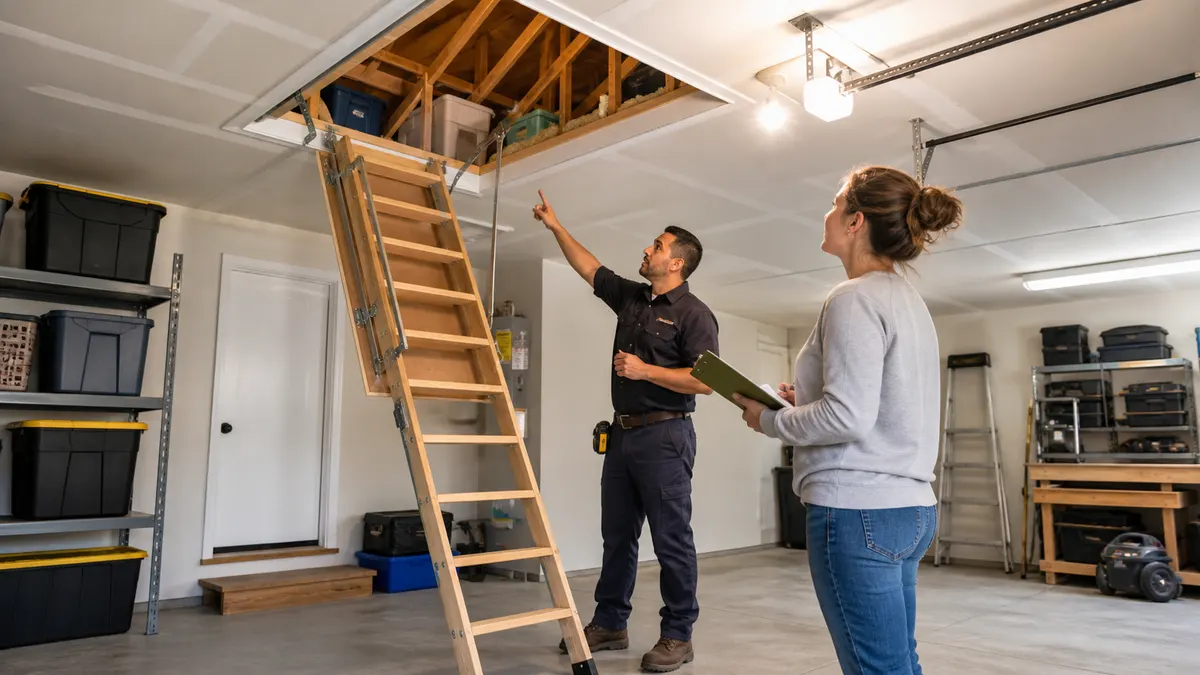
Citrus Heights Attic Ladder and Garage Storage Safety: What to Check Before You Add Boxes
The attic ladder looks like the easy part. A Citrus Heights homeowner wants the holiday bins off the garage floor, the camping gear out of the laundry room, and a clean pull-down ladder so nobody has to drag a stepladder across the concrete every December. The box at the home center says "attic ladder." The garage ceiling already has space above it. How complicated can it be?
Complicated enough to ask better questions before the first cut.
A garage attic can be useful storage, but it is not automatically a storage room. The framing above the ceiling may be built to hold drywall and insulation, not rows of heavy totes. The ceiling may be part of the garage's fire separation from the house. The insulation may be doing important comfort work for rooms above or beside the garage. Add lighting, an outlet, a bigger opening, or a plywood platform, and the project can move from a small handyman task into general contracting, electrical, insulation, drywall, and permit territory.
Use this chart before comparing bids. A ladder replacement can be simple; cutting a new garage ceiling opening, adding storage decking, or touching wiring changes the risk profile.
Start With What You Plan To Store
Before you call anyone, list what is actually going into the attic. Empty suitcases, holiday wreaths, wrapping paper, and lightweight bins are a different project from tile boxes, tools, paint, files, books, gym equipment, or leftover flooring. The attic ladder is only the access point. The real question is whether the space above the garage can safely carry the load you are about to add.
Citrus Heights has many one-story and split-level homes from the 1960s through the 1990s with attached garages, low attic clearances, older insulation, and ceiling framing that was never intended to become a storage loft. Some newer homes have trusses that should not be cut, notched, or modified casually. If a contractor talks about "just laying plywood" without asking what the framing is and what you plan to store, the scope is not ready.
Take photos of the garage ceiling, the existing attic access, the door to the house, overhead door tracks, lights, gas appliance vents, and anything already stored above. Those details help a contractor decide whether this is a small access upgrade or a project that needs framing review.
The Attic Floor May Not Be a Floor
The flat surface you see from below is usually drywall, not a floor. Above it may be ceiling joists, engineered trusses, ducts, wiring, insulation, and narrow walking paths. Plywood placed directly over insulation can compress the insulation, reduce comfort, hide wiring, and make future repairs harder. Plywood placed across the wrong framing can overload members that were not designed for storage.
A useful contractor walkthrough should answer four questions:
- What framing is above the garage ceiling: joists, trusses, or engineered members?
- Is the proposed storage area limited to lightweight seasonal items, or does it need a designed platform?
- Will the ladder location interfere with garage door tracks, vehicles, lights, appliances, or the door into the house?
- Will the work disturb insulation, air sealing, drywall, or the garage-house fire separation?
If nobody can answer those questions from the floor, the estimate should say what must be inspected from inside the attic before final pricing.
Which Contractor Should Lead?
A handyman may be the right fit for a like-for-like ladder replacement in an existing framed opening when the job is small, nonstructural, and does not involve electrical work, permits, or a larger storage buildout. That is the narrow version of the project.
A general contractor is a better lead when the opening must be reframed, the ladder location changes, drywall needs to be cut and patched, a storage platform is added, or several trades are involved. Bring in a licensed electrician for attic lighting, a switch, an outlet, or any wiring correction. Use an insulation contractor when the platform changes insulation depth, blocks ventilation, or exposes gaps that make nearby rooms hotter. A drywall contractor may be needed if the ceiling must be repaired cleanly around the hatch.
The best contractor is not the one who says yes fastest. It is the one who can explain what the attic ladder does, what the framing can carry, what the garage ceiling must continue to protect, and which parts of the job they are not licensed to perform.
What a Useful Estimate Should Separate
Most Citrus Heights garage-attic projects fall somewhere in these planning ranges:
- Organizing, shelving, or light garage cleanup before storage: $300 to $2,000.
- Like-for-like attic ladder replacement in an existing framed opening: $700 to $2,500.
- New pull-down ladder opening with framing, trim, and drywall touch-up: $1,800 to $5,500.
- Storage decking, raised platforms, access lighting, or insulation adjustments: $1,500 to $8,500 depending on size and access.
- Structural review, ceiling repair, electrical corrections, or larger garage storage buildout: $5,000 to $18,000 or more.
Those numbers are not quotes. They are a warning against comparing a $900 ladder install to a $6,000 attic storage scope as if they are the same job. A complete estimate should separate the ladder model, opening size, framing assumptions, finish trim, drywall repair, insulation handling, electrical work, debris haul-off, permit responsibility, warranty, and what happens if unsafe framing or wiring is discovered.
Ask whether the ladder is rated for the people and items using it, whether the stairs will clear parked vehicles, whether the hatch seals tightly enough to limit hot attic air, and whether a handrail, light, or safer landing area makes sense. Small details matter when someone is carrying a storage bin overhead.
Permits, Fire Separation, and Licensing
Citrus Heights building permits run through the city's Building & Safety process, and the city uses an online permit portal for applications and inspections. Do not guess based on a neighbor's project. Ask the contractor to state in writing whether your exact scope requires a permit, who confirms that answer, and who schedules inspections if they are needed.
A simple replacement in an existing opening may be treated differently from cutting a new opening, altering framing, changing garage ceiling drywall, adding electrical work, or building a storage platform. Attached garages also deserve extra caution because the ceiling and walls between garage and living space can be part of a fire-separation assembly. A poorly fitted hatch, oversized opening, or sloppy drywall repair can create a problem you do not notice until resale, insurance review, or a later permit inspection.
California licensing rules also matter. The minor-work exemption is limited: under $1,000, no permit requirement, and no hired employees. Once the job requires a permit, involves workers, includes specialty electrical work, or exceeds that threshold, use the appropriate licensed contractor. Separately, written home improvement contracts are required for projects over $500 in combined labor and materials. Verify the license, insurance, bond, and workers' compensation status before anyone cuts the garage ceiling.
Red Flags in Attic Ladder and Storage Bids
Slow down if you see any of these:
- The bid says "install plywood storage" without inspecting the framing.
- The contractor plans to cut trusses or framing without engineered guidance.
- Electrical lighting is included, but no licensed electrical scope is named.
- The garage ceiling fire-separation question is dismissed as irrelevant.
- Insulation will be compressed or removed with no plan to restore performance.
- The ladder swing conflicts with garage door tracks, vehicles, shelving, or the house entry door.
- The estimate does not say who patches drywall, trims the opening, or handles inspections.
- License, insurance, bond, or workers' compensation proof is vague.
None of those red flags means you cannot use the attic. They mean the project needs a better scope before the ceiling is opened.
Questions to Ask Before You Sign
- What specific attic ladder model and load rating are included?
- Are we using an existing framed opening or cutting a new one?
- What framing is above the garage ceiling, and can it carry the planned storage?
- Will you add storage decking, a raised platform, or only safe access?
- How will insulation, air sealing, and attic ventilation be protected?
- Does this garage ceiling need rated drywall, a rated hatch, or specific repair details?
- Is electrical work included, and who performs it?
- Are permits or inspections needed for this exact scope in Citrus Heights?
- What is excluded: structural engineering, insulation replacement, drywall texture, paint, lighting, outlets, or garage organization?
The right answers should make the project feel calmer, not bigger. A clean ladder and a small storage zone can be a smart upgrade when everyone understands the limits.
Internal Homework Before You Hire
For local context, start with our Citrus Heights contractor guide, compare handyman services, general contractors, electrical contractors, insulation contractors, and drywall contractors. Use the contractor search when you are ready to build a shortlist.
For related planning, pair this with our Citrus Heights attic venting and wiring guide, attic air sealing and insulation guide, home insulation guide, garage storage and workshop planning guide, garage door safety guide, California permit basics, and license verification guide.
The Bottom Line
An attic ladder can make a Citrus Heights garage feel twice as useful, but only when the access, framing, storage load, insulation, fire separation, and electrical scope all agree with each other. Store light items. Respect the framing. Do not treat the garage ceiling like a blank sheet of drywall. Hire the contractor who can explain the limits before they make the opening bigger.
Who to Hire for This Project
For the work covered in this guide, these are the contractor types to contact and the CSLB classification to verify before you take quotes:
Questions to Ask Before You Sign
- "Is your CSLB license active and bonded?" Verify it yourself at cslb.ca.gov the license number must appear on their bid.
- "Who pulls the permit, and is it included in the bid?" The contractor should handle any required permits a pro who suggests skipping one is a red flag.
- "Can you itemize labor, materials, and allowances?" Itemized bids are the only way to compare quotes on the same scope.
- "What's the payment schedule?" California caps the down payment at $1,000 or 10%, whichever is less payments should track completed work.
- "Who from this area can I call as a reference?" Ask for a recent local job of similar scope, not just photos.