Citrus Heights Whole-House Fan Planning: Attic Venting, Wiring, and Noise
A whole-house fan sounds almost too simple when the first 100-degree week hits Citrus Heights: open the windows after sunset, turn on the fan, pull the hot air out of the house, and let the attic vent it outside.
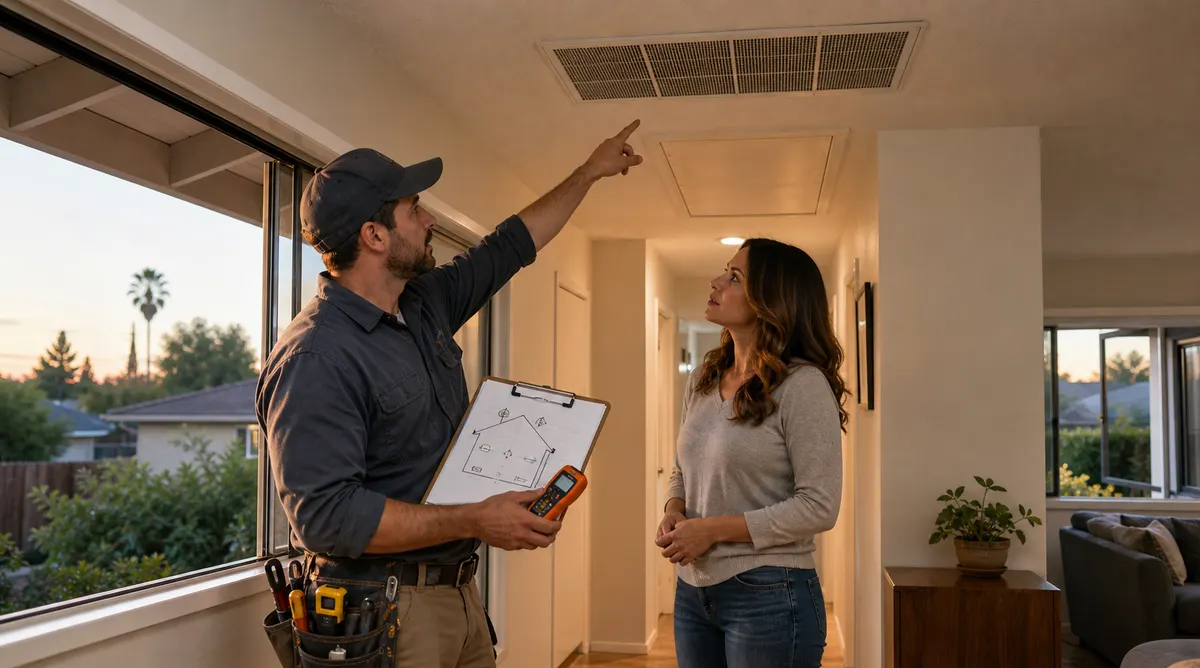
Then the contractor looks up in the hallway and asks where the attic access is, how much roof venting you have, whether the panel has room for the circuit, whether the hallway grille will be too loud near the bedrooms, and whether the attic insulation is going to blow around every time the fan runs. Suddenly the project is not just a fan in a box. It is airflow, electrical work, attic conditions, roof ventilation, noise, dust, permits, and choosing the right trade lead.
That is still a manageable project. It just needs a better first conversation than "how much for a whole-house fan?"
Use this chart before comparing bids. A whole-house fan estimate is not ready until attic venting, wiring, noise, insulation, and how the household will actually use the fan are visible.
Start With the Evenings, Not the Equipment
Citrus Heights has a lot of postwar and 1970s ranch homes where the attic stores heat well after dinner. The air outside may finally feel pleasant at 8:30 p.m., but the hallway, bedrooms, and ceiling drywall are still radiating the afternoon. A whole-house fan can help when the outdoor air has cooled enough and the homeowner is willing to open enough windows before turning it on.
That last part matters. A whole-house fan is not an air conditioner replacement during the afternoon. It is an evening purge tool. If the house stays closed up, the fan can pull air from dusty gaps, fireplaces, garages, or crawlspace leaks instead of clean outdoor air. If only one small window is cracked open, the fan may whistle, slam doors, or create uncomfortable drafts.
Before you call contractors, track three evenings. What time does the outside air become cooler than the inside air? Which windows can safely stay open with screens? Which bedrooms need the most relief? Is road noise, wildfire smoke, pollen, or security going to limit how often you actually use the fan? Those answers shape the fan size, location, controls, and whether another comfort upgrade should come first.
The Attic Has to Breathe
A whole-house fan moves air from the living space into the attic, then out through roof vents, gable vents, dormer vents, ridge vents, or other exhaust paths. If the attic does not have enough net free vent area, the fan can pressurize the attic, push hot dusty air into small gaps, make the fan louder, reduce performance, and stress the roof ventilation system.
Ask the contractor to calculate attic venting, not just glance at the roof. Older Citrus Heights homes may have a few gable vents, blocked soffit vents, painted-over vents, added insulation covering intake, or roof vents that were fine for passive attic ventilation but not enough for a powered whole-house fan. A good installer should be willing to photograph the attic before quoting and explain whether additional venting is needed.
This is also where insulation comes into the conversation. Loose blown-in insulation near the fan box, baffles, or attic access may need protection so it is not pulled toward the fan or disturbed by air movement. If the attic insulation is thin, dirty, or uneven, the better first dollar might be air sealing and insulation before the fan goes in. A fan cools the house at night; insulation slows the heat load the next afternoon.
Pick the Location Before You Pick the Model
The most common location is a hallway ceiling near the center of the house, but "center" does not always mean "best." The grille should pull air evenly from bedrooms and main living areas without sitting directly outside a room where a light sleeper will hear it every night. It also needs framing clearance, attic clearance, service access, a practical wiring path, and room for the fan housing.
Some fan models mount directly at the ceiling. Others use an insulated duct between the grille and a remote fan box, which can reduce noise in the living space. That choice affects price, attic space, installation time, and maintenance access. If the hallway is narrow, the ceiling joists run the wrong direction, or a truss blocks the ideal location, the contractor should catch that before you approve the model.
Ask the installer to mark the proposed grille location with painter tape during the walkthrough. Stand in the bedrooms, open the doors, and picture the sound at night. A fan that is technically installed but too annoying to use is a failed project.
What a Useful Estimate Should Separate
For Citrus Heights homeowners, a straightforward whole-house fan installation often lands around $1,800 to $4,500 depending on fan type, controls, attic access, wiring, and venting. Quieter ducted or larger systems, added roof or gable venting, new electrical work, drywall repair, attic air sealing, insulation protection, or difficult access can move the project into the $4,500 to $9,500-plus range.
Ask each bidder to separate:
- Fan type and capacity. Direct-mount or ducted, airflow rating, speed settings, damper style, insulation value at the grille, and expected noise level.
- Location. Proposed grille location, framing cuts, attic clearance, service access, and how air will move from the far bedrooms.
- Electrical scope. Existing circuit or new circuit, switch or timer location, smart control assumptions, breaker space, and who pulls the electrical permit.
- Attic ventilation. Existing vent area, blocked vents, new gable or roof vents if needed, roof penetration responsibility, and weatherproofing.
- Insulation and air sealing. How loose insulation is protected, whether attic bypasses are sealed, and whether the attic access needs weatherstripping or an insulated cover.
- Finish repair. Drywall patching, paint touch-up, grille trim, cleanup, and who repairs unexpected ceiling damage.
- Warranty and service. Fan warranty, labor warranty, access for future service, and who handles vibration or noise adjustments after installation.
If the estimate only says "install whole-house fan," it is too thin.
Permits and Licensing in Citrus Heights
Citrus Heights Building & Safety lists electric attic fans and whole-house fans as permit-required projects. The city also lists any electrical, heating, or plumbing alteration, improvement, or addition as commonly permit-required work. Plain English: if the fan is powered, hardwired, or tied to new controls, ask how the permit and inspection are handled before the job starts.
Licensing should match the work:
- C-10 electrical contractor. Use this when a new circuit, switch, timer, control, breaker work, or other wiring is part of the job.
- C-20 HVAC contractor. This may fit ventilation-system work involving blowers, ducts, controls, and warm-air ventilation expertise.
- C-2 insulation contractor. Bring this trade in when the attic insulation is thin, buried over vents, loose near the fan, or needs air sealing and baffles.
- C-39 roofing contractor. Use a roofer if the project adds roof vents or changes roof penetrations.
- B general contractor. A broader lead can make sense when the project also includes drywall, electrical, roofing, attic repair, insulation, and other small trades.
You do not need every trade on every job. You do need one contractor who can say which license classification fits their scope and who is responsible for any permit.
Red Flags in Whole-House Fan Bids
Slow down if you hear any of these:
- "You do not need a permit" with no explanation for the electrical work.
- The installer never looks in the attic.
- No one calculates or discusses attic exhaust venting.
- The fan size is chosen only by house square footage.
- The grille location is picked without checking joists, trusses, ducts, or bedroom noise.
- The bid ignores loose insulation, blocked soffit vents, or attic access.
- The contractor cannot explain whether they are acting as the electrician, HVAC installer, or general lead.
- The estimate has no plan for drywall repair, cleanup, or vibration/noise callbacks.
The best whole-house fan contractors are practical. They talk about how the house breathes, how the attic vents, and how your family will use the fan on real summer nights.
Questions to Ask Before You Sign
- What time of day will this fan actually help in my house?
- How many windows should be open, and where?
- Did you verify attic venting, or is that assumed?
- Will the fan need a new electrical circuit or only a connection to existing power?
- Who pulls the Citrus Heights permit and schedules inspection?
- Is the fan direct-mount or ducted, and what noise level should I expect in the hallway and bedrooms?
- Will you protect loose insulation and seal attic gaps near the fan?
- What happens if the fan vibrates, rattles, or pulls dust after installation?
Those questions are not overkill. They are the difference between a fan you use every summer night and one you turn off after two tries.
Internal Homework Before You Hire
For local context, start with our Citrus Heights contractor guide, compare licensed electrical contractors, HVAC contractors, insulation contractors, roofing contractors, and general contractors. Use the contractor search when you are ready to build a shortlist.
For related planning, pair this with our Sacramento attic insulation guide, home insulation guide, attic ventilation guide, summer HVAC maintenance guide, electrical panel guide, and California permit basics.
The Bottom Line
A whole-house fan can be a smart Citrus Heights comfort upgrade when the house, attic, and evening routine fit the idea. Do the attic check first, confirm the wiring and permit path, place the grille where people can live with the sound, and hire the contractor who explains airflow instead of just selling a fan.
Who to Hire for This Project
For the work covered in this guide, these are the contractor types to contact and the CSLB classification to verify before you take quotes:
Questions to Ask Before You Sign
- "Is your CSLB license active and bonded?" Verify it yourself at cslb.ca.gov the license number must appear on their bid.
- "Who pulls the permit, and is it included in the bid?" The contractor should handle any required permits a pro who suggests skipping one is a red flag.
- "Can you itemize labor, materials, and allowances?" Itemized bids are the only way to compare quotes on the same scope.
- "What's the payment schedule?" California caps the down payment at $1,000 or 10%, whichever is less payments should track completed work.
- "Who from this area can I call as a reference?" Ask for a recent local job of similar scope, not just photos.
Sacramento Contractors for This Project
Related Articles
Sacramento Attic Insulation and Air Sealing Guide: Costs, Rebates, Ducts, Venting, and Summer Comfort
August 9, 2026
Sacramento Attic Insulation and Air Sealing Guide: Costs, Rebates, Comfort, and Contractor Questions
August 5, 2026
Arden Arcade Mini-Split Installation: Permits & Summer Cooling
July 18, 2026