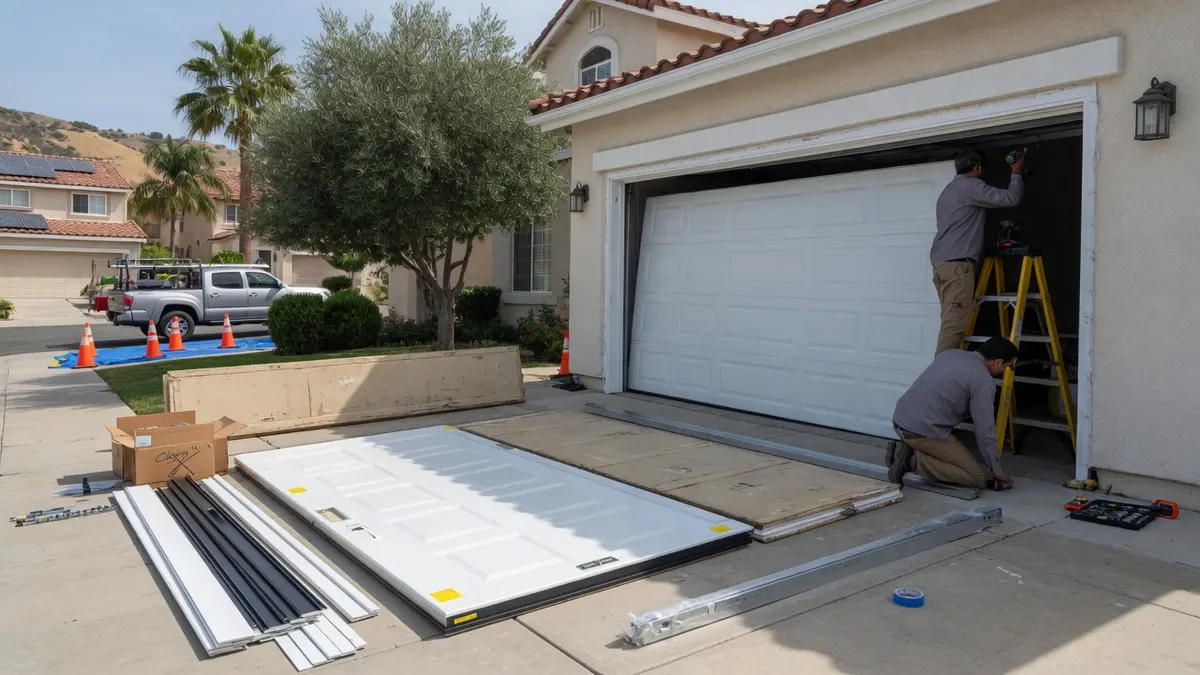
Citrus Heights Garage Door Replacement for Safety and Street Appeal
Drive down almost any street in Citrus Heights built between the 1960s and the early 2000s and you'll notice the same thing: the garage is the biggest single feature facing the curb. On a lot of these homes it takes up more visual real estate than the front door, the windows, and the landscaping combined. So when that door is dented, sun-bleached, or groans like it's auditioning for a horror movie every morning, it drags the whole house down with it. The good news is that swapping it out is one of the few projects that improves looks, security, comfort, and daily function all at once.
The door is doing more work than you think
People tend to think of a garage door as a big sheet of metal that goes up and down. In practice it's a moving system: panels, torsion or extension springs, rollers, tracks, hinges, an opener, and safety sensors that are all supposed to work together. The springs are under serious tension and are the part most likely to hurt someone when they fail. If your current door slams the last foot of travel, hesitates halfway, or makes the opener strain, that's usually a spring or balance issue, not just a tired motor.
A replacement is a chance to fix all of that at once instead of nursing a 25-year-old door through one more winter. Newer doors also seal better at the bottom and sides, which matters more than you'd expect when a Citrus Heights summer afternoon hits triple digits and that attached garage shares a wall with a bedroom or a converted office.
What you'll actually spend in the Sacramento Valley
For a straightforward replacement around here, plan on roughly $1,500 to $6,500 installed. That's a wide range on purpose. A basic single-layer steel door on a standard single-car opening sits near the bottom; an insulated, multi-layer door with decorative windows, a new opener, and fresh springs and tracks on a two-car opening pushes toward the top.
The number moves based on a few things: door material and how many insulation layers it has, whether your old opener can handle a heavier insulated panel (often it can't), and whether the spring system and tracks get replaced along with the panels. A good estimate spells all of that out, including haul-off of the old door, trim work, and warranty terms. If one bid comes in hundreds of dollars under another, don't assume the cheaper crew is just nicer to you. Read the assumptions. Usually the gap is insulation, opener, or spring hardware that one quote included and the other quietly left out. Keep a small cushion set aside too, because older Citrus Heights garages sometimes hide rotted trim or framing that nobody can see until the old door comes off.
When you're comparing numbers, our Citrus Heights contractor guide and the broader contractor search make it easier to line up three real bids instead of guessing.
Licensing is not a formality in California
This is the part homeowners skip and later regret. In California, any home-improvement job where labor and materials total $1,000 or more must be done by a contractor holding an active CSLB license. A garage door replacement clears that threshold easily, so an unlicensed "handyman special" isn't a bargain, it's a liability. If the springs are installed wrong or the door comes off the tracks later, you have almost no recourse.
Verifying a license takes about two minutes. Look up the contractor's number on the CSLB website, confirm it's active and in the right classification, and check that they carry workers' compensation and liability insurance. Ask for proof in writing, not a verbal "yeah, we're covered." A legitimate garage door and door installer will hand it over without flinching. The ones who get cagey about a license are telling you something.
When a permit enters the picture
Most like-for-like garage door swaps in Citrus Heights don't trigger a permit, because you're not touching the structure or changing the opening size. Where it changes: if the job involves a new structural header, widening the opening, or running new electrical for an opener circuit, the city's building division will likely want a permit and an inspection. Electrical work in particular is one of those trades California takes seriously, so if your installer is adding a dedicated circuit or outlet for the opener, that's a job for a licensed electrician, and it may need to be inspected.
Ask your contractor directly who is responsible for pulling any permit and scheduling inspections, and get the answer in the contract. You don't want to discover at resale that an undocumented modification is now your problem to untangle.
Timing the job so you're not waiting in the heat
Exterior work books up fast in the Sacramento Valley once spring hits and stays busy through early summer, when everyone decides at once to fix the front of their house. If you want a relaxed schedule and your pick of installation crews, a call in late fall or winter usually means shorter waits. Whenever you go, confirm material lead times up front. Custom finishes, specific window inserts, or non-stock colors can add weeks, and a door sitting in a warehouse three counties away doesn't help your curb appeal.
A few questions separate a smooth job from a frustrating one: What's the insulation R-value? Is my existing opener rated for this door's weight, or do I need a new one? What's the warranty on the springs specifically? How will gaps between the new door and the existing trim be handled? Ask for photos of similar Citrus Heights installs and a payment schedule tied to progress rather than a large deposit up front.
When you're ready, walk the property and take a few photos of the current door, the trim around it, and the opener unit. Note what's bugging you, whether it's noise, looks, drafts, or that one panel that's caved in. Then pull three licensed bids through our Sacramento Valley contractor search and compare scopes side by side. The right choice usually isn't the lowest line on the page; it's the contractor who explained the most, hid the least, and gave you a door you'll be glad to see every time you pull into the driveway.
Who to Hire for This Project
For the work covered in this guide, these are the contractor types to contact and the CSLB classification to verify before you take quotes:
Questions to Ask Before You Sign
- "Is your CSLB license active and bonded?" Verify it yourself at cslb.ca.gov the license number must appear on their bid.
- "Who pulls the permit, and is it included in the bid?" The contractor should handle any required permits a pro who suggests skipping one is a red flag.
- "Can you itemize labor, materials, and allowances?" Itemized bids are the only way to compare quotes on the same scope.
- "What's the payment schedule?" California caps the down payment at $1,000 or 10%, whichever is less payments should track completed work.
- "Who from this area can I call as a reference?" Ask for a recent local job of similar scope, not just photos.
Sacramento Contractors for This Project
Related Articles
Frequently Asked Questions
How much does a garage door replacement cost in Citrus Heights? +
A typical installed replacement in the Sacramento Valley runs roughly $1,500 to $6,500. The low end is a basic single-layer steel door on a single-car opening, while the high end reflects an insulated, multi-layer two-car door with windows, a new opener, and fresh springs and tracks. Insulation level, opener compatibility, and spring hardware are usually what drive the difference between bids.
Do I need a permit to replace my garage door in Citrus Heights? +
A straight like-for-like replacement usually does not require a permit since you are not altering the structure or opening size. Permits typically come into play only if the job involves a new structural header, widening the opening, or running new electrical for the opener. Confirm in writing who is responsible for pulling any permit and scheduling inspections before you sign.
Does a garage door installer in California need to be licensed? +
Yes. California law requires an active CSLB license for any home-improvement job where labor and materials total $1,000 or more, and a garage door replacement easily clears that threshold. Verify the contractor's license number on the CSLB website, confirm it is active, and ask for proof of workers' compensation and liability insurance in writing.
Will my existing opener work with a new garage door? +
Not always. Insulated, multi-layer doors are heavier than older single-layer panels, and an aging opener may not have the lifting capacity to handle the extra weight reliably. Ask your installer to confirm whether your current opener is rated for the new door, and budget for a replacement opener if it is not.
When is the best time to schedule a garage door replacement in the Sacramento Valley? +
Exterior work books up quickly once spring arrives and stays busy through early summer. For shorter wait times and more crew availability, calling in late fall or winter is often easier. Whenever you schedule, confirm material lead times early, since custom colors or window inserts can add weeks.
How do I compare garage door bids fairly? +
Read the assumptions, not just the bottom-line price. A complete estimate should spell out the door material and insulation, opener, springs, tracks, trim, haul-off of the old door, and warranty terms. When two bids differ by hundreds of dollars, the gap is usually insulation, opener, or spring hardware that one quote included and the other left out.