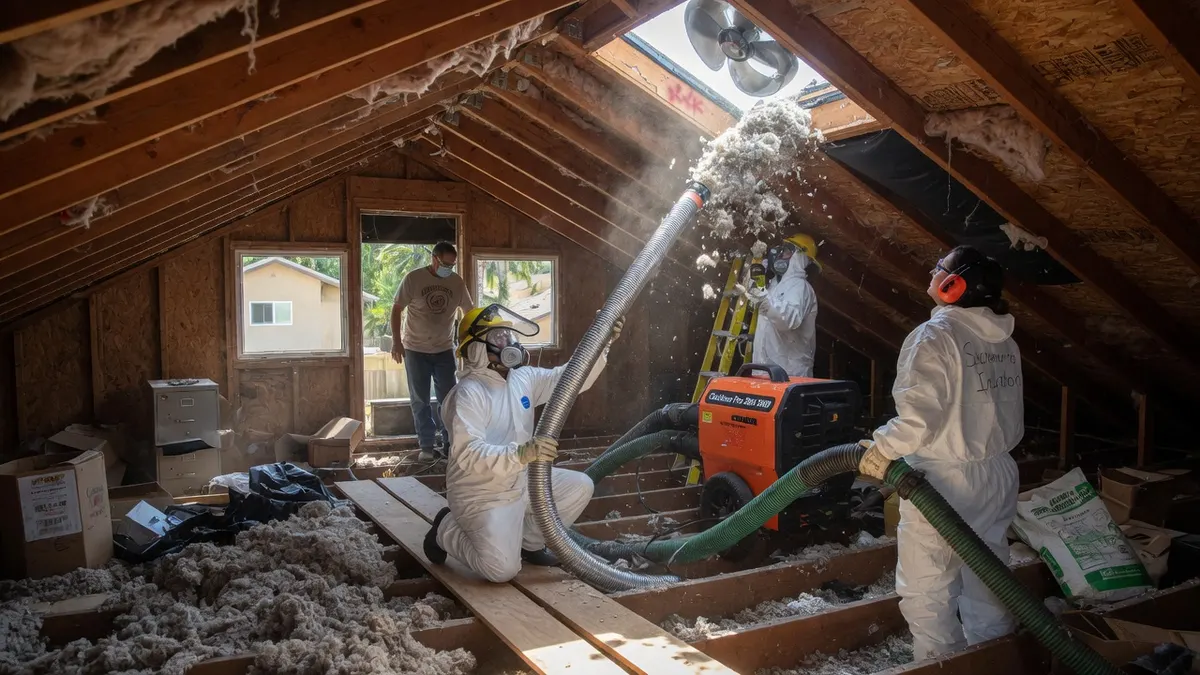
Attic Air Sealing and Insulation in Sacramento: Costs, Rebates, R-Values, and Contractor Scope
Watch: Quick Homeowner Overview
A short vertical explainer for this guide share it on socials or preview the project before you read.
Attic insulation is one of the least glamorous home projects in Sacramento, which is exactly why it gets ignored until the upstairs bedrooms feel like an oven in July or the winter heating bill looks wrong. The uncomfortable truth is that many homes in Sacramento, Carmichael, Rancho Cordova, Citrus Heights, Elk Grove, Roseville, and older foothill communities have attics that were never built for modern comfort expectations.
A contractor can blow more insulation over the old material in a day. That does not always mean the house is fixed. The best attic projects handle air sealing, ventilation, bath fan ducting, recessed light safety, rodent contamination, and HVAC duct leakage before adding depth. If those details are skipped, new insulation may hide old problems and deliver less comfort than the homeowner paid for.
Here is the practical Sacramento version of attic air sealing and insulation: start with the leaks, clean up the attic conditions, then add the right amount of insulation for the home.
What Attic Insulation Usually Costs
For a typical Sacramento-area single-family home, attic insulation and related work often falls into these ranges:
- Basic blown-in insulation top-off: $1.25 to $2.50 per square foot
- Air sealing plus blown insulation: $2.00 to $4.50 per square foot
- Old insulation removal: $1.50 to $4.00 per square foot, more if contaminated
- Rodent cleanup, sanitizing, and exclusion work: $1,000 to $5,000 or more depending on severity
- Duct sealing or minor duct repair: $500 to $2,500
- Major duct replacement in attic: $4,000 to $12,000 or more
- Bath fan duct corrections: $300 to $1,200 per fan
- Attic ventilation corrections: $500 to $3,000 depending on intake and exhaust needs
A straightforward top-off for a 1,500 square foot attic might cost $2,000 to $4,500. A more complete project with air sealing, removal, duct fixes, and ventilation can land between $5,000 and $15,000. Homes with low attic clearance, knob-and-tube concerns, recessed light hazards, heavy rodent damage, or complicated ductwork can cost more.
The cheapest bid usually means fewer prep steps. Sometimes that is fine. If the attic is clean, dry, properly ventilated, and already air sealed, adding depth may be enough. But in many Sacramento homes built before the 1990s, the prep work is the project.
Why Air Sealing Comes Before More Insulation
Insulation slows heat movement. Air sealing stops uncontrolled air movement. They are related, but they are not the same job.
Warm indoor air escapes into the attic through gaps around plumbing stacks, electrical penetrations, top plates, can lights, ceiling boxes, attic hatches, dropped soffits, and chases. In summer, superheated attic air can leak down into the living space through the same paths. Blowing loose insulation over those leaks does not seal them. It just covers the evidence.
Good air sealing uses fire-rated foam, caulk, rigid blocking, sheet metal, or other appropriate materials depending on the gap. The crew should pull back existing insulation where needed, seal the penetrations, and then restore the insulation layer. The attic hatch should also be weatherstripped and insulated. A beautiful R-value on paper does not help much if the hatch is a leaky plywood door in a hallway ceiling.
Sacramento R-Value Targets
Most Sacramento-area attic upgrades aim for roughly R-38 to R-49, depending on existing conditions, code path, budget, and the contractor's recommendation. Older homes may have only a few inches of old fiberglass or loose fill, especially if prior owners moved insulation around during wiring, cable, alarm, or HVAC work.
Do not judge insulation by inches alone. Cellulose, fiberglass, and mineral wool have different R-values per inch. Settling also matters. A bid should state the existing approximate R-value, the installed depth, the final target R-value, and the product being used. If a contractor only says "add insulation" without a target, the scope is too vague.
Ventilation Still Matters
Sacramento attics get brutally hot. More insulation helps keep that heat out of the living space, but the attic still needs a reasonable ventilation strategy. Balanced intake and exhaust usually matters more than simply adding a powered fan.
Common problems include blocked soffit vents, painted-over eave vents, insulation stuffed into intake paths, not enough low intake, disconnected bath fan ducts, and roof vents added without a clear airflow plan. A contractor should check whether the attic has both intake and exhaust, whether baffles are needed near eaves, and whether new insulation will block airflow.
Powered attic fans are not automatically bad, but they are often oversold. If a powered fan pulls conditioned air from the house through ceiling leaks, it can make the home less efficient. Air sealing and passive ventilation should be evaluated before adding mechanical attic ventilation.
Ducts, Bath Fans, and Recessed Lights
Many Sacramento homes have HVAC ducts running through the attic. If ducts leak, are crushed, have missing insulation, or sit under extreme heat, attic insulation alone will not solve comfort complaints. Rooms at the end of long duct runs may stay hot because the delivered air warms up before it reaches the register. Duct sealing and duct insulation can be just as important as the attic floor.
Bathroom fans also deserve attention. A fan that dumps humid air into the attic can wet roof sheathing and insulation during cooler months. Each bath fan should duct to the exterior through a proper roof or wall termination, not end under loose fill.
Recessed lights need the right clearance and rating. Older non-IC can lights may not be safe to bury in insulation. The contractor should identify those fixtures before adding material, not after. Electrical junction boxes, knob-and-tube wiring, and old splices should also be handled carefully. If there are electrical concerns, bring in a licensed electrician before covering everything.
Removal vs. Top-Off
Homeowners often ask whether old insulation has to be removed. Not always. If the existing material is dry, clean, evenly distributed, and not hiding serious air sealing work, a top-off can be reasonable.
Removal makes more sense when the attic has rodent droppings, urine odor, old fire damage, water staining, heavy dust, asbestos-suspect materials, or insulation so disturbed that air sealing cannot be done properly. Removal adds cost, but it can be the right call when the old attic is unhealthy or impossible to inspect.
If rodents were present, do not stop at removal. The project should include exclusion work so the animals cannot return. That means sealing entry points at eaves, roof returns, vents, utility penetrations, and gaps near the garage or crawl space. Otherwise the new insulation becomes nesting material.
Rebates, Permits, and Documentation
Local utility incentives and energy programs change, so treat rebates as a bonus, not the foundation of the budget. Ask the contractor which program they are using, what documentation is required, whether pre-approval is needed, and whether the quoted price assumes an incentive.
Basic attic insulation usually does not require the same permit path as a structural remodel, but related work can trigger additional requirements. New electrical work, HVAC duct replacement, bath fan rewiring, roof penetrations, or major mechanical changes may need permits. Rules can differ between the City of Sacramento, Sacramento County, Roseville, Folsom, Elk Grove, Rancho Cordova, and Davis.
Keep the product labels, final R-value documentation, photos of air sealing, and any rebate paperwork. Those records are useful for future buyers, appraisers, energy audits, and warranty questions.
What a Complete Bid Should Include
A useful attic insulation estimate should spell out:
- Existing insulation condition and approximate R-value
- Final target R-value and installed depth
- Insulation material, brand or product type, and coverage area
- Air sealing locations and materials
- Attic hatch insulation and weatherstripping
- Ventilation review, baffles, and blocked intake corrections
- Bath fan ducting corrections, if needed
- Duct sealing or duct repair scope, if included
- Old insulation removal, disposal, and cleanup details
- Rodent exclusion scope, if needed
- Recessed light and electrical safety approach
- Photos before and after the work
- Rebate paperwork and warranty terms
The bid should also say what is excluded. Drywall repair, electrical corrections, duct replacement, pest control, asbestos testing, and roof vent installation may be separate line items or separate trades.
The Bottom Line
Attic insulation is a high-value Sacramento comfort project when it is scoped correctly. It can make upstairs rooms more livable, reduce HVAC runtime, protect duct performance, and help an older home feel less drafty in winter. But the best results usually come from a package: air sealing first, attic problems second, insulation depth third.
If your home has thin insulation, hot rooms, dusty registers, high utility bills, or a history of rodents, ask for an attic inspection before buying a simple top-off. A clean, sealed, properly ventilated attic with the right R-value is not flashy. It just works every hot afternoon when you need it most.
Who to Hire for This Project
For the work covered in this guide, these are the contractor types to contact and the CSLB classification to verify before you take quotes:
Questions to Ask Before You Sign
- "Is your CSLB license active and bonded?" Verify it yourself at cslb.ca.gov the license number must appear on their bid.
- "Who pulls the permit, and is it included in the bid?" The contractor should handle any required permits a pro who suggests skipping one is a red flag.
- "Can you itemize labor, materials, and allowances?" Itemized bids are the only way to compare quotes on the same scope.
- "What's the payment schedule?" California caps the down payment at $1,000 or 10%, whichever is less payments should track completed work.
- "Who from this area can I call as a reference?" Ask for a recent local job of similar scope, not just photos.
Sacramento Contractors for This Project
Related Articles
Folsom Attic Insulation: Cost, Permits, and Hiring (2026)
October 5, 2026
Sacramento Attic Insulation and Air Sealing Cost Guide: Summer Heat, Old Ducts, Rebates, and Contractor Scope
July 24, 2026
Sacramento Attic Insulation Removal and Duct Sealing Cost Guide: Cleanup, Air Leaks, Ventilation, and Comfort
July 22, 2026
Frequently Asked Questions
How much does attic insulation cost in Sacramento? +
A basic blown-in insulation top-off often costs $1.25 to $2.50 per square foot. Air sealing plus insulation commonly runs $2.00 to $4.50 per square foot. If old insulation removal, rodent cleanup, duct work, or ventilation corrections are needed, many full projects land between $5,000 and $15,000.
Should I air seal before adding attic insulation? +
Yes, in most older Sacramento homes. Insulation slows heat transfer, but it does not stop air leaks around plumbing, wiring, top plates, can lights, and attic hatches. Air sealing before adding insulation usually improves comfort and prevents new insulation from hiding old leaks.
What attic R-value is best for Sacramento homes? +
Many Sacramento-area attic upgrades target about R-38 to R-49, depending on existing conditions and the project scope. The bid should state the current estimated R-value, the installed depth, the final target R-value, and the insulation product being used.
Do I need to remove old attic insulation? +
Not always. Clean, dry, evenly distributed insulation can often be topped off after air sealing. Removal is more appropriate when insulation is contaminated by rodents, wet, smoke damaged, heavily disturbed, or blocking proper inspection and air sealing.
Does attic insulation require a permit? +
Basic attic insulation often does not require the same permit path as larger remodels, but related electrical, HVAC, bath fan, roof penetration, or mechanical work may. Check with the local building department or ask the contractor to explain the permit responsibility for the full scope.