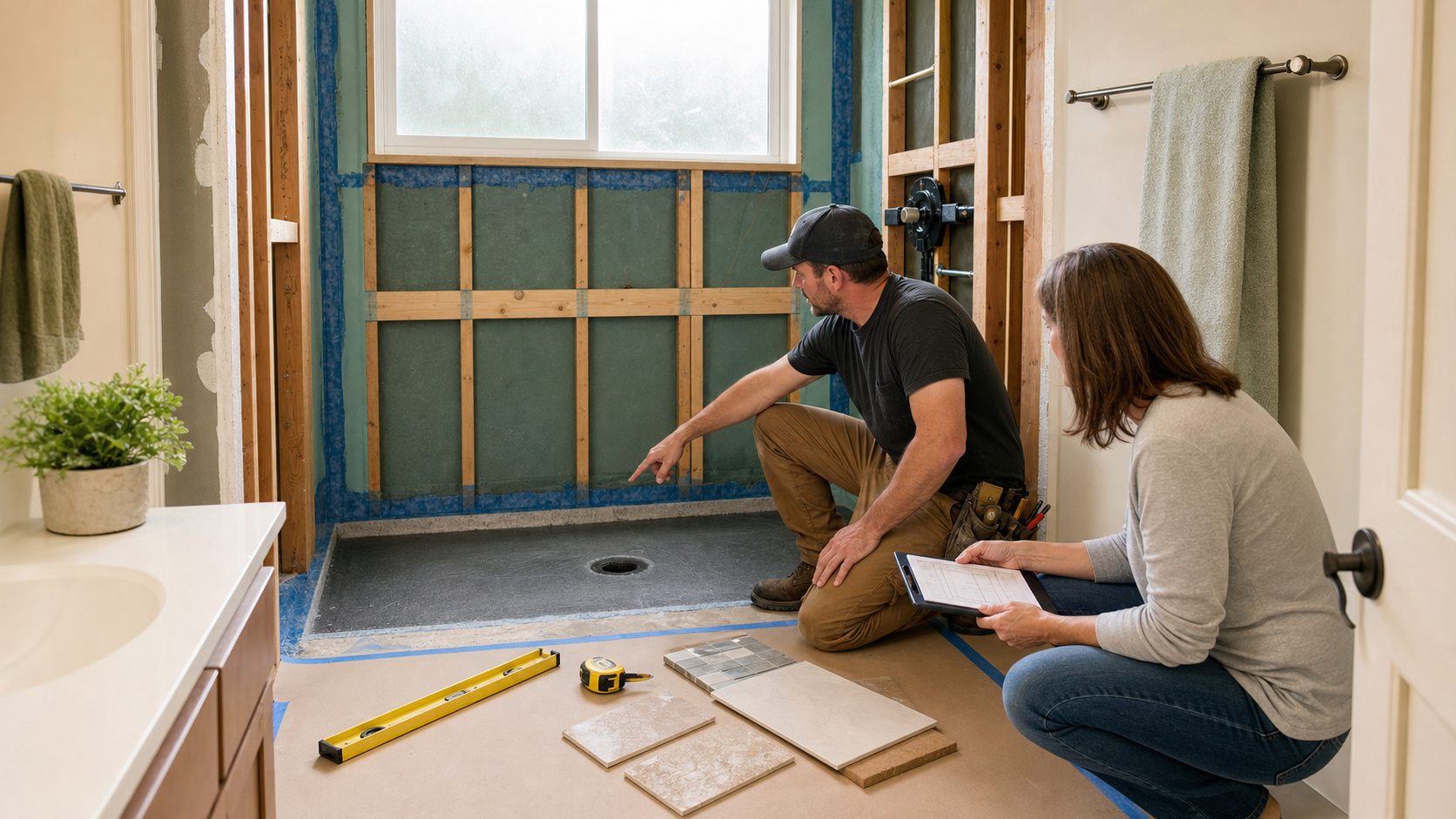
Davis Tub-to-Shower Conversions: Waterproofing, Access, and Permit Questions
The project often starts with one honest sentence: nobody uses the tub.
In a Davis hall bathroom or older ranch-home primary bath, that unused tub can feel like wasted space every morning. A parent visiting for the summer has trouble stepping over it. A teenager wants a cleaner shower. A homeowner planning to age in place wants a safer entry without making the room look institutional. The first idea sounds simple enough: pull the tub and tile a shower.
That is where the project stops being simple.
A tub-to-shower conversion can touch the drain, valve height, subfloor or slab, waterproofing system, exhaust fan, lighting, glass, flooring transition, wall framing, window trim, and sometimes resale documentation. The visible finish is tile or a shower surround. The expensive part is making sure water stays where it belongs.
| Scope choice | Why it matters | Best lead | Planning range |
|---|---|---|---|
| Prefabricated shower insert | Fastest path when the opening is standard and plumbing stays close. | Bath remodeler or GC | $8,000 to $18,000 |
| Custom tiled low-curb shower | Better fit and finish, but waterproofing and slope must be exact. | Bathroom remodel contractor | $14,000 to $32,000 |
| Curbless or barrier-light shower | Improves access but can require floor recessing, linear drain planning, or concrete work. | GC with plumber and tile pro | $22,000 to $55,000-plus |
| Full bathroom remodel | Best when the vanity, fan, floor, lighting, and storage all need work. | General contractor | $28,000 to $80,000-plus |
Use this chart before comparing estimates. Two shower-conversion bids are not comparable until they use the same assumptions for drain location, waterproofing, wall repair, ventilation, glass, permits, and finish materials.
Start With The Bathroom You Actually Have
Before choosing tile, stand in the room and describe the real problem. Is the tub too hard to step over? Is the shower wall moldy because the fan is weak? Is this the only full bath in the house? Is the project being done before a sale, before an older parent moves in, or because the old surround has finally failed?
Those answers affect the design. A low-curb shower may solve the daily problem without the cost of a true curbless build. A curbless shower may be worth it if long-term access is the main goal, but it needs room for slope and drainage. A prefabricated shower can be practical in a rental or secondary bath, but it still needs correct plumbing, backing, and waterproof transitions.
Take photos before the first estimate: the tub, valve wall, drain end, window if one sits in or near the wet area, exhaust fan, vanity, flooring transition, attic or crawl access if visible, and the electrical panel if new lighting or a fan may be added. A contractor who sees the whole room can separate a simple conversion from a bathroom remodel that happens to include a shower.
Why Davis Homes Need A Specific Plan
Davis has a lot of modest ranch homes, older additions, compact hall baths, and houses that have served different life stages: young families, UC Davis households, rental years, and owners who now want to stay put longer. That mix creates two common bathroom problems.
First, many tubs sit in tight alcoves where the old plumbing was never designed for a comfortable modern shower. The drain may be off-center. The valve may sit too low. The wall may include a window that needs a waterproof trim detail. The fan may be noisy, undersized, or vented poorly. If the floor is slab-on-grade, moving the drain for a cleaner shower layout can mean concrete cutting rather than a quick plumbing shift.
Second, Davis resale habits make documentation matter. The City of Davis building FAQ says residential properties are inspected before change of ownership to check building code, zoning, and security requirements. That is a strong reason to keep permit records and final inspection approvals for bathroom work that affects plumbing, electrical, ventilation, or waterproofed assemblies.
What It Might Cost In 2026
These are planning ranges for Davis and nearby Sacramento Valley homes, not quotes:
- Design visit, moisture check, and scope planning: $250 to $1,200 when the contractor needs to verify access, drain location, ventilation, or hidden damage before pricing.
- Basic tub-to-shower insert conversion: $8,000 to $18,000 when the opening is standard, the drain and valve work are limited, and finishes are straightforward.
- Custom tiled low-curb shower: $14,000 to $32,000 when the scope includes a site-built pan, waterproofing system, tile, niche, glass, fixtures, and finish repair.
- Curbless or barrier-light shower: $22,000 to $55,000-plus when the floor must be recessed, concrete must be cut, a linear drain is used, or the bathroom floor has to be reworked for slope.
- Ventilation, lighting, or electrical upgrades: $800 to $6,500-plus when the fan is replaced, ducting changes, GFCI protection is corrected, recessed lighting is added, or the circuit needs attention.
- Full bathroom remodel tied to the shower conversion: $28,000 to $80,000-plus when the vanity, flooring, toilet, drywall, window, storage, and paint are part of the same project.
The cheapest shower-conversion bid is often cheap because it assumes the old drain location works, the walls are dry, the fan is fine, the glass is extra, and permits are someone else's problem. A better bid may cost more because it includes the hidden work that keeps the bathroom usable after the tile looks good.
Which Contractor Should Lead?
For a direct tub-to-shower conversion with plumbing, waterproofing, tile, and finish repair, start with a bathroom remodel contractor or a general contractor who regularly manages bathrooms. A specialized bath company can be a good fit for insert systems if the scope is narrow and the contract is clear. A general contractor is usually the better lead when the job touches multiple trades, changes the floor, relocates plumbing, upgrades ventilation, or expands into the rest of the bathroom.
The plumbing portion should be handled by the right licensed trade. The CSLB's C-36 plumbing classification covers safe water supply and waste disposal. Custom tile work should be scoped by someone qualified for wet-area tile systems; CSLB's C-54 tile classification covers preparation and installation of tile and stone surfaces, including showers. Electrical changes, exhaust fans, recessed lights, heated floors, and new circuits belong with an electrical contractor or a GC coordinating that licensed work.
Do not let the job become a relay race where each trade blames the last one. The contract should say who owns demolition, rough plumbing, waterproofing, tile, glass, drywall, paint, permits, inspection corrections, cleanup, and warranty.
Permit And Inspection Questions
Bathroom permit rules depend on the exact scope, but Davis homeowners should assume a tub-to-shower conversion is a permit question until confirmed. The City of Davis building permit page includes bathroom remodel and shower surround permit materials among its building resources, and the city's FAQ says permit fees vary by project and that inspection cost is included in the building permit fee.
Ask the contractor to put these permit assumptions in writing:
- Is this being permitted as a bathroom remodel, shower surround, plumbing permit, electrical permit, mechanical permit, or a combined scope?
- Who prepares the drawings, product sheets, valuation, and application?
- Who schedules inspections and meets the inspector?
- Will waterproofing be inspected before tile covers it?
- If the fan or lighting changes, are electrical and mechanical corrections included?
- What happens if the inspector asks for changes after demolition reveals older work?
Skipped permits can become more than a paperwork issue in Davis because resale inspection can surface undocumented work. Even if a prior owner did the questionable remodel, the current owner may be the one trying to explain it during a sale.
Waterproofing Is The Project
Tile is not waterproof. Grout is not waterproof. The system behind the finish is what protects the framing, subfloor, ceiling below, and adjacent rooms. Ask every bidder to name the waterproofing method, drain assembly, pan system, flood-test approach if used, wall board, sealant details, and how corners, niches, benches, windows, and curb transitions are handled.
If a window sits in the shower area, slow down. Sill slope, waterproof membrane, trim material, glass condition, and privacy all need decisions before tile starts. If the bathroom has old moisture damage, ask whether the bid includes replacing compromised framing or whether that becomes a change order.
Curbless showers need an even sharper plan. The floor must slope toward the drain without sending water into the room. On slab homes, that may mean cutting concrete. On raised-floor homes, it may mean reframing or recessing the shower area. Sometimes a low curb is the smarter compromise because it controls water without forcing a structural solution the room does not support.
Access Choices That Do Not Look Clinical
The best access upgrades disappear into the design. Blocking for future grab bars can be installed while the walls are open even if you do not mount bars today. A handheld shower on a slide bar, a bench or foot ledge, a wider glass opening, a low curb, better lighting, and slip-conscious floor tile can make the bathroom safer without changing the feel of the house.
Think about who uses the bathroom at 6 a.m., at midnight, after surgery, or while carrying laundry. Small choices matter: where the towel lands, whether the door swing blocks the vanity, whether the shower valve can be reached before stepping under cold water, and whether the floor transition catches bare feet.
If this is the only tub in the house, think before removing it. Many buyers prefer at least one tub for children, pets, or soaking. In a one-bath Davis home, a well-built shower may still be the right choice, but the decision should be deliberate. In a two-bath home, removing one tub is usually easier to justify if another tub remains.
Red Flags In Shower Conversion Bids
Be cautious with any bid that says "install shower" but does not name the waterproofing system. Be careful if the contractor wants to tile over questionable surfaces, skip the fan discussion, avoid permits, or promise a curbless shower without explaining drain slope and floor depth.
Other red flags include vague allowances for glass, no plan for the flooring transition, no mention of plumbing access, no answer on wall blocking, no photo documentation, and no warranty language that separates workmanship from manufacturer materials. A fast install is not a problem by itself. A fast install with no inspection points and no waterproofing detail is.
Ask for photos from past tub-to-shower projects at the rough stage, not only finished beauty shots. The rough-stage photos tell you whether the contractor understands the part of the job you will never see again.
Internal Homework Before You Hire
Start with our Davis contractor guide, then compare licensed bathroom remodel contractors, general contractors, plumbing contractors, electrical contractors, drywall contractors, and flooring contractors. Use the contractor search when you are ready to build a shortlist.
For related planning, pair this with our bathroom remodel cost guide, bathroom remodel trends guide, bathroom exhaust fan guide, California permit basics, contractor versus handyman guide, and license verification checklist.
The Bottom Line
A tub-to-shower conversion is a good Davis upgrade when the scope is honest. The decision is not just insert versus tile. It is drain location, waterproofing, access, ventilation, lighting, permits, licensing, and documentation.
Hire the contractor who explains what happens before tile, not only what the finished shower will look like. A clear plan for waterproofing, inspections, trade roles, and hidden conditions is what turns an unused tub into a shower that works for the next decade.
Who to Hire for This Project
For the work covered in this guide, these are the contractor types to contact and the CSLB classification to verify before you take quotes:
Questions to Ask Before You Sign
- "Is your CSLB license active and bonded?" Verify it yourself at cslb.ca.gov the license number must appear on their bid.
- "Who pulls the permit, and is it included in the bid?" The contractor should handle any required permits a pro who suggests skipping one is a red flag.
- "Can you itemize labor, materials, and allowances?" Itemized bids are the only way to compare quotes on the same scope.
- "What's the payment schedule?" California caps the down payment at $1,000 or 10%, whichever is less payments should track completed work.
- "Who from this area can I call as a reference?" Ask for a recent local job of similar scope, not just photos.
Sacramento Contractors for This Project
Related Articles
Frequently Asked Questions
How much does a tub-to-shower conversion cost in Davis? +
A basic insert conversion may run about $8,000 to $18,000. A custom tiled low-curb shower often lands around $14,000 to $32,000. Curbless showers, drain relocation, concrete cutting, ventilation upgrades, hidden moisture repair, glass, and full bathroom remodel work can push the project above $55,000.
Do I need a permit for a tub-to-shower conversion in Davis? +
Treat it as a permit question until the City of Davis or your contractor confirms the exact path. Plumbing changes, shower pan or surround work, electrical changes, exhaust fan work, structural repairs, and full bathroom remodels can all trigger permit and inspection requirements.
What contractor should lead a tub-to-shower conversion? +
A bathroom remodel contractor or general contractor is usually the best lead when the project includes plumbing, waterproofing, tile, glass, drywall, flooring, fan, or lighting work. A licensed plumber should handle water and drain work, and an electrical contractor should handle wiring, fans, lighting, or circuit changes.
Can an older Davis bathroom be converted to a curbless shower? +
Sometimes. The contractor has to verify floor structure, slab conditions, drain location, available slope, waterproofing details, and glass layout. In some older bathrooms, a low-curb shower gives safer access for less structural work than forcing a fully curbless design.
Will removing the only bathtub hurt resale? +
It depends on the house and buyer pool. If it is the only full bath, some buyers with children or pets may prefer a tub. If another tub remains elsewhere, replacing an unused tub with a well-built shower is usually easier to justify. The best answer depends on daily use, long-term access, and resale plans.
What should a shower-conversion bid include? +
A useful bid should list demolition, plumbing, drain location, waterproofing system, wall board, pan or insert, tile or surround materials, glass, ventilation, lighting, wall blocking, drywall and paint repair, flooring transition, permits, inspections, exclusions, warranty, and change-order triggers.