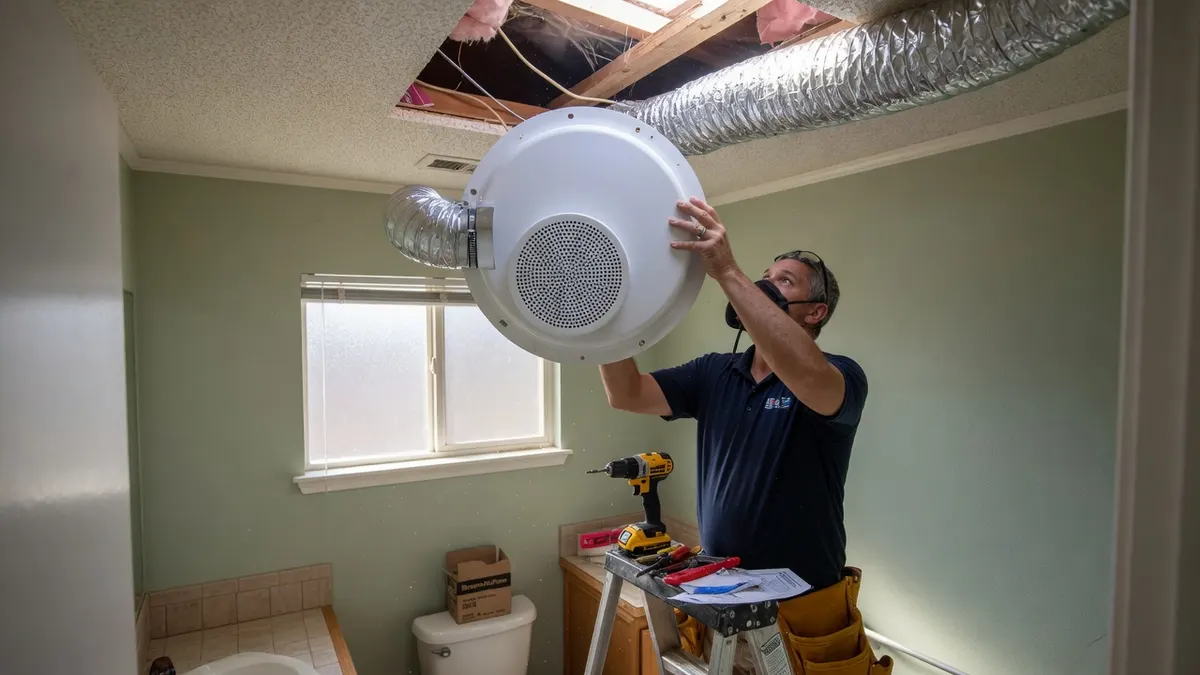
Bathroom Exhaust Fans in Sacramento: Costs, Venting, Permits, and Mold Prevention
A bathroom exhaust fan is easy to ignore until the mirror stays fogged for twenty minutes, paint starts peeling over the shower, or a home inspector points out that the fan dumps warm moist air into the attic. In Sacramento, that mistake can sit hidden for years. Our summers are dry, but bathrooms still create heavy bursts of humidity, and winter attic spaces can hold enough cool damp air for moisture problems to show up around ducting, roof sheathing, insulation, and drywall.
The best bathroom fan job is not just a new grille and a quieter motor. It is a ventilation path: the right fan size, a short duct run, a real exterior termination, proper electrical controls, and a clear answer about whether the work is part of a permitted bathroom remodel. This is where homeowners can avoid one of the most common small-scope change orders in Sacramento bathroom projects.
What a Bathroom Fan Is Supposed to Do
A bathroom fan removes humid air at the source before moisture settles on walls, trim, cabinets, and attic materials. A good fan helps protect paint, grout, caulk, framing, insulation, and indoor air quality. It also makes the room more comfortable after showers, especially in small baths with limited window ventilation.
The fan has to move that air outside. Venting into an attic, crawl space, garage, wall cavity, or soffit area that traps moisture is not a proper fix. If an older home in East Sacramento, Land Park, Tahoe Park, Carmichael, or Citrus Heights has an original fan, the first inspection should confirm where the duct actually ends. A surprisingly common finding is a loose duct lying under insulation, a disconnected flex line, or a fan that was never ducted at all.
Sacramento Cost Ranges for Exhaust Fan Work
For a typical Sacramento-area home, bathroom fan work often falls into these ranges:
- Basic fan replacement in the same opening: $250 to $650
- Quiet fan upgrade with minor ceiling adjustment: $450 to $1,100
- New fan with new ducting to exterior: $800 to $2,500
- Roof cap or wall cap installation: $300 to $1,200 depending on access and roofing material
- New switch, timer, or humidity control: $150 to $600 when wiring is accessible
- Drywall patching and paint touch-up: $200 to $900
A straightforward replacement is simple when the existing duct, wiring, ceiling opening, and exterior termination are already correct. The price climbs when the contractor has to cut a new ceiling opening, run duct through a tight attic, install a roof cap on tile roofing, patch drywall, add a timer switch, or correct unsafe wiring.
The cheapest quote is often just a motor swap. That may be fine if the duct is already right. It is not fine if the old system was venting moisture into the attic for ten years.
CFM Sizing: Small Fans Are a Common Problem
Bathroom fans are rated in CFM, or cubic feet per minute. A small powder bath may only need 50 CFM. A standard full bath commonly needs 80 to 110 CFM. Larger bathrooms, long duct runs, jetted tubs, steam showers, or enclosed toilet rooms may need more careful sizing.
A simple field rule is to start near 1 CFM per square foot of bathroom floor area, then adjust for duct length, elbows, ceiling height, and fixture layout. That means a 70 square foot hall bath usually belongs near an 80 CFM fan, while a 120 square foot primary bath may need 110 to 150 CFM or multiple pickup points.
Do not oversize blindly. A loud 150 CFM fan in a small hall bath may annoy everyone and get turned off too early. A quiet properly sized fan on a timer is usually better than a powerful fan nobody uses.
Noise Ratings Matter More Than Homeowners Expect
Fan noise is measured in sones. Old builder-grade fans can be loud enough that people shut them off during the shower, which defeats the purpose. Modern quiet fans often run at 0.3 to 1.5 sones. That is a meaningful difference in a hallway bath near bedrooms.
In Sacramento rentals and busy family homes, a timer or humidity-sensing control can be worth the small added cost. The fan should run long enough after a shower to clear moisture, often 20 to 30 minutes. A humidity control helps when people forget. A timer helps when the fan is quiet enough that nobody remembers it is on.
Ducting Is the Real Scope
The duct path decides whether the new fan performs. A good installer should check:
- Duct diameter required by the fan manufacturer
- Total duct length and number of elbows
- Whether flex duct is crushed, sagging, or disconnected
- Whether the duct slopes or traps condensation
- Whether the termination is a proper wall cap or roof cap
- Whether the cap has a damper to reduce backdrafts and pests
- Whether the roof or wall penetration is flashed correctly
Short, smooth, direct duct runs perform better than long winding flex runs. In older Sacramento homes with low attic clearance, the duct route can be the hard part of the job. In two-story homes, condos, and townhomes, finding a legal exterior route may require more planning than the fan itself.
Be wary of vague estimate language like "vent fan included" with no duct description. Ask where the air exits the house. If the contractor cannot point to the exterior termination, the scope is not complete.
Permits and Remodel Timing
Replacing an existing fan motor or grille may be treated as minor maintenance. Installing a new fan, adding new ducting, changing electrical wiring, or doing the work as part of a bathroom remodel can trigger permit requirements. Sacramento-area rules vary by jurisdiction, including the City of Sacramento, Sacramento County, Elk Grove, Roseville, Folsom, Davis, and West Sacramento.
When the fan is part of a permitted bathroom remodel, the ventilation plan should be addressed alongside lighting, GFCI protection, waterproofing, and inspections. California energy rules also affect bathroom lighting and controls during remodel work, so a contractor who says the fan is just cosmetic may be missing the bigger permit picture.
The cleanest approach is to ask before work starts: who is pulling the permit, what inspections apply, and whether the fan and duct are included in the permitted scope.
Which Contractor Should Handle It?
For a simple same-location fan replacement with existing wiring and ducting, a qualified handyman may be enough if the work stays within legal handyman limits and no new wiring is involved. For new wiring, new controls, or a dedicated circuit, use a licensed electrical contractor. For duct routing, roof caps, and exterior penetrations, the project may involve an HVAC contractor, roofer, or general contractor depending on the house.
Bathroom remodels are different. If walls are open, tile is being replaced, electrical is changing, and waterproofing is involved, a general contractor or bathroom remodeler should coordinate the fan with the rest of the scope. The fan should not be an afterthought installed after paint.
What a Complete Fan Estimate Should Include
Before approving the work, ask for the estimate to spell out:
- Fan model, CFM rating, and sone rating
- Whether the ceiling opening will be enlarged or patched
- Duct size, duct material, and route
- Exterior termination location
- Roof cap or wall cap details
- Switch, timer, or humidity control included
- Any drywall, texture, and paint repair
- Permit responsibility if the work is part of a remodel
- Cleanup and haul-away of the old unit
- Warranty on labor and equipment
If two bids are far apart, compare the ducting and finish repair first. One contractor may be pricing a full exterior vent path while another is only replacing the visible fan.
Red Flags to Avoid
Do not accept a fan that vents into the attic. Do not let a contractor bury the duct under insulation without showing the termination. Do not assume a window is enough ventilation if the remodel plan removes practical airflow. Do not install a high-CFM fan on undersized ducting and expect quiet performance.
Also be careful with bathroom paint and drywall repairs before the moisture source is fixed. Peeling paint, mildew stains, swollen trim, and soft drywall may be symptoms, not the main problem.
The Bottom Line
A Sacramento bathroom fan upgrade is a small project with real consequences. Done well, it protects the bathroom and attic, keeps showers comfortable, and helps a remodel pass inspection cleanly. Done cheaply, it can hide moisture in a place nobody checks until repair costs are much higher.
Start with the duct route, not the fan grille. Choose a quiet model people will actually use. Put the exterior termination in writing. If the work is part of a remodel, settle the permit and inspection question before demo starts. That is the difference between a useful ventilation upgrade and a ceiling accessory that only sounds like it is helping.
Who to Hire for This Project
For the work covered in this guide, these are the contractor types to contact and the CSLB classification to verify before you take quotes:
Questions to Ask Before You Sign
- "Is your CSLB license active and bonded?" Verify it yourself at cslb.ca.gov the license number must appear on their bid.
- "Who pulls the permit, and is it included in the bid?" The contractor should handle any required permits a pro who suggests skipping one is a red flag.
- "Can you itemize labor, materials, and allowances?" Itemized bids are the only way to compare quotes on the same scope.
- "What's the payment schedule?" California caps the down payment at $1,000 or 10%, whichever is less payments should track completed work.
- "Who from this area can I call as a reference?" Ask for a recent local job of similar scope, not just photos.
Sacramento Contractors for This Project
Related Articles
Tub-to-Shower Conversions in Sacramento: Costs, Waterproofing, Permits, and Bid Details
August 16, 2026
Sacramento Bathroom Exhaust Fan and Moisture Control Guide: Venting, Mold Prevention, Costs, and Remodel Details
August 13, 2026
Sacramento Bathroom Caulk, Grout, and Waterproofing Maintenance: What Is Cosmetic and What Is a Leak Clue
August 4, 2026
Frequently Asked Questions
How much does it cost to replace a bathroom exhaust fan in Sacramento? +
A simple same-location fan replacement often costs $250 to $650. A quiet fan upgrade with minor ceiling work may run $450 to $1,100, while a new fan with new ducting to an exterior wall or roof cap can cost $800 to $2,500 or more depending on access, roofing material, wiring, and drywall repair.
Can a bathroom fan vent into the attic? +
No. A bathroom exhaust fan should vent to the exterior through a proper wall cap or roof cap. Dumping humid bathroom air into an attic can wet insulation, stain roof sheathing, damage drywall, and contribute to mold problems.
What size bathroom fan do I need? +
Many standard full bathrooms need an 80 to 110 CFM fan, while small powder rooms may need about 50 CFM and larger primary bathrooms may need 110 to 150 CFM or more. The right size depends on room area, duct length, elbows, ceiling height, and whether the layout has enclosed areas.
Do I need a permit to install a bathroom exhaust fan in Sacramento? +
Permit requirements depend on the jurisdiction and scope. Replacing a fan motor may be minor maintenance, but new ducting, new wiring, a new fan location, or fan work included in a bathroom remodel can require a permit and inspection. Ask the contractor to identify the permit path before work starts.
Who installs bathroom exhaust fans? +
Simple replacements may be handled by a qualified handyman when no new wiring is involved. New wiring or controls should involve a licensed electrical contractor. Duct routing, roof caps, and remodel coordination may require an HVAC contractor, roofer, or general contractor depending on the house and scope.