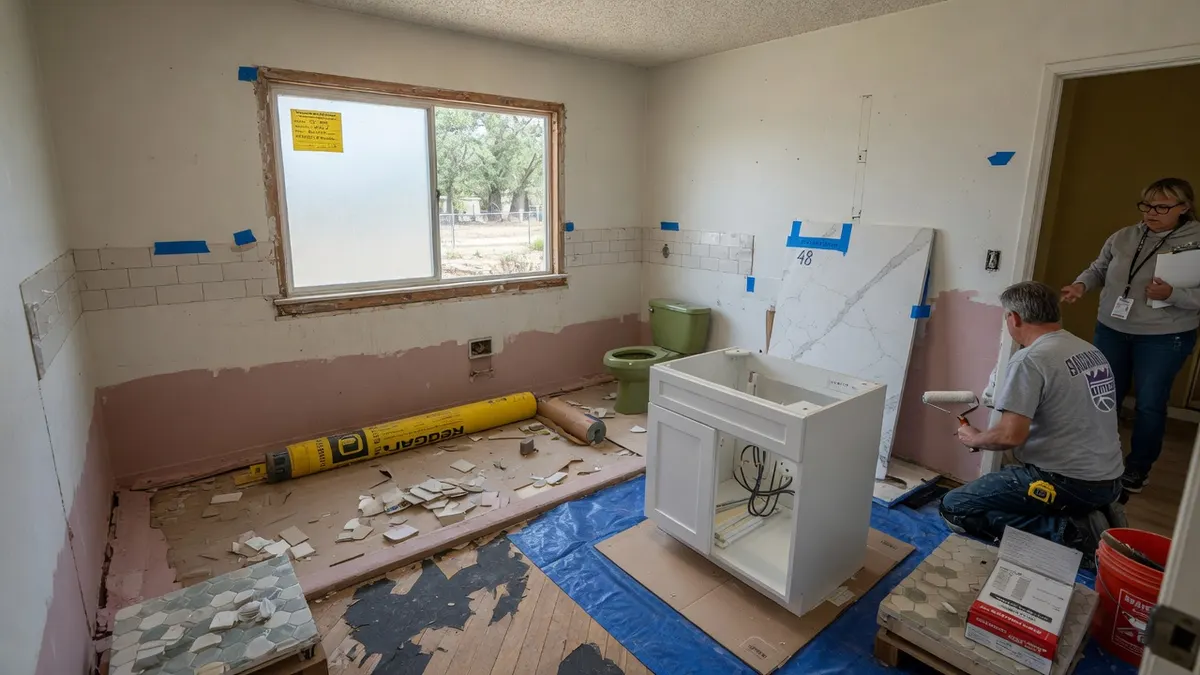
Orangevale Bathroom Remodel Costs: Permits, Older Homes, and Contractor Scope
Orangevale bathroom remodels are not all the same job. A hall bath in a 1970s ranch house near Greenback Lane, a primary bath in a larger rural-residential property, and a compact guest bath in a Citrus Heights border neighborhood can have very different costs even when the finished photos look similar. The hidden work matters: drain locations, venting, subfloor condition, electrical updates, tile backing, waterproofing, access, and whether the home is on sewer or still dealing with older site conditions.
For homeowners in Orangevale, Fair Oaks, Citrus Heights, Folsom, Carmichael, and nearby Sacramento County communities, the best remodel plan starts with scope, not finishes. Tile, vanities, and fixtures are important, but they are the visible layer. The budget is usually won or lost in demolition, plumbing, waterproofing, inspection requirements, and change orders.
This guide explains what bathroom remodels cost in Orangevale in 2026, when permits are likely needed, what older homes tend to reveal, and how to compare contractor bids without falling for a vague low number.
Typical 2026 Bathroom Remodel Cost Ranges in Orangevale
Most Orangevale bathroom remodels fall into one of these practical ranges:
- Cosmetic refresh: $5,000 to $15,000 for paint, fixtures, vanity replacement, lighting swaps, mirrors, accessories, and limited flooring work without moving plumbing or opening walls extensively.
- Standard hall bathroom remodel: $18,000 to $38,000 for demolition, new tub or shower surround, tile or waterproof wall panels, vanity, toilet, flooring, fan, lighting, plumbing trim, and basic electrical corrections.
- Mid-range primary bathroom remodel: $35,000 to $70,000 for a larger shower, upgraded tile, dual vanity, better lighting, improved storage, glass enclosure, plumbing updates, and more finish detail.
- Layout-change or luxury bathroom remodel: $70,000 to $120,000 or more when walls move, drains relocate, structural work is involved, custom tile is extensive, or the project includes high-end fixtures and cabinetry.
A bid below these ranges is not automatically wrong, but it needs scrutiny. It may exclude permits, shower glass, finish materials, drywall repair, subfloor repair, fan ducting, painting, or plumbing corrections. A bid above these ranges can also be reasonable if the project includes custom waterproofing details, aging-in-place improvements, major drain relocation, extensive tile, or difficult access.
Why Orangevale Homes Can Be Tricky
Orangevale has many single-story homes from the 1960s through the 1990s, along with larger lots and custom homes. That mix creates several common bathroom remodel issues.
Older bathrooms may have undersized exhaust fans, fan ducts that terminate in the attic, ungrounded or poorly located electrical devices, old supply valves, cast iron or galvanized drain sections, water-damaged subfloors, and tile assemblies that were never waterproofed to current expectations. Some homes have additions or prior remodels where the paperwork and workmanship are uneven.
Larger lots can also complicate logistics. If the bathroom is far from the driveway, upstairs, or tucked behind finished landscaping, demolition and material handling take longer. If the home has a raised foundation or crawl space, plumbing access may be easier in some cases, but the contractor still has to inspect clearances, moisture, and existing pipe condition.
The smart move is to assume the first estimate is a planning number until demolition confirms what is behind the walls. A good contractor will explain likely allowances and unit prices before work starts so surprises do not become arguments.
Permit Basics for Bathroom Remodels
Permit requirements depend on the exact jurisdiction and scope. Many Orangevale homes are in unincorporated Sacramento County, while nearby addresses may fall under other city rules. In general, replacing finishes without changing plumbing, electrical, framing, or mechanical systems may be simpler than a full remodel. Once a project adds or moves electrical, changes plumbing, installs a new shower pan, alters framing, or upgrades ventilation, permits are commonly part of the conversation.
A permitted bathroom remodel may include inspection of rough plumbing, electrical, mechanical ventilation, waterproofing or shower pan work, insulation if walls are opened, and final finishes. Requirements can vary, so homeowners should not rely on a contractor who says permits are never needed for bathrooms. That is too broad.
Permits add cost and time, but they also create a record of the work. That matters for resale, insurance questions, and problems that show up later. If a contractor wants the homeowner to pull an owner-builder permit for a normal hired remodel, slow down and understand the liability before agreeing.
The Shower Is the Risk Center
The most expensive bathroom failures usually start in the shower. A pretty tile job can still fail if the waterproofing is wrong. Grout is not waterproofing. Cement board is not waterproof by itself. A shower needs a complete water management system: properly sloped pan, waterproof membrane or approved backer system, sealed penetrations, correct drain connection, compatible thinset and tile setting materials, and a plan for corners, niches, benches, and curbs.
In Orangevale remodels, tub-to-shower conversions are especially common. They can be excellent upgrades for aging-in-place, but they are not just a tub removal. The drain may need relocation, the floor may need reinforcement or leveling, the valve height changes, the waterproofing system must be selected, and the shower glass or curtain plan affects curb design.
Ask the contractor which waterproofing system they use and whether the estimate includes flood testing when appropriate. Brand names matter less than consistency. Mixing random materials from different systems can create warranty and performance problems.
Ventilation, Moisture, and Sacramento Summers
Bathroom ventilation is easy to underestimate. Orangevale has hot, dry summers, but bathrooms still create concentrated humidity. A quiet, properly ducted fan helps protect paint, cabinets, mirrors, drywall, and attic framing.
A remodel should verify that the fan is sized for the room, controlled appropriately, and ducted to the exterior. Ducting into an attic is a problem, not a shortcut. If the bathroom has a large shower, enclosed toilet room, or poor window ventilation, fan selection becomes more important. Many older bathrooms also need electrical updates for GFCI protection, lighting layout, and dedicated circuits depending on the scope.
A contractor who treats the fan as a cosmetic swap may miss the mechanical and electrical details that make the finished bathroom last.
What Should Be in a Complete Bid
A useful bathroom remodel bid should identify more than a final price. Look for:
- Demolition scope and debris hauling
- Permit responsibility and inspection schedule
- Plumbing fixture locations and whether drains or supply lines move
- Shower or tub system, including waterproofing method
- Tile square footage, pattern assumptions, grout type, and edge trim
- Vanity, countertop, mirror, storage, and medicine cabinet details
- Toilet model or allowance
- Exhaust fan model, ducting, and exterior termination
- Lighting, switches, outlets, GFCI protection, and electrical corrections
- Drywall, texture, paint, baseboards, and door casing repairs
- Shower glass, curtains, grab bars, accessories, and towel hardware
- Allowances for unknown subfloor, framing, rot, or plumbing repairs
- Cleanup, work hours, dust protection, and expected timeline
If one bid includes shower glass, permits, fan ducting, and painting while another excludes them, the two numbers are not comparable.
Timeline Expectations
A straightforward hall bathroom remodel usually takes three to six weeks once work begins. A primary bathroom with custom tile, glass, inspections, and specialty materials may take six to ten weeks. The calendar can stretch if materials are not ordered early, inspections are delayed, hidden damage is found, or the homeowner changes finishes mid-project.
The best schedule is boring: selections made before demolition, fixtures on site before rough-in, tile confirmed before waterproofing decisions, and a clear inspection plan. Rushing demolition before the vanity, tile, valve, fan, and shower system are chosen is how simple projects turn messy.
Aging-in-Place Details Worth Considering
Orangevale has many long-term homeowners who want to stay in place. A bathroom remodel is the right time to plan for safer use later, even if the room does not need to look medical.
Consider blocking in the walls for future grab bars, a wider shower entry, a low curb or curbless shower if the structure allows it, slip-resistant flooring, better lighting, lever handles, a handheld shower, and storage that does not require bending into awkward cabinets. These choices are much cheaper during a remodel than after tile is finished.
Curbless showers are popular, but they need careful planning. The floor structure, drain location, slope, waterproofing, and glass layout all have to work together. In some homes, a low curb is more practical and less expensive than forcing a curbless design into a bathroom that was not built for it.
How to Choose the Right Contractor
Bathroom remodeling often requires coordination between general contracting, plumbing, electrical, tile, waterproofing, drywall, and finish carpentry. For projects over $1,000 in labor and materials, California requires licensed contractors. Verify licenses through the Contractors State License Board at cslb.ca.gov, and check that the contractor carries workers' compensation if they have employees.
Ask who will actually perform the tile and waterproofing, whether subcontractors are licensed where required, how change orders are priced, and how warranty claims are handled. A strong contractor will be specific. A weak contractor will say not to worry about details until later.
Final Planning Advice
For most Orangevale homeowners, the safest bathroom remodel budget includes the contract price plus a 10% to 20% contingency for hidden repairs or upgrades discovered after demolition. Spend money first on waterproofing, ventilation, plumbing reliability, electrical safety, and layout. Then choose finishes that fit the remaining budget.
A bathroom remodel should make the home easier to live in, easier to maintain, and easier to sell. The way to get there is not the cheapest line item. It is a clear scope, a licensed contractor, realistic allowances, and a bid that explains what happens behind the tile.
Browse licensed bathroom remodel contractors in the Sacramento area, or search for verified professionals serving Orangevale, Fair Oaks, Citrus Heights, and nearby communities.
Who to Hire for This Project
For the work covered in this guide, these are the contractor types to contact and the CSLB classification to verify before you take quotes:
Questions to Ask Before You Sign
- "Is your CSLB license active and bonded?" Verify it yourself at cslb.ca.gov the license number must appear on their bid.
- "Who pulls the permit, and is it included in the bid?" The contractor should handle any required permits a pro who suggests skipping one is a red flag.
- "Can you itemize labor, materials, and allowances?" Itemized bids are the only way to compare quotes on the same scope.
- "What's the payment schedule?" California caps the down payment at $1,000 or 10%, whichever is less payments should track completed work.
- "Who from this area can I call as a reference?" Ask for a recent local job of similar scope, not just photos.
Sacramento Contractors for This Project
Related Articles
Tub-to-Shower Conversions in Sacramento: Costs, Waterproofing, Permits, and Bid Details
August 16, 2026
Sacramento Bathroom Exhaust Fan and Moisture Control Guide: Venting, Mold Prevention, Costs, and Remodel Details
August 13, 2026
Sacramento Bathroom Caulk, Grout, and Waterproofing Maintenance: What Is Cosmetic and What Is a Leak Clue
August 4, 2026
Frequently Asked Questions
How much does a bathroom remodel cost in Orangevale? +
A cosmetic refresh often costs $5,000 to $15,000, a standard hall bathroom remodel usually runs $18,000 to $38,000, and a mid-range primary bathroom remodel often costs $35,000 to $70,000. Layout changes, custom tile, curbless showers, and hidden repairs can push projects above $70,000.
Do Orangevale bathroom remodels need permits? +
Many Orangevale homes are in unincorporated Sacramento County, and permit requirements depend on scope. Plumbing changes, electrical work, new shower pans, mechanical ventilation changes, and framing changes commonly require permits and inspections. Ask the contractor to state who is responsible for permits before signing.
What is the most common hidden cost in a bathroom remodel? +
Water damage is one of the most common surprises. Contractors may find damaged subflooring, old plumbing, poor shower waterproofing, or fan ducts that need correction once demolition starts. A 10% to 20% contingency is sensible for older Orangevale bathrooms.
How long does a bathroom remodel take? +
A straightforward hall bathroom often takes three to six weeks after work begins. A larger primary bathroom with custom tile, inspections, shower glass, and specialty materials may take six to ten weeks. Delayed selections and hidden repairs can extend the schedule.