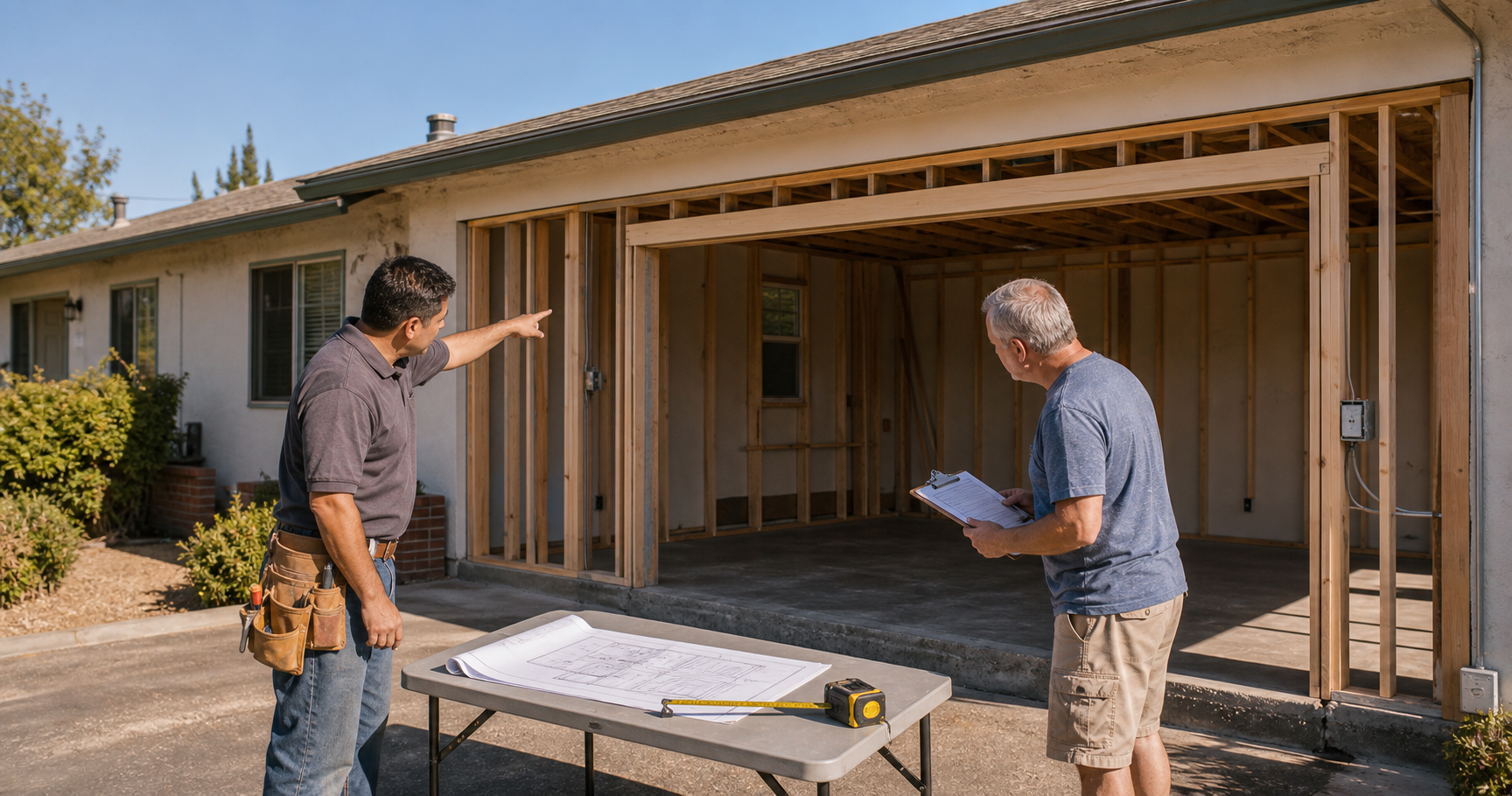
North Highlands Carport Enclosures: Garage Walls, Permits, and Scope Questions
The project sounds simple at first: close in the old carport, add a garage door, and finally get a lockable place for tools, bikes, storage bins, and a freezer. Then the contractor looks at the roof posts, the driveway slope, the side-yard setback, the electrical panel, and the wall between the house and the carport. Suddenly the "easy garage" has become a real construction project.
That is common in North Highlands. Many older ranch homes were built with practical carports instead of fully enclosed garages. They kept the sun off the car and made the front of the house feel open, but they were not designed like modern enclosed garage space. Turning one into a garage can be a smart upgrade, especially for security, storage, and resale presentation. It can also go wrong quickly if the scope ignores framing, fire separation, drainage, electrical, ventilation, garage-door structure, and Sacramento County permit requirements.
This guide is for the homeowner staring at an open carport and wondering who to call first. It explains what a real carport enclosure scope should include, when a general contractor should lead, what costs can look like in 2026, which permit and license questions matter, and how to compare bids before someone starts closing walls around problems.
Use this chart before comparing bids. The wall framing is visible, but the real project is the structure, door opening, water path, electrical plan, and permit package behind it.
Start With The Carport You Already Have
Before calling contractors, take photos from the street, from inside the carport, from both side yards, and from the driveway looking back at the house. Show the roof posts, ceiling framing, slab edge, any cracks, the existing electrical outlets or lights, the wall shared with the house, and where water runs after a hose test or rain. Measure the clear opening, ceiling height, slab step, and approximate distance to side and front property lines if you know them.
Those details matter because not every carport is ready to become a garage. Some carports were built as part of the original roofline. Others were added later. Some have posts sitting on shallow footings or old slab edges. Some have a roof beam that works fine for shade but needs review before new walls, doors, and bracing are attached. Some already sit too close to a property line to add openings without fire-rated construction questions.
The first contractor conversation should be about feasibility, not door color. A good contractor should ask what you want the enclosed space to do: parking only, secure storage, workshop, laundry overflow, freezer space, bikes, gym equipment, or future conversion planning. Each use changes outlets, lighting, ventilation, wall finish, insulation, and budget.
Why North Highlands Carports Need Careful Scoping
North Highlands has many practical postwar homes where the carport is part of the home's identity. The roofline is low, the driveway may slope toward the street, and the slab may have been poured for covered parking rather than enclosed space. That makes the project more than "add three walls."
The slab is a big clue. A carport slab is often sloped to shed water. If you close the front with a garage door and ignore that slope, rain can collect at the new door, run toward stored items, or sit against new framing. If the slab edge is cracked or thin, framing may need a curb, anchor detail, or concrete correction before walls go up. If the driveway pitches toward the house, the bid should talk about thresholds, drainage, and where water goes during a winter storm.
Security is another reason homeowners start the project, but enclosure can create new blind spots. A secure garage still needs a safe pedestrian door path, lighting, opener safety sensors, a working side-yard gate, and enough clearance that the garage door can operate without hitting storage. Good planning makes the space easier to use, not just harder to see into.
The Garage Door Opening Is Structural Work
The front opening is where many weak bids fall apart. A garage door needs proper side framing, a header or beam condition that matches the load, track clearance, opener clearance, spring hardware, weather sealing, and a safe connection to the existing roof and side walls. If the opening changes the existing structure, the contractor should explain whether engineering or plan details are needed.
A door installer may be the right trade for a like-for-like garage door replacement. A carport enclosure usually needs more than that. The garage door company might install the door and opener, but a general contractor or framing contractor should own the enclosure, structural framing, wall finish, trim, and coordination with electrical and permit inspections.
Ask each bidder to show the proposed door size, rough opening, side clearance, overhead clearance, opener location, sensor placement, exterior trim, and how the new front wall will look from the street. A garage that functions well but looks like an afterthought can hurt curb appeal.
Electrical, Lighting, And The Wall Shared With The House
Once a carport becomes a garage, homeowners usually want more than the old porch light. They want a garage-door opener, brighter ceiling lights, an outlet near the freezer, a place to charge tools, maybe a dedicated circuit, and sometimes an EV charger later. That is where a simple enclosure can trigger electrical scope.
Electrical work should be handled by a properly licensed electrical contractor or by a general contractor using appropriately licensed subcontractors. Ask whether the existing circuit can support the planned use, whether GFCI protection is needed, whether conduit will be surface-mounted or hidden, and whether the opener outlet is included. If the home has an older panel or limited breaker space, that should come up before framing closes access.
The shared wall between the garage and the house also deserves attention. Garages have fire-separation and safety requirements that normal exterior walls do not always raise in the same way. If the wall has old penetrations, damaged drywall, an unsealed door, or improvised wiring, enclosure is the time to correct it. Do not let a contractor close the carport and leave a weak garage-to-house wall as "existing."
What It Might Cost In 2026
These are planning ranges for North Highlands and nearby Sacramento County homes, not quotes:
- Feasibility visit, measurements, and basic concept scope: $250 to $1,200 depending on whether drawings, photos, and permit research are included.
- Simple carport enclosure with limited electrical and a standard garage door: $18,000 to $45,000 when the roof, slab, posts, and setbacks cooperate.
- More complete enclosure with framing corrections, door structure, electrical upgrades, drywall, exterior finish, and paint: $45,000 to $95,000 or more.
- Slab repair, drainage correction, footing work, or structural engineering: $3,000 to $30,000-plus depending on what the existing carport needs before enclosure.
- Panel, circuit, lighting, or EV-ready electrical work: $1,500 to $15,000-plus depending on capacity, trenching, panel condition, and inspection requirements.
- Finish upgrades such as insulation, cabinets, epoxy floor coating, windows, or workshop storage: highly variable and should be listed separately.
The wide range is the point. A carport with a sound slab, good roof framing, enough clearance, and a simple door opening is a different job from a carport with termite-damaged posts, poor drainage, old wiring, and an undersized header. Compare what each bid assumes before comparing totals.
Permits And Licensing Questions To Ask
Most North Highlands homes are in unincorporated Sacramento County, so homeowners should start with Sacramento County Building Permits and Inspection for current process details. Enclosing a carport typically changes walls, openings, structure, electrical, exterior appearance, and sometimes parking assumptions. Treat it as a permit conversation until the county or your contractor confirms otherwise for the exact address and scope.
Ask who prepares the drawings, who submits the permit, what inspections are expected, and whether zoning setbacks, easements, fire separation, or stormwater/drainage concerns affect the plan. If the contractor says "no permit needed" for a full enclosure, ask for the basis in writing.
California licensing matters too. CSLB explains that construction work generally requires a contractor license when the project needs a building permit, uses additional workers, or reaches $1,000 or more in labor and materials. A carport enclosure will almost always clear that line. A B general building contractor is often the right lead when the project involves multiple trades. Specialty contractors may still be needed for electrical, garage doors, concrete, drywall, painting, or related work. Verify the license status, bond, workers' compensation, and insurance before signing.
What A Complete Bid Should Include
Ask each contractor to separate:
- Existing conditions: roof posts, beam, slab thickness, cracks, slope, drainage, termite or dry-rot clues, and side-yard access
- Permit responsibility: drawings, submittal, fees, inspections, corrections, and closeout documents
- Framing scope: walls, anchors, sheathing, header, garage-door rough opening, bracing, and exterior finish
- Garage door scope: door type, insulation level, opener, sensors, spring hardware, tracks, weather seals, trim, and haul-off
- Electrical scope: lights, outlets, opener outlet, GFCI protection, conduit, circuits, panel assumptions, and who performs the work
- Garage-to-house safety: fire separation, rated door or self-closing hardware where applicable, wall penetrations, and smoke/CO alarm implications
- Slab and water control: threshold, curb, grading, drainage path, driveway transition, and what happens if water currently runs toward the house
- Interior finish: drywall, paint, insulation, shelving, flooring, ventilation, and what remains unfinished
- Change-order triggers: hidden rot, inadequate footings, unpermitted past work, panel capacity, asbestos or lead concerns, or failed inspections
If a bid says only "frame carport and install garage door," it is not complete enough for a project that changes the building envelope.
Red Flags In Carport Enclosure Quotes
Slow down if a contractor does not walk the slab, does not look at the shared house wall, or prices the project from a street photo. Be careful with anyone who treats the garage-door opening as trim work, skips permit discussion, ignores electrical load, or says drainage can be handled after the walls are up.
Also watch for a bid that makes the space sound like a future bedroom, office, or rental unit without discussing the much larger rules for legal living space or ADUs. A garage enclosure for storage and parking is not the same as a garage conversion. If the long-term goal is conditioned living space, say that early so you do not build the wrong first phase.
Internal Homework Before You Hire
For local context, start with our North Highlands contractor guide, compare licensed general contractors, door and garage door contractors, electrical contractors, concrete contractors, and drywall contractors. Use the contractor search when you are ready to build a shortlist.
For related planning, pair this with our garage conversion ADU guide, Rancho Cordova garage conversion guide, garage door replacement guide, North Highlands roof and dry-rot guide, California permit basics, and license verification guide.
The Bottom Line
A North Highlands carport enclosure can be a practical upgrade, but it is not just a wall-and-door weekend. Start with the roof support, slab, drainage, setbacks, garage-door structure, electrical plan, and permit path. Then hire the contractor who can explain the sequence in writing and identify which specialty trades are included. The best finished garage is the one that looks like it belonged to the house all along and does not create water, wiring, or inspection problems you have to solve later.
Who to Hire for This Project
For the work covered in this guide, these are the contractor types to contact and the CSLB classification to verify before you take quotes:
Questions to Ask Before You Sign
- "Is your CSLB license active and bonded?" Verify it yourself at cslb.ca.gov the license number must appear on their bid.
- "Who pulls the permit, and is it included in the bid?" The contractor should handle any required permits a pro who suggests skipping one is a red flag.
- "Can you itemize labor, materials, and allowances?" Itemized bids are the only way to compare quotes on the same scope.
- "What's the payment schedule?" California caps the down payment at $1,000 or 10%, whichever is less payments should track completed work.
- "Who from this area can I call as a reference?" Ask for a recent local job of similar scope, not just photos.
Sacramento Contractors for This Project
Related Articles
Frequently Asked Questions
How much does it cost to enclose a carport in North Highlands? +
A simple carport enclosure with a standard garage door may run $18,000 to $45,000 when the existing slab, roof, posts, and setbacks cooperate. More complete projects with framing corrections, electrical work, drywall, exterior finish, paint, drainage corrections, or structural engineering can run $45,000 to $95,000 or more.
Does a carport enclosure need a permit in Sacramento County? +
Treat a carport enclosure as a permit project until Sacramento County or a qualified contractor confirms otherwise for the exact address and scope. The work can change walls, openings, structure, electrical, exterior appearance, drainage, and fire separation, all of which can trigger review and inspections.
Who should lead a carport-to-garage enclosure? +
A B general building contractor is often the right lead because the job commonly involves framing, exterior finish, garage-door coordination, electrical work, drywall, concrete or drainage corrections, and permits. Specialty contractors may still handle the door, electrical, concrete, or drywall portions.
Can a garage door company enclose my carport? +
A garage door company may install the door and opener, but a full carport enclosure usually needs broader construction planning. The project may require framing, a structural header, slab or drainage work, electrical circuits, exterior finish, fire-separation details, and permit coordination.
What should I check before asking for bids? +
Photograph the carport from the street, inside, both side yards, and the driveway. Note slab slope, cracks, roof posts, ceiling height, existing lights and outlets, the wall shared with the house, and where water runs after rain. Those details help contractors price the real scope instead of guessing.