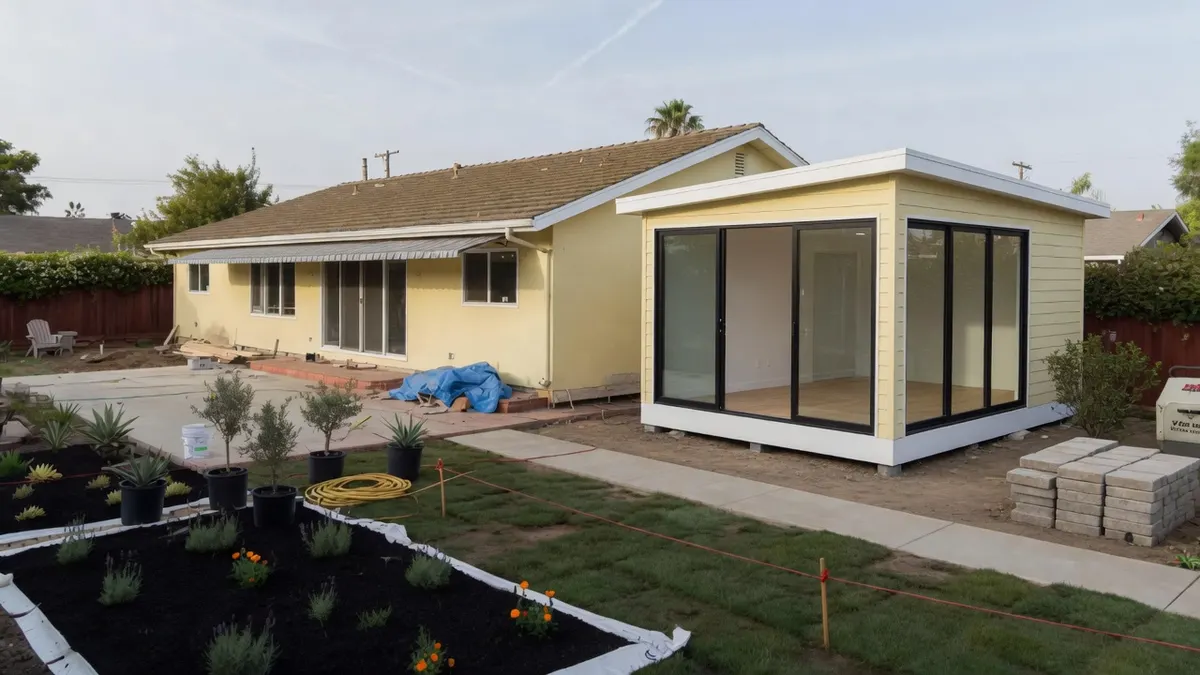
Rancho Cordova Garage Conversion Planning for Flexible Living Space
A two-car garage off the side of a Rancho Cordova ranch house is one of the most tempting blank canvases a homeowner can own. Maybe the kids have moved out and you want a real office instead of a corner of the bedroom. Maybe an aging parent is coming to stay, or you want a rentable studio to help with the mortgage. The square footage is right there, already roofed and walled. What trips people up is that "converting" a garage almost never means just laying carpet and calling it a room. Done right, it's a small addition wearing the disguise of an easy project.
The slab problem nobody warns you about
Walk into most garages built in the 1960s and 70s around the Cordova area and you'll notice the floor sits a few inches below the rest of the house. That step-down was intentional, so rainwater and the occasional radiator leak drained toward the door instead of into your living room. The slab also usually has no vapor barrier underneath it, which matters a lot once you put a bed or a desk on top of it.
So the first real cost isn't drywall. It's raising or sealing that floor, adding moisture protection, and getting the new room flush with the rest of the house. In our hot Sacramento Valley summers and damp Delta-influenced winters, skipping moisture control is how you end up with a musty room and warped flooring two years later. Any contractor who quotes a garage conversion without mentioning the slab hasn't really looked at your garage.
What the money actually buys
Across the Sacramento Valley, a genuine, permitted garage conversion usually lands somewhere between roughly $45,000 and $130,000. That spread is wide for a reason, and the reason is almost never the paint color. It's the slab work, insulation, new windows, a heating and cooling solution, electrical capacity, and whatever has to happen to the big garage door opening.
Here's the honest version of where the dollars go. You're paying to insulate walls and ceiling that were never meant to hold temperature. You're paying to extend HVAC or add a mini-split so the room is comfortable in July and January. You're paying to bring electrical up to a livable load instead of the single circuit that ran a door opener and a freezer. And if this becomes a bedroom or an ADU, you're paying for proper egress windows so someone can actually get out in a fire.
When you collect estimates, the shortest one is rarely the clearest. A useful bid spells out materials, labor, allowances, what's excluded, who pulls permits, cleanup, and warranty terms. If two bids are $30,000 apart, the gap usually lives in the assumptions, not in one contractor being greedy. Set aside a contingency too, because older Cordova homes love to hide surprises behind the studs. You can compare bids from licensed general contractors and start a shortlist through the contractor search.
Closing up that door opening
The garage door is the architectural tell. Fill it in carelessly and the whole street can see that this used to be a garage, which dings both curb appeal and resale value. A good crew frames the opening to match the home's lines, adds a window or two where the door used to be, and finishes the exterior siding or stucco so it blends instead of patches.
This is also where the work crosses several trades at once. Framing, electrical for the new circuits and outlets, insulation, windows, and exterior finish all have to coordinate. That's part of why a licensed general contractor running the show usually beats stitching together separate handymen, especially when permits and inspections are riding on it.
Permits, licenses, and the California fine print
Plan on a permit. Converting a garage into conditioned living space is exactly the kind of change Sacramento County's building department wants to see drawings and inspections for, and that's doubly true if the room becomes an ADU or a legal bedroom, where parking replacement, egress, and utility rules kick in. Pulling the permit protects you at resale and creates documented proof of code-compliant work; whether a permit affects an insurance claim depends on your policy, the cause of loss, and your carrier - verify with your insurer rather than relying on a contractor's assessment. Treat anyone who suggests skipping the permit as a red flag, not a money-saver.
On the contractor side, California law is specific. Any home-improvement job where labor and materials total $1,000 or more must be performed by a licensed contractor. That threshold used to be $500, and you'll still see the old number floating around online, but the current line is $1,000. Verify the license yourself at the CSLB website, confirm it's active and matches the company name on your contract, and ask for proof of liability insurance and workers' compensation. The trades that absolutely demand a license here are electrical, plumbing, HVAC, roofing, and any structural work, all of which a garage conversion tends to touch.
Timing it around the Valley calendar
Spring and early summer are the crunch months for anything involving exterior work, HVAC installs, concrete, and roofing, so good crews book out fast. A garage conversion is mostly interior, which gives you some flexibility to schedule into the shoulder seasons of fall or late winter. Just confirm material lead times up front, because windows and mini-split units can take weeks to arrive regardless of how open the calendar looks.
Before you ever sit down for an estimate, walk the garage with your phone. Photograph the floor step-down, the existing panel, the ceiling height, and the door opening. Write down what you actually want the room to do, then rank those goals so you can tell a contractor where to spend and where to hold back. From there, line up at least three licensed bids through the Sacramento Valley contractor search, and skim the Rancho Cordova guide for local permit notes. The win here isn't the lowest number on the page. It's a tight scope, a finished room that appraises like real square footage, and a space that genuinely fits how your household lives now.
Who to Hire for This Project
For the work covered in this guide, these are the contractor types to contact and the CSLB classification to verify before you take quotes:
Questions to Ask Before You Sign
- "Is your CSLB license active and bonded?" Verify it yourself at cslb.ca.gov the license number must appear on their bid.
- "Who pulls the permit, and is it included in the bid?" The contractor should handle any required permits a pro who suggests skipping one is a red flag.
- "Can you itemize labor, materials, and allowances?" Itemized bids are the only way to compare quotes on the same scope.
- "What's the payment schedule?" California caps the down payment at $1,000 or 10%, whichever is less payments should track completed work.
- "Who from this area can I call as a reference?" Ask for a recent local job of similar scope, not just photos.
Sacramento Contractors for This Project
Related Articles
Frequently Asked Questions
Do I need a permit to convert my garage in Rancho Cordova? +
Yes. Turning a garage into conditioned living space is a permitted change through Sacramento County's building department, which will want drawings and inspections. Permitting becomes even more involved if the room qualifies as an ADU or a legal bedroom, since egress, utility, and parking-replacement rules apply. A permitted conversion also protects you at resale and gives you a documented inspection record that can matter if an insurance dispute arises - coverage depends on your policy and the cause of loss.
How much does a garage conversion typically cost in the Sacramento Valley? +
A genuine, permitted conversion usually runs roughly $45,000 to $130,000 across the Sacramento Valley. The wide range reflects slab moisture work, insulation, new windows, HVAC, electrical upgrades, and finishing the old garage door opening. Treat any figure as directional and budget a contingency, since older Rancho Cordova homes often hide surprises behind the walls.
Does my contractor need to be licensed for a garage conversion in California? +
Yes. California requires a licensed contractor for any home-improvement job where labor and materials total $1,000 or more, which a garage conversion easily exceeds. Verify the license is active and matches your contract at the CSLB website, and confirm liability insurance and workers' compensation. Electrical, plumbing, HVAC, roofing, and structural work all specifically require proper licensing.
Why is the garage floor a problem when converting to living space? +
Most older Rancho Cordova garages have a slab that sits a few inches below the rest of the house and often lacks a vapor barrier underneath. That step-down was built for drainage, so converting the space usually means raising or sealing the floor and adding moisture protection to bring it flush with the home. Skipping this in our humid winters leads to musty air and warped flooring within a couple of years.
Can I turn my Rancho Cordova garage into an ADU I can rent? +
Often yes, but it changes the project's requirements. A garage-to-ADU conversion triggers stricter rules on egress windows, utility connections, and sometimes replacement parking, plus its own permit path through the county. The build cost typically lands at the higher end of the range because you're adding a kitchen, bathroom, and separate systems. Confirm current ADU rules with the building department before committing.
What should I do about the old garage door opening? +
A quality conversion frames in the opening to match the home's architecture rather than just patching it, usually adding a window or two and matching the surrounding siding or stucco. Done poorly, the filled-in door is obvious from the street and hurts both curb appeal and resale value. Because this step involves framing, electrical, insulation, windows, and exterior finish at once, a licensed general contractor is usually the better fit over separate trades.