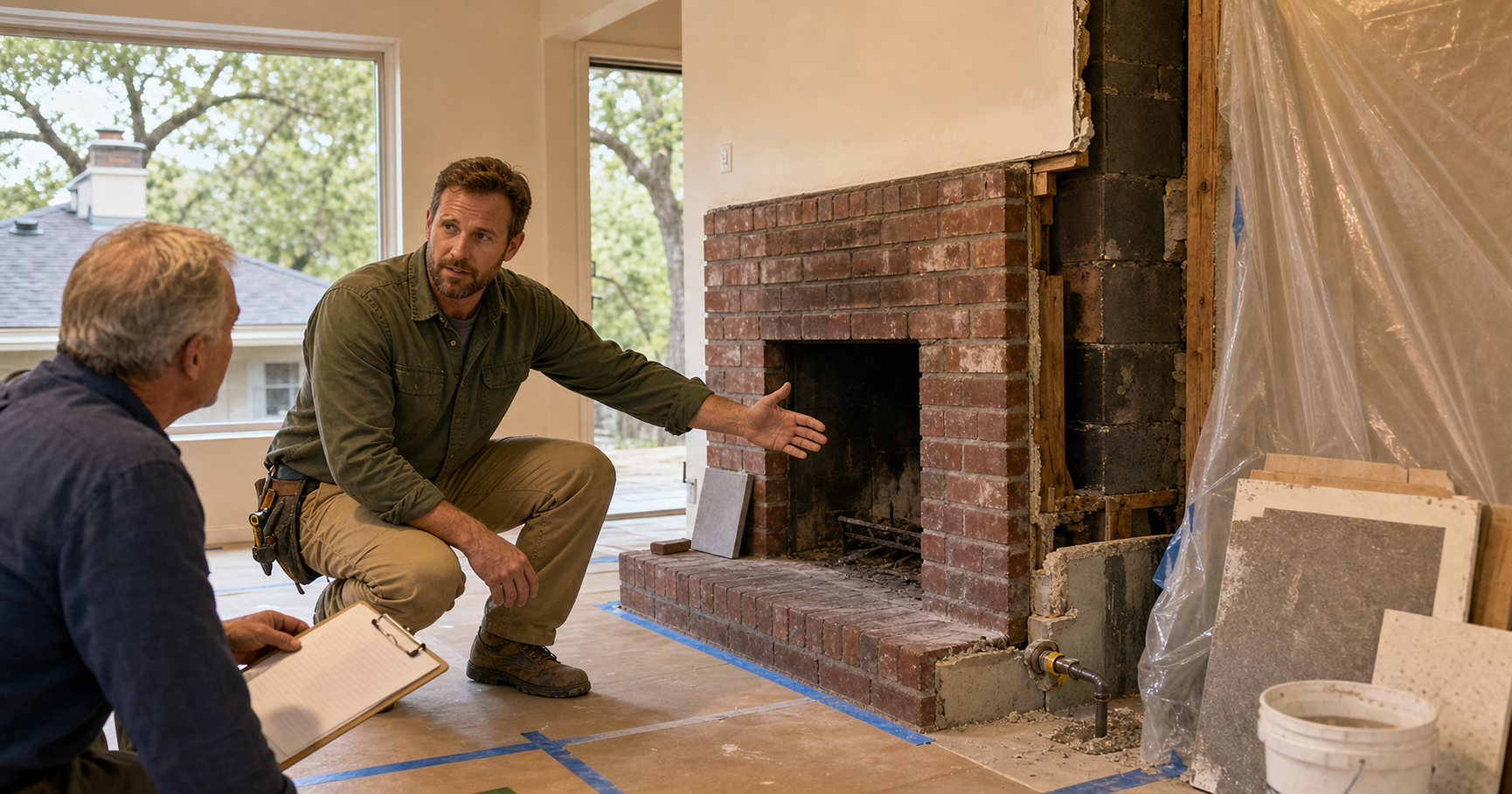
Fair Oaks Fireplace Removal: Chimney, Gas Line, Roof Patch, and Permit Questions
The fireplace is not doing much. It takes up the best wall in the living room, the hearth steals furniture space, and the chimney has become one more roof penetration to flash, inspect, and worry about every winter.
So the first thought sounds simple: "Let's just remove it."
In a Fair Oaks home, that can mean three very different projects. One homeowner may only want the brick surround and raised hearth gone so the room can take a media wall or built-ins. Another may want the firebox abandoned but the chimney left above the roof. A third may want the full chimney removed through the attic and roofline so the roof can be patched cleanly. Those scopes do not use the same contractor, carry the same permit risk, or cost the same money.
Fireplace removal is where homeowners get burned by vague bids. The visible brick is only the start. The hidden scope may include a masonry stack, framing around the chase, gas piping, electrical outlets, mantel lighting, roof flashing, attic bracing, smoke and carbon monoxide alarms, drywall texture, flooring repair, and sometimes asbestos or lead-safe work in older finishes.
| Scope | Best lead | Biggest risk | Planning range |
|---|---|---|---|
| Mantel, surround, or hearth only | GC or finish/demo contractor | Flooring, texture, dust, hidden wiring | $1,500 to $7,500 |
| Firebox and lower chase removal | General contractor | Structural support, gas cap, drywall, flooring | $5,000 to $22,000 |
| Full chimney removal through roof | GC with roofer and demo trade | Roof patch, attic framing, weatherproofing | $12,000 to $45,000-plus |
Use this matrix before comparing bids. A fireplace removal estimate is not complete until it says whether the chimney stays, who handles utilities, how the roof is patched, and what finish repair is included.
Start With What You Actually Want Back
Before calling contractors, decide what problem you are solving. Do you want more wall space? Better furniture layout? A safer unused gas log setup? A roof without an old chimney penetration? A cleaner opening for built-ins? Or are you removing a damaged fireplace because cracks, smoke odor, leaks, or settlement made it a liability?
The answer changes the job. If the goal is only a flatter living room wall, a full chimney teardown may be overkill. If the chimney is leaking or pulling away from the house, leaving it in place may preserve the most expensive problem. If you plan to install an electric insert, cabinets, a TV wall, or new flooring, the contractor has to plan outlets, blocking, clearances, texture, and floor patching before the old brick is gone.
Take photos from the living room, the exterior wall, the attic if safe, and the roof from the ground. Photograph the gas valve, electrical outlets, mantel lights, nearby return vents, flooring transitions, and the roof area around the chimney. A contractor who sees only one close-up of the brick face is guessing.
Why Fair Oaks Homes Need A Careful Scope
Fair Oaks has a mix of ranch homes, custom hillside houses, older cottages, and larger lots shaded by mature oaks. Fireplaces in these homes are often tied into the original layout. They may sit on a slab edge, share a wall with built-ins, pass through a low attic, or rise through an older roof plane that has been patched more than once.
That matters because fireplace removal touches several systems at once. The masonry may be load-bearing for itself even if it is not carrying the house. A framed chase may hide electrical or low-voltage wiring. A gas log line may need a licensed plumbing contractor to cap it correctly. A chimney opening through the roof needs a roofer who can patch decking, underlayment, flashing, and roofing material without creating a future leak.
The best contractor will slow the project down at the beginning. They should identify whether the chimney is masonry or framed, whether the firebox is structural or prefabricated, where gas and electrical run, how the attic is supported, and what will be visible after demolition.
What It Might Cost In 2026
These are planning ranges for Fair Oaks and nearby Sacramento County homes, not quotes:
- Initial inspection, scope planning, and trade walk-through: $250 to $1,200 when the contractor, roofer, plumber, or structural professional needs to verify what is hidden.
- Remove mantel, brick veneer, raised hearth, or non-structural surround: $1,500 to $7,500 depending on dust protection, debris disposal, floor repair, wall patching, and finish matching.
- Remove or abandon a firebox while leaving the chimney above: $5,000 to $22,000 when the work includes demolition, gas capping, framing, drywall, electrical changes, flooring repair, and finish carpentry.
- Full chimney removal through attic and roof: $12,000 to $45,000-plus depending on masonry height, roof pitch, access, attic framing, roofing material, weatherproofing, disposal, and interior patching.
- Gas line, electrical, or insert conversion work: $500 to $4,500-plus when valves, outlets, circuits, mantel lighting, or a new electric feature wall are part of the plan.
- Whole-room remodel tied to the fireplace wall: $18,000 to $75,000-plus when cabinets, flooring, lighting, paint, windows, or layout changes happen at the same time.
The cheapest bid is often the one that ignores the roof, gas line, or finish repair. A better bid may look higher because it includes dust containment, utility shutoff, disposal, attic checks, roof patching, inspections, and a finished wall rather than a pile of brick removed from the room.
Which Contractor Should Lead?
For a cosmetic mantel or hearth change, a general contractor, demolition contractor, finish carpenter, or masonry-capable remodeler may be enough. The moment the scope includes a gas line, roof patch, structural masonry, electrical work, or a full room remodel, a general contractor is usually the cleaner lead because several trades have to be sequenced.
A licensed plumbing contractor should handle gas piping, shutoff changes, pressure testing if required, and final capping. A licensed electrical contractor should handle outlets, circuits, junction boxes, mantel lighting, media wiring, or an electric insert. A roofing contractor should own the roof patch when the chimney comes down through the roof. A drywall contractor can make the wall look normal again, but only after the chase, framing, utilities, and firebox decisions are settled.
Demolition skill matters too. Fireplace removal is not just swinging a hammer at brick. The contractor should isolate dust, protect floors, control debris, avoid damaging adjacent framing, identify potential hazardous materials, and stop when hidden conditions change the plan.
Permits, Air Rules, And License Questions
Fair Oaks is generally in unincorporated Sacramento County, so start with the county's Building Permits and Inspection Division when the property is under county jurisdiction. The county says it handles electronic plan submittal and review for building projects. A fireplace project may also involve plumbing, electrical, mechanical, roof, or structural review depending on what changes.
Cosmetic trim removal may not need the same review as structural chimney demolition. Full chimney removal, roof patching, gas piping, electrical relocation, framing, or a new appliance should be treated as permit questions until the building department or contractor confirms otherwise. Ask the contractor to put the permit assumption in writing.
If the plan is not just removal but a replacement wood-burning appliance or new fireplace, check the Sac Metro Air District fireplace rules. The district's fireplace information explains that traditional open-hearth fireplaces are not allowed for new installation in Sacramento County, and that wood-burning appliance rules are separate from ordinary remodel preferences.
California licensing matters as well. The CSLB explains that unlicensed work is limited to jobs under $1,000 including labor and materials, with no advertising as a licensed contractor. If a permit is required, employees are used, or the work reaches the licensing threshold, use properly licensed contractors for the actual scope.
Questions To Ask Before You Sign
Ask each contractor these questions before comparing prices:
- Are we removing only finish materials, the firebox, the lower chase, or the full chimney?
- Is the chimney masonry, framed, prefabricated, or a combination?
- Does anything support, brace, or pass through the chimney chase?
- Who disconnects, caps, or tests any gas line?
- Who handles outlets, wiring, media cables, mantel lighting, or an electric insert?
- If the chimney comes through the roof, who patches the roof and what roofing materials are included?
- Will the attic framing, roof decking, insulation, drywall, flooring, baseboard, and texture be repaired in the bid?
- Are asbestos, lead paint, soot, or older flooring materials possible enough to test before demolition?
- Which permits are included, who meets the inspector, and what work is excluded?
- What happens if demolition reveals rot, cracked masonry, settlement, or hidden utility conflicts?
A bid that answers those questions is easier to trust. A bid that says "remove fireplace" and little else is not ready.
Red Flags In Fireplace Removal Bids
Be cautious if the contractor says the chimney can be knocked down without checking the attic or roof. Be careful with anyone who wants to cap gas piping casually, bury an electrical junction behind drywall, or leave the roof patch to "a roofer later" without naming who owns the weatherproofing.
Other red flags include no dust containment, no disposal plan for masonry, no discussion of floor patching, no permit assumption, and no plan for matching old texture or baseboards. If the fireplace wall will become built-ins or a media wall, the bid should also mention blocking, outlet placement, low-voltage paths, and future service access.
The best contractor may tell you the first visit is not enough for a final number. That is not a problem. Fireplace removal has hidden conditions. The professional move is to identify them before the room is opened, not after the dust is already in the hallway.
Internal Homework Before You Hire
Start with our Fair Oaks contractor guide, then compare licensed general contractors, demolition contractors, roofing contractors, plumbing contractors, electrical contractors, and drywall contractors. Use the contractor search when you are ready to build a shortlist.
For related planning, pair this with our Fair Oaks gas line permit guide, roof replacement cost guide, drywall and leak-source guide, California permit basics, contractor versus handyman guide, and license verification checklist.
The Bottom Line
A fireplace can look like one object, but removing it can touch the roof, attic, gas piping, electrical, framing, drywall, flooring, and air-quality rules. Fair Oaks homeowners should start by deciding whether the chimney stays, who owns the utilities, and how the room should look when the work is finished.
Get the scope in writing before comparing bids. A good contractor will identify the version of removal, name the trades, explain permit assumptions, protect the house from dust, and leave a plan for the roof and finishes. That is what turns "just remove it" into a project that does not create the next problem.
Who to Hire for This Project
For the work covered in this guide, these are the contractor types to contact and the CSLB classification to verify before you take quotes:
Questions to Ask Before You Sign
- "Is your CSLB license active and bonded?" Verify it yourself at cslb.ca.gov the license number must appear on their bid.
- "Who pulls the permit, and is it included in the bid?" The contractor should handle any required permits a pro who suggests skipping one is a red flag.
- "Can you itemize labor, materials, and allowances?" Itemized bids are the only way to compare quotes on the same scope.
- "What's the payment schedule?" California caps the down payment at $1,000 or 10%, whichever is less payments should track completed work.
- "Who from this area can I call as a reference?" Ask for a recent local job of similar scope, not just photos.
Sacramento Contractors for This Project
Related Articles
Frequently Asked Questions
How much does fireplace removal cost in Fair Oaks? +
Cosmetic mantel, surround, or hearth removal may range from about $1,500 to $7,500. Removing a firebox or lower chase can run $5,000 to $22,000. Full chimney removal through the attic and roof can reach $12,000 to $45,000-plus depending on access, roof patching, utilities, structural conditions, and finish repair.
Do I need a permit to remove a fireplace in Sacramento County? +
It depends on the scope. Cosmetic finish removal may be different from full chimney demolition, gas piping, electrical relocation, roof patching, framing, or new appliance work. Fair Oaks homeowners should confirm with Sacramento County Building Permits and Inspection or have the contractor state the permit assumption in writing.
Who should remove a fireplace? +
A general contractor is often the best lead when fireplace removal touches multiple trades. A demolition contractor may handle controlled removal, a plumber should handle gas piping, an electrician should handle wiring or outlets, a roofer should handle roof patching, and a drywall contractor can finish the wall after the hidden scope is resolved.
Can I remove the fireplace but leave the chimney? +
Sometimes, but the contractor must explain how the remaining chimney or chase will be supported, sealed, weatherproofed, and documented. Leaving a chimney above the roof can preserve a future leak or flashing problem if the reason for removal is roof-related.
What should a fireplace removal bid include? +
A useful bid should say whether the mantel, hearth, firebox, lower chase, or full chimney is being removed. It should also list dust protection, debris disposal, gas and electrical work, roof patching, framing, drywall, flooring, permits, inspections, exclusions, and change-order triggers.
Can I install a new wood-burning fireplace after removing the old one? +
Not without checking current air district rules. Sac Metro Air District rules restrict new traditional open-hearth fireplaces in Sacramento County. If the project includes a replacement appliance, ask the contractor to verify air-quality rules, building permits, clearances, and manufacturer requirements before designing around it.