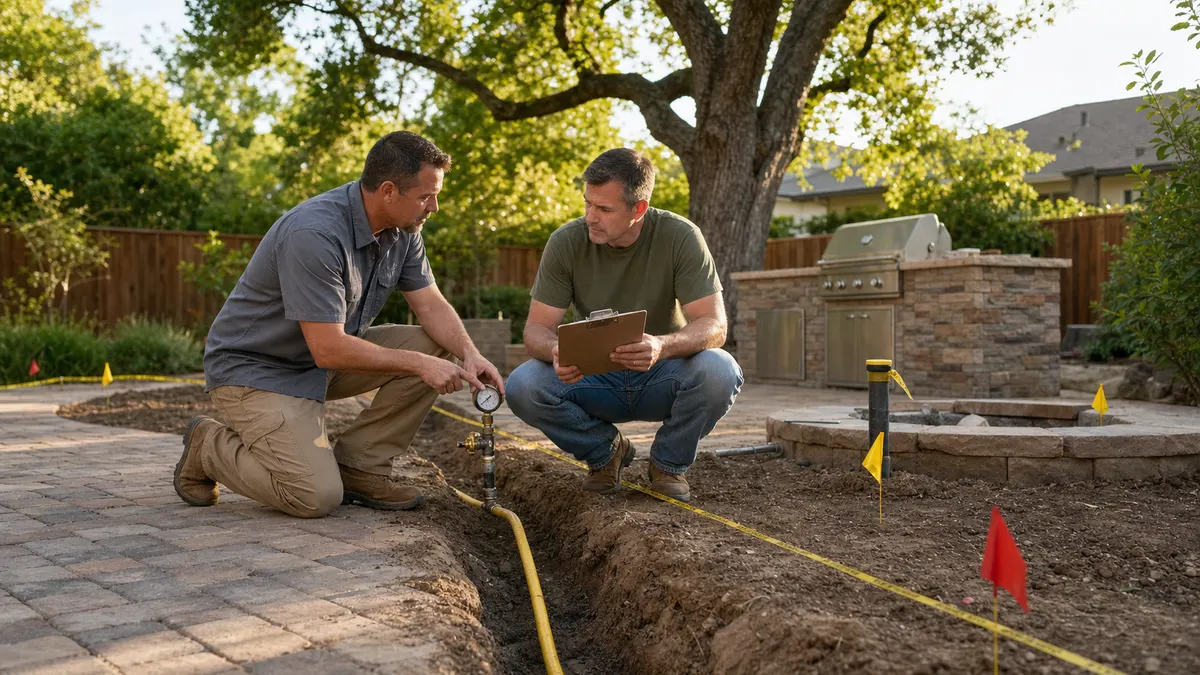
Fair Oaks Gas Lines for Fire Pits and Built-In Grills: Permits, Trenching, and Who to Call
The Fair Oaks backyard already has the hard part: a shady patio under mature oaks, a spot for a grill island, and enough room for chairs around a future fire pit. The surprise comes when the first hardscape bid says "gas by owner," the second bid includes a vague gas allowance, and the third contractor asks where the meter is before talking about stone, counters, or pavers.
That is the right question. A permanent gas fire pit or built-in grill is not just an outdoor living upgrade. It is a fuel-gas project with trenching, sizing, shutoffs, appliance instructions, inspection timing, and often several trades walking through the same yard. In Fair Oaks, older lots, big tree roots, paver patios, side-yard gates, pool equipment, and sloped areas can make the route more important than the fixture.
This guide is for homeowners who want the backyard to feel finished without guessing on gas work. It explains who to call first, what should be in the scope, what can change the budget, when Sacramento County permits enter the project, and how to avoid burying a problem under a beautiful patio.
Use this before comparing backyard bids. The fire pit may be the visible feature, but the price usually turns on gas demand, trench route, inspection timing, and how cleanly the plumber, hardscape contractor, and electrician coordinate.
Start With The Appliance, Not The Trench
Before anyone prices pipe, decide what the gas line will serve. A small built-in grill, a large grill with side burners, a fire pit ring, a fire table, and an outdoor kitchen with several appliances do not ask the gas system for the same thing. The contractor needs the appliance make, model, BTU input, installation instructions, distance from the meter, and whether you expect to run more than one appliance at the same time.
That matters because undersized gas piping can leave a grill weak, a fire feature unreliable, or other gas appliances in the house affected when everything runs together. A good plumber will not size the line from a photo of a pretty fire bowl. They will ask about total gas demand, route length, fittings, meter capacity, shutoff location, and the manufacturer's instructions.
If you do not have the appliance yet, pick the exact short list before permits or trenching. "Future fire pit" is too vague. "A 120,000 BTU listed fire pit burner 42 feet from the meter plus a 75,000 BTU built-in grill" gives a licensed contractor something real to design around.
The Fair Oaks Yard Problem
Fair Oaks backyards are rarely blank rectangles. Many have mature oaks, older irrigation, pavers that were installed years before the outdoor kitchen idea, pool equipment on one side yard, and grade changes that make a straight trench unrealistic. The cleanest gas route on paper may cut across tree roots, pass near drainage, cross concrete, or land exactly where the future seating wall is supposed to go.
Walk the yard before calling contractors. Photograph the gas meter, patio, proposed fire pit or grill location, side-yard access, large trees, pool equipment, retaining walls, irrigation valves, electrical panel, and any hardscape that would have to be cut or lifted. Measure rough distances. Mark where people will sit, where smoke may drift, where doors and windows are, and where you want the shutoff accessible.
Also call for utility locating before digging. Public utility marking is not the same as finding every private irrigation, lighting, drainage, or pool line in the yard. A careful contractor will ask what has been installed since the house was built and will plan for hand digging near known conflicts.
Who Should Lead The Job?
For the gas piping itself, start with a licensed plumbing contractor. In California, C-36 plumbing contractors are the usual lead for gas piping, pressure testing, shutoffs, and fuel-gas permit work. A B general contractor can make sense when the gas line is one part of a broader outdoor kitchen, patio cover, masonry, electrical, and concrete project, but the gas work still needs to be done by properly licensed people.
The hardscape or landscape contractor is still important. They may build the fire pit surround, grill island, seating wall, paver patio, drainage, planting, and final surface repair. That does not make them the right person to size or connect the gas line unless they hold the proper license and are handling the permit correctly.
Bring in an electrical contractor if the project includes ignition controls, outlets, lighting, a fridge, a rotisserie outlet, motorized shade, a TV, or low-voltage lighting that crosses the same trench area. A concrete contractor may be needed if the route cuts slab, footings, steps, or a driveway. The safest project has one clear lead and written responsibilities for every trade.
Permit And Inspection Timing
Fair Oaks is in unincorporated Sacramento County, so the permit path usually runs through Sacramento County for residential building and trade work. A new or altered fuel-gas line is not just decorative landscaping. Plan on asking whether a plumbing, mechanical, or fuel-gas permit is required for the exact address and scope.
The key timing point is simple: do not cover the line before the required inspection and pressure test are complete. A trench that gets backfilled too early can force rework, delays, and arguments about who pays to expose it again. The same goes for pavers, concrete, stone veneer, and finished fire-pit materials that block access to connections or shutoffs.
If trenching may affect a protected or mature tree, slow down before roots are cut. Fair Oaks yards with large oaks may need a different route, arborist input, or a separate review depending on location and scope. If the route goes near easements, retaining walls, pool barriers, drainage swales, or a covered patio, ask the contractor to confirm those items before digging starts.
What It Might Cost In 2026
Use these as planning ranges, not quotes. The same fire pit can be cheap or expensive depending on the distance from the meter, the surface being disturbed, and whether the appliance load requires changes upstream.
- Portable propane setup: $200 to $1,500 for a movable fire table or grill setup that does not add permanent gas piping.
- Short gas stub to a nearby grill or fire feature: $900 to $3,500 when the meter is close, access is simple, and hardscape repair is minor.
- Longer backyard route with trenching and restoration: $3,500 to $9,500 when the line crosses lawn, pavers, irrigation, roots, drainage, or side-yard constraints.
- Outdoor kitchen or built-in fire feature with multiple trades: $8,000 to $35,000-plus when masonry, countertops, electrical, concrete, landscaping, appliance installation, and permit coordination are included.
- Meter, regulator, or capacity complications: variable and sometimes outside the contractor's direct control. Confirm capacity before buying high-BTU appliances.
The number that matters is not "gas line cost" by itself. Compare whether the bid includes appliance sizing, permit responsibility, trenching, pressure test, inspection coordination, backfill, paver or concrete restoration, appliance connection, startup, cleanup, and warranty.
Scope Questions To Ask Before Signing
Ask each contractor the same questions so you can compare real scopes:
- What exact appliances and BTU loads are being sized for?
- Where does the gas line start, where does it end, and where will shutoffs be accessible?
- Who confirms meter capacity and pipe sizing?
- Who calls for utility locating and how are private irrigation, lighting, and drainage lines handled?
- Is the permit included, and who schedules the pressure test and inspection?
- Will the trench stay open until approval, and who protects the open area safely?
- What surfaces are being removed, protected, or restored?
- Are tree roots, protected trees, drainage, pool equipment, and easements addressed?
- Are appliance installation instructions part of the closeout paperwork?
- What is excluded: concrete, paver matching, planting repair, electrical, ignition, or appliance assembly?
If the bid cannot answer those questions, it is not ready for a deposit.
Red Flags
Be careful with any contractor who says a permanent outdoor gas line never needs a permit, wants to bury the line before inspection, sizes the pipe without knowing appliance BTUs and distance, or treats the gas connection as a small add-on to a landscaping bid. Also slow down if the shutoff will be hidden behind stone, inside a cabinet with poor access, or under a feature that cannot be serviced.
Another warning sign is a project that asks the plumber to show up after the patio is already poured. Gas, electrical, drainage, and hardscape should be coordinated before construction starts. Otherwise the cleanest route may be blocked, and the "simple" line becomes a demolition job.
Finally, do not split a real construction job into small pieces to avoid licensing. California's minor-work exemption is limited, and permanent gas work connected to a larger backyard project is not a casual handyman task. Verify the contractor's license, bond, insurance, and workers' compensation status before work starts.
Internal Homework Before You Call
Start with our Fair Oaks contractor guide, compare licensed plumbing contractors, landscaping contractors, concrete contractors, electrical contractors, and general contractors, then use the contractor search to build a shortlist.
For related planning, pair this with our outdoor kitchen cost guide, patio cover and pergola guide, deck and patio cost guide, Sacramento-area minor permit guide, Fair Oaks tree root and hardscape guide, California permit basics, and license verification guide.
The Bottom Line
A gas fire pit or built-in grill can make a Fair Oaks backyard feel finished, but the gas line should be planned before the stonework, not after it. Start with the appliance load, map the route from the meter, bring in a licensed plumber early, and make permit and inspection timing explicit. The best projects leave the pressure test, shutoff access, root protection, and restoration plan clear before anyone starts digging.
Who to Hire for This Project
For the work covered in this guide, these are the contractor types to contact and the CSLB classification to verify before you take quotes:
Questions to Ask Before You Sign
- "Is your CSLB license active and bonded?" Verify it yourself at cslb.ca.gov the license number must appear on their bid.
- "Who pulls the permit, and is it included in the bid?" The contractor should handle any required permits a pro who suggests skipping one is a red flag.
- "Can you itemize labor, materials, and allowances?" Itemized bids are the only way to compare quotes on the same scope.
- "What's the payment schedule?" California caps the down payment at $1,000 or 10%, whichever is less payments should track completed work.
- "Who from this area can I call as a reference?" Ask for a recent local job of similar scope, not just photos.
Sacramento Contractors for This Project
Related Articles
Frequently Asked Questions
Do Fair Oaks homeowners need a permit for a backyard gas line? +
A new or altered fuel-gas line is typically permit and inspection work in unincorporated Sacramento County. Confirm the exact requirement for your address and scope before digging, and do not cover the line before any required pressure test and inspection.
Who should install a gas line for a fire pit or built-in grill? +
Use a licensed plumbing contractor, commonly a C-36 contractor, for gas piping, sizing, shutoffs, pressure testing, and permit coordination. A general contractor or landscape contractor may coordinate the larger backyard project, but the gas work should still be performed by properly licensed people.
How much does a backyard gas line cost in Fair Oaks? +
A short, accessible gas stub may run about $900 to $3,500. Longer routes with trenching, hardscape repair, irrigation conflicts, tree roots, or multiple appliances can run $3,500 to $9,500 or more. Full outdoor kitchens and fire features with several trades often move into the $8,000 to $35,000-plus range.
Can a landscaper run the gas line while building the patio? +
Only if the contractor is properly licensed for the gas work and handles permits, testing, and inspection correctly. Many landscape or hardscape contractors should coordinate with a licensed plumber rather than sizing, connecting, or burying the gas line themselves.
What should I know before buying the fire pit or grill? +
Know the exact appliance model, BTU input, installation clearances, and whether it will run at the same time as other gas appliances. Give that information to the plumber before the line is sized or the trench route is finalized.