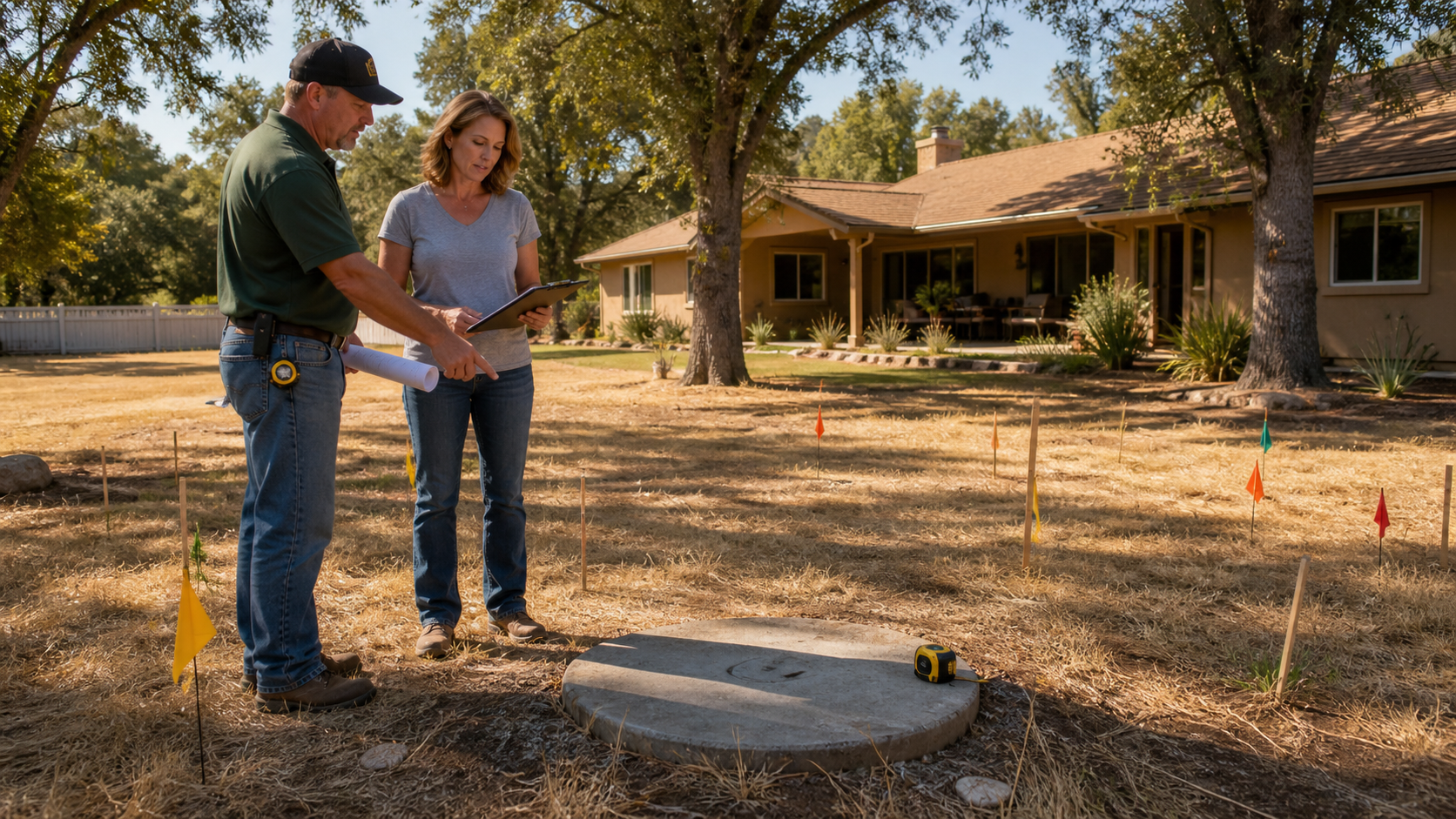
Orangevale Septic System Planning: Tank Location, Leach Fields, Yard Projects, and Permit Questions
The most expensive place to discover a septic tank is under the patio you just poured.
That is not a theoretical Orangevale problem. A homeowner plans a detached workshop behind the garage, a paver patio under the oaks, or a small ADU for family. The yard looks big enough. The contractor has room to work. Then someone asks where the septic tank, dry wells, leach lines, replacement area, and old permit records are. Nobody knows. The prior owner only said, "It is somewhere out back."
On larger Orangevale lots, septic planning is not just a plumbing issue. It can decide where you build, where you drive equipment, where you plant trees, whether an addition is practical, and whether a cheap yard project turns into a permit problem. The smart move is to locate and document the system before design decisions harden.
| Project or clue | Best lead | What to verify first | Planning range |
|---|---|---|---|
| You only need the tank located | Septic service or C-36/C-42 contractor | Tank lid, cleanouts, route, prior permit records, access path. | $250 to $900 |
| Patio, driveway, or landscape work | Landscape, concrete, or GC plus septic input | No heavy loads, trees, irrigation, or hardscape over critical septic areas. | $1,500 to $25,000-plus for yard scope |
| Workshop, garage, addition, or ADU idea | General contractor with septic review | Buildable area, setbacks, wastewater capacity, replacement area, permit path. | $2,500 to $12,000-plus before construction |
| Slow drains, wet soil, sewage odor, or surfacing wastewater | Licensed septic/sanitation contractor | Pump history, tank condition, soil area, failure signs, repair permit needs. | $500 to $4,500 diagnosis; repairs vary widely |
Use this chart before comparing bids. Septic planning is not comparable until every contractor is using the same tank location, wastewater assumption, access route, and permit responsibility.
Start By Finding The System, Not Picking The Product
If your yard project might cover soil, bring in trucks, move drainage, add bedrooms, or change how the property is used, start with the septic map. Do not start with paver colors, a workshop kit, or a patio cover sketch.
Ask the current owner, prior owner, county records office, or septic service company for any plot plan, pumping record, repair permit, or installation permit. Then verify the actual location in the yard. Old drawings can be approximate. Landscaping changes, fences, sheds, and concrete pads can make a drawing feel cleaner than the real property.
Useful first-step documentation includes photos of cleanouts, visible lids, low wet spots, greener grass, old gravel patches, suspicious concrete panels, vent pipes, and the route from the house to the tank. If the tank is due for service, ask the septic company to expose and mark the lids clearly while they are there. A contractor cannot protect what nobody can find.
Why Orangevale Lots Need This Conversation
Orangevale is different from tighter Sacramento neighborhoods because many properties have larger yards, older improvements, mature trees, workshops, wells, irrigation, animal areas, and generations of owner-built changes. That extra land is valuable, but it also creates a puzzle: the best spot for a patio, detached shop, driveway gate, pool equipment pad, or future ADU may be exactly where the septic system needs air, soil absorption, access, or replacement space.
The issue is not only the existing tank. It is also the disposal field, dry wells, leach lines, trenches, setbacks, soil conditions, and future repair area. Heavy equipment can compact soil. Tree roots can chase moisture. Irrigation can keep an already stressed area wet. A slab, deck footing, retaining wall, or driveway can block maintenance access. A bedroom addition or ADU can change wastewater assumptions even when the footprint looks small.
If you are using the Orangevale contractor guide to plan a project, add one early question: where does wastewater go today, and what space does that system need tomorrow?
Permit And County Review Questions
Sacramento County Environmental Management Department's Liquid Waste Program oversees design, construction, installation, cleaning, and repair activities for onsite wastewater treatment systems in the county. The county's septic permit process explains that new systems depend on parcel location, soil conditions, and whether the site is in a standard or test-drill area.
For homeowners, the practical takeaway is simple: do not let a contractor treat septic impact as a casual note. If the project changes wastewater demand, relocates site improvements, repairs a failing system, or builds near the septic area, ask who is contacting the county and what review is needed before work starts.
Sacramento County also says only a licensed contractor may apply for and install a septic system, with C-36 Plumbing, C-42 Sanitation, and General A Engineering listed as permitted license designations for installation. The CSLB's C-42 sanitation classification covers septic tanks, storm drains, sewage disposal structures, and related system piping. A plumbing contractor may be the right fit for some scopes, but a true septic installation or repair needs a contractor whose license and county process match the work.
What It Might Cost In 2026
These are planning ranges for Orangevale and nearby Sacramento County properties, not quotes:
- Septic record search, lid location, or basic site visit: $250 to $900 when the task is mostly finding the tank, lids, cleanouts, and access.
- Routine septic pumping or inspection visit: $450 to $1,200, depending on tank size, lid access, digging, travel, and whether baffles, tees, risers, or filters are checked.
- Camera, line locating, or more involved diagnostics: $500 to $2,500 when the route from the house to the tank or from tank to disposal area is unclear.
- Install risers or improve access: $900 to $3,500-plus when buried lids need easier future access and the tank condition supports it.
- Septic repair design, soil review, test-drill work, or professional evaluation: $2,500 to $12,000-plus before construction when soil conditions, failure clues, or added wastewater capacity require more than a service visit.
- Septic repair or replacement: $8,000 to $45,000-plus depending on system type, access, soil, groundwater, engineering, disposal area, county review, and yard restoration.
- Project redesign to avoid septic conflict: costs vary, but it is usually cheaper before plans, concrete, trenching, or framing are underway.
The cheapest septic-related number is not always the cheapest project. Paying to locate and document the system before a backyard build can prevent a five-figure redesign, failed inspection, damaged field, or unusable improvement.
Which Contractor Should Lead?
For a septic tank location, pumping, access riser, failed leach area, or system repair, start with a licensed septic, sanitation, or plumbing contractor who can explain the county path. For digging, trenching, test holes, or difficult site access, an excavation contractor may be involved, but that does not replace septic-specific licensing or county inspection requirements.
If the septic issue is tied to a detached workshop, ADU, addition, pool, patio, driveway, or whole-yard redesign, a general contractor may be the right coordinator. The GC should not guess on septic. They should bring in the septic contractor early enough that the site plan can move before the budget is locked.
For hardscape and planting work, a landscaping contractor or concrete contractor can be part of the job, but they need a marked septic plan. Ask how they will keep equipment, irrigation, trees, and drainage away from the tank and disposal area.
Questions To Ask Before You Approve Yard Work
Before signing a patio, driveway, workshop, addition, or landscape contract, ask:
- Where are the septic tank, cleanouts, distribution components, dry wells, leach lines, or trenches?
- Is there a county record, plot plan, pumping record, or prior repair permit?
- Will this project add bedrooms, plumbing fixtures, occupants, or wastewater load?
- Are we building, grading, planting, irrigating, or driving equipment over the septic area?
- What access will a pump truck or repair crew have after the project is done?
- Who is responsible for Sacramento County EMD contact, permits, inspections, and corrections?
- Which contractor license classification applies to the septic portion?
- What happens if the septic location conflicts with the proposed footprint?
Put the answers into the written scope. A verbal "we will work around it" is not enough when a future inspection, failure, or property sale asks what was actually protected.
Pumping Is Not The Same As Repair
A pumping visit can be useful. It can expose lid locations, show whether the tank is backing up, and help document access. But pumping does not fix a failed disposal field, crushed pipe, broken baffle, high groundwater problem, or capacity mismatch. If drains slow again soon after pumping, or wastewater surfaces in the yard, treat that as a diagnosis problem, not a reason to schedule pumping every few months.
Ask for photos of the exposed lids and accessible components. Ask whether the contractor saw signs of root intrusion, inlet or outlet problems, missing risers, damaged baffles, standing liquid above normal level, or soggy soil near the disposal area. Those notes matter if you later hire a GC for a backyard project.
Red Flags In Septic And Backyard Bids
Be careful when a contractor says septic will not matter without locating the system. Be careful with anyone proposing concrete, pavers, tree planting, or equipment access over a known or suspected disposal area. Slow down if a bid tells you to "just pump it first" but does not ask why the system is being checked.
Other red flags include no license number, no county permit answer, no plot plan, no access plan for future service, no discussion of replacement area, vague excavation assumptions, or a bid that excludes yard restoration without saying so plainly. Septic work is one of those scopes where buried uncertainty should be named, not hidden.
Internal Homework Before You Hire
If your Orangevale project also involves a well, read the well pump and pressure tank guide and the well water filtration guide. Well location, septic setbacks, trenching, and equipment access belong in the same site conversation, especially on larger lots.
For sewer-side comparison, the North Highlands sewer cleanout guide explains how access and camera evidence change plumbing bids. For broader paperwork context, use the California home improvement permit guide.
When you are ready to build a shortlist, use Sac Valley Contractors search and compare contractors by license fit, local septic or site-work experience, documentation habits, and whether they are willing to coordinate before the backyard design is final.
The Bottom Line
For Orangevale homeowners, septic planning is not a delay tactic. It is what keeps a yard project from blocking access, overloading a system, compacting the wrong soil, or triggering permit trouble after money is already spent.
Before you pour, trench, plant, build, or add plumbing load, locate the tank and disposal area, check county records, verify the contractor license, and get the permit responsibility in writing. A larger yard gives you options only if you know which ground needs to stay open.
Who to Hire for This Project
For the work covered in this guide, these are the contractor types to contact and the CSLB classification to verify before you take quotes:
Questions to Ask Before You Sign
- "Is your CSLB license active and bonded?" Verify it yourself at cslb.ca.gov the license number must appear on their bid.
- "Who pulls the permit, and is it included in the bid?" The contractor should handle any required permits a pro who suggests skipping one is a red flag.
- "Can you itemize labor, materials, and allowances?" Itemized bids are the only way to compare quotes on the same scope.
- "What's the payment schedule?" California caps the down payment at $1,000 or 10%, whichever is less payments should track completed work.
- "Who from this area can I call as a reference?" Ask for a recent local job of similar scope, not just photos.
Sacramento Contractors for This Project
Related Articles
Frequently Asked Questions
Do I need to locate my septic system before building a patio or workshop in Orangevale? +
Yes, if the project could cover soil, bring in heavy equipment, change drainage, or block future service access. Locate the tank, lids, cleanouts, and disposal area before finalizing the footprint so the project does not damage or trap the system.
Who can install or repair a septic system in Sacramento County? +
Sacramento County says septic system installation must be applied for and installed by a properly licensed contractor, with C-36 Plumbing, C-42 Sanitation, and General A Engineering listed as eligible license designations. Verify the current license and county requirements before signing.
Does adding an ADU or bedroom affect septic planning? +
It can. Added bedrooms, plumbing fixtures, occupants, or habitable space may change wastewater assumptions and trigger county review. Check the septic records and talk with Sacramento County EMD before assuming the existing system can support the project.
How much does septic inspection or location work cost? +
Many basic tank-location or access visits land around $250 to $900, while pumping and inspection commonly run about $450 to $1,200. Camera work, line locating, soil review, design, or repair planning can cost more.
Can a landscaper install pavers over a leach field? +
Do not assume so. Hardscape, compaction, irrigation, roots, and blocked access can all create septic problems. Have the system located and ask a septic-qualified contractor or Sacramento County EMD before approving hardscape over or near the disposal area.
What should I ask before buying an Orangevale home with septic? +
Ask for the installation permit, plot plan, pumping history, repair records, tank location, disposal area location, and any known failure history. If the records are thin, budget for a septic inspection before planning additions or major yard work.