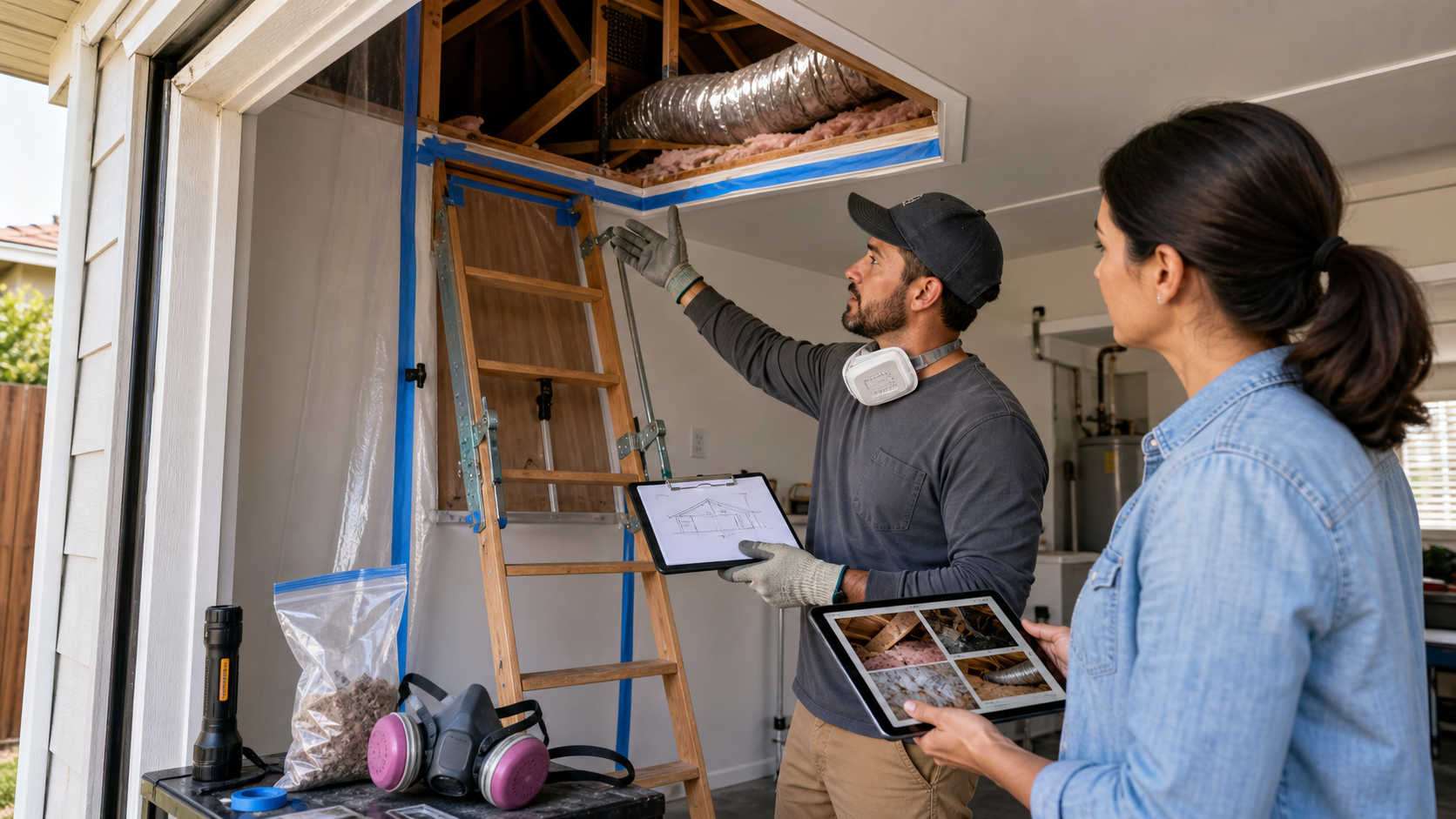
Natomas Attic Rodent Cleanup Before Insulation or Duct Work
The sound starts as a quick scratch over the hallway, then goes quiet when the lights come on. A Natomas homeowner checks the attic hatch, sees disturbed insulation near the ductwork, and wonders who to call first: pest control, insulation, HVAC, roofing, or a handyman with a shop vacuum.
That order matters. If rodents are still getting in, new insulation only becomes new nesting material. If ducts were chewed, contaminated, crushed, or disconnected, the house may be losing conditioned air into the attic. If wiring was damaged, cleanup can turn into an electrical safety issue. And if a roof gap, vent screen, plumbing chase, or garage-wall opening is the entry point, the repair has to close the path without creating a ventilation or moisture problem.
Natomas has plenty of newer tract homes, older sections, flat rooflines, open-field edges, garage attic access, and HVAC ducts running through hot attic spaces. This guide explains how to plan attic rodent cleanup before insulation or duct work, what the cost range can look like, which contractor should lead, and what to ask before anyone starts removing material overhead.
Use this before comparing bids. The visible insulation is only part of the job; the real scope depends on entry points, contamination, ducts, wiring, and how the crew protects the living space below.
Start With Exclusion, Not New Insulation
The first question is simple: how are animals getting in? Do not pay for attic insulation replacement until the contractor has a real exclusion plan. That means looking at roof edges, gable and foundation vents, garage-to-attic gaps, utility penetrations, plumbing chases, soffit returns, damaged screens, roof-to-wall transitions, and places where branches or fences make access easier.
A good pest-control or exclusion contractor should explain the difference between trapping, cleanup, and sealing. Trapping without exclusion invites the next problem. Sealing without confirming animals are out can create a worse problem. Insulation replacement without either one is just expensive timing.
Ask for photos. You want wide attic context, close-ups of likely entry points, duct conditions, insulation disturbance, and any safety concerns. If the contractor cannot show what they found, the estimate is harder to trust.
Why Natomas Attics Need A Careful Plan
Many Natomas homes use garage or hallway attic access, blown insulation, flexible ductwork, and low-slope roof areas that make work tight. HVAC ducts often sit above conditioned rooms, which means chewed or disconnected duct runs can affect comfort, dust, and energy use. A bedroom that never cools well may be an HVAC problem, but it may also be a duct problem hidden under disturbed insulation.
Neighborhood conditions matter too. Homes near open fields, canals, drainage areas, mature landscaping, or construction edges may see recurring pressure from rodents if exterior paths are not corrected. That does not mean the house is dirty or poorly maintained. It means the work should be planned like a building-envelope repair, not just a cleanup visit.
Also consider timing. Attic work during peak summer heat is slower and harder. If the job can be planned before the hottest stretch, crews may have better working conditions and homeowners may have more contractor availability.
Cleanup, Removal, Or Insulation Replacement?
Not every attic needs a full cleanout. If disturbance is limited and the insulation is otherwise dry, deep enough, and intact, a targeted cleanup and exclusion plan may be enough. If contamination is widespread, insulation is matted down, nests are present, odor remains, or ducts are buried in compromised material, removal and replacement may be the better path.
Ask how the contractor decides. A useful scope should describe containment at the attic hatch, how material is bagged or vacuumed, whether negative air or filtration is used, what gets disinfected or deodorized, whether air sealing happens before new insulation, and what R-value or insulation depth will be restored.
Be cautious with any bid that jumps straight to blow-in insulation over old material without explaining what is underneath. Covering damaged insulation can hide the problem and make later duct or electrical work messier.
Ducts, Wiring, And Other Trades
Rodent cleanup often exposes other work. Flexible duct jackets may be torn, ducts may be crushed by past foot traffic, register boots may leak, or a return path may pull dusty attic air. An HVAC contractor should handle duct repair, duct sealing, air balancing, and equipment-side questions when the attic conditions affect comfort or airflow.
Electrical concerns need a licensed electrician. Chewed low-voltage thermostat wire is one thing; damaged branch wiring, open junctions, scorched insulation, or unsafe splices are another. Do not ask a cleanup crew to make electrical judgment calls outside its lane.
Roofing and exterior repair can also enter the project. A broken vent screen, lifted roof edge, damaged fascia, or roof-to-wall gap may need a roofer, carpenter, siding contractor, or general contractor depending on the location. The strongest estimate names those handoffs before work begins.
What It Might Cost In 2026
These are planning ranges for Natomas and nearby Sacramento homes, not quotes:
- Inspection and limited exclusion plan: $300 to $1,500 when access is simple and the issue is localized.
- Entry-point sealing and basic cleanup: $800 to $3,500 depending on roofline, vents, garage gaps, utility penetrations, and containment.
- Attic insulation removal and sanitation: $2,500 to $9,500 or more depending on attic size, contamination level, access, bagging, vacuuming, and disposal.
- New blown-in insulation after cleanup: $2,500 to $8,500 for many homes, with cost driven by square footage, target R-value, air sealing, and access.
- Duct repair or duct sealing: $750 to $5,500 for targeted work; more if multiple runs or returns need replacement.
- Electrical, roof, fascia, or structural repairs: variable. These should be separate line items or separate trade bids, not hidden allowances.
The lowest bid may be only a trap-and-patch visit. The higher bid may include exclusion, containment, insulation removal, sanitation, air sealing, new insulation, duct repair coordination, and photos. Compare scope before comparing price.
Which Contractor Should Lead?
Start with a pest-control or exclusion contractor when the question is active entry, trapping, cleanup, and prevention. Bring in an insulation contractor when removal, air sealing, and replacement insulation are part of the work. Bring in an HVAC contractor when ducts, returns, registers, or comfort complaints are involved.
Use an electrical contractor for damaged wiring, unsafe junctions, new circuits, or anything tied to house power. Use a roofer, siding contractor, carpenter, or general contractor when the entry point is part of the exterior shell, fascia, roof edge, or a multi-trade repair.
The right lead contractor is the one who can say, clearly, what they will not touch and which licensed trade should own that part.
Permit, Licensing, And Safety Questions
Straightforward pest exclusion and attic cleanup may not need the same permit path as HVAC, electrical, roofing, or structural work. That changes when the project repairs ducts, opens or alters electrical work, changes roof assemblies, modifies framing, or becomes part of a larger remodel. Natomas homeowners should confirm the jurisdiction and permit path for the exact address, since many projects fall under the City of Sacramento, while some edges of the area can create jurisdiction questions.
California licensing rules still matter. The limited minor-work exemption is for projects under $1,000 in combined labor, materials, and other costs, and it does not apply when a permit is required or employee labor is used. Attic cleanup plus insulation or duct work commonly exceeds that threshold, so verify licenses, insurance, bond status, and workers' compensation before signing.
Safety should be in the scope too. Ask how the crew protects the living space, whether the HVAC system should stay off during dusty work, how attic access is sealed during removal, and how they handle sharp debris, droppings, contaminated insulation, or suspect materials.
Bid Questions That Prevent Surprises
Ask each contractor:
- What entry points did you find, and which ones are included in the sealing scope?
- How do you confirm animals are out before final sealing?
- Is this targeted cleanup, full removal, sanitation, new insulation, or all of those?
- How will the attic hatch, hallway, garage, flooring, and nearby rooms be protected?
- Are ducts inspected, photographed, sealed, repaired, or excluded?
- What happens if damaged wiring, unsafe junctions, roof gaps, mold-like staining, or wet insulation is found?
- What R-value or insulation depth is included after cleanup?
- Are permits or separate licensed trades needed for any part of the work?
- What before-and-after photos and warranty documents will you receive?
If a bid says only "attic cleanout" or "rodent proofing" without those answers, keep asking.
Red Flags
Slow down if someone offers to blow new insulation over contaminated material, seal every opening before confirming animals are out, ignore ducts that are visibly torn or crushed, or promise that one trap visit solves the whole attic. Also be careful with vague sanitation claims that do not explain containment, disposal, or cleanup verification.
Another warning sign is a contractor who treats electrical or HVAC damage as a small add-on without the right license. Attic work is hidden work. It should leave the home safer, cleaner, and easier to document, not just make the attic look fluffy again from the hatch.
Internal Homework Before You Call
For local context, start with our Natomas contractor guide, compare licensed pest control services, insulation contractors, HVAC contractors, electrical contractors, roofing contractors, and general contractors. Use the contractor search when you are ready to build a shortlist.
For related planning, pair this with our home insulation guide, attic air sealing and insulation guide, ductwork sealing and replacement guide, HVAC replacement guide, attic ladder and storage safety guide, Natomas remodel permit guide, and license verification guide.
The Bottom Line
Attic rodent cleanup in Natomas is not just pest control and not just insulation. It is a sequence: find the entry points, confirm the attic is no longer active, protect the living space, clean or remove what is damaged, check ducts and wiring, then restore insulation. The best contractor makes that sequence visible before the first bag of insulation leaves the attic.
Who to Hire for This Project
For the work covered in this guide, these are the contractor types to contact and the CSLB classification to verify before you take quotes:
Questions to Ask Before You Sign
- "Is your CSLB license active and bonded?" Verify it yourself at cslb.ca.gov the license number must appear on their bid.
- "Who pulls the permit, and is it included in the bid?" The contractor should handle any required permits a pro who suggests skipping one is a red flag.
- "Can you itemize labor, materials, and allowances?" Itemized bids are the only way to compare quotes on the same scope.
- "What's the payment schedule?" California caps the down payment at $1,000 or 10%, whichever is less payments should track completed work.
- "Who from this area can I call as a reference?" Ask for a recent local job of similar scope, not just photos.
Sacramento Contractors for This Project
Related Articles
Frequently Asked Questions
How much does attic rodent cleanup cost in Natomas? +
Limited inspection, exclusion, and basic cleanup may cost $800 to $3,500. Full insulation removal, sanitation, air sealing, and replacement insulation can run $5,000 to $18,000 or more depending on attic size, contamination, access, ducts, and related trade work.
Should I replace attic insulation after rodents? +
Not always. Targeted cleanup can be enough when disturbance is limited and insulation is dry, intact, and deep enough. Full removal is more likely when contamination is widespread, insulation is matted or nested, odor remains, or duct and wiring access requires material to be removed.
Who should handle attic rodent exclusion? +
Start with a pest-control or exclusion contractor for entry-point diagnosis, trapping, cleanup, and prevention. Bring in insulation, HVAC, electrical, roofing, or general contractors when the scope includes insulation replacement, duct repair, damaged wiring, roof gaps, or multi-trade repairs.
Do attic cleanup projects need permits? +
Basic pest exclusion and cleanup may not require a building permit. Permits can enter the project when work changes electrical systems, HVAC ducts, roof assemblies, framing, or other building components. Confirm the exact permit path for the Natomas address and scope before work starts.
Can new insulation be blown over old contaminated insulation? +
Be cautious. Blowing new insulation over damaged or contaminated material can hide the problem and complicate later duct, wiring, or air-sealing work. Ask the contractor to document what is being left in place and why before approving that scope.