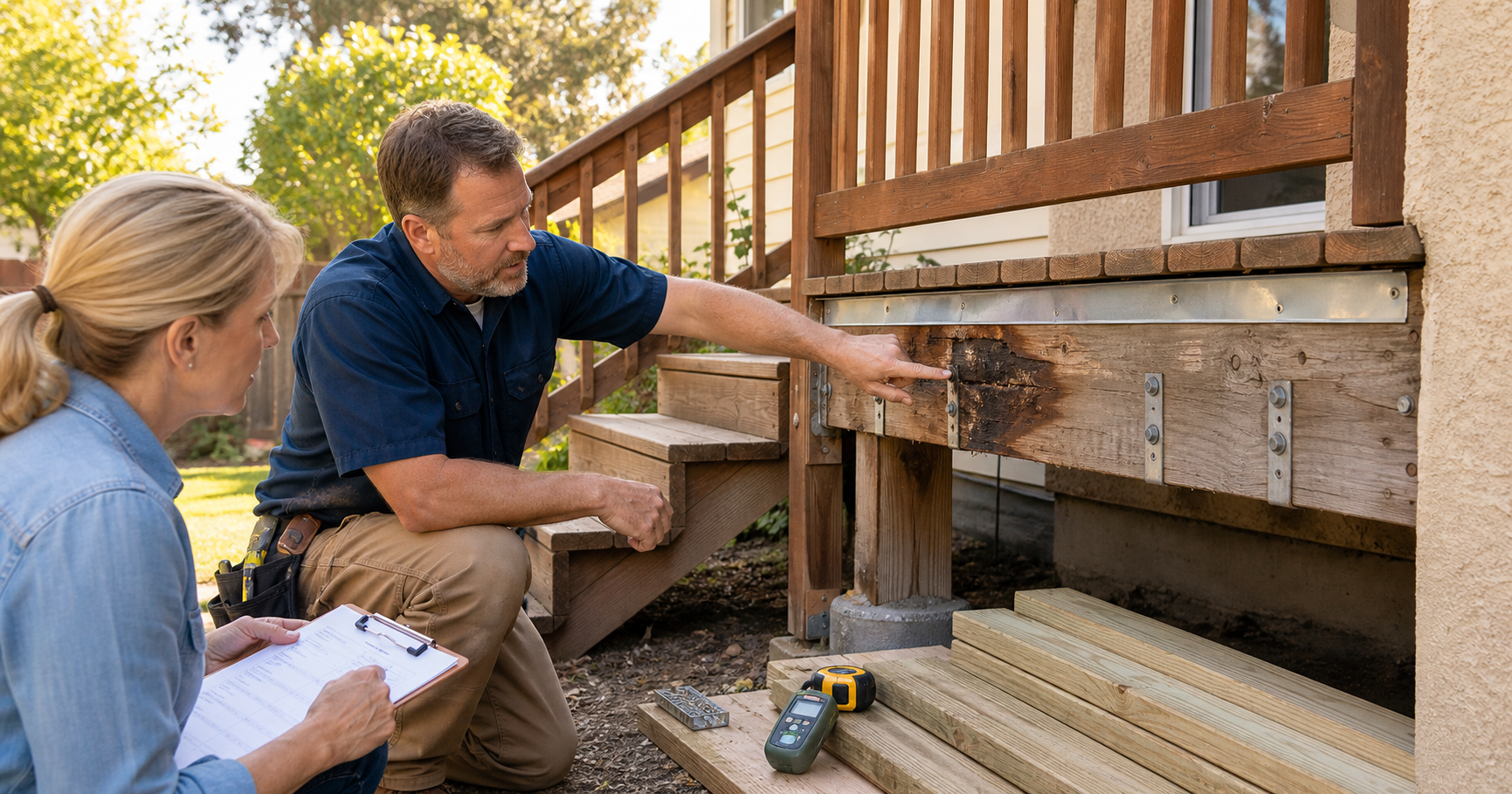
Sacramento Deck Ledger and Railing Repairs: Dry Rot, Flashing, and Permit Questions
The deck usually feels safe right up until the moment it does not.
A Sacramento homeowner in Tahoe Park notices the railing wiggle when a guest leans on it. A Land Park family sees a dark stain below the patio door after winter rain. In East Sacramento, an older raised deck still looks fine from above, but the joist ends are soft where leaves and irrigation spray have been trapped for years. Nobody called it an emergency last summer. By August, the question is whether this is a repair, a rebuild, or a liability waiting for the next barbecue.
Deck repairs are easy to underestimate because the visible surface is only the top layer. The safety questions live at the ledger board, guardrail posts, stair stringers, flashing, fasteners, footings, and the house wall behind the attachment. If a contractor only talks about board color, the scope is not ready.
| What you see | What it may mean | Best first call | Planning range |
|---|---|---|---|
| Loose railing or stair handrail | Weak post connections, old fasteners, rot at blocking | Deck/framing contractor | $800 to $4,500 |
| Soft boards but solid framing | Surface replacement, fastening, finish work | Deck contractor | $2,500 to $12,000 |
| Dark ledger stain near house | Failed flashing, hidden wall rot, bad attachment | GC or deck/framing contractor | $3,500 to $18,000-plus |
| Sagging frame or pulling ledger | Structural repair, engineer, permit path | General contractor | $8,000 to $35,000-plus |
| Widespread rot or unsafe layout | Full rebuild, new footings, rails, stairs | GC or deck builder | $25,000 to $85,000-plus |
Use this chart before comparing bids. A deck estimate is not comparable until it says whether the ledger, railing posts, stairs, flashing, house-wall repair, permits, and hidden rot are included or excluded.
Start Under The Deck
Before you call three contractors, walk the deck slowly and photograph the parts nobody photographs: the underside, the ledger board where the deck meets the house, stair stringers, post bases, guardrail connections, beam pockets, and any place sprinklers hit wood. Push gently on the railing. Look for rusted connectors, missing washers, split posts, loose stairs, spongey boards, and dark staining below the door threshold.
If the deck is elevated, do not keep "testing" it by bouncing on it. Mark the problem areas, keep people off questionable railings and stairs, and get an inspection. A railing that moves is not a cosmetic issue. A ledger board that has been taking water is not just a carpentry issue. Those parts carry people.
The best first estimate starts with diagnosis. Is the walking surface worn out but the framing sound? Did water get behind siding or stucco? Are the railing posts bolted through solid blocking or just screwed to rim boards? Are the footings stable? Was the deck built with a permit, and does the current repair need one? Those answers decide whether you need a deck specialist, a general contractor, a pest or dry-rot report, or an engineer.
Why Sacramento Decks Fail In Predictable Places
Sacramento's deck problems come from a local mix of sun, winter rain, irrigation, mature trees, and older housing stock. Summer heat dries and checks wood. Winter rain finds every unflashed joint. Sprinklers hit stairs and posts for years. Leaves sit in corners. Older decks in Midtown, Land Park, Curtis Park, Tahoe Park, and East Sacramento may have been repaired several times by owners who were trying to stretch one more season out of the structure.
The ledger board is the part to take most seriously. It is the horizontal board that ties an attached deck to the house. When flashing above the ledger fails or was never installed correctly, water can run behind the deck, enter the wall, soften framing, and rot the attachment from the inside out. From above, the deck may only show a small stain or a slightly dipped board near the door. Underneath, the connection can be compromised.
Railing posts are the other common weak point. A guardrail needs to resist people leaning, children pulling, and the sudden load of someone catching themselves on the way down a stair. Screws through decking boards are not a structural guardrail detail. A good contractor will talk about blocking, bolts, connectors, post location, and current guard height, not just "tightening it up."
What It Might Cost In 2026
These are planning ranges for Sacramento-area homes, not quotes:
- Deck safety inspection and written repair scope: $250 to $900, depending on access, height, and whether moisture, pest, or structural documentation is needed.
- Railing or stair connection repairs: $800 to $4,500 for limited post blocking, hardware, handrail correction, or stair tread/stringer work.
- Surface board replacement with sound framing: $2,500 to $12,000 depending on deck size, material, fastening system, disposal, and whether rails are disturbed.
- Ledger flashing and localized wall repair: $3,500 to $18,000-plus when siding or stucco must be opened and the contractor may find dry rot at framing.
- Elevated structural deck repair: $8,000 to $35,000-plus when beams, joists, posts, footings, stairs, or guardrails need correction.
- Full deck rebuild: $25,000 to $85,000-plus depending on size, height, material, railing type, stairs, engineering, permitting, demolition, and access.
The cheapest bid may only replace the boards you walk on. A stronger bid may include temporary shoring, demolition, ledger flashing, connectors, stair work, railing upgrades, wall patching, pest-related wood replacement, permit handling, and inspections. Those scopes should not be compared as if they are the same project.
Which Contractor Should Lead?
For a ground-level surface refresh where the frame is sound, start with licensed deck contractors. For attached decks, elevated decks, ledger repairs, stairs, or railing safety, the contractor needs framing judgment, not just finish carpentry.
The CSLB's C-5 framing and rough carpentry classification covers framing systems and related rough carpentry, including exterior staircases and railings. A B general building contractor may be the better lead when the deck repair touches the house wall, siding or stucco, drainage, pest damage, structural coordination, concrete footings, or multiple trades.
If the problem starts at the roofline or siding above the deck, a roofing contractor or siding contractor may need to coordinate the water-detail work. If the contractor finds termite evidence, fungus, or wood-destroying organism damage, involve the right pest-control or inspection professional before pretending a board replacement solved the cause.
Permit Questions In The City Of Sacramento
Do not guess on deck permits. The City of Sacramento's required building permits page lists decks and patio covers among project types that require permits, and it also lists a narrow exemption for decks that are not over 200 square feet, not more than 30 inches above grade at any point, not attached to a dwelling, and not serving the required exit door. That means many attached Sacramento decks are permit questions even when the footprint is modest.
The city's building codes page says new plan review and permit applications moved to the 2025 California Building Standards Codes as of January 1, 2026. For homeowners, the practical takeaway is simple: ask each contractor which code path, drawings, and inspections are assumed before you compare bids.
Put these questions in writing:
- Is this a repair, alteration, or full replacement?
- Is the deck attached to the house, and does it serve a required exit door?
- Are railing height, stair geometry, handrails, guard posts, and landings being brought into compliance?
- Are footings, posts, beams, joists, ledger flashing, and fasteners part of the permit drawings?
- Who submits the permit, meets the inspector, and handles corrections?
- If hidden dry rot is found inside the wall, how is that priced and documented?
If the home sits in a historic or design review area, exterior visibility can add another step. That does not mean the project cannot happen. It means the schedule and scope need to admit it early.
How To Read A Deck Repair Bid
A useful bid should tell you what the contractor inspected and what they did not inspect. It should name the deck area, material, fasteners, connectors, flashing, rail scope, stair scope, disposal, permit assumptions, and exclusions. If the contractor cannot see the ledger because trim, siding, or stucco covers it, the bid should say how that hidden condition will be opened, inspected, and priced.
Ask for unit prices before work starts. What does extra joist replacement cost? What is the price per post, per stair stringer, or per square foot of decking? How is wall rot handled? Who patches stucco or siding after the ledger is repaired? Does paint or stain include only new wood, or the whole deck so it does not look patched together?
Also ask for progress photos. You want photos before demolition, after the deck is opened, after the ledger and flashing are corrected, after connectors are installed, and before everything is covered. Those pictures become useful documentation when you sell the home or when another contractor works near the same wall years later.
Red Flags Before You Sign
Be careful with any contractor who gives a firm structural repair price from the top of the deck without looking underneath. Be cautious if the bid says "replace deck boards" but ignores a loose guardrail, or if the contractor wants to caulk the house joint instead of discussing flashing.
Other red flags include no license number on the contract, no workers' compensation coverage for employees, no permit answer, no plan for hidden rot, no written change-order process, and no discussion of how people will safely enter and exit the home while stairs or landings are under repair.
A good deck contractor does not need to scare you. They should be able to explain what is unsafe, what is cosmetic, what can be repaired, what should be rebuilt, and what needs inspection before anyone knows the final number.
Internal Homework Before You Hire
Start with our Sacramento contractor guide, then compare licensed deck contractors, general contractors, siding contractors, roofing contractors, and concrete contractors for footing or landing work. Use the contractor search when you are ready to build a shortlist.
For related planning, pair this with our deck and patio construction cost guide, Sacramento deck building cost guide, termite damage repair guide, foundation warning signs guide, California permit basics, and license verification checklist.
The Bottom Line
A Sacramento deck repair is not just a weekend surface project when the ledger, railing, stairs, or house wall are involved. The right contractor will slow down long enough to inspect the structure, explain the water path, separate cosmetic work from safety work, and tell you what permit assumptions are built into the bid.
If the deck is attached to the house or elevated enough for a fall to matter, hire for diagnosis first and materials second. Good flashing, sound connections, clear permit handling, and honest dry-rot pricing are what turn a shaky deck conversation into a repair you can trust.
Who to Hire for This Project
For the work covered in this guide, these are the contractor types to contact and the CSLB classification to verify before you take quotes:
Questions to Ask Before You Sign
- "Is your CSLB license active and bonded?" Verify it yourself at cslb.ca.gov the license number must appear on their bid.
- "Who pulls the permit, and is it included in the bid?" The contractor should handle any required permits a pro who suggests skipping one is a red flag.
- "Can you itemize labor, materials, and allowances?" Itemized bids are the only way to compare quotes on the same scope.
- "What's the payment schedule?" California caps the down payment at $1,000 or 10%, whichever is less payments should track completed work.
- "Who from this area can I call as a reference?" Ask for a recent local job of similar scope, not just photos.
Sacramento Contractors for This Project
Related Articles
Frequently Asked Questions
How much does deck ledger or railing repair cost in Sacramento? +
A focused deck inspection may cost $250 to $900. Limited railing or stair connection repairs often run $800 to $4,500. Ledger flashing or house-wall repairs can run $3,500 to $18,000-plus, especially if siding, stucco, or hidden dry rot is involved. Larger elevated structural repairs or full rebuilds can move much higher.
Do I need a permit to repair a deck in the City of Sacramento? +
Treat it as a permit question until the City of Sacramento or your contractor confirms the exact scope. Sacramento lists decks and patio covers among permit-required projects, with a narrow exemption for small, low, detached decks that do not serve the required exit door. Attached decks, elevated decks, stairs, railings, footings, and structural repairs often need permit review.
What license should a Sacramento deck contractor have? +
For structural deck framing, exterior stairs, and railings, look for a contractor with appropriate CSLB licensing such as C-5 framing and rough carpentry or a B general building contractor when the job involves multiple trades or the house wall. Verify the active license, bond, workers' compensation, and insurance through CSLB before signing.
Why is the deck ledger board so important? +
The ledger board is the attachment point between an attached deck and the house. If flashing fails, water can rot the ledger or the wall framing behind it while the deck surface still looks acceptable. A compromised ledger is a safety issue, not just a cosmetic repair.
Can I just replace deck boards and leave the frame alone? +
Only if the framing, ledger, posts, beams, stairs, and railing connections are sound. Replacing surface boards over hidden rot or weak guardrail posts can waste money and leave the dangerous part untouched. Ask the contractor to inspect underneath before pricing a surface-only scope.
What should a deck repair bid include? +
A useful bid should list the inspected areas, demolition assumptions, decking material, fasteners, connectors, railing and stair scope, ledger flashing, permit responsibility, disposal, finish work, warranty, unit prices for hidden rot, and who repairs siding or stucco if the house wall must be opened.