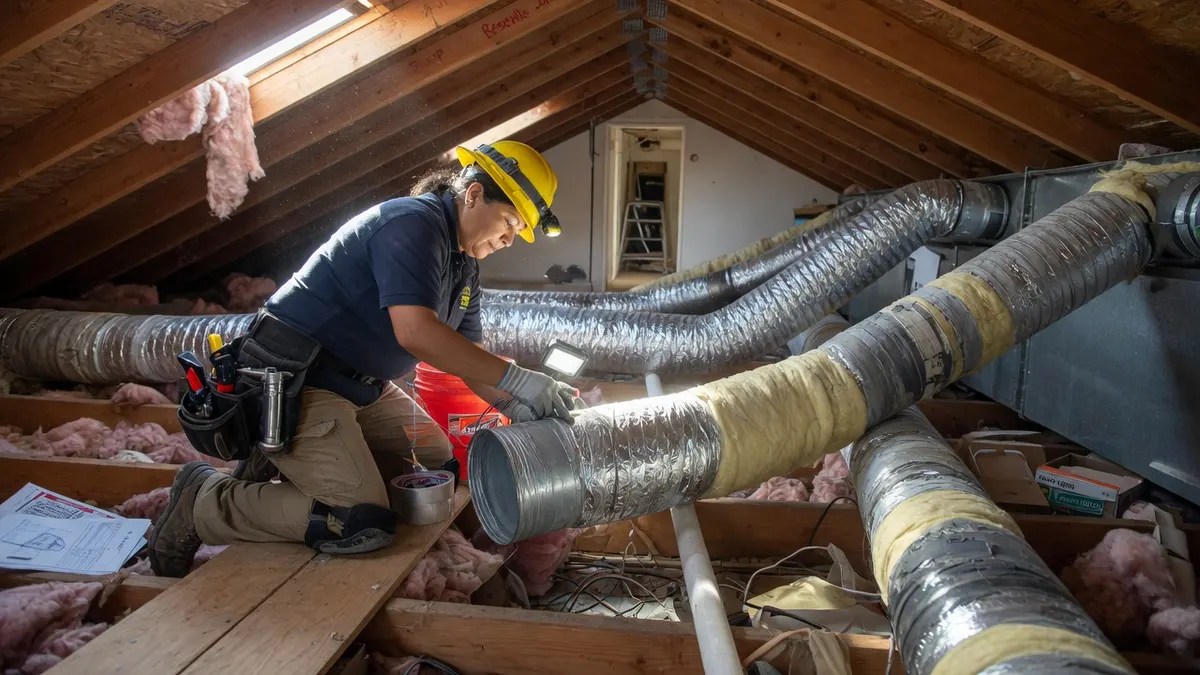
Roseville Ductwork Replacement and Sealing Costs: Comfort, Leaks, and Rebates
Ductwork is easy to ignore because most of it is hidden in the attic, crawlspace, garage soffits, or walls. Homeowners usually think about ducts only after one bedroom stays hot, the air conditioner runs constantly, dust comes back right after cleaning, or an HVAC contractor points out crushed, disconnected, or poorly insulated runs during a service visit.
In Roseville, duct problems matter because summers are long, attic temperatures get severe, and many homes depend on air conditioning for comfort from late spring through early fall. A high-efficiency heat pump or air conditioner cannot perform well if the duct system leaks conditioned air into a 130 degree attic or fails to deliver enough airflow to the rooms where people actually live.
This guide explains practical 2026 cost ranges for duct sealing and duct replacement in Roseville, when a repair is enough, when replacement makes more sense, what testing should be included, and how to compare HVAC bids without getting distracted by vague promises about better comfort.
Typical 2026 Ductwork Cost Ranges in Roseville
Most Roseville duct projects fall into these planning ranges:
- Basic duct inspection and minor sealing: $300 to $900 when access is simple and the work is limited to visible joints, boots, plenums, or a few obvious leaks.
- Whole-system duct sealing: $1,200 to $3,500 for sealing accessible attic or crawlspace ducts, repairing loose connections, improving register boot seals, and checking airflow after the work.
- Partial duct replacement: $2,500 to $7,500 when several damaged runs, undersized branches, or old flex ducts need replacement but the trunk layout and most of the system remain usable.
- Full duct replacement: $7,500 to $18,000 or more for a complete attic duct system, new plenums, properly sized branches, insulation, balancing dampers where appropriate, and difficult access.
- Ductwork tied to HVAC replacement: $10,000 to $25,000 or more as part of a larger heat pump or air conditioner project when equipment, ducts, electrical work, permits, and air balancing are bundled.
These numbers are planning ranges, not quotes. Duct pricing depends heavily on access, attic pitch, insulation depth, asbestos concerns in older materials, the number of supply runs, return duct design, equipment size, and whether the project includes testing. A small one-story home with open attic access is different from a two-story house with tight chases, cathedral ceilings, or ducts buried under blown insulation.
Signs Your Duct System Needs Attention
The most common duct complaint is uneven comfort. One room gets too much air, another barely moves at the register, and the thermostat satisfies before the problem room cools down. Other warning signs include high summer electric bills, whistling registers, rooms that smell dusty when the system starts, visible kinks in flexible duct, missing insulation, disconnected boots, or return grilles that pull air from hot attic spaces or wall cavities.
Age matters too. Many flexible duct systems installed decades ago have sagging runs, torn outer jackets, compressed insulation, and loose connections. Even if the HVAC equipment was replaced recently, the ducts may still be sized for an older layout or installed in a way that creates high static pressure. High static pressure makes the blower work harder, reduces delivered airflow, and can shorten equipment life.
A good contractor should not diagnose the whole system from the hallway thermostat. They should inspect the attic or crawlspace where accessible, look at supply and return sizing, check the plenum connections, note crushed or sharply bent runs, and explain whether the problem is leakage, poor layout, undersizing, equipment mismatch, or a mix of all four.
Sealing Versus Replacement
Duct sealing can be a smart first step when the ducts are generally in good shape but leak at joints, plenums, boots, and accessible seams. Sealing is especially useful when the layout is sound, the ducts are not badly crushed, and insulation is still intact. Proper sealing can improve delivered airflow and reduce the amount of conditioned air lost to the attic.
Replacement makes more sense when flexible ducts are deteriorated, undersized, kinked, badly sagging, contaminated, missing insulation, or routed so poorly that sealing would only preserve a weak design. Replacement may also be needed when a new heat pump or air conditioner requires different airflow than the old system delivered.
Be careful with bids that treat sealing and replacement as interchangeable. Sealing a leaky but undersized system may reduce waste but still leave rooms uncomfortable. Replacing ducts without proper sizing can create a newer version of the same airflow problem. The bid should explain the reason for the recommended scope.
Testing, Airflow, and Title 24 Details
California energy rules often make duct testing part of HVAC replacement or major duct alteration work. Homeowners do not need to become code experts, but they should know whether the project includes permit coordination, duct leakage testing, airflow verification, and HERS-related documentation when required. The California Energy Commission provides homeowner and code resources at energy.ca.gov, and local permit requirements should be confirmed for the specific Roseville address.
Testing is valuable even when it is not the main reason for the project. A duct system can look neat and still leak. It can also be tight but poorly balanced. Ask whether the contractor will measure static pressure, check temperature split, verify return air capacity, confirm register airflow in problem rooms, and provide before-and-after findings in plain language.
Airflow is not just comfort. Low airflow across the indoor coil can lead to poor dehumidification, icing, short cycling, noise, and higher operating costs. Too much restriction can also make a new system sound louder than expected. That is why ductwork should be discussed before equipment size is finalized, not after the new unit is already installed.
Attic Access, Insulation, and Work Conditions
Roseville attic work can be physically demanding. Summer attic temperatures, low roof pitch, buried ducts, old insulation, tight access hatches, and limited walk paths all affect labor. If the home has blown-in insulation, ask how the crew will protect it, move it, restore it, and avoid leaving gaps around ducts and ceiling penetrations.
Duct insulation matters because many systems run through unconditioned attic space. The outer jacket should be intact, vapor barriers should not be torn open, and ducts should be supported so they do not sag between straps. A shiny new run that is compressed against framing or stretched too tightly can still perform poorly.
Returns deserve special attention. An undersized or leaky return can pull hot attic air, garage air, dust, or insulation particles into the system. If the home has only one central return and several rooms with closed doors, the contractor may recommend transfer grilles, jump ducts, added returns, or door undercut adjustments to improve pressure balance.
Rebates, Incentives, and Utility Coordination
Duct sealing, insulation, heat pump upgrades, and whole-home efficiency work may qualify for rebates or financing programs depending on utility territory, equipment type, income rules, and current program funding. Programs change often, so homeowners should confirm details before signing a contract rather than assuming a rebate will apply.
Ask the contractor to separate base price from rebate assumptions. A clean estimate should state whether the homeowner or contractor submits paperwork, what test results are required, whether permits are included, and what happens if the rebate amount changes. The safest budget is one you can afford before incentives, with rebates treated as a helpful offset rather than a guarantee.
What a Complete Ductwork Bid Should Include
A useful Roseville ductwork estimate should identify:
- Whether the scope is inspection, sealing, partial replacement, or full replacement
- Supply and return duct sizes, number of runs, and affected rooms
- Plenum repairs, register boot sealing, return air improvements, and balancing dampers
- Duct material, insulation value, support method, and routing assumptions
- Attic or crawlspace access limitations, insulation handling, and cleanup
- Testing included before and after the work, such as leakage, static pressure, or airflow checks
- Permit responsibility and documentation if the work is tied to HVAC replacement or major alteration
- Exclusions for asbestos, mold, pest damage, electrical work, drywall repair, or insulation upgrades
- Change-order pricing if hidden damage or inaccessible ducts are discovered
The lowest bid may be fine for a small visible repair, but it is rarely enough for a whole-house comfort problem. If a contractor cannot explain why certain rooms are uncomfortable, how the duct layout will change, or how success will be measured, keep asking questions.
Final Planning Advice
For Roseville homeowners, ductwork is not glamorous, but it is one of the most practical comfort upgrades in the house. Before buying larger HVAC equipment, make sure the air delivery system is not the real bottleneck. Start with an inspection, compare bids by scope and testing method, and insist on details about returns, sealing, insulation, permits, and airflow.
If the project is connected to an HVAC replacement, discuss ducts early enough that equipment sizing, rebates, and permits can be planned together. If the goal is to fix one problem room, make sure the bid addresses that room specifically instead of promising a general tune-up. Good ductwork should be quiet, tight, insulated, balanced, and boring. When it works, you stop thinking about it.
Browse licensed HVAC contractors in the Sacramento area, start with the Roseville contractor guide, or use the contractor search to compare professionals serving Rocklin, Citrus Heights, Folsom, and nearby communities.
For related planning, see our HVAC replacement guide, attic air sealing and insulation guide, whole house fan installation guide, and California home improvement permits guide.
Who to Hire for This Project
For the work covered in this guide, these are the contractor types to contact and the CSLB classification to verify before you take quotes:
Questions to Ask Before You Sign
- "Is your CSLB license active and bonded?" Verify it yourself at cslb.ca.gov the license number must appear on their bid.
- "Who pulls the permit, and is it included in the bid?" The contractor should handle any required permits a pro who suggests skipping one is a red flag.
- "Can you itemize labor, materials, and allowances?" Itemized bids are the only way to compare quotes on the same scope.
- "What's the payment schedule?" California caps the down payment at $1,000 or 10%, whichever is less payments should track completed work.
- "Who from this area can I call as a reference?" Ask for a recent local job of similar scope, not just photos.
Sacramento Contractors for This Project
Related Articles
Frequently Asked Questions
How much does duct replacement cost in Roseville? +
Partial duct replacement often ranges from $2,500 to $7,500. Full duct replacement commonly ranges from $7,500 to $18,000 or more depending on access, number of runs, return duct work, insulation, plenums, testing, and whether the work is part of an HVAC replacement.
Is duct sealing worth it before replacing HVAC equipment? +
Often, yes. If ducts leak or restrict airflow, new equipment may not solve comfort problems. Duct sealing or replacement should be evaluated before final equipment sizing so the system can deliver the airflow the home needs.
Do ductwork projects require permits in Roseville? +
Permit needs depend on project scope and whether the ductwork is part of HVAC replacement or major alteration work. Ask the contractor to state permit responsibility, testing requirements, and documentation in the written estimate.
What should a ductwork contractor test? +
Useful testing may include duct leakage, static pressure, temperature split, return air capacity, and room-by-room airflow checks. Before-and-after findings help show whether the work improved comfort and system performance.