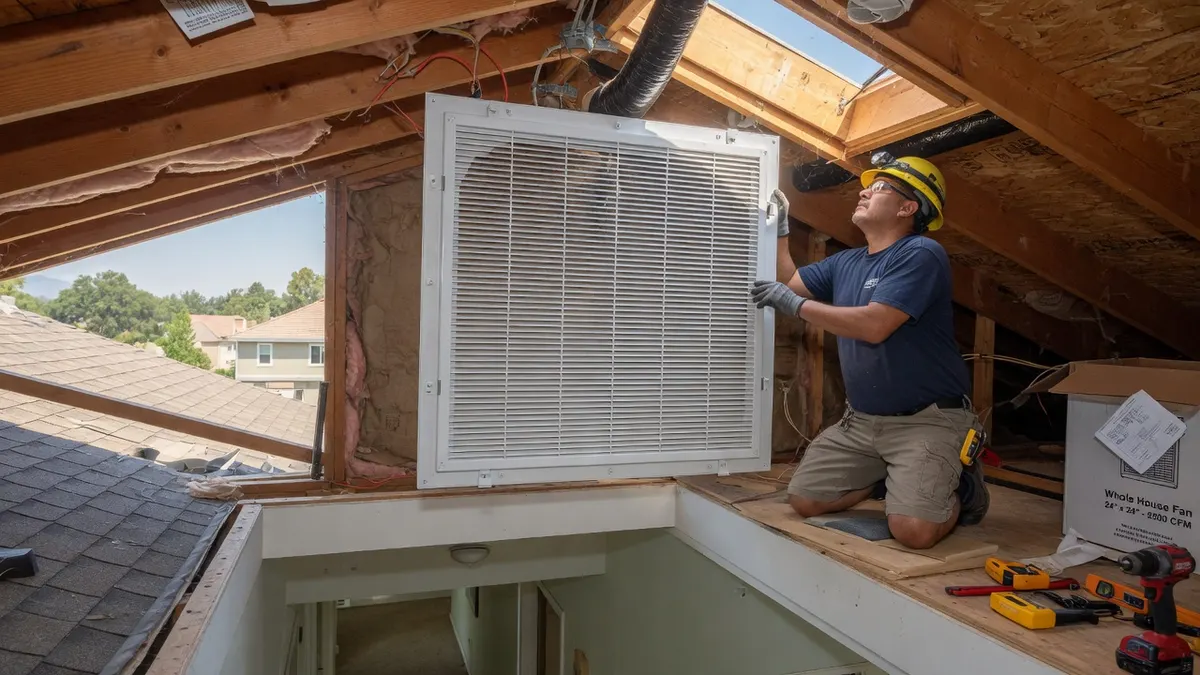
Whole House Fan Installation in Sacramento: Costs, Sizing, Electrical Work, and Comfort Tradeoffs
A whole house fan can be one of the most satisfying Sacramento home upgrades when it is installed in the right house and used at the right time. On spring evenings, Delta breeze nights, and early fall mornings, it can flush hot indoor air out quickly and pull cooler outdoor air through open windows. For many homeowners, that means the air conditioner starts later, runs less, and the house feels fresher after a long hot day.
It is not a magic replacement for air conditioning. Sacramento still has stretches when the outdoor temperature stays high late into the evening, and wildfire smoke can make open-window cooling a bad idea. But for homes that trap heat upstairs, houses with poor cross ventilation, and families that like sleeping with cooler night air, a whole house fan can be a practical comfort project.
The key is proper sizing, quiet installation, attic ventilation, electrical safety, and honest expectations. A fan that is too loud, too large, poorly sealed, or installed in an attic without enough exhaust area can disappoint quickly.
What Whole House Fan Installation Usually Costs
For a typical Sacramento-area home, whole house fan projects often fall into these ranges:
- Basic smaller fan installed in a hallway ceiling: $1,200 to $2,500
- Mid-size quiet whole house fan system: $2,000 to $4,000
- Large or multi-fan system for a larger two-story home: $3,500 to $6,500 or more
- New dedicated electrical circuit or difficult wiring path: $500 to $2,000 added to the project
- Attic ventilation improvements: $500 to $3,000 depending on the number and type of vents
- Ceiling framing, drywall, or finish repairs: $300 to $1,500 when needed
- Smart controls, timers, wall switches, or multi-speed controls: $150 to $700 depending on setup
A straightforward install in a single-story home with accessible attic space and adequate roof or gable ventilation may be completed in one day. A more complicated two-story home, tight attic, tile roof, finished ceiling repairs, or electrical panel limitation can push the project into a larger budget.
The fan equipment itself is only part of the price. Labor, attic access, wiring, controls, air sealing, and exhaust venting decide whether the installed system works well.
How a Whole House Fan Works
A whole house fan is usually mounted in the ceiling between the living space and the attic. When the fan turns on, homeowners open selected windows. The fan pulls outdoor air through those windows, moves it through the house, and pushes warm indoor air into the attic. From there, the air exits through attic vents.
That last step is important. The fan is not just cooling a room. It is moving a large volume of air through the entire building and attic. If the attic cannot exhaust that air, pressure builds up. The system may get louder, move less air, and push dusty attic air through small gaps. In a worst-case installation, poor venting can make the fan feel strong at the grille but weak at actually cooling the house.
A contractor should evaluate both sides of the system: how air enters through windows and how air leaves the attic.
Sizing the Fan for a Sacramento Home
Whole house fan sizing is usually discussed in cubic feet per minute, or CFM. Bigger is not always better. A very large fan can cool quickly, but it can also be noisy, require more attic ventilation, and create uncomfortable drafts if windows are not opened enough.
For many Sacramento homes, the best target depends on:
- Square footage and ceiling height
- One-story vs. two-story layout
- Hallway location and central airflow path
- Number of windows that can be safely opened
- Attic volume and available vent area
- Desired noise level
- Whether the homeowner wants quick purge cooling or quiet overnight operation
A common mistake is choosing a fan based only on square footage. A two-story Roseville or Elk Grove home with hot upstairs bedrooms may need a different strategy than a single-story Land Park bungalow. A long ranch home in Carmichael may need careful fan placement so bedrooms do not get left out of the airflow path. A home with vaulted ceilings or limited attic access may require a different product style.
Ask the installer to explain the CFM recommendation, not just the brand. If the answer is only that the larger unit is more powerful, keep asking.
Attic Ventilation Can Make or Break the Project
Whole house fans move far more air than normal attic ventilation was designed to handle. Existing roof vents, gable vents, ridge vents, or dormer vents may be enough for a smaller fan, but not always. Older Sacramento homes may have limited vent area, painted-over gable vents, blocked eave intake, or past roof work that changed the ventilation balance.
The contractor should calculate or at least clearly evaluate net free vent area. That means the actual open area available for airflow after accounting for screens, louvers, and vent design. A small vent with a heavy screen does not move as much air as its outside dimensions suggest.
If attic venting is short, the scope may include adding gable vents, dormer vents, roof vents, or other approved exhaust paths. This can add cost, especially on tile roofs or homes where exterior appearance matters. Still, it is better to fix the venting during installation than to live with a loud fan that strains against the attic.
Electrical and Permit Questions
Most whole house fans require permanent electrical wiring, a switch, and sometimes a dedicated circuit. Some smaller units use lower power, while larger fans can need more careful electrical planning. The installer should follow the manufacturer's instructions for wire size, breaker requirements, controls, and junction box access.
In Sacramento, permit requirements can vary by jurisdiction and scope. A simple replacement of an existing fan may be handled differently than a new installation that adds wiring, cuts a ceiling opening, or changes attic ventilation. City of Sacramento, Sacramento County, Elk Grove, Folsom, Roseville, Rancho Cordova, and Davis can each have their own process. Homeowners should ask who is responsible for permits and inspections before work begins.
If the contractor says no permit is needed, that may be true for some limited scopes, but the answer should be specific to the address and work being performed. Electrical work hidden in an attic is not the place for vague assumptions.
Noise, Location, and Controls
Noise is one of the biggest satisfaction factors. Older whole house fans had a reputation for sounding like a small aircraft in the hallway. Modern insulated, ducted, or remote-mounted fans can be much quieter, but placement still matters.
Good locations are usually central hallways or upstairs landings where air can move from multiple rooms toward the fan. Poor locations include tight corners, rooms where the grille will bother sleepers, or areas too close to attic obstructions. The fan should also be installed with proper vibration isolation, weatherstripping, and secure framing.
Controls matter too. A timer is almost mandatory because homeowners often run the fan for 20 to 60 minutes rather than all night. Multi-speed controls are useful because high speed can purge heat quickly while low speed is more comfortable for sleeping. Smart controls can help, but simple reliable switches are often enough.
When a Whole House Fan Is a Bad Fit
A whole house fan is not right for every Sacramento home. It may be a poor choice if:
- Household members have severe outdoor allergies and prefer filtered indoor air
- The neighborhood has frequent smoke, dust, freeway pollution, or agricultural odors
- Windows cannot be opened safely at night
- The attic has asbestos-suspect materials or serious contamination that must be addressed first
- The roof or attic lacks a practical path for added venting
- The home already has excellent HVAC zoning and little evening heat buildup
Wildfire smoke is the big Sacramento-area caution. During smoky days, keep windows closed and do not use a whole house fan to pull outdoor air inside. Homeowners who install one should still maintain HVAC filters, consider portable HEPA filtration for bedrooms, and watch air quality alerts during fire season.
What to Ask Before Hiring an Installer
A useful whole house fan estimate should answer these questions:
- What CFM do you recommend and why?
- Where will the fan grille be located?
- How much attic ventilation does the fan require?
- Is the existing attic venting enough?
- Will new roof, gable, or dormer vents be needed?
- What electrical work is included?
- Are permits required, and who handles them?
- How loud is the unit at each speed?
- Does the fan include insulated doors or dampers for winter and summer air sealing?
- What ceiling framing, drywall, or paint touch-up is excluded?
- What warranty applies to labor and equipment?
The estimate should also explain how the system will be sealed when off. In winter, a leaky fan opening can let warm indoor air escape into the attic. In summer, it can let attic heat radiate or leak back into the home. Insulated dampers and careful installation help prevent the fan from becoming a year-round energy penalty.
The Bottom Line
Whole house fans are a good fit for many Sacramento homes because the region often has cooler nights after hot afternoons. They can reduce evening air conditioning use, improve bedroom comfort, and clear stale indoor air quickly. The best results usually come from a quiet, correctly sized fan installed with enough attic ventilation and safe electrical work.
Do not buy the largest fan by default. Do not ignore attic venting. Do not let the installer treat the ceiling cutout, wiring, controls, and air sealing as afterthoughts. A properly scoped whole house fan is simple to use, quiet enough to run often, and especially valuable during the shoulder seasons when Sacramento weather gives you cool outdoor air for free.
Who to Hire for This Project
For the work covered in this guide, these are the contractor types to contact and the CSLB classification to verify before you take quotes:
Questions to Ask Before You Sign
- "Is your CSLB license active and bonded?" Verify it yourself at cslb.ca.gov the license number must appear on their bid.
- "Who pulls the permit, and is it included in the bid?" The contractor should handle any required permits a pro who suggests skipping one is a red flag.
- "Can you itemize labor, materials, and allowances?" Itemized bids are the only way to compare quotes on the same scope.
- "What's the payment schedule?" California caps the down payment at $1,000 or 10%, whichever is less payments should track completed work.
- "Who from this area can I call as a reference?" Ask for a recent local job of similar scope, not just photos.
Sacramento Contractors for This Project
Related Articles
Frequently Asked Questions
How much does a whole house fan cost to install in Sacramento? +
Many Sacramento-area installations cost $1,200 to $4,000 for a basic to mid-size system. Larger homes, quiet premium fans, difficult wiring, ceiling repairs, or added attic ventilation can push projects to $3,500 to $6,500 or more.
Can a whole house fan replace air conditioning? +
Usually no. A whole house fan works best when outdoor air is cooler than indoor air, especially evenings and mornings. During very hot nights or smoky wildfire conditions, Sacramento homeowners still need air conditioning or filtered indoor cooling.
Does a whole house fan need attic ventilation? +
Yes. The fan pushes indoor air into the attic, and that air needs enough vent area to escape. If attic ventilation is inadequate, the fan may be louder, less effective, and more likely to create pressure problems.
Does whole house fan installation require a permit? +
Permit requirements depend on the local jurisdiction and scope of work. New wiring, ceiling openings, and added vents may require permits or inspections. Ask the installer to identify the rule for your specific city or county before work starts.
When should I avoid using a whole house fan? +
Do not use it when outdoor air is smoky, dusty, polluted, or hotter than the indoor air. It is also a poor fit if windows cannot be opened safely or if household members need tightly controlled filtered indoor air.