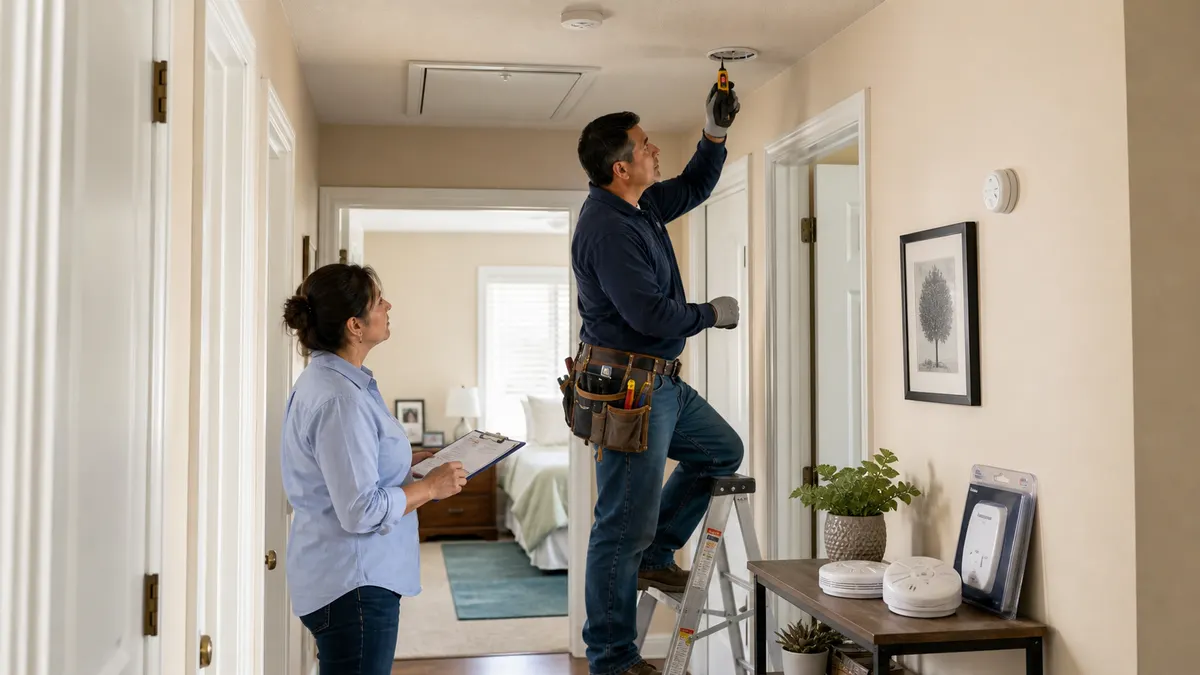
Elk Grove Smoke and CO Alarm Upgrades: Remodel Permits, Wiring, and Who to Call
The chirp starts at 2:13 a.m., then stops just long enough to make an Elk Grove homeowner wonder which ceiling unit is guilty. By morning, the problem looks simple: buy a few new alarms, climb a ladder, and be done. Then the homeowner remembers the kitchen remodel permit that is still open, the bedroom hallway that never had a carbon monoxide alarm, and the electrician's note about interconnection.
Smoke and carbon monoxide alarms are small devices, but they can become the inspection item that slows down a larger project. They also sit at an awkward contractor boundary. A battery-only replacement may be a quick homeowner task. A hardwired, interconnected alarm system is electrical work. A remodel that opens walls or ceilings can trigger upgrade questions that were never part of the original cabinet, lighting, or bathroom plan.
Elk Grove has many homes from the 1990s and 2000s where alarms are now aging out, layouts have changed, bedrooms have been added, and homeowners are planning electrical or interior projects. This guide explains what to check before you hire, when a handyman is enough, when an electrician should lead, how permits enter the conversation, and how to keep a small safety upgrade from becoming a last-minute final inspection problem.
Use this before comparing bids. The price depends less on the plastic alarm and more on permit timing, wiring access, alarm locations, and whether the project opens walls or ceilings.
Start With A Hallway Walk
Before calling anyone, walk the house with your phone. Photograph every existing smoke alarm, carbon monoxide alarm, bedroom door, hallway outside bedrooms, stair or split-level area, attached garage door, gas furnace or water heater area, and the panel where electrical work might be tied in. If any alarm has a visible date, photograph it. Many alarms are designed around a roughly 10-year service life, and homeowners often discover the whole house is overdue at once.
Then separate two questions. First: are you simply replacing old battery alarms with new listed units in the same sensible locations? Second: is this part of a permitted remodel, new electrical work, wall or ceiling opening, bedroom addition, hallway change, or hardwired/interconnected upgrade? Those are different jobs.
The first question may be a weekend task. The second belongs in the scope before bids are compared, because it affects permit closure, electrical labor, drywall patching, attic access, and who signs off on the work.
What Elk Grove Homeowners Should Know About Placement
Elk Grove's residential guidance lines up with the familiar California pattern: smoke alarms belong inside sleeping rooms, outside separate sleeping areas near bedrooms, and on each additional story. Carbon monoxide alarms are required where the dwelling has an attached garage or fuel-burning appliances, and they belong near sleeping areas and on every level.
The common mistake is assuming one hallway alarm covers everything. A split-bedroom layout, downstairs bedroom, converted den, new office that may later be used as a bedroom, or separated primary suite can change what "outside the sleeping area" means in real life. A larger two-story Elk Grove home may also need more attention than a single-level starter home because sound has to reach closed bedrooms.
If you are doing a permitted remodel, ask the contractor to walk the alarm locations with you before final inspection week. The answer may be simple. The problem is finding out late.
Battery, Plug-In, Hardwired, And Interconnected Are Not The Same Scope
Battery-only alarms are the simplest path when allowed for the existing condition. Many homeowners can replace them themselves with a drill, screwdriver, and the manufacturer's instructions. Plug-in carbon monoxide alarms can also be straightforward, but they need a stable outlet location and should not create a trip or nuisance problem.
Hardwired alarms are different. They connect to house wiring, usually with battery backup. Interconnected alarms are designed so one alarm sounding activates the others. In newer construction, hardwired and interconnected systems are standard expectations. In existing homes, whether you must upgrade depends on the work being done, what finishes are opened, and whether attic, crawlspace, or basement access makes wiring practical.
That is why bids can differ so much. One contractor may price a like-for-like battery swap. Another may price new hardwired alarms, interconnection, attic crawling, device boxes, circuit work, patching, and inspection support. The alarm on the ceiling looks cheap; the path between alarms is what costs money.
Permits And The Final Inspection Trap
Elk Grove says smoke and carbon monoxide alarms are required when building permits are issued for residential additions, alterations, or repairs, and the devices must be installed before final inspection. The city also notes that newly installed wiring or alarms connected to house wiring require an electrical permit.
In plain English: if your remodel already has a permit, do not treat alarms as a separate afterthought. They may be part of closing the permit. If your plan involves running new wiring for alarms, bring in an electrical contractor and ask how the permit is being handled.
This matters on small projects too. A bathroom fan, recessed lighting, panel work, kitchen remodel, bedroom conversion, or hallway rework can expose the alarm question. If the contractor says "we will deal with that at the end," ask for the plan now.
Which Contractor Should Lead?
A homeowner or handyman may be fine for replacing battery-only alarms when no permit is required, no wiring is touched, and the job stays genuinely minor. That is not the right lane for hardwired alarm circuits, new boxes, interconnection, panel work, or ceiling/wall opening tied to electrical changes.
A C-10 electrical contractor should lead when alarms connect to house wiring, when new wiring is installed, when a remodel includes lighting or fan circuits, or when the work needs permit coordination. A general contractor should coordinate the alarm scope when the alarm work is only one piece of a kitchen, bathroom, addition, or whole-home remodel. If HVAC, water heater, fireplace, or garage conditions raise carbon monoxide questions, make sure the relevant mechanical or plumbing contractor is not ignoring the alarm requirement.
The best lead contractor is the one who can answer both questions: where the alarms belong and how the work gets inspected.
What It Might Cost In 2026
These are planning ranges for Elk Grove and nearby Sacramento County homes, not quotes:
- DIY or simple battery alarm replacement: $75 to $350 for several listed alarms, depending on device type and quantity.
- Handyman or small-service visit for battery alarms: $200 to $700 when the job is limited to reachable, battery-only devices and no permit or wiring is involved.
- Electrician visit for troubleshooting or replacing existing hardwired units: $350 to $1,200 depending on access, device count, compatibility, and whether wiring is sound.
- Adding or interconnecting hardwired alarms: $900 to $3,500 for many homes when attic access is reasonable; more if finished ceilings must be opened.
- Alarm work tied to a remodel, lighting project, or panel cleanup: $1,500 to $6,500 or more when permit coordination, drywall repair, painting, and multiple rooms are involved.
The low end is a device replacement. The high end is an electrical and finish-repair project. Compare bids by scope, not by the word "alarm."
Questions To Ask Before You Hire
Ask these before signing:
- Which existing alarms are being replaced, relocated, or added?
- Are the new alarms smoke only, CO only, or combination units?
- Are they battery-only, plug-in, hardwired, or hardwired with battery backup?
- Will activation of one alarm trigger the others where required?
- Does this job require an Elk Grove electrical permit, or is it part of another building permit?
- Who walks the alarm locations before final inspection?
- Will attic access, wall openings, drywall patching, texture, and paint be included or excluded?
- What happens if old wiring, missing boxes, or unsafe splices are found?
- Are device model numbers and manufacturer instructions included in the closeout paperwork?
- Is the contractor's CSLB license, bond, insurance, and workers' compensation status current?
If the project is part of a larger remodel, put the alarm scope in that contract. A vague "owner to handle alarms" line can become stressful when inspection is already scheduled.
Red Flags
Slow down if a contractor says no permit is ever needed for alarm work, offers to connect hardwired alarms as a handyman task, refuses to discuss where alarms belong, ignores carbon monoxide alarms in a home with an attached garage or gas appliances, or says final inspection "probably will not care."
Also be careful with bids that exclude drywall and paint without explaining where holes may be made. In a two-story home, interconnection can require routing through attic spaces, finished ceilings, or wall cavities. The cleanest electrical bid still needs a finish plan if openings are created.
Finally, do not split a real electrical job into tiny pieces to avoid licensing or permits. California's minor-work exemption is narrow, and it does not cover permit-required work. If the job touches wiring, an open permit, or a larger remodel, treat it like construction, not a shopping errand.
Internal Homework Before You Call
For local context, start with our Elk Grove contractor guide, compare licensed electrical contractors, handyman services, and general contractors, and use the contractor search when you are ready to build a shortlist.
For related planning, pair this with our California permit basics, contractor vs. handyman guide, ceiling fan wiring and permit guide, bath fan permit guide, and Elk Grove neighborhood improvement guide.
The Bottom Line
Smoke and CO alarms are not glamorous, but they are exactly the kind of small safety item that can protect a family and delay a project when ignored. In Elk Grove, start with the layout, the age of the existing alarms, whether the home has fuel-burning appliances or an attached garage, and whether a permit is already open. If the work stays battery-only and minor, keep it simple. If it touches wiring or final inspection, bring the electrician into the scope early and get the alarm plan in writing before the ladder comes out.
Who to Hire for This Project
For the work covered in this guide, these are the contractor types to contact and the CSLB classification to verify before you take quotes:
Questions to Ask Before You Sign
- "Is your CSLB license active and bonded?" Verify it yourself at cslb.ca.gov the license number must appear on their bid.
- "Who pulls the permit, and is it included in the bid?" The contractor should handle any required permits a pro who suggests skipping one is a red flag.
- "Can you itemize labor, materials, and allowances?" Itemized bids are the only way to compare quotes on the same scope.
- "What's the payment schedule?" California caps the down payment at $1,000 or 10%, whichever is less payments should track completed work.
- "Who from this area can I call as a reference?" Ask for a recent local job of similar scope, not just photos.
Sacramento Contractors for This Project
Related Articles
Frequently Asked Questions
Do Elk Grove smoke alarm upgrades need a permit? +
Simple battery-only alarm replacement often does not need a permit by itself. Newly installed wiring or alarms connected to house wiring require an electrical permit, and smoke/CO alarm compliance can be checked before final inspection when a residential building permit is open.
Where should smoke and CO alarms go in an Elk Grove home? +
Smoke alarms generally belong inside sleeping rooms, outside each separate sleeping area near bedrooms, and on each additional story. Carbon monoxide alarms are required for homes with attached garages or fuel-burning appliances and should be near sleeping areas and on every level.
Can a handyman replace smoke alarms? +
A handyman may be appropriate for a limited battery-only replacement when no wiring, permit, or larger remodel is involved. Use a licensed electrical contractor for hardwired alarms, interconnection, new boxes, circuit work, or permit-required electrical scope.
How much does it cost to replace smoke and CO alarms? +
DIY battery alarm replacement may cost under a few hundred dollars for devices. A service visit can run $200 to $700, while hardwired troubleshooting or interconnection commonly ranges from $350 to $3,500 or more depending on access, device count, permits, and finish repair.