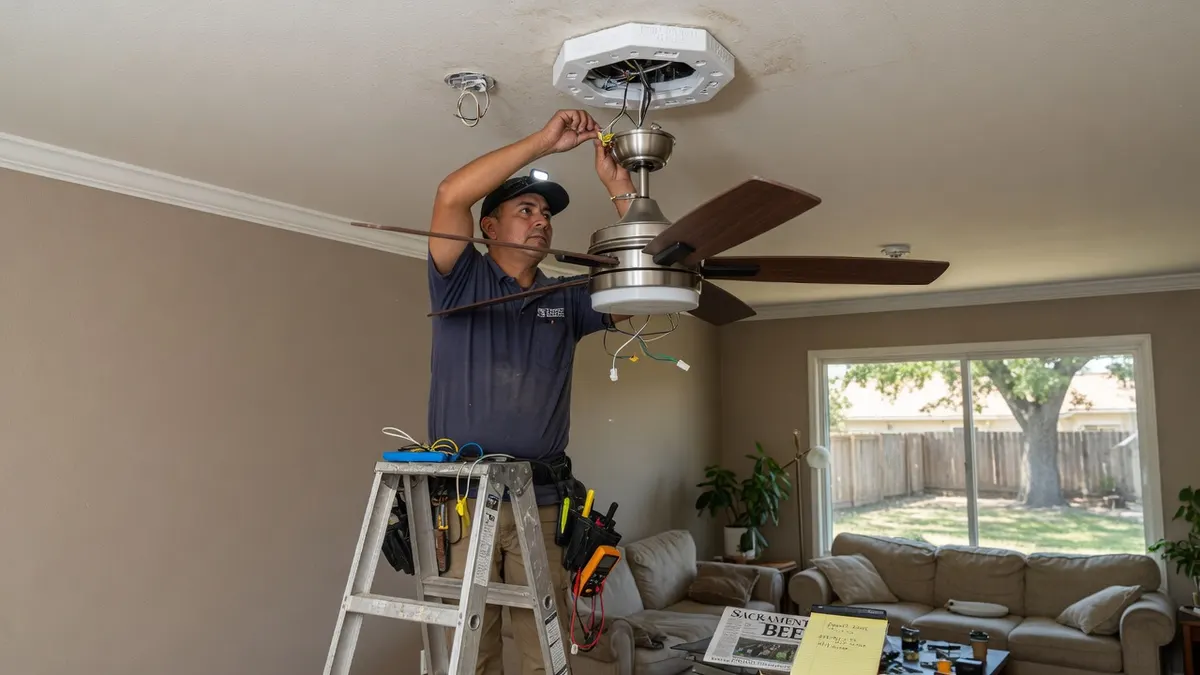
Ceiling Fan Installation in Sacramento: Costs, Wiring, Fan-Rated Boxes, and Permit Questions
A ceiling fan feels like a small upgrade until the first 102°F afternoon arrives and the upstairs bedroom finally becomes usable without lowering the thermostat. In Sacramento, Elk Grove, Roseville, Davis, Carmichael, and the rest of the valley, ceiling fans are not a cure for bad insulation or an undersized air conditioner, but they are one of the most cost-effective comfort improvements a homeowner can make.
The catch is that a ceiling fan is heavier and more dynamic than a light fixture. It spins, vibrates, and hangs over people. Swapping a light for a fan without checking the ceiling box, framing support, wiring, switch setup, and permit expectations can create a real safety problem. The cheapest fan install is not always the best value if it leaves the fan wobbling, the switch confusing, or the box carrying more load than it was designed to hold.
Here is what Sacramento-area homeowners should understand before hiring an electrician or handyman for ceiling fan work.
What Ceiling Fan Installation Usually Costs
For a typical Sacramento-area house, ceiling fan installation often falls into these ranges:
- Replace an existing fan in the same location: $150 to $400 labor, not including the fan
- Install a fan where a fan-rated box and wiring already exist: $200 to $500
- Replace a light fixture with a fan using an accessible attic above: $350 to $900
- Install a new fan location with new wiring and switch: $700 to $1,800
- Install a fan in a two-story room, vaulted ceiling, or difficult access area: $800 to $2,500 or more
- Outdoor fan on a covered patio with new wiring: $600 to $2,000, depending on access and weatherproofing
- Smart switch, remote module, or wall control upgrade: $150 to $500 when the wiring is simple
The fan itself may cost $100 to $350 for a decent indoor model, $250 to $700 for a larger premium fan, and $250 to $800 for a wet-rated or damp-rated outdoor fan. Very cheap fans can be noisy, hard to balance, and frustrating to repair later.
The Ceiling Box Is the First Safety Check
The most important question is not whether the fan fits the room. It is whether the ceiling box is rated to support a fan. A light fixture box is not automatically safe for a ceiling fan. Fan-rated boxes are designed to handle both weight and movement. They should be attached properly to framing or to a rated brace between joists.
This is especially important in older Sacramento homes with plaster ceilings, original knob-and-tube remnants, shallow boxes, or remodeled rooms where past work is hard to trace. A fan may appear stable on day one and still loosen over time if the box is wrong.
Ask the installer to confirm:
- Whether the existing box is listed for ceiling fan support
- How the box is attached to framing
- Whether the fan weight is within the box rating
- Whether a brace or new box will be installed
- Whether ceiling damage will be patched if access is needed
If a bid says only "install fan" and does not mention the box, ask before work starts. That one detail separates a safe installation from a shortcut.
Wiring Options: One Switch, Two Switches, Remote, or Smart Control
A fan can be wired several ways, and the best option depends on what is already in the wall and ceiling.
A simple setup uses one wall switch for power and pull chains or a remote for fan speed and light control. This is common when replacing a basic ceiling light and only one switched hot conductor is available.
A better setup uses separate wall controls for the fan and light. This usually requires the right cable between the switch box and ceiling box. If that cable is not already there, the electrician may need attic access, wall fishing, or surface conduit.
Remote-control fans are convenient, but they can be annoying in rentals or busy households if the remote disappears. Smart switches can work well, but not all smart controls are compatible with every fan motor. Some fans use DC motors and proprietary controls. Others need a neutral wire in the switch box. Older homes may not have that neutral where you expect it.
Before choosing controls, decide how you want the room to work at 2 a.m. A bedroom fan should be easy to adjust without turning on bright lights. A living room fan may need separate dimming. A rental or guest room should be intuitive for someone who has never used the remote.
Sacramento Rooms Where Fans Help the Most
Ceiling fans work by moving air across skin, which makes people feel cooler. They do not lower the room temperature. That distinction matters. A fan in an empty room wastes electricity. A fan in an occupied room can let you set the thermostat a few degrees higher and still feel comfortable.
The best Sacramento fan locations are usually:
- Upstairs bedrooms that hold heat after sunset
- West-facing rooms with afternoon sun
- Home offices where the AC does not reach evenly
- Living rooms with high ceilings and stagnant air
- Covered patios used during warm evenings
- Kitchens or dining spaces where airflow improves comfort
Fans are less effective when the room has very low ceilings, poor blade clearance, or heavy heat gain from the attic. A fan helps comfort, but it should not hide a larger building-performance problem.
Size, Height, and Blade Clearance
Fan size should match the room. A small 42-inch fan can feel weak in a large living room. A large 60-inch fan can overwhelm a small bedroom and create too much airflow near a bed. Many bedrooms work well with 44 to 52 inches. Larger living rooms often need 52 to 60 inches, or sometimes two smaller fans depending on layout.
Height matters too. Standard ceilings usually use a low-profile or short downrod fan. Tall or vaulted ceilings may need a longer downrod so the blades sit at a useful height. If the fan is too high, you may barely feel it. If it is too low, it can feel unsafe and look awkward.
The bid should account for ceiling height, slope, downrod length, canopy compatibility, blade clearance from walls, and whether a ladder or scaffold is needed. A vaulted great room in Folsom is a different installation than a hall bedroom in Tahoe Park.
Outdoor Fans Need the Right Rating
A covered Sacramento patio can still expose a fan to moisture, dust, heat, insects, and wind. Indoor fans do not belong outside. For covered patios, use a damp-rated fan at minimum. For locations where rain can reach the fan, use a wet-rated model. Outdoor-rated blades and housings hold up better, and the electrical connections need appropriate boxes, covers, and weather-resistant details.
Outdoor fan scope should also include how the wiring reaches the fan. Running a new circuit or extending an existing exterior circuit may require conduit, GFCI protection where applicable, weather-rated boxes, and a switch location that makes sense from inside and outside. If the fan is going into a new patio cover, coordinate the electrician before the cover is finished. It is cheaper to plan wiring before panels, beams, or ceiling materials close the route.
Permits and Who Should Do the Work
Permit rules vary by jurisdiction and scope. Replacing an existing fan with a similar fan in the same approved box is often treated differently than adding a new ceiling outlet, new wiring, or a new switch leg. New electrical wiring generally requires a permit and inspection. Outdoor circuits, patio cover electrical, and work tied to a larger remodel are more likely to need formal permit handling.
For work over $1,000 in California, contractor licensing matters. A C-10 electrical contractor is the clean fit for new wiring, new switches, circuit work, outdoor electrical, and troubleshooting. A properly licensed general contractor may handle electrical as part of a larger permitted project using qualified trades. A handyman may be appropriate for limited like-for-like work below the legal threshold, but not for running new circuits or making judgment calls about wiring safety.
If the installer says no permit is ever needed for ceiling fans, that is too broad. If they say every fan swap requires a full plan review, that is also unlikely. Ask what applies to your city, your exact scope, and who is responsible for the inspection if one is required.
What a Complete Ceiling Fan Bid Should Include
A useful estimate should spell out more than the number of fans. Ask for:
- Fan locations and ceiling height
- Whether each ceiling box is existing, replaced, or newly installed
- Confirmation that boxes are fan-rated
- Wiring method and switch/control plan
- Whether attic access, wall fishing, or drywall patching is included
- Fan assembly, balancing, and testing
- Disposal of old fixtures or fans
- Permit responsibility if new wiring is added
- Outdoor rating and weatherproofing details for patios
- Warranty on labor and callback policy for wobble or noise
Also clarify who buys the fans. If you buy them, confirm the installer is willing to install that model and that you have the right downrod, remote kit, slope adapter, or wall control before the appointment. Missing parts turn a simple job into a second trip.
Common Mistakes to Avoid
The biggest mistake is hanging a fan from a light-duty box. The second is assuming the existing wall switch can control the fan and light separately. The third is buying a fan based only on style without checking ceiling height, room size, motor type, and control compatibility.
For outdoor spaces, the common mistake is using an indoor-rated fan under a patio because it is cheaper. Sacramento summers are dry, but covered patios still see winter moisture, dust, and temperature swings. A failed outdoor fan is not a bargain.
For bedrooms, avoid bright integrated light kits if the room needs soft nighttime control. For high ceilings, do not skip the downrod calculation. For older homes, do not let anyone bury questionable splices or leave old wiring unexplained.
The Bottom Line
Ceiling fans are a smart Sacramento comfort upgrade when they are installed safely and planned around how the room is actually used. The visible fan is only part of the job. The ceiling box, framing support, wiring, switch control, blade height, and outdoor rating decide whether the project feels solid years later.
Start by choosing the rooms where air movement will make a difference. Then ask the installer to verify the fan-rated box, explain the control plan, and put any wiring or permit responsibility in writing. A well-scoped ceiling fan project is not complicated, but it should never be treated like hanging a picture frame.
Who to Hire for This Project
For the work covered in this guide, these are the contractor types to contact and the CSLB classification to verify before you take quotes:
Questions to Ask Before You Sign
- "Is your CSLB license active and bonded?" Verify it yourself at cslb.ca.gov the license number must appear on their bid.
- "Who pulls the permit, and is it included in the bid?" The contractor should handle any required permits a pro who suggests skipping one is a red flag.
- "Can you itemize labor, materials, and allowances?" Itemized bids are the only way to compare quotes on the same scope.
- "What's the payment schedule?" California caps the down payment at $1,000 or 10%, whichever is less payments should track completed work.
- "Who from this area can I call as a reference?" Ask for a recent local job of similar scope, not just photos.
Sacramento Contractors for This Project
Related Articles
Outdoor Outlets, GFCI Protection, and Landscape Lighting in Sacramento: Costs and Planning
August 17, 2026
Sacramento Electrical Panel Upgrade Guide: Costs, Permits, Load Calculations, and When 200 Amps Makes Sense
August 14, 2026
Sacramento Electrical Panel Upgrade and EV Charger Guide: Costs, Load Calculations, Permits, and Practical Planning
August 10, 2026
Frequently Asked Questions
How much does it cost to install a ceiling fan in Sacramento? +
A simple replacement in the same location often costs $150 to $400 for labor. Installing a fan where only a light fixture exists may cost $350 to $900 if attic access is good, while a new fan location with new wiring and a switch can run $700 to $1,800 or more.
Can a ceiling fan be installed on any existing light box? +
No. The ceiling box must be rated for fan support and attached properly to framing or a rated brace. A standard light fixture box may not safely handle the weight and movement of a ceiling fan.
Do I need an electrician to install a ceiling fan? +
Use a licensed electrician when the job involves new wiring, a new switch, outdoor electrical, troubleshooting, or uncertain existing wiring. A simple like-for-like fan replacement may be more limited, but the installer still needs to confirm the box is fan-rated.
Does ceiling fan installation require a permit in Sacramento? +
Permit requirements depend on jurisdiction and scope. A like-for-like replacement is often treated differently than adding a new ceiling outlet, switch, or circuit. New electrical wiring generally requires a permit and inspection, so ask your local building department or licensed electrician before work starts.
What kind of fan should I use on a covered patio? +
Use a damp-rated fan for covered patios protected from direct rain, and a wet-rated fan where rain can reach the fixture. Indoor fans are not built for exterior moisture, dust, and temperature swings.