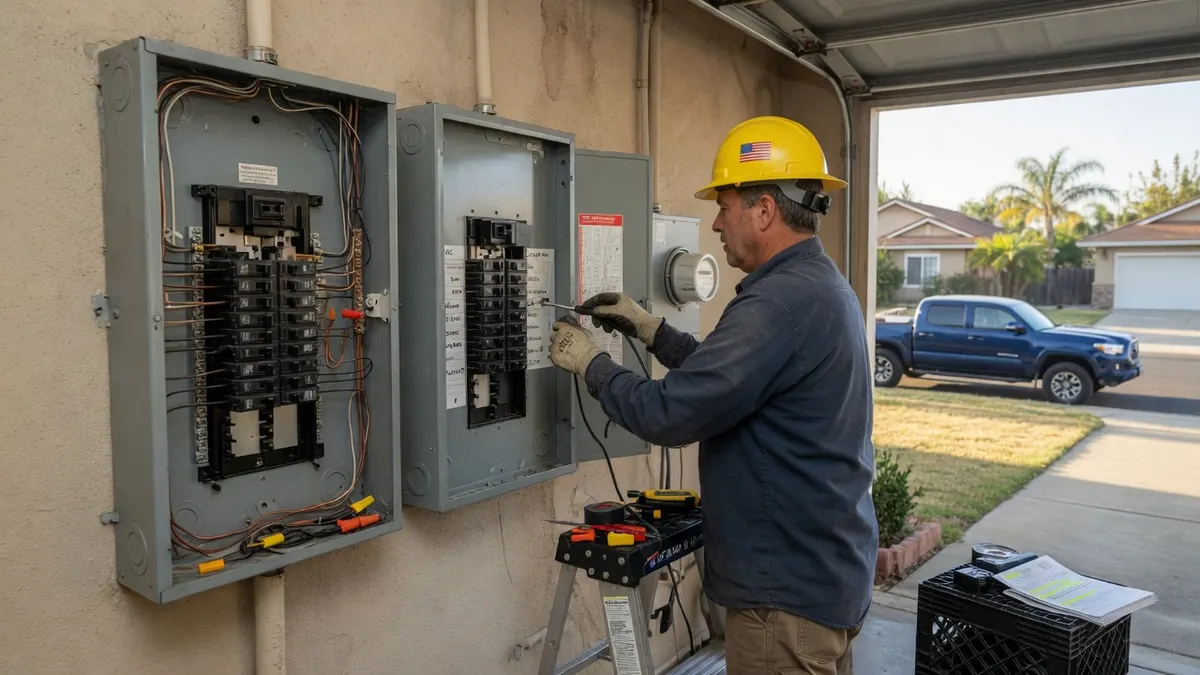
Sacramento Electrical Panel Upgrade Cost Guide: 100 Amp, 200 Amp, EV Chargers, Heat Pumps, and Permits
Electrical panels are not exciting until they become the thing that blocks the project you actually want. A kitchen remodel needs new circuits. An EV charger needs capacity. A heat pump water heater, induction range, HVAC replacement, spa, ADU, or solar battery may push an older panel past its practical limit. In Sacramento, many homes still have 100 amp service, crowded breaker spaces, older equipment, Federal Pacific or Zinsco panels, or additions that were wired over several decades. The panel may still keep the lights on, but that does not mean it is ready for modern loads.
A panel upgrade is one of those projects where the visible box is only part of the cost. The scope can involve utility coordination, service mast or underground service work, grounding and bonding, meter/main equipment, trenching, stucco or siding patching, load calculations, permits, inspections, and sometimes a full service upgrade from 100 amps to 200 amps. Prices vary widely because one house may need a straightforward panel swap while another requires utility engineering and exterior wall repairs.
This guide explains realistic 2026 Sacramento-area costs, when a panel upgrade is necessary, how EV chargers and heat pumps affect the decision, what permits and inspections usually look like, and how to compare electrical bids without getting lost in jargon.
Typical 2026 Electrical Panel Upgrade Costs in Sacramento
For planning purposes, Sacramento homeowners commonly see these ranges:
- Basic panel replacement with similar service size: $2,500 to $5,500 when the existing service, meter location, grounding, and access are relatively straightforward
- 100 amp to 200 amp service upgrade: $4,500 to $12,000 for many homes, depending on overhead or underground service, utility requirements, panel location, and wall repairs
- Panel relocation: $6,000 to $18,000-plus if the panel must move to meet clearance, utility, fire, or access requirements
- Subpanel installation: $1,500 to $5,000-plus for garages, workshops, additions, EV charging areas, or load distribution
- EV charger circuit with available capacity: $800 to $2,500 for many common installations, more for long conduit runs, trenching, drywall repair, or panel constraints
- Load management device instead of full service upgrade: $800 to $2,500-plus when suitable for the appliance and accepted by the authority having jurisdiction
- Underground service complications: $3,000 to $15,000-plus added cost is possible when trenching, conduit replacement, utility pull boxes, concrete cutting, or long runs are involved
A very low panel quote may exclude utility fees, permit fees, stucco patching, labeling, grounding corrections, surge protection, trenching, or drywall work. That does not automatically make it a bad bid, but exclusions should be clear before you sign.
When Sacramento Homes Usually Need a Panel Upgrade
A panel upgrade is often triggered by one of four situations: capacity, condition, safety, or project requirements.
Capacity is the most common reason. Older 100 amp services were not designed around multiple high-demand electric appliances. Add an EV charger, heat pump HVAC, heat pump water heater, induction cooking, electric dryer, pool equipment, or workshop loads, and the home may need either more service capacity or a smarter load management plan. The right answer depends on a formal load calculation, not guesswork.
Condition matters too. Rust, scorching, buzzing, loose breakers, missing covers, water intrusion, double-tapped conductors, damaged bus bars, and obsolete equipment are red flags. Some older panel brands are widely considered problematic by insurers, electricians, and home inspectors. If an inspector calls out the panel during a sale or remodel, buyers and lenders may want it corrected before closing or before other work proceeds.
Project requirements can also force the issue. A remodel that opens walls, adds circuits, or changes the service equipment may trigger current code requirements. ADUs and major electrification projects can require more planning because the loads affect the whole property.
100 Amp vs. 200 Amp Service
A 200 amp upgrade is common, but it is not automatically required for every home. A small house with gas appliances and modest electrical demand may work safely with 100 amps if the panel is in good condition and has adequate breaker space. A larger all-electric home, a house with two EVs, or a property planning an ADU may need 200 amps or more detailed load management.
The best first step is an electrical load calculation. This looks at square footage, fixed appliances, HVAC equipment, water heating, cooking, laundry, EV charging, pools, spas, and other loads. It also accounts for demand factors in the electrical code. Ask the electrician to explain whether they are recommending a full service upgrade because the calculation requires it, because the existing equipment is obsolete, or because it is the most flexible long-term option.
For many Sacramento homeowners, the decision is strategic. If you plan to keep the house, buy EVs, replace gas appliances with electric equipment, install solar with batteries, or build an ADU, a 200 amp service may prevent multiple rounds of electrical work. If you need one new circuit and the panel still has safe capacity, a smaller targeted solution may be enough.
EV Chargers, Heat Pumps, Solar, and Batteries
EV chargers are a major driver of panel upgrades. A Level 2 charger may use a 40 amp, 50 amp, or 60 amp circuit depending on charger settings and vehicle needs. Not every driver needs the maximum charge rate. Many homes can use a lower-amp charger, scheduled charging, or an energy management system to avoid an expensive service upgrade. The tradeoff is charging speed.
Heat pump HVAC and heat pump water heaters also need planning. They may reduce gas use, but they add electrical load. Induction ranges and electric dryers can do the same. If several upgrades are likely over the next few years, tell the electrician now. Designing around the whole electrification path is usually cheaper than adding one circuit at a time.
Solar and batteries add another layer. The main panel, meter/main equipment, bus rating, backfeed limits, emergency disconnects, and utility rules can all affect design. If solar is in your future, ask whether the proposed panel is solar-ready and whether it leaves room for batteries or a future critical-load subpanel.
Permits, Utility Coordination, and Inspections
Panel upgrades in the Sacramento area usually require an electrical permit and inspection. The process may involve the city or county building department, SMUD for electric service, and sometimes PG&E if gas equipment is being changed as part of a broader electrification project. Jurisdictions can differ between Sacramento, Elk Grove, Roseville, Folsom, Rancho Cordova, Citrus Heights, West Sacramento, Placer County, El Dorado County, and unincorporated areas.
Utility coordination is especially important. If the service must be disconnected and reconnected, the contractor may need to schedule with the utility and inspector so the power outage is limited. Overhead service upgrades can involve mast height, weatherhead, service entrance conductors, and attachment point details. Underground service can be more expensive because conduit, trenching, and utility-owned equipment may come into play.
California homeowners should verify the contractor's license through the official Contractors State License Board. Electrical work should be handled by a properly licensed electrical contractor for the scope. Ask for proof of workers' compensation and general liability insurance, especially because service equipment work has serious safety and property risks.
What a Strong Electrical Panel Bid Should Include
A useful bid should be specific. Look for:
- Existing service size and proposed service size
- Panel brand, amperage, breaker spaces, and outdoor rating if applicable
- Whether the work is a panel swap, service upgrade, panel relocation, or subpanel installation
- Load calculation assumptions and planned future loads
- Permit responsibility and inspection coordination
- Utility coordination and expected outage time
- Grounding and bonding scope
- Meter/main, mast, riser, conduit, conductors, breakers, and labeling details
- AFCI, GFCI, surge protection, and code-required upgrades if included
- Stucco, siding, drywall, paint, concrete, or trenching exclusions
- Warranty terms for labor and equipment
Do not compare only the final price. One quote may include utility coordination, grounding corrections, permit fees, and patching, while another may leave those items as owner responsibilities.
Bottom Line
For Sacramento homeowners, an electrical panel upgrade is partly a repair project and partly a capacity planning decision. Many straightforward panel replacements fall around $2,500 to $5,500, while 100 amp to 200 amp upgrades often land around $4,500 to $12,000. Relocations, underground service, trenching, complex utility requirements, solar-ready equipment, and wall repairs can push costs higher.
Before committing, decide what the house needs now and what it may need soon. EV charging, heat pumps, induction cooking, batteries, ADUs, pools, and workshops all affect the right design. Ask for a load calculation, clear permit handling, utility coordination, grounding details, and written exclusions. A good electrical upgrade should not just pass inspection this week. It should make the next decade of home improvements easier, safer, and less expensive.
Browse Sacramento-area electrical contractors and related general contractors serving Sacramento, Elk Grove, Roseville, Folsom, and nearby communities.
Who to Hire for This Project
For the work covered in this guide, these are the contractor types to contact and the CSLB classification to verify before you take quotes:
Questions to Ask Before You Sign
- "Is your CSLB license active and bonded?" Verify it yourself at cslb.ca.gov the license number must appear on their bid.
- "Who pulls the permit, and is it included in the bid?" The contractor should handle any required permits a pro who suggests skipping one is a red flag.
- "Can you itemize labor, materials, and allowances?" Itemized bids are the only way to compare quotes on the same scope.
- "What's the payment schedule?" California caps the down payment at $1,000 or 10%, whichever is less payments should track completed work.
- "Who from this area can I call as a reference?" Ask for a recent local job of similar scope, not just photos.
Sacramento Contractors for This Project
Related Articles
Outdoor Outlets, GFCI Protection, and Landscape Lighting in Sacramento: Costs and Planning
August 17, 2026
Sacramento Electrical Panel Upgrade Guide: Costs, Permits, Load Calculations, and When 200 Amps Makes Sense
August 14, 2026
Sacramento Electrical Panel Upgrade and EV Charger Guide: Costs, Load Calculations, Permits, and Practical Planning
August 10, 2026
Frequently Asked Questions
How much does it cost to upgrade an electrical panel in Sacramento? +
Many Sacramento-area panel replacements cost about $2,500 to $5,500 when the service size and location stay similar. A 100 amp to 200 amp service upgrade commonly costs about $4,500 to $12,000, with higher prices for panel relocation, underground service, trenching, utility requirements, stucco or siding repairs, and solar-ready equipment.
Do I need a 200 amp panel for an EV charger? +
Not always. Some homes can support a lower-amp Level 2 charger, scheduled charging, or a load management device without a full service upgrade. The decision should be based on an electrical load calculation, the charger size, other appliances, and local inspection requirements.
Does an electrical panel upgrade require a permit in Sacramento? +
Usually yes. Panel replacements and service upgrades typically require an electrical permit, inspection, and sometimes utility coordination for disconnect and reconnect. Requirements vary by city, county, and utility service area, so the contractor should identify permit responsibilities in writing.
What should I ask before hiring an electrician for a panel upgrade? +
Ask for the existing and proposed service size, a load calculation, permit and inspection handling, utility coordination, grounding and bonding scope, breaker and panel specifications, expected outage time, warranty terms, and exclusions for stucco, siding, drywall, trenching, concrete, or painting.