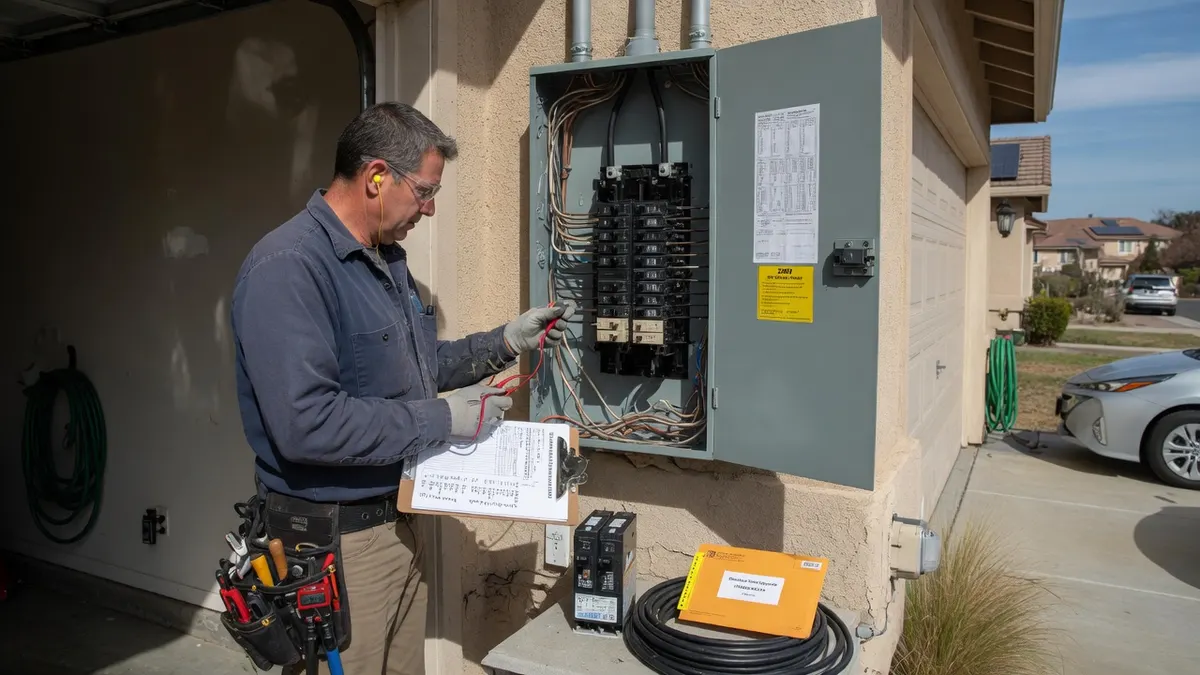
Rancho Cordova Electrical Panel Upgrade Costs: Permits, Load Calculations, and EV Readiness
Electrical panel upgrades in Rancho Cordova are often triggered by a bigger project. A homeowner wants an EV charger, heat pump water heater, induction range, room addition, hot tub, solar battery, or garage conversion, then discovers the existing panel may not have enough capacity, breaker spaces, or safe working clearance. The panel becomes the gatekeeper for the rest of the plan.
Rancho Cordova has a wide mix of homes: older neighborhoods near Folsom Boulevard, postwar and mid-century houses, newer subdivisions, attached garages, detached workshops, and homes that have already been remodeled in phases. That variety matters. A simple like-for-like panel replacement is very different from a service upgrade that involves utility coordination, trenching, stucco repair, grounding corrections, or moving the panel because the current location no longer meets clearance rules.
This guide explains what Rancho Cordova homeowners should budget in 2026, when permits and inspections usually apply, why load calculations matter, and what should be included in a complete electrical contractor bid.
Typical 2026 Cost Ranges
Most residential panel projects in the Sacramento area fall into these practical ranges:
- Basic panel replacement with similar capacity: $2,500 to $5,500 when the service size stays similar, access is good, the panel location works, and only limited grounding or stucco repair is needed.
- 100 amp to 200 amp service upgrade: $4,500 to $10,000 for many single-family homes, depending on utility coordination, meter main equipment, grounding, permit requirements, and wall repair.
- Complex service upgrade or panel relocation: $8,000 to $18,000 or more when the project requires a new location, overhead mast changes, underground service work, long feeder runs, exterior wall rebuilding, or coordination with other trades.
- Panel work tied to EV, solar, battery, or electrification projects: $6,000 to $20,000 or more if the panel upgrade is only one part of a larger electrical plan.
These ranges are planning numbers, not promises. Electrical work is heavily dependent on existing conditions. The final price can change if the contractor discovers damaged service conductors, outdated grounding, crowded subpanels, abandoned circuits, unsafe splices, poor labeling, or a panel brand with known limitations.
Why Load Calculations Matter
A larger panel is not automatically the answer. The right starting point is a load calculation. A load calculation estimates how much electrical demand the home is expected to place on the system based on square footage, appliances, heating and cooling equipment, water heating, laundry, kitchen circuits, EV charging, and other loads.
This matters because homeowners are adding more electrical demand than they used to. A house that worked fine with gas water heating, gas cooking, and no EV may look very different after adding a heat pump HVAC system, heat pump water heater, induction range, electric dryer, and Level 2 charger. At the same time, modern load management equipment can sometimes avoid a full service upgrade by controlling when certain equipment runs.
Ask the electrician how they are sizing the panel and whether the estimate includes a formal load calculation. If the answer is simply "200 amps is always enough," keep asking questions. Many homes do need 200 amp service, but the reasoning should be written down, especially if future solar, batteries, or EV charging are part of the plan.
Permit and Inspection Basics in Rancho Cordova
Electrical panel replacements and service upgrades usually require permits and inspections. Rancho Cordova addresses may be handled through city processes or related regional utility coordination depending on the exact scope. The utility also matters because meter work and service disconnects must be coordinated safely.
A normal project may involve permit application, utility disconnect or meter release steps, panel installation, grounding and bonding updates, inspection, and utility re-energizing. Timing can be straightforward for a well-planned replacement, but it can stretch if equipment is backordered, the panel location fails clearance requirements, or utility scheduling is tight.
Homeowners should ask who pulls the permit, whether permit fees are included, who schedules utility coordination, and how long the power is expected to be off. For many occupied homes, the outage is measured in hours, but complex projects can take longer. If someone proposes unpermitted service equipment work, that is a major warning sign.
California electrical work over $1,000 in labor and materials generally requires a licensed contractor. Homeowners can verify licenses and workers' compensation status through the Contractors State License Board at cslb.ca.gov. For panel and service work, confirm that the contractor is properly licensed for electrical work and insured for the scope.
Common Rancho Cordova Panel Issues
Older homes may have panels with limited breaker spaces, obsolete breakers, poor labeling, undersized grounding, mixed wiring methods, or prior additions that were never cleaned up. Some garages have been converted or packed with storage, making working clearance around the panel a real issue. A panel cannot simply be hidden behind cabinets, shelving, water heaters, or appliances.
Exterior panels can have weathering, damaged stucco, rust, deteriorated seals, or vegetation conflicts. Overhead service masts can need correction if they are loose, too low, or poorly flashed. Underground services can be more complicated because the path from utility equipment to the home may not be obvious until the contractor investigates.
Subpanels are another common source of confusion. A home may have a main panel outside, a garage subpanel, a pool equipment panel, or a detached structure panel. Upgrading one piece of equipment does not automatically fix overloaded circuits or poor wiring elsewhere. The estimate should define exactly which panels, feeders, breakers, grounding parts, and labels are included.
EV Chargers, Solar, Batteries, and Electrification
EV charging is one of the most common reasons homeowners ask about panel capacity. A Level 2 charger may need a dedicated 240 volt circuit, but the charger size should match the home's available capacity and the driver's actual needs. Not everyone needs the highest amperage charger. Sometimes a smaller charger, scheduled charging, or load management device is a smarter and cheaper solution.
Solar and batteries also require planning. If solar is likely in the next few years, tell the electrician before choosing panel equipment. Some meter-main combinations, bus ratings, breaker layouts, and backup load panel designs are better suited for solar and storage than others. Replacing a panel now and discovering it is poorly matched to a future battery system is an expensive mistake.
Electrification projects should be sequenced. If the homeowner plans to replace a gas furnace with a heat pump, add an electric water heater, install induction cooking, and buy an EV, the panel should be planned for the full direction of the house, not just the first appliance. A good electrician will ask about future loads before finalizing the scope.
What a Complete Electrical Bid Should Include
A useful panel upgrade estimate should spell out more than "upgrade panel." Look for:
- Existing service size and proposed service size
- Main panel, meter-main, subpanel, breaker, and feeder details
- Whether the panel location stays the same or moves
- Load calculation assumptions and future load planning
- Permit responsibility, inspection steps, and utility coordination
- Grounding and bonding scope, including ground rods, water bonding, and required corrections
- Labeling, circuit identification, and cleanup of abandoned or unsafe wiring
- Stucco, siding, drywall, paint, or weatherproofing exclusions
- Expected power outage duration and scheduling plan
- EV charger, solar, battery, generator, pool, spa, or detached structure considerations
- Warranty terms and cleanup
If one bid includes permits, utility coordination, grounding corrections, labeling, and wall repair while another only lists the panel equipment, the prices are not comparable.
Questions to Ask Before You Hire
Before signing, ask whether the contractor has inspected the existing panel in person, whether the panel is safe to work around, and whether the current location has required clearance. Ask what happens if the utility requires additional work. Ask whether future EV, solar, or battery plans should change the equipment choice. Ask how change orders are priced if hidden problems appear.
Also ask whether the contractor will provide a clear shutdown plan. Losing power for a day affects refrigerators, internet, home offices, medical devices, security systems, and garage access. The best projects are planned around the household, not just the installer's calendar.
Final Planning Advice
For many Rancho Cordova homeowners, a realistic panel upgrade budget should include the quoted price plus a contingency for grounding corrections, wall repair, labeling cleanup, and utility surprises. If the project is connected to a larger remodel, EV charger, heat pump conversion, or solar plan, bring the electrician into the conversation early. Waiting until the appliance or charger is already purchased can force rushed decisions.
A good electrical panel upgrade is not glamorous, but it makes the home safer, more flexible, and easier to improve. The goal is not just a bigger number on the main breaker. The goal is a permitted, inspected, well-labeled electrical system that supports how the home will actually be used over the next decade.
Browse licensed electricians in the Sacramento area, or search for contractors serving Rancho Cordova, Carmichael, Folsom, and nearby communities.
Who to Hire for This Project
For the work covered in this guide, these are the contractor types to contact and the CSLB classification to verify before you take quotes:
Questions to Ask Before You Sign
- "Is your CSLB license active and bonded?" Verify it yourself at cslb.ca.gov the license number must appear on their bid.
- "Who pulls the permit, and is it included in the bid?" The contractor should handle any required permits a pro who suggests skipping one is a red flag.
- "Can you itemize labor, materials, and allowances?" Itemized bids are the only way to compare quotes on the same scope.
- "What's the payment schedule?" California caps the down payment at $1,000 or 10%, whichever is less payments should track completed work.
- "Who from this area can I call as a reference?" Ask for a recent local job of similar scope, not just photos.
Sacramento Contractors for This Project
Related Articles
Outdoor Outlets, GFCI Protection, and Landscape Lighting in Sacramento: Costs and Planning
August 17, 2026
Sacramento Electrical Panel Upgrade Guide: Costs, Permits, Load Calculations, and When 200 Amps Makes Sense
August 14, 2026
Sacramento Electrical Panel Upgrade and EV Charger Guide: Costs, Load Calculations, Permits, and Practical Planning
August 10, 2026
Frequently Asked Questions
How much does an electrical panel upgrade cost in Rancho Cordova? +
A basic panel replacement may cost $2,500 to $5,500, while many 100 amp to 200 amp service upgrades land around $4,500 to $10,000. Complex relocations, underground service issues, EV charging, solar readiness, batteries, or major grounding corrections can push the project above $10,000.
Do electrical panel upgrades need permits? +
Panel replacements and service upgrades usually require permits, inspections, and utility coordination. The contractor should state who pulls the permit, who schedules the utility steps, what inspections are expected, and how long power may be off.
Can I add an EV charger without upgrading my panel? +
Sometimes. It depends on the home's load calculation, existing service size, available breaker space, charger amperage, and whether load management equipment is appropriate. A smaller charger or managed charger can sometimes avoid a full service upgrade.
What should be included in a panel upgrade bid? +
Look for service size, panel and breaker details, load calculation assumptions, permit and utility coordination, grounding and bonding work, labeling, outage planning, wall repair exclusions, and any EV, solar, battery, generator, pool, or detached structure considerations.