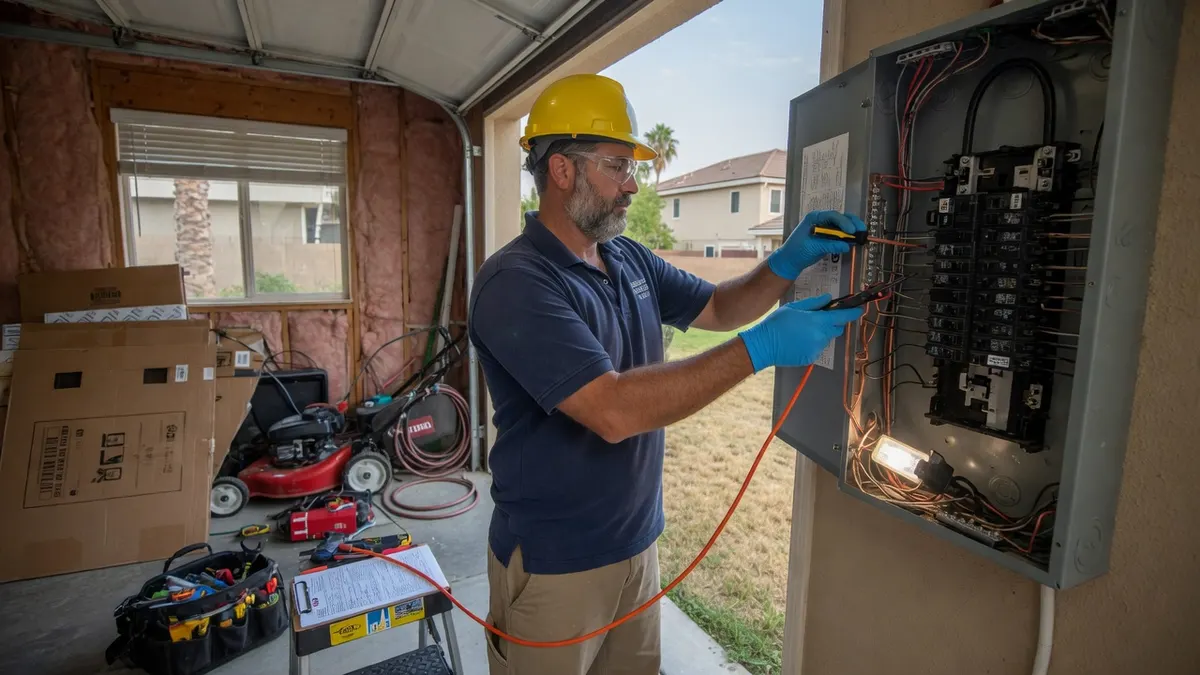
Sacramento Electrical Panel Inspection Scheduling: What Homeowners Should Expect
Electrical panel work feels urgent because the house depends on it. Once the old panel is opened, upgraded, relocated, or replaced, homeowners want power restored, inspections passed, and utility coordination finished without surprises. The part that often creates the most confusion is not the panel itself. It is the inspection schedule.
Sacramento homeowners search for specific inspection times because panel jobs can affect work schedules, refrigeration, medical equipment, EV charging, air conditioning, gates, internet, and home offices. Unfortunately, electrical inspections are rarely as precise as a restaurant reservation. The contractor, building department, and utility may each have a role, and each has its own timing rules.
This guide explains how electrical panel inspection scheduling usually works in the Sacramento area, what affects the timeline, what a homeowner should confirm before the panel is shut down, and how to reduce the chance of a failed inspection or an extra day without a finished approval.
Use this to understand the sequence before your contractor submits; actual timing depends on jurisdiction, utility, and project scope.
Why Panel Inspection Scheduling Is Different
A simple outlet repair might be completed in one visit with no utility coordination. Panel upgrades are different because the work can involve the service entrance, meter, grounding, breakers, main disconnect, utility conductors, and the approved load calculation for the home. If the panel is being upgraded for an EV charger, heat pump, solar-ready electrical work, ADU, kitchen remodel, or room addition, the inspector may also look at related permit scope.
The inspection is the local agency's confirmation that the permitted work is ready to energize, continue, or close out. Depending on the project, the contractor may need a rough inspection, a meter release, a final inspection, or both. The utility may need permission from the building department before reconnecting or changing service equipment.
That is why the schedule matters. A panel replacement can be physically installed in a day, but the homeowner's actual timeline depends on permit approval, inspection availability, utility disconnect and reconnect rules, correction items, and whether the contractor submitted the right paperwork before work started.
Typical 2026 Scheduling and Cost Context
For planning purposes, many Sacramento panel projects fall into these ranges:
- Inspection request window: often requested the business day before the inspection, though exact rules vary by jurisdiction and permit system.
- Field inspection arrival: commonly a multi-hour window rather than an exact appointment, especially during busy construction seasons.
- Basic panel replacement: often $3,500 to $7,500 when replacing like-for-like service equipment with straightforward access and no major service upgrade.
- Panel upgrade to 200 amps: often $5,000 to $12,000 or more depending on utility coordination, trenching, mast or riser work, grounding, stucco or siding repair, and load calculations.
- Panel relocation or complex service work: often $8,000 to $20,000 or more when the panel moves, overhead service changes to underground, walls must be opened, or utility design is required.
These are planning ranges, not quotes. A project in the City of Sacramento can have different process details than one in unincorporated Sacramento County, Elk Grove, Citrus Heights, Folsom, Rancho Cordova, Roseville, or Davis. The address controls the building department and often the utility process.
Who Schedules the Inspection?
In most homeowner projects, the licensed electrical contractor or general contractor schedules the inspection because they hold the permit or are responsible for the electrical scope. That is usually best. The contractor knows when the panel will be ready, which inspection type to request, what permit number applies, and whether the utility needs a meter release.
Homeowners should still understand the schedule. Ask the contractor these questions before the job starts:
- Who is requesting the inspection?
- Which inspection is needed: rough, service, meter release, final, or another category?
- Is the inspection requested for a specific date or only after the work is complete?
- Can the homeowner track the permit online?
- What happens if the inspector requires corrections?
- Who coordinates with SMUD, PG&E, or another utility if service must be disconnected or reconnected?
If the contractor says the homeowner must schedule the inspection, get written instructions. Use the exact permit number, site address, inspection type, contact name, gate code, dog instructions, and phone number requested by the permit system. A wrong inspection type can waste a day.
City, County, and Utility Coordination
Sacramento-area addresses do not all use the same agency. City of Sacramento permits are handled by the city. Unincorporated areas use Sacramento County. Nearby cities have their own building departments. Utility service may involve SMUD for electric service in much of Sacramento County, PG&E in other nearby communities, or both utilities if gas work is also part of a remodel.
Homeowners can review local permit and inspection resources through official agency sites such as the City of Sacramento building division or Sacramento County building permits and inspection services. For contractor license status, the authority is the Contractors State License Board.
The key point is that the building inspector does not always control the utility schedule. A project can pass a local inspection and still need utility action before the panel is fully energized or upgraded. For service upgrades, the contractor should explain whether the utility has approved the service size, whether a disconnect is scheduled, and whether reconnection depends on same-day approval.
Can You Request a Specific Inspection Time?
Sometimes a permit system allows notes or contact preferences, but homeowners should not assume they can choose an exact time. Many inspection departments assign routes based on geography, inspector workload, inspection type, and daily staffing. A request for morning or afternoon may be considered, but it is not always guaranteed.
If timing is critical, say so early. For example, a household with medical equipment, refrigerated business inventory, remote work needs, or limited gate access should tell the contractor before the inspection is scheduled. The contractor may be able to request a courtesy call, choose a workday with better availability, or plan temporary power needs. Waiting until inspection morning is too late.
Homeowners should also make the site easy to inspect. Unlock the gate, clear access to the panel, keep pets secured, move stored items away from the service area, and make sure an adult contact can answer the phone. If the inspector cannot access the panel, the inspection may fail or be marked inaccessible.
Common Reasons Panel Inspections Fail
Failed inspections are frustrating because they can delay reconnection, final approval, or the next trade in a remodel. Common issues include missing labels, incomplete grounding or bonding, incorrect breaker type, missing working clearance, unprotected conductors, open knockouts, missing permit card, wrong panel location, load calculation questions, or work that does not match the approved scope.
Some failures are small correction items. Others are more serious, especially if service equipment, grounding electrodes, meter location, or utility requirements are involved. The written correction notice matters. Ask the contractor to explain each item in plain language, whether power can remain on, when corrections will be made, and who will request the reinspection.
A professional bid should include realistic assumptions for inspection coordination and correction work. It should not promise that every inspection will pass the first time, but it should make clear that code-compliant work, permit handling, and reasonable correction response are part of the job.
What to Confirm Before Power Is Shut Off
Before the panel day, homeowners should confirm practical details:
- Expected outage start time and whether same-day reconnection is realistic
- Which refrigerators, freezers, alarms, gates, routers, pumps, or medical devices need backup planning
- Whether the contractor arranged utility disconnect or meter access
- Whether the permit has already been issued
- Whether the inspection can be requested before or during the workday
- Who will be onsite when the inspector arrives
- Whether stucco, siding, drywall, painting, or landscaping repair is included after the panel work
Do not assume all finish repairs are included. Panel replacements often disturb stucco, siding, trim, conduit penetrations, paint, or landscaping near the service area. Those repairs may require another trade or a separate line item.
What a Complete Electrical Panel Bid Should Include
A useful Sacramento panel estimate should identify:
- Existing service size and proposed service size
- Panel brand, amperage, breaker type, and number of spaces
- Main disconnect, grounding and bonding scope, surge protection, and labeling
- Load calculation assumptions for EV chargers, heat pumps, solar, ADUs, hot tubs, or future circuits
- Permit responsibility, inspection scheduling, and utility coordination
- Expected outage duration and whether temporary power is excluded
- Wall, stucco, siding, paint, or trench repair exclusions
- Correction and reinspection responsibilities
- Warranty terms and cleanup
A vague estimate that says "install 200 amp panel" is not enough. The schedule, permit, utility, and repair details are where homeowners get surprised.
Final Planning Advice
For Sacramento homeowners, the best inspection experience starts before the permit is pulled. Confirm the building department for the address, ask who schedules each inspection, understand whether a meter release or utility reconnect is involved, and make the site easy for the inspector to access.
If exact timing matters, bring it up during the estimate, not on inspection morning. If the panel is part of a larger remodel, coordinate the electrical inspection with drywall, HVAC, solar, EV charger, or ADU work so one trade does not cover another trade's unfinished inspection item.
A clean panel job should leave the home safer, better labeled, properly permitted, and ready for the next decade of electrical demand. The schedule will never be perfectly under the homeowner's control, but good planning can prevent the worst surprises.
Browse licensed electrical contractors in the Sacramento area, start with the Sacramento contractor guide, or use the contractor search to compare professionals serving Elk Grove, Citrus Heights, Folsom, and nearby communities.
For related planning, see our electrical panel upgrade guide, home improvement permits guide, contractor license verification guide, and EV charger and panel upgrade guide.
Who to Hire for This Project
For the work covered in this guide, these are the contractor types to contact and the CSLB classification to verify before you take quotes:
Questions to Ask Before You Sign
- "Is your CSLB license active and bonded?" Verify it yourself at cslb.ca.gov the license number must appear on their bid.
- "Who pulls the permit, and is it included in the bid?" The contractor should handle any required permits a pro who suggests skipping one is a red flag.
- "Can you itemize labor, materials, and allowances?" Itemized bids are the only way to compare quotes on the same scope.
- "What's the payment schedule?" California caps the down payment at $1,000 or 10%, whichever is less payments should track completed work.
- "Who from this area can I call as a reference?" Ask for a recent local job of similar scope, not just photos.
Sacramento Contractors for This Project
Related Articles
Outdoor Outlets, GFCI Protection, and Landscape Lighting in Sacramento: Costs and Planning
August 17, 2026
Sacramento Electrical Panel Upgrade Guide: Costs, Permits, Load Calculations, and When 200 Amps Makes Sense
August 14, 2026
Sacramento Electrical Panel Upgrade and EV Charger Guide: Costs, Load Calculations, Permits, and Practical Planning
August 10, 2026
Frequently Asked Questions
Can I request a specific time for a Sacramento electrical panel inspection? +
Some permit systems allow notes or contact preferences, but exact inspection times are usually not guaranteed. Routes are commonly set by inspector workload, location, and inspection type. Ask the contractor to request a courtesy call or timing note if access or power outage planning is critical.
Who schedules the inspection after a panel upgrade? +
Usually the licensed contractor who holds the permit schedules the inspection. Homeowners should still confirm the inspection type, permit number, expected date, utility coordination, and what happens if corrections are required.
Does passing the building inspection mean the utility reconnects power immediately? +
Not always. Some projects require a meter release, utility approval, or separate reconnect process after local inspection. Ask the contractor how SMUD, PG&E, or the applicable utility fits into the schedule for the specific address.
What causes electrical panel inspections to fail? +
Common issues include missing labels, grounding or bonding problems, wrong breakers, inadequate working clearance, open knockouts, incomplete permit documents, load calculation questions, or work that does not match the approved scope.