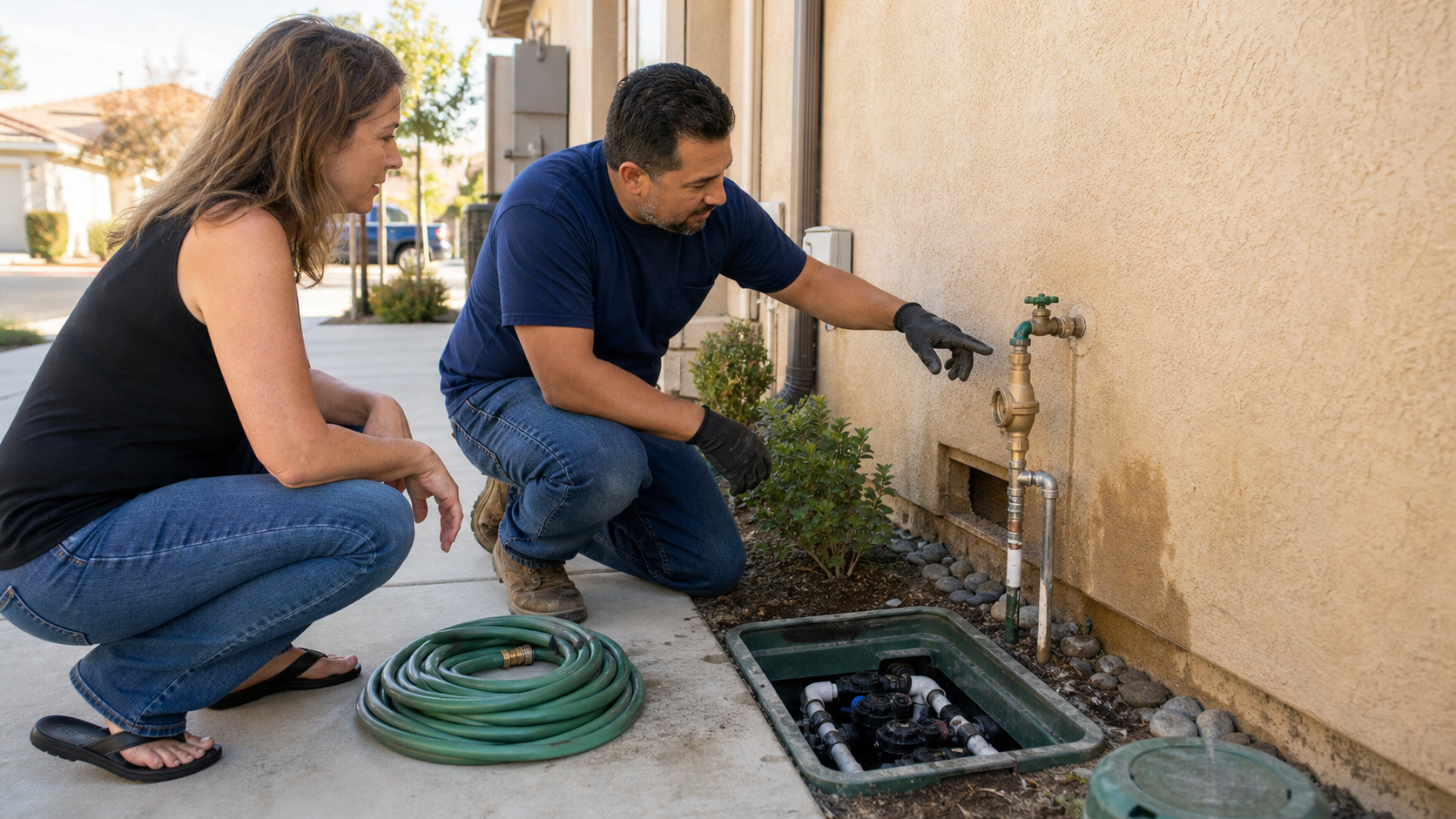
Natomas Hose Bib and Irrigation Shutoff Leaks: Small Plumbing Fixes Before Stucco Damage
The side-yard faucet only drips when the hose is connected. Or the irrigation box is always damp. Or the stucco below the hose bib has a brown stain that looks harmless until you press near it and the wall feels soft.
That is how a lot of Natomas plumbing problems start: small, exterior, easy to ignore, and sitting right where water, stucco, slab edges, landscaping, and irrigation all meet. The repair may be as simple as replacing a hose bib. It may also involve a failed vacuum breaker, a leaking irrigation shutoff, a pressure regulator problem, a cracked supply line inside the wall, or a backflow device that should have been tested or replaced before the landscaping soaked the wall for another summer.
The mistake is treating every outside leak like a handyman errand. Some hose bib repairs are small. Others touch the potable water system, irrigation backflow protection, wall penetrations, stucco repair, or a buried line. Before you hire, decide whether you are fixing a fixture, a valve, a pressure problem, or water damage.
| Symptom | Likely lead | What to verify | Planning range |
|---|---|---|---|
| Dripping hose bib or loose handle | Plumbing contractor | Threaded vs soldered connection, anti-siphon part, wall condition | $250 to $900 |
| Wet irrigation valve box | Landscaping or plumbing contractor | Zone valve, main irrigation shutoff, backflow, pressure | $350 to $2,500 |
| Stucco stain or soft wall near faucet | Plumber plus stucco/GC | Hidden pipe leak, sheathing damage, wall drying, finish repair | $900 to $7,500-plus |
| Failed pressure regulator or main shutoff | Plumbing contractor | Static pressure, service valve, water meter location, permit assumption | $900 to $3,500-plus |
Use this chart before comparing bids. The low price is not useful until you know whether the contractor is replacing only the faucet, rebuilding irrigation valves, correcting pressure, or repairing water-damaged wall materials.
Start With A Simple Scenario
Picture a Natomas homeowner getting the yard ready for a weekend party. The hose is connected, the kids are filling water balloons, and the faucet starts spraying from behind the handle. The owner tightens it, wraps it with tape, and moves on. A month later the valve box by the walkway stays wet even when the sprinklers are off. By fall, the stucco below the faucet has a stain and the planting bed smells musty.
That is not a disaster yet. It is a warning. Exterior plumbing leaks are easy to underprice because the visible part is small. The hidden part may be inside the stucco wall, below the slab edge, under a valve box, or on the irrigation side where a landscaping contractor and a plumber need to agree on the connection.
Before the first estimate, take photos of the hose bib, irrigation valve box, backflow device if present, pressure regulator, water meter, main shutoff, nearby stucco stain, and any soggy planting bed. Run the irrigation zones one at a time and note which box fills with water. If the leak appears only under pressure, say that clearly.
Why This Comes Up In Natomas
Natomas has many late-1990s and early-2000s tract homes with stucco exteriors, slab foundations, side yards, irrigation valve boxes near walkways, and hose bibs placed where homeowners actually use them: patios, garage side doors, garden beds, and rear walls. Those are convenient locations until a threaded fitting moves, a vacuum breaker fails, a hose gets yanked, or a buried irrigation line starts leaking next to the house.
The area also has practical water-management concerns. Many Natomas lots are flat, and water that stays near the foundation or stucco base can create staining, pests, soil movement, and hidden wall damage. Natomas homeowners already pay attention to flood-zone and drainage questions during bigger remodels. Small exterior plumbing leaks deserve the same habit: find the source before finishing the surface.
The best contractor will not just swap the faucet and leave. They should check whether the hose bib is securely attached, whether the wall penetration is sealed, whether the leak is before or after the valve, whether pressure is unusually high, and whether irrigation water is being confused with domestic plumbing water.
What It Might Cost In 2026
These are planning ranges for Natomas and nearby Sacramento-area homes, not quotes:
- Replace a standard hose bib or anti-siphon hose bib: $250 to $900 when access is clear and the connection is straightforward.
- Add or replace a local shutoff for an exterior line: $350 to $1,500 depending on access, pipe material, wall opening, and whether the work is exposed or buried.
- Repair irrigation zone valves, manifold leaks, or a wet valve box: $350 to $2,500 for common work, more when trenching, wiring, controller troubleshooting, or backflow corrections are involved.
- Replace or repair a pressure regulator or main shutoff: $900 to $3,500-plus when the work involves service-side access, meter coordination, code upgrades, or difficult excavation.
- Open stucco and repair a hidden supply leak: $1,200 to $6,500-plus before finish matching, depending on pipe damage, drying, framing/sheathing condition, and access.
- Stucco patch, paint blend, or exterior finish repair after plumbing work: $800 to $7,500-plus depending on wall size, texture, color match, and whether moisture damage spread.
The cheapest visit may only replace the visible faucet. That can be fine if the leak is isolated. It is not fine if the wall is wet, the line moves inside the stucco, pressure is high, or the irrigation system keeps refilling the valve box after the repair.
Which Contractor Should You Call?
Call a licensed plumbing contractor when the work touches the home water supply, hose bib piping, main shutoff, pressure regulator, backflow preventer, water service line, or a leak inside the wall. CSLB's C-36 plumbing classification includes water and gas piping, backflow preventers, water conditioning equipment, and regulating valves.
A landscaping contractor may be the right lead for irrigation valves, drip zones, spray heads, controller wiring, and planting-bed repairs, especially when the leak is entirely downstream of the irrigation system. But if the irrigation work ties into potable water, a backflow device, a pressure regulator, or a supply line at the house, make the licensing and scope split explicit before work starts.
A general contractor or stucco contractor may enter the job if the wall has to be opened and repaired. A concrete contractor may be needed if a buried line runs under a walkway or patio. A handyman may be appropriate for a small sub-$1,000 non-permit repair, but not for larger plumbing work, backflow work, wall repairs, or anything that requires employees or a building permit.
Permit, Water, And Backflow Questions
Natomas is generally within the City of Sacramento, but homeowners should still confirm jurisdiction and utility provider before assuming the permit path. The City of Sacramento's permit services page says new submittals and resubmittals are handled electronically, and the city offers online minor permits to California licensed contractors. Its online permitting guide lists residential plumbing minor work such as water service repair and replacement, water supply and drainage re-piping, and fixture replacement.
That does not mean every hose bib washer needs a permit. It means the contractor should state the permit assumption in writing when the scope goes beyond a simple fixture repair, especially for water service work, re-piping, backflow replacement, wall opening, or a larger remodel. If a bid says "no permit needed," ask why.
Backflow deserves a separate question because irrigation systems can create cross-connection risk. The City of Sacramento's cross-connection standards are intended to protect the potable water supply from contaminants entering through cross-connections, and Sacramento County's Cross-Connection Control Program explains that external backflow devices, when required, protect public drinking water and may need annual testing. Ask whether your existing irrigation setup has the correct device, whether it is accessible, and whether testing or replacement is required.
For water-use help, the City of Sacramento water conservation page points residents to rebates, watering schedules, water-use tracking, house calls, and leak-repair resources. Those programs change, so confirm current eligibility before building a budget around them.
California licensing rules matter even for small exterior jobs. The CSLB explains that the small-job exemption is limited to work under $1,000, with no building permit required and no employee labor used; larger work cannot be split into smaller invoices to avoid licensing.
Questions To Ask Before You Sign
Ask each contractor:
- Is the leak on the house plumbing side, the hose bib assembly, the irrigation side, or the wall cavity?
- Will you test water pressure before replacing parts?
- Is the hose bib threaded, soldered, crimped, or connected inside the wall?
- Does the faucet need an anti-siphon/vacuum breaker or a different backflow setup?
- Where is the nearest working shutoff, and will the repair leave the homeowner with a usable isolation valve?
- If the wall is wet, who opens, dries, patches, textures, and paints the stucco?
- Is irrigation valve work included, or does a separate landscaping contractor need to handle it?
- Are permits, inspections, or backflow testing included or excluded?
- What change-order price applies if the pipe breaks inside the wall or underground?
- Will the finished repair be photographed before the wall or valve box is closed?
If the contractor cannot explain where the leak starts, the estimate is not ready.
Red Flags In Exterior Plumbing Bids
Be careful with anyone who wants to replace the hose bib without checking pressure, wall movement, or the irrigation box when those are part of the complaint. Be cautious if a bid says "fix leak" but does not name the fixture, pipe material, shutoff, backflow device, wall repair, or irrigation scope.
Other red flags include burying a valve where it cannot be reached, leaving a hose bib loose in stucco, capping or bypassing backflow protection without explanation, ignoring high water pressure, and treating active stucco staining as only a paint problem. If the contractor opens the wall, ask for photos before it is closed. You want evidence that the wet material was addressed, not just covered.
Internal Homework Before You Hire
Start with our Natomas contractor guide, then compare licensed plumbing contractors, landscaping contractors, general contractors, and concrete contractors if the repair touches hardscape. Use the contractor search when you are ready to build a shortlist.
For related planning, pair this with our main shutoff and pressure regulator guide, leak-prevention guide, irrigation and drought-tolerant landscaping cost guide, Natomas flood-zone remodel permit guide, summer home prep checklist, and California contractor license verification guide.
The Bottom Line
A leaking hose bib is small only when the leak is actually at the hose bib. Natomas homeowners should check the wall, valve box, shutoffs, pressure, irrigation tie-in, and backflow question before choosing the cheapest repair.
Get a written scope that says what is being replaced, who owns irrigation versus house plumbing, how the wall will be repaired if opened, whether permits or backflow testing apply, and what happens if hidden damage appears. That is how a nuisance drip stays a plumbing repair instead of becoming stucco, mold, concrete, and landscaping work later.
Who to Hire for This Project
For the work covered in this guide, these are the contractor types to contact and the CSLB classification to verify before you take quotes:
Questions to Ask Before You Sign
- "Is your CSLB license active and bonded?" Verify it yourself at cslb.ca.gov the license number must appear on their bid.
- "Who pulls the permit, and is it included in the bid?" The contractor should handle any required permits a pro who suggests skipping one is a red flag.
- "Can you itemize labor, materials, and allowances?" Itemized bids are the only way to compare quotes on the same scope.
- "What's the payment schedule?" California caps the down payment at $1,000 or 10%, whichever is less payments should track completed work.
- "Who from this area can I call as a reference?" Ask for a recent local job of similar scope, not just photos.
Sacramento Contractors for This Project
Related Articles
Frequently Asked Questions
How much does it cost to replace an exterior hose bib in Natomas? +
Many straightforward exterior hose bib replacements cost about $250 to $900. The price can rise when the connection is inside a stucco wall, the pipe is damaged, the line needs a new shutoff, pressure is too high, or the repair exposes wall or irrigation damage.
Do I need a plumber or landscaper for a wet irrigation valve box? +
If the leak is entirely within irrigation valves, drip zones, spray lines, or controller wiring, a landscaping contractor may be the right lead. If the issue involves potable water supply, a backflow preventer, pressure regulator, hose bib piping, or a main shutoff, call a licensed plumbing contractor or make the trade split clear in writing.
Does a hose bib repair need a permit in Sacramento? +
A simple like-for-like fixture repair may be treated differently from water service repair, re-piping, backflow replacement, wall opening, or larger remodel work. Natomas homeowners should ask the contractor to state the permit assumption in writing and confirm with the City of Sacramento when the scope is more than a small repair.
Why does backflow matter for irrigation? +
Backflow protection helps keep irrigation water, fertilizer, soil, or other contaminants from being drawn into the potable water system. If a backflow device is required, it should be accessible, installed correctly, and tested or maintained according to the applicable water provider or local program requirements.
What are warning signs that a hose bib leak is more serious? +
Watch for a loose faucet body, soft stucco, staining at the wall base, wet soil when sprinklers are off, high water pressure, a valve box that refills after being bailed out, moldy odor, or water that appears only when the hose is under pressure. Those symptoms can point to hidden pipe, pressure, irrigation, or wall damage.
Can a handyman fix an outdoor faucet? +
Possibly, for a small non-permit repair under California's licensing threshold when no employees are used and the work is truly limited. Larger work, permit work, water supply piping, backflow devices, pressure regulators, wall repairs, or irrigation tie-ins should be handled by properly licensed contractors for the actual scope.