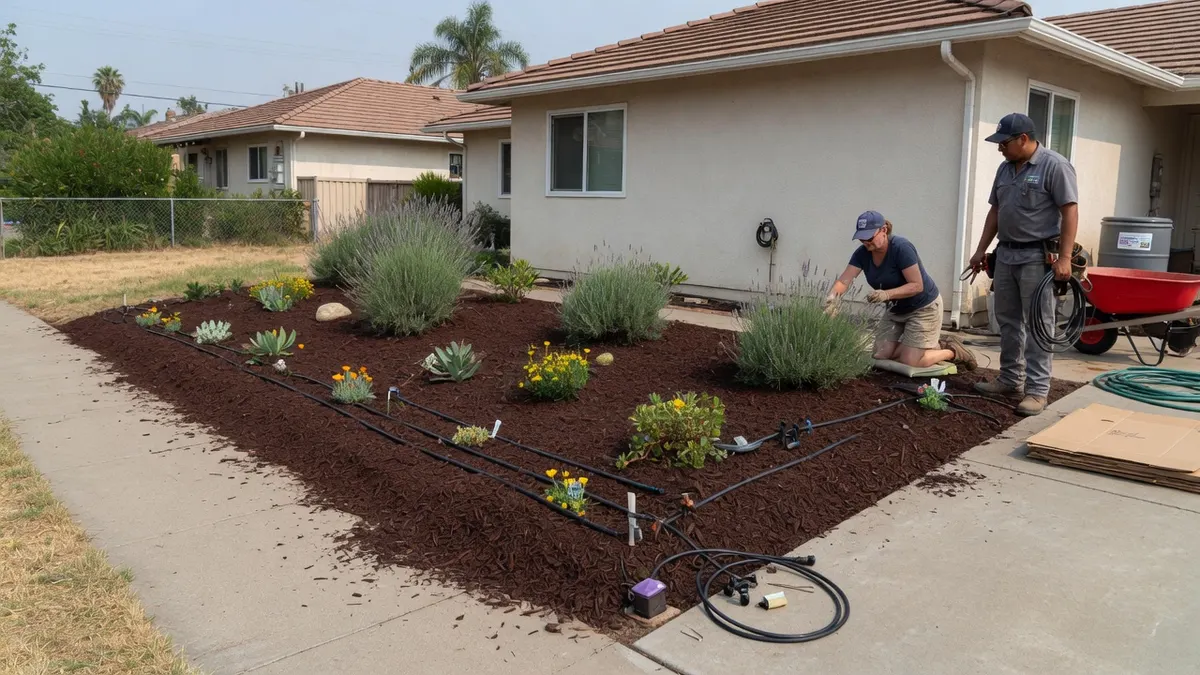
Drought-Tolerant Landscaping in Sacramento: Costs, Irrigation, Rebates, and Contractor Scope
A Sacramento yard has to survive two very different seasons. Winter can bring weeks of rain, saturated clay soil, and standing water in low spots. Summer brings months of dry heat, irrigation limits, 100°F afternoons, and lawns that look tired unless they get more water than many homeowners want to use. That is why drought-tolerant landscaping is not just a style choice here. It is a practical way to lower water use, reduce maintenance, and make the yard more useful during the hottest part of the year.
The mistake is treating it like a simple lawn removal job. A good conversion is really a small site project: demolition, grading, soil preparation, irrigation redesign, plant selection, mulch, drainage, edging, and sometimes hardscape. If those pieces are not planned together, the new yard can look good for one season and then turn patchy or expensive to fix.
Here is what to budget for, what to ask, and where contractors often hide important scope.
What Drought-Tolerant Landscaping Means Here
Drought-tolerant does not mean a yard with only gravel and cactus. In Sacramento, the best low-water landscapes usually mix climate-adapted shrubs, native or Mediterranean plants, shade trees, groundcovers, mulch, decomposed granite, boulders, paths, and efficient drip irrigation. The goal is not zero water. The goal is water used intentionally, especially during the first two summers while plants establish.
A well-designed front yard in East Sacramento may keep a small green focal area, add shade-friendly understory plants, and protect mature tree roots. A suburban yard in Elk Grove or Roseville might remove a large thirsty lawn and add drip zones, mulch, walkway lighting, and a seating area. A larger lot in Carmichael, Fair Oaks, or Orangevale may need drainage and irrigation zoning before anyone talks about plant lists.
The right design depends on sun exposure, soil, tree canopy, slope, irrigation pressure, pets, kids, and how much maintenance you actually want to do.
Sacramento Cost Ranges for Lawn Conversion
Most Sacramento-area lawn-to-garden conversions fall into broad ranges:
- Basic lawn removal and mulch refresh: $3 to $8 per square foot
- Lawn removal with drip irrigation and simple planting: $8 to $18 per square foot
- Designed drought-tolerant landscape with paths, boulders, edging, and dense planting: $18 to $40 per square foot
- Premium front yard redesign with lighting, masonry, drainage, and custom hardscape: $35 to $75 per square foot or more
- Drip irrigation retrofit: $1,500 to $6,000 for many residential yards, depending on zones and valve work
- Smart irrigation controller installation: $300 to $900 when wiring and valves are straightforward
For a 1,000 square foot front lawn, a practical conversion may land between $10,000 and $30,000. A very simple mulch and plant job can be less. A full curb-appeal redesign with paths, lighting, drainage corrections, and mature plants can cost much more.
The price difference is usually not just plants. It is demolition method, disposal, grading, irrigation replacement, soil amendment, plant size, mulch depth, edging quality, drainage work, and how finished the design needs to look on day one.
Lawn Removal: Sheet Mulch, Sod Cutting, or Herbicide
The first scope question is how the existing lawn is removed or suppressed. There are three common methods.
Sod cutting removes the grass quickly and gives the contractor a clean working surface. It is useful when the project includes grading, new paths, or immediate planting. It also creates disposal cost and can remove some topsoil. Sheet mulching layers cardboard or paper, compost, and mulch over the lawn to smother it. This can work well for lower-disturbance conversions, but it needs enough mulch depth and time. It is not ideal when you need hardscape grades set immediately or when aggressive weeds are already established. Herbicide treatment may be used by some crews to kill turf before removal or sheet mulching. Homeowners should ask exactly what product is used, who applies it, and whether they are comfortable with that approach. Many people prefer mechanical removal or sheet mulching, especially near edible gardens or play areas.Whatever method is chosen, the bid should say what happens to the old sprinkler heads, valve boxes, roots, buried edging, and low spots left behind.
Irrigation Is the Part That Decides Whether the Yard Works
Many failed drought-tolerant yards fail because the irrigation was treated as an afterthought. Sprinklers designed for turf do not serve shrubs and groundcovers efficiently. A proper conversion usually means switching to drip irrigation or at least creating separate low-water zones.
A good contractor should check water pressure, existing valves, controller wiring, backflow protection, and whether old lateral lines are worth reusing. In some yards, the cheapest path is to cap old sprinkler lines and run new drip from existing valves. In others, the valve layout is so messy that rebuilding the irrigation manifold saves headaches later.
Ask for the estimate to identify:
- Number of irrigation zones
- Whether drip line, individual emitters, or bubblers will be used
- Filter and pressure regulator locations
- Whether the controller is upgraded
- Whether old sprinkler heads are capped or removed
- How trees will be watered separately from shrubs
- Who adjusts the schedule after planting
Trees deserve special attention. A new drip grid for small shrubs may not water an existing mature tree deeply enough. Protecting mature oaks, sycamores, elms, and redwoods should be part of the design conversation.
Soil, Mulch, and Sacramento Clay
Sacramento soils vary, but clay is common. Clay can hold water in winter and bake hard in summer. Simply scraping off lawn and dumping rock over compacted soil is a recipe for struggling plants.
Most conversions need some combination of compost, soil loosening, grading, and mulch. Organic mulch is usually better around plants because it moderates soil temperature and slowly improves the soil. Gravel and decomposed granite can work well for paths and accent areas, but large fields of rock can increase heat around the house and stress plants if used without shade or irrigation planning.
Mulch depth matters. Two inches disappears quickly. Three to four inches is more useful for weed suppression and moisture retention, while keeping mulch pulled back from trunks, siding, and weep screeds. The bid should specify mulch type and depth, not just say "mulch included."
Plant Selection for Hot Valley Summers
Sacramento yards need plants that can handle hot dry summers, cool wet winters, and occasional frost. Good choices often include salvias, lavender, rosemary, ceanothus, manzanita, yarrow, deer grass, California fuchsia, rockrose, germander, western redbud, crape myrtle, and selected ornamental grasses. The exact list depends on sun, drainage, deer pressure, size at maturity, and maintenance tolerance.
Avoid choosing plants only by how they look in five-gallon pots. A shrub that reaches six feet wide can become a pruning problem if planted one foot from a walkway. A delicate full-sun plant may fail under a dense tree canopy. A plant that is drought-tolerant once established still needs reliable water for the first year or two.
Ask the contractor for a plant schedule that shows species, size, quantity, and spacing. If the plan says "assorted drought plants," it is not detailed enough.
Rebates and Water Agency Rules
Sacramento-area rebate programs change by water provider and funding cycle. Some agencies offer turf replacement rebates, irrigation efficiency rebates, or smart-controller incentives. The rules often require pre-approval before work starts, photos of the existing lawn, minimum converted area, plant coverage requirements, and restrictions on artificial turf or high-water plants.
Do not assume a rebate will apply after demolition. If rebate money matters to the budget, check the current program before signing the contract and ask the contractor whether their design meets the requirements. Also confirm who submits documentation and whether the bid depends on rebate approval.
Watering rules also vary by city and district. A landscape contractor should design a system that can be scheduled within local watering limits while still establishing new plants safely.
Permits, Drainage, and Hardscape Scope
Planting and irrigation alone usually do not require a building permit, but the project can cross into other rules when it includes retaining walls, electrical work, drainage connections, large concrete areas, fences, trees, or work in public right-of-way. Front yard grading that sends runoff toward a neighbor, sidewalk, or foundation can create problems even if no permit was required.
Drainage is especially important in flat Sacramento lots. Replacing lawn with mulch and mounded planting beds can change how water moves during winter storms. If the yard already has ponding near the foundation, low spots at the sidewalk, or downspouts dumping into the old lawn, solve that while the yard is open.
Lighting and outlets are another boundary. Low-voltage lighting may be part of a landscape plan, but new exterior outlets, circuits, transformers, or wiring near pools should involve the right electrical contractor.
What a Complete Landscape Bid Should Include
Before approving a drought-tolerant landscape project, ask for a written scope that covers:
- Lawn removal method and disposal
- Grading and soil preparation
- Irrigation zones, valves, filters, regulators, and controller details
- Plant schedule with sizes and quantities
- Mulch or rock type, depth, and square footage
- Edging, paths, boulders, or hardscape details
- Drainage fixes and downspout routing
- Warranty period for plants and irrigation workmanship
- Maintenance instructions for the first summer
- Rebate documentation responsibility, if applicable
Comparing bids without this detail is frustrating. One contractor may be pricing a full irrigation rebuild and dense planting plan, while another is pricing mulch, scattered one-gallon plants, and capped sprinklers.
Who Should Do the Work?
For a small refresh, a qualified landscape maintenance crew may be enough. For a full conversion over $1,000, California licensing matters. A C-27 landscaping contractor is the typical fit for planting, irrigation, grading related to landscaping, and landscape construction. If the project includes significant concrete, retaining walls, electrical work, drainage structures, or broader remodeling, additional specialty contractors or a general contractor may be needed.
Ask for a current contractor license, proof of insurance, recent local examples, and a clear warranty. Also ask who will be on site. The person selling the design is not always the person setting grades, laying drip line, or placing plants.
The Bottom Line
A drought-tolerant Sacramento yard can look better, use less water, and reduce weekend maintenance, but only if the hidden systems are handled correctly. The plants are the visible part. Irrigation, soil, grading, mulch depth, drainage, and establishment care are what make the project last.
Start with how you want to use the yard, not just how much lawn you want gone. Decide whether the project is a basic water-saving conversion or a true front yard redesign. Get the irrigation scope in writing. Check rebates before demolition. And be careful with bids that make the finished yard sound simple while skipping the details that keep it alive through August.
Who to Hire for This Project
For the work covered in this guide, these are the contractor types to contact and the CSLB classification to verify before you take quotes:
Questions to Ask Before You Sign
- "Is your CSLB license active and bonded?" Verify it yourself at cslb.ca.gov the license number must appear on their bid.
- "Who pulls the permit, and is it included in the bid?" The contractor should handle any required permits a pro who suggests skipping one is a red flag.
- "Can you itemize labor, materials, and allowances?" Itemized bids are the only way to compare quotes on the same scope.
- "What's the payment schedule?" California caps the down payment at $1,000 or 10%, whichever is less payments should track completed work.
- "Who from this area can I call as a reference?" Ask for a recent local job of similar scope, not just photos.
Sacramento Contractors for This Project
Related Articles
Sacramento Irrigation Backflow and Sprinkler Valve Repair Guide: Leaks, Testing, Costs, and Practical Bid Questions
August 12, 2026
Sacramento Paver Patio Cost Guide: Base Prep, Drainage, Permits, and When Pavers Beat Concrete
July 11, 2026
Rocklin Retaining Wall Repairs: Drainage, Permits, and Contractor Scope
July 9, 2026
Frequently Asked Questions
How much does drought-tolerant landscaping cost in Sacramento? +
A simple lawn removal and mulch project may cost $3 to $8 per square foot. A more complete drought-tolerant conversion with drip irrigation and planting often costs $8 to $18 per square foot, while designed front yard projects with paths, boulders, lighting, drainage, and dense planting can run $18 to $40 per square foot or more.
Do I need to replace my sprinklers with drip irrigation? +
Usually yes for a true lawn-to-garden conversion. Turf sprinklers are designed for broad overhead watering, while shrubs, groundcovers, and trees usually need more targeted irrigation. Drip zones with filters and pressure regulation are more efficient and easier to schedule for low-water planting.
Are there Sacramento rebates for removing lawn? +
Rebates depend on the homeowner's water provider and current funding. Many programs require pre-approval, photos before work starts, minimum converted area, and specific design rules. Check the current program before demolition and confirm who handles the paperwork.
What plants work well for Sacramento drought-tolerant yards? +
Common choices include salvias, lavender, rosemary, ceanothus, manzanita, yarrow, deer grass, California fuchsia, rockrose, germander, western redbud, and crape myrtle. The best choices depend on sun exposure, soil drainage, mature plant size, tree canopy, and maintenance goals.
Does drought-tolerant landscaping need a permit? +
Basic planting and irrigation work usually does not require a building permit, but related work can. Retaining walls, electrical circuits, drainage structures, concrete work, tree removal, fences, or work in the public right-of-way may trigger permits or separate approvals depending on the city or county.