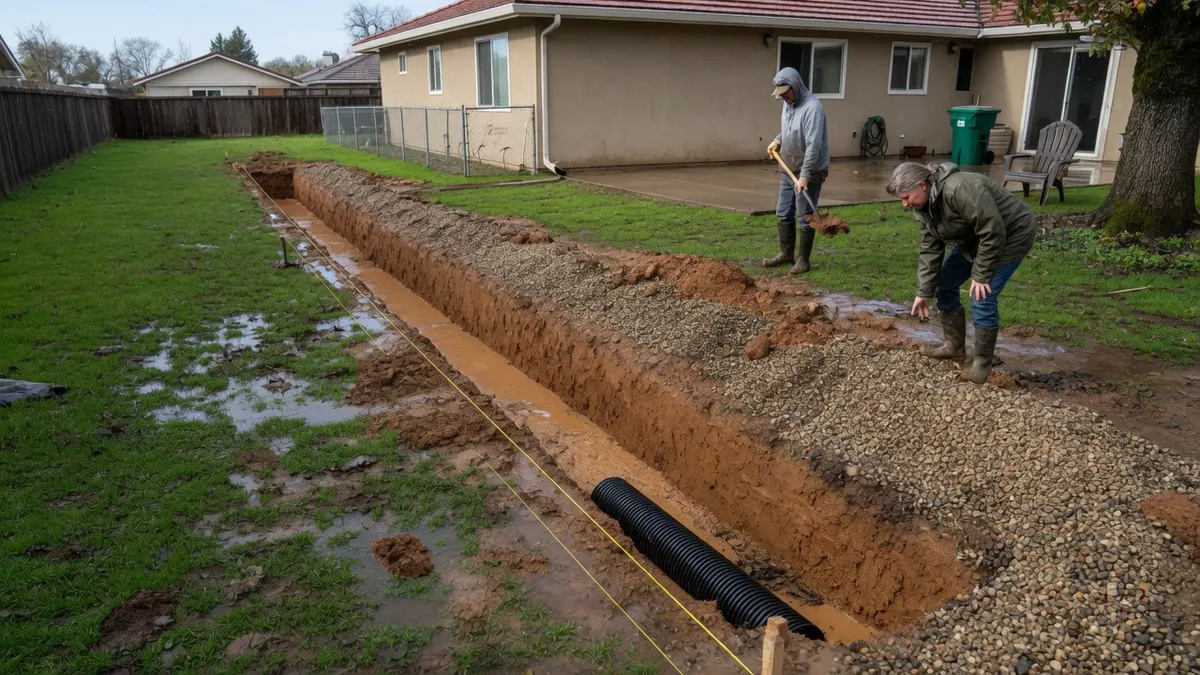
Sacramento French Drain and Yard Drainage Cost Guide: Standing Water, Grading, and Storm Runoff
Standing water is easy to ignore in July and hard to ignore after the first serious Sacramento storm. A low spot near the patio turns into a pond, water collects beside the foundation, the side yard stays muddy for weeks, or roof runoff cuts a small trench through the landscaping. Drainage problems are not just cosmetic. Over time, poor drainage can damage concrete, rot fence posts, invite mosquitoes, undermine walkways, push moisture toward crawlspaces, and make foundation movement worse in expansive clay soils.
Sacramento-area drainage work has a wide price range because every yard moves water differently. A simple downspout extension may solve one problem for a few hundred dollars. A full side-yard French drain with grading, catch basins, trenching, gravel, fabric, pipe, discharge planning, and landscape repair can cost several thousand dollars. The right answer depends on where the water starts, where it can legally go, and whether the project is solving surface water, subsurface water, or both.
This guide explains realistic 2026 costs for French drains and yard drainage in the Sacramento area, how to compare drainage bids, what to know about clay soil, and when grading, sump pumps, gutters, or hardscape repairs need to be part of the scope.
Typical 2026 Yard Drainage Costs in Sacramento
For planning purposes, Sacramento homeowners often see ranges like these:
- Downspout extensions or splash block improvements: $150 to $800 for simple corrections
- Buried downspout lines: $800 to $3,000 depending on length, trenching, and outlet location
- Catch basin and solid drain pipe system: $1,500 to $6,000 for common patio, lawn, and side-yard problems
- French drain for subsurface water: $2,500 to $10,000 or more depending on depth, length, access, gravel volume, and restoration
- Regrading a small yard or side yard: $1,500 to $7,500, often more if irrigation, sod, concrete, fences, or retaining edges are affected
- Sump basin and pump for a low discharge point: $2,000 to $8,000 depending on electrical work, pump capacity, basin size, and backup needs
- Concrete removal and replacement for drainage correction: often $2,000 to $12,000 or more when patios, walkways, or driveways are part of the problem
The cheapest line item is not always the cheapest project. If a contractor installs pipe without correcting the slope, clearing the outlet, handling roof runoff, or protecting the system from sediment, the same wet area may return after the next storm. A useful bid explains the water source, pipe type, slope, discharge location, soil disposal, surface restoration, and what happens if utilities, roots, or old concrete are discovered during trenching.
French Drain vs. Surface Drain: They Solve Different Problems
A French drain is a gravel-filled trench with perforated pipe wrapped or protected with filter fabric. It is meant to intercept and move subsurface water through the ground. It can help along a soggy side yard, behind a retaining wall, near a crawlspace, or below a lawn that stays wet because water is trapped in the soil.
A surface drain system uses catch basins, channel drains, area drains, and solid pipe to collect water that is already on top of the ground. It is often the better answer for patio runoff, downspout discharge, pooling near walkways, low lawn spots, and water that flows across hardscape during storms.
Many Sacramento yards need both ideas. For example, a side yard may need grading to move surface water away from the foundation, catch basins to collect roof runoff, and a French drain section to reduce persistent soil saturation. If a bid says "French drain" for every drainage problem, ask the contractor to explain whether the issue is surface water, subsurface water, or both. Using perforated pipe for roof runoff can overload the soil. Using only surface drains in a soggy clay side yard may leave the ground wet for weeks.
Sacramento Clay Soil Changes the Design
Much of the Sacramento region has heavy clay soil or clay-influenced fill. Clay drains slowly, expands when wet, shrinks when dry, and can hold water near foundations longer than sandy soil. That means a drainage system needs enough slope and a reliable outlet. Simply burying pipe in a flat trench can create a long underground bathtub.
Good drainage contractors pay attention to:
- The high point and low point of the yard
- Whether water is coming from roof runoff, irrigation, neighboring grades, hardscape, or groundwater
- How much fall is available from the wet area to the outlet
- Whether soil needs to be removed, amended, or reshaped
- Whether roots, utilities, concrete, fences, or HVAC equipment block the best route
- How the repaired area will be protected from future sediment and erosion
Access matters too. A machine can make trenching faster in an open yard, but many Sacramento drainage jobs happen in narrow side yards between fences, stucco walls, gas meters, AC condensers, and landscaping. Hand digging costs more, especially if the route crosses roots or old concrete washout.
Where Can the Water Go?
Drainage design is not just about getting water away from your house. It also has to discharge responsibly. In general, you should not dump concentrated runoff onto a neighbor's property, into a public sidewalk in a way that creates a nuisance, or toward another structure. Some projects can discharge to the street, an approved drainage inlet, a dry well where allowed and appropriate, a pop-up emitter, a landscape basin, or a sump system that pumps to a suitable outlet.
Rules vary by city and county. City of Sacramento homeowners can start with the City of Sacramento utilities and drainage information, while unincorporated properties can check Sacramento County water resources. Nearby cities such as Elk Grove, Roseville, Folsom, Citrus Heights, Rancho Cordova, and West Sacramento may have their own stormwater and encroachment rules.
If a contractor proposes cutting the curb, tying into a public storm drain, changing drainage across the sidewalk, or doing work in the public right of way, ask whether a permit, encroachment approval, or city inspection is required. For private yard work that stays on your property, permit requirements are often simpler, but grading, retaining walls, electrical work for pumps, and public discharge points can change the answer.
Gutters and Downspouts Usually Come First
Before paying for a large underground drainage system, inspect the roof water. A surprising number of yard drainage problems start with missing gutters, clogged gutters, short downspouts, broken splash blocks, or downspouts that empty directly into a planter next to the foundation.
Sacramento storms can put a lot of water on a roof in a short period. If that water lands at the base of the house, a French drain may be asked to solve a problem that should have been handled above ground. Extending downspouts to a safe outlet, adding additional downspouts, cleaning gutters, or repairing gutter slope may reduce the size and cost of the ground drainage work.
A good contractor will look up before digging down. Ask whether the bid includes downspout connections, debris cleanouts, leaf protection assumptions, and what happens when the gutters overflow.
Bid Details That Matter
Drainage bids should be more specific than "install drain line." Before choosing a contractor, ask for answers to these questions:
- What problem is the system designed to solve?
- Is the project collecting surface water, subsurface water, roof water, or a combination?
- What pipe diameter, pipe type, gravel, and filter fabric will be used?
- What slope will the pipe have, and how will that slope be confirmed?
- Where exactly will the water discharge?
- Are cleanouts included so the system can be flushed later?
- Who marks utilities and handles irrigation, low-voltage lighting, or sprinkler repairs?
- What landscaping, mulch, sod, concrete, or fence repair is included?
- Is soil haul-away included, or will soil be spread onsite?
- Are permits or right-of-way approvals included if needed?
Also ask about maintenance. Catch basins need debris cleaned out. Pop-up emitters can clog with leaves or mulch. French drains can fail if sediment enters the gravel or if landscaping fabric is installed incorrectly. A contractor who explains maintenance is usually thinking beyond the day the trench is covered.
When Drainage Becomes a Foundation or Concrete Issue
If water is pooling against the foundation, entering a crawlspace, staining stem walls, or causing doors and floors to move seasonally, drainage should be treated as part of a larger building issue. The first goal is to move water away from the structure, but the project may also need crawlspace review, foundation inspection, vapor barrier work, termite inspection, or concrete correction.
Concrete can be both a cause and a victim. Patios and walkways that slope toward the house may need replacement, mudjacking, grinding, or drains cut into the surface. A channel drain across a driveway or patio can help when re-pouring concrete is not practical, but it must be sized and cleaned properly. If the concrete has already settled because water washed out the base, drainage and concrete repair should be planned together.
Bottom Line
A Sacramento drainage project works when it starts with the water source, not the product name. French drains are useful for subsurface water, catch basins and solid pipe are useful for surface water, and gutters may be the cheapest fix when roof runoff is the real source. The best bids explain slope, outlet, pipe type, access, restoration, and maintenance in plain language.
If you are comparing quotes, walk the site with each contractor after a rain if possible. Show photos or videos of where water collects. Ask where the water will go, how the system will be cleaned, and what parts of the yard will look different when the job is done. A drainage system is mostly buried when finished, so the written scope matters.
Browse Sacramento-area drainage contractors, landscaping contractors, concrete contractors, and foundation contractors in Sacramento, Elk Grove, Roseville, Folsom, and nearby communities. For related planning, see our foundation problems guide, concrete cost guide, and California contractor license verification guide.
Who to Hire for This Project
For the work covered in this guide, these are the contractor types to contact and the CSLB classification to verify before you take quotes:
Questions to Ask Before You Sign
- "Is your CSLB license active and bonded?" Verify it yourself at cslb.ca.gov the license number must appear on their bid.
- "Who pulls the permit, and is it included in the bid?" The contractor should handle any required permits a pro who suggests skipping one is a red flag.
- "Can you itemize labor, materials, and allowances?" Itemized bids are the only way to compare quotes on the same scope.
- "What's the payment schedule?" California caps the down payment at $1,000 or 10%, whichever is less payments should track completed work.
- "Who from this area can I call as a reference?" Ask for a recent local job of similar scope, not just photos.
Sacramento Contractors for This Project
Related Articles
Sacramento Irrigation Backflow and Sprinkler Valve Repair Guide: Leaks, Testing, Costs, and Practical Bid Questions
August 12, 2026
Sacramento Paver Patio Cost Guide: Base Prep, Drainage, Permits, and When Pavers Beat Concrete
July 11, 2026
Rocklin Retaining Wall Repairs: Drainage, Permits, and Contractor Scope
July 9, 2026
Frequently Asked Questions
How much does a French drain cost in Sacramento? +
Many Sacramento French drain projects cost about $2,500 to $10,000 or more depending on length, depth, access, gravel volume, outlet location, and landscape repair. Simple surface drain or downspout projects may cost less, while low yards with pumps, concrete removal, or tight access can cost more.
Is a French drain the same as a yard drain? +
No. A French drain usually uses perforated pipe and gravel to collect subsurface water. A yard drain or catch basin system collects water from the surface and usually carries it through solid pipe. Many wet yards need a combination of grading, surface drains, downspout work, and sometimes a French drain.
Do Sacramento drainage projects need permits? +
Private yard drainage that stays on your property may not need a permit, but rules change if the work affects the public right of way, cuts a curb, ties into public drainage, changes grading significantly, includes retaining walls, or adds electrical work for a pump. Check the local city or county before work starts.
Can I send yard drainage water to the street? +
Sometimes, but it depends on local rules and how the water reaches the street. Discharging across sidewalks, into a neighbor's property, or through an unapproved curb cut can create problems. Ask the contractor to identify the legal outlet and any approval needed before installing pipe.