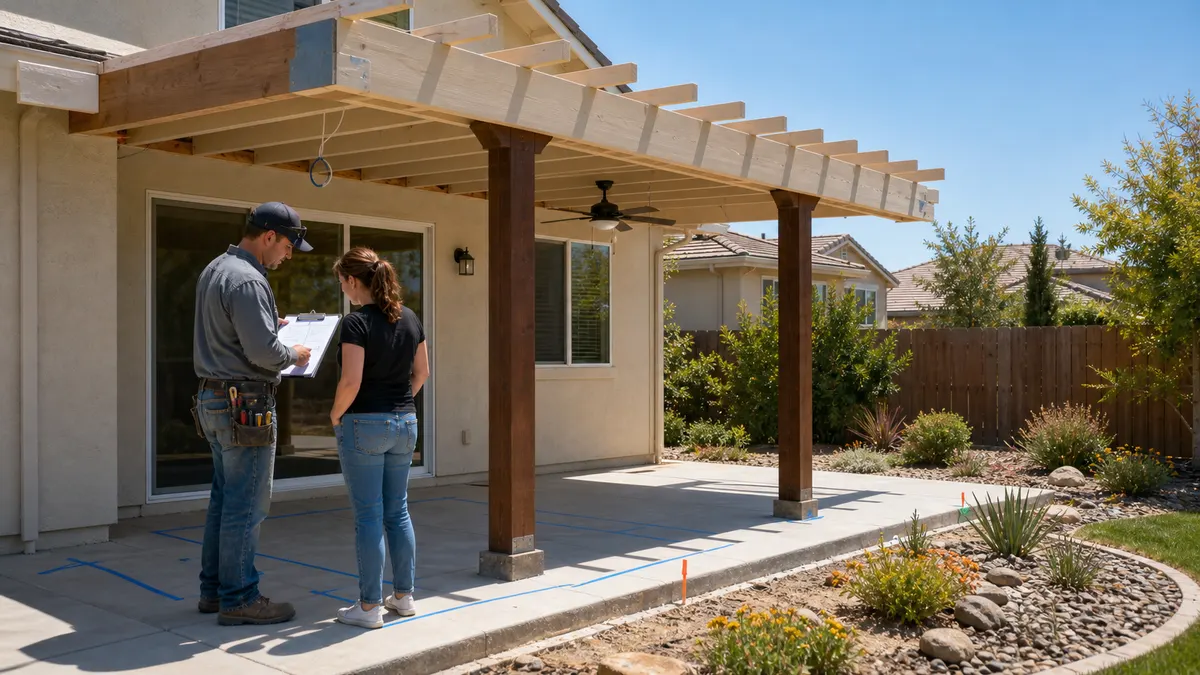
Lincoln Patio Cover Planning Before Summer: Shade, Fans, and Permit Questions
The patio starts telling the truth around 4 p.m.
Morning coffee is fine. Lunch is still possible. Then the west sun hits the concrete, the sliding door throws heat into the family room, and the table nobody wanted to move becomes unusable until after dinner. That is when a Lincoln homeowner starts searching patio covers, pergolas, shade sails, ceiling fans, outdoor lights, and maybe a built-in heater for shoulder season.
The hard part is that "add shade" is not one project. One contractor may be pricing a light aluminum cover. Another may be pricing a custom wood structure tied into the house. Another may assume electrical, gutters, concrete footings, HOA paperwork, and permit drawings are the homeowner's problem.
Before you compare numbers, make the scope visible. A patio cover can be a very good Lincoln upgrade, but only when shade, structure, drainage, electrical work, permits, and neighborhood rules are handled in the right order.
Use this chart before comparing bids. A patio cover price is not ready to compare until attachment, shade coverage, electrical work, drainage, HOA review, and permit responsibility are visible.
Start With How the Patio Actually Gets Used
In Lincoln, especially in newer neighborhoods with open backyards, the problem is often not that the patio is too small. It is that the usable hours are too few. A slab that works in April can feel punishing in June. West-facing glass, pale concrete, reflective fences, and young landscaping can make the back of the house hotter than the rest of the yard.
Before calling contractors, track the patio for a few days. Where does the sun hit at 10 a.m., 2 p.m., and 5 p.m.? Which door needs shade? Is the goal to cover a dining table, protect the kitchen slider, cool a play area, create an outdoor kitchen zone, or make a future spa corner usable?
That answer controls the structure. A small lattice cover may be enough for filtered shade. A solid insulated cover may be better when the house needs heat relief and the homeowner wants fans or lights. A freestanding pergola can work away from the house, but it may not protect the door or reduce indoor heat as well. A shade sail may solve one hot corner, but it will not behave like a roof.
Match the Cover to the House, Not the Catalog Photo
The attachment point matters. If the cover connects to the house, the contractor needs to understand the wall framing, stucco, ledger, flashing, roof edge, gutter line, windows, patio door clearance, and whether the cover blocks future maintenance. The structure should move water away from the house, not trap it against the wall.
For a freestanding cover, the questions shift to post locations, footings, setback lines, concrete condition, irrigation lines, landscape roots, wind exposure, and whether the cover will shade the right area once the sun drops low. A beautiful cover in the wrong place becomes an expensive umbrella.
Ask every bidder to mark the proposed footprint on the patio. You should know where posts land, how much walking clearance remains, whether patio furniture still fits, and whether the cover changes access to gates, hose bibs, windows, side yards, or pool equipment.
What a Useful Estimate Should Separate
For Lincoln homeowners, a modest manufactured aluminum or lattice-style patio cover may run around $6,000 to $18,000 depending on size, footings, attachment, and finish. A larger custom wood, steel, or solid insulated cover often lands between $18,000 and $45,000. Add electrical work, fans, lighting, gutters, concrete changes, drainage correction, outdoor kitchen coordination, or finish repair and the total can move into the $35,000 to $70,000-plus range.
Ask each bidder to separate:
- Cover type. Lattice, solid, insulated, wood, aluminum, steel, freestanding, attached, pre-engineered, or custom-built.
- Attachment and flashing. Ledger details, wall connection, stucco cuts, waterproofing, existing gutter conflicts, and repair responsibility.
- Posts and footings. Post count, footing size, concrete cutting, pier inspection, anchors, hardware, and whether the existing slab can stay.
- Electrical scope. Ceiling fan boxes, lighting, switches, outlets, heaters, low-voltage lighting, GFCI protection, conduit, and who pulls electrical permits.
- Drainage. Roof slope, gutters, downspouts, where water discharges, patio slope, drainage at posts, and landscape repair.
- Approvals. City of Lincoln permit package, plan details, inspections, HOA approval where applicable, and who handles corrections.
- Exclusions. Paint or stain, concrete repair, stucco patching, irrigation reroutes, furniture removal, landscaping, and cleanup.
If the bid only says "install patio cover," it is not detailed enough for an attached structure.
Permits and HOA Review in Lincoln
Lincoln is not a place to treat patio covers as casual backyard furniture. The City of Lincoln lists covered patios among projects that require a permit, and its residential permit guidance includes Patio Cover Requirements plus a Building Permit Application. The city's patio-cover handout also notes that patio covers are reviewed for location, size, lot coverage, construction type, zoning or specific-plan standards, and building-code compliance. It also says homeowners are responsible for HOA approval where applicable before submitting.
That matters in neighborhoods where the HOA cares about color, roof style, rear-yard visibility, setbacks, materials, or whether a cover matches the original home. Do not wait until lumber or aluminum is ordered to find out the architectural review committee wants changes.
Ask the contractor:
- Will you prepare the permit drawings and scaled plot plan?
- Are HOA submittals included, or do I handle them?
- What inspections should I expect?
- Does the design meet setback, lot coverage, and drainage requirements?
- If the city or HOA asks for corrections, who revises the plans?
The best answer is written into the estimate. "We will figure it out later" is not a permit plan.
Licensing: Who Should Lead the Job?
For a simple manufactured aluminum, metal, vinyl, or canvas awning or patio cover, California's D-3 awnings classification may be relevant, but that classification does not include patio enclosures or carports. Lattice-type patio covers can also involve general building, carpentry, or landscaping classifications depending on the scope and whether the work is part of a larger project.
In plain English, match the license to what is actually being built. A B general contractor can be a good lead when the project includes structural attachment, multiple trades, concrete work, stucco repair, drainage, electrical work, or outdoor living coordination. A patio-cover specialist may be right for a contained pre-engineered cover. A licensed electrician belongs in the scope when fans, lighting, switches, outlets, or heaters are added.
Do not let a shade project become unlicensed electrical work. Outdoor fan boxes, weather-rated fixtures, GFCI protection, exterior conduit, and switching should not be guessed at after the cover is framed.
Design Choices That Make the Patio More Usable
A solid cover gives deeper shade and can help the room behind the slider feel less punished by afternoon sun. It also needs a real drainage path. Gutters and downspouts may be part of the design, not an afterthought.
Lattice and pergola covers feel lighter and can preserve more daylight inside the house. They are less useful if the homeowner expects rain protection, heavy fan use, or full-sun relief at low afternoon angles. If the patio faces west, ask the contractor to explain whether side shade, screens, plantings, or a wider cover is needed.
Ceiling fans help comfort only when people sit under them. Plan their location around furniture, not just symmetry. If you want lights, speakers, outlets, heaters, or a future outdoor kitchen, rough in the wiring while the cover is open. Retrofitting later is usually messier and more expensive.
Red Flags in Patio Cover Bids
A few warning signs should slow the project down:
- The contractor never asks where the sun hits or how the patio is used.
- Post locations are not shown before you sign.
- The bid ignores City of Lincoln permits or says patio covers never need approval.
- Electrical work is included vaguely with no licensed electrician named.
- The cover attaches to stucco or fascia with no flashing or waterproofing explanation.
- Drainage from the new roof is sent toward the house, patio door, or neighbor's yard.
- HOA approval is treated as the homeowner's problem after materials are ordered.
Good patio-cover contractors are practical. They can explain what the cover will shade, how it is held up, where water goes, and which approvals happen before work starts.
Questions to Ask Before You Sign
- What exact area will be shaded at the hottest part of the day?
- Is the cover attached to the house or freestanding, and why?
- Where will posts, footings, downspouts, switches, and fan boxes land?
- Who prepares the City of Lincoln permit package and handles inspections?
- Do I need HOA approval before city submittal?
- What electrical work is included, and which licensed contractor performs it?
- Will the new cover change drainage, patio slope, window access, or future maintenance?
- What is excluded from the price?
If the written estimate cannot answer those questions, ask for a clearer scope before approving the project.
Internal Homework Before You Hire
For local context, start with our Lincoln contractor guide, compare licensed deck and patio contractors, general contractors, electrical contractors, landscaping contractors, and concrete contractors. Use the contractor search when you are ready to build a shortlist.
For related planning, pair this with our patio cover and pergola cost guide, deck and patio cost guide, hot-afternoon outdoor living guide, outdoor kitchen cost guide, electrical panel planning guide, and California permit basics.
The Bottom Line
A Lincoln patio cover should make the backyard easier to use, not create permit, drainage, or electrical problems that show up later. Start with the sun pattern, confirm the structure and water path, settle permit and HOA responsibility, and hire the contractor who can show the whole scope before the first post hole is dug.
Who to Hire for This Project
For the work covered in this guide, these are the contractor types to contact and the CSLB classification to verify before you take quotes:
Questions to Ask Before You Sign
- "Is your CSLB license active and bonded?" Verify it yourself at cslb.ca.gov the license number must appear on their bid.
- "Who pulls the permit, and is it included in the bid?" The contractor should handle any required permits a pro who suggests skipping one is a red flag.
- "Can you itemize labor, materials, and allowances?" Itemized bids are the only way to compare quotes on the same scope.
- "What's the payment schedule?" California caps the down payment at $1,000 or 10%, whichever is less payments should track completed work.
- "Who from this area can I call as a reference?" Ask for a recent local job of similar scope, not just photos.