Elk Grove Shared Fence Replacement: Neighbors, HOA Rules, and Posts That Last
The fence usually becomes urgent on a windy night, not during a calm planning conversation.
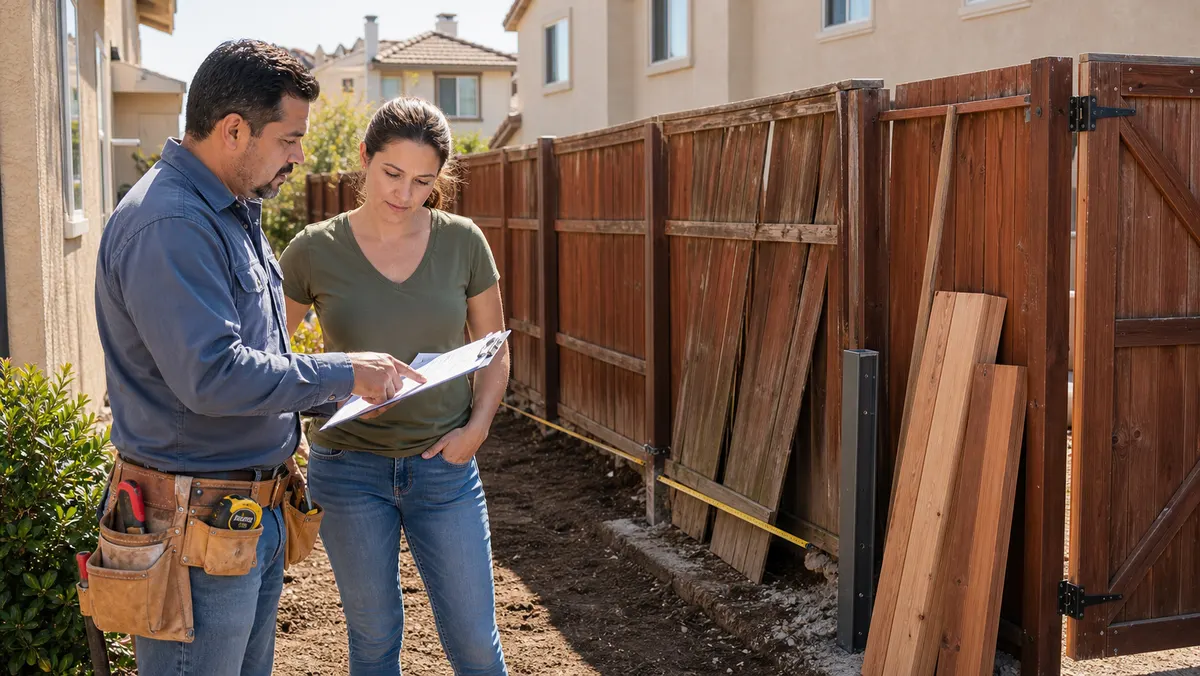
An Elk Grove homeowner steps into the side yard after dinner and sees one panel leaning hard into the neighbor's yard. The gate drags. A post moves when you push it. The neighbor wants it fixed before the dog finds the gap. The HOA wants the same style and color. The first contractor asks where the property line is, whether both owners agree on cost sharing, whether the old posts are rotten at grade, and whether the replacement should use wood posts again or steel posts behind a wood privacy fence.
That is the moment a "simple fence" becomes a coordination job. Fence replacement is not complicated because the boards are hard to understand. It is complicated because the work sits on a shared boundary, touches HOA rules, changes gates and access, and can be ruined by cheap posts long before the pickets wear out.
Use this chart before comparing fence bids. In Elk Grove, the cleanest project is usually the one that settles neighbor notice, HOA rules, post choice, gate details, and drainage before demolition starts.
Start With the Neighbor, Not the Lumber
Many Elk Grove fence replacements happen on a shared side or rear boundary. California's good-neighbor fence law generally expects adjoining owners to share responsibility for a boundary fence that benefits both properties, but that does not mean you should start demolition after one text message. If you plan to ask a neighbor to contribute, the safer path is written notice before the work, including the problem, proposed repair, estimated cost, proposed cost split, and timing.
Even when the neighbor is friendly, put the basics in writing. Which run of fence is being replaced? Is the neighbor paying half of the standard fence only, or half of upgrades too? Who owns the gate? What happens if the old fence is discovered off the line? Will dogs, kids, sprinklers, or pool access need temporary protection while the fence is open?
That conversation can feel awkward. It is much less awkward than asking for money after the crew is done.
HOA Approval Can Be the Slowest Part
Elk Grove has plenty of neighborhoods where the HOA cares about fence height, picket style, cap boards, stain color, vinyl versus wood, and whether a visible street-side run matches the community standard. Some associations are relaxed when you replace like for like. Others want an architectural form, neighbor signatures, sample material, or a site sketch before work begins.
Ask the fencing contractor what they need for a clean HOA submittal: linear footage, height, material, stain or color, gate location, and photos of the existing fence. Then ask the HOA how long review usually takes. A contractor can often provide product notes and photos, but the homeowner is usually responsible for HOA approval unless the contract says otherwise.
Do not schedule demolition for the morning after you email the HOA. Fences look simple until a management company asks for a revised color or a board-on-board detail you did not price.
The Real Lifespan Is in the Posts
Most failed wood fences in Elk Grove do not fail because every picket wore out at once. They fail because posts rot at the soil line, concrete collars hold moisture, sprinklers soak one side every morning, or clay soil moves enough to make the panel rack. The fence may look decent above grade while the structure is already tired below it.
That is why the post conversation matters. Wood posts are familiar and usually cheaper. Steel posts cost more upfront but can dramatically reduce the most common failure point when they are set and concealed correctly. Metal posts are not automatically the right answer for every HOA or every budget, but they deserve a real comparison on a fence you expect to keep for the next 20 years.
Ask each bidder to explain post spacing, depth, concrete size, soil assumptions, how they handle old concrete removal, and whether sprinkler heads need to be moved away from the new fence. A bid that says "new redwood fence" without the post details is missing the part that decides how long the fence stands straight.
What a Useful Estimate Should Separate
For Elk Grove homeowners, a straightforward shared wood privacy fence can still vary widely. A small side-yard section with easy access may run a few thousand dollars. A full backyard replacement with demolition, haul-off, steel posts, multiple gates, staining, HOA documentation, grade corrections, or neighbor coordination can move into the $6,000 to $18,000-plus range. Premium materials, long runs, corner lots, pool barriers, poor access, or extensive old concrete removal can push higher.
Ask each fencing contractor to separate:
- Linear footage and height. Confirm every run, return, and gate opening.
- Demolition and disposal. Old boards, rails, posts, concrete footings, and haul-off.
- Post system. Wood or steel posts, spacing, depth, concrete, brackets, and concealment details.
- Fence style. Dog-ear, board-on-board, good-neighbor, cap and trim, lattice, or HOA-specific pattern.
- Gate scope. Width, frame, hinges, latch, self-closing needs, pool or pet requirements, and whether posts are upgraded at gates.
- Property-line assumptions. Whether the old fence location is reused or a survey/marker check is needed.
- Irrigation and drainage. Sprinklers, drip lines, grade against the fence, and soil that stays wet at post bases.
- Approvals and permits. HOA forms, city questions, pool barriers, corner-lot visibility, retaining walls, and who confirms each requirement.
- Finish and warranty. Stain or seal timing, material grade, workmanship warranty, and what maintenance keeps it valid.
Two fence bids can be thousands apart because one includes steel posts, haul-off, gate frames, and HOA paperwork while the other prices only boards and rails. Compare the assumptions before you compare totals.
When a Fence Needs More Than a Fence Contractor
Start with a licensed fencing contractor for a normal privacy fence replacement. In California, that commonly points to a C-13 fencing contractor. A B general contractor can also make sense when the fence is part of a larger remodel, retaining wall, pool barrier, drainage correction, or access project.
Bring in a landscaper when sprinklers, drainage, grading, planting beds, or root conflicts are causing the fence to fail. Bring in a concrete contractor if the fence ties into new flatwork, a mow strip, a retaining edge, or driveway work. Bring in a tree service or arborist if large roots are lifting posts or pushing panels. If the fence borders a pool area, ask whether the gate and barrier details need pool-safety review before you replace anything.
The key is not hiring every trade at once. The key is making sure the fencing contractor names the boundary of their scope instead of quietly ignoring the part that made the old fence lean.
Permits and Elk Grove Rules to Check
The City of Elk Grove's building-permit guidance lists fences, other than swimming pool barriers, not over 7 feet high among work that does not require a building permit. That is helpful, but it is not the whole conversation. Zoning, HOA rules, front-yard or street-side visibility, pool barriers, retaining walls, gates, and fence height can still change what approvals are needed. Elk Grove's fee materials also flag masonry or wood fences above 6 feet as a permit-fee category, so ask the city or your contractor to confirm your exact scope rather than relying on a rule of thumb.
Pool barriers are a separate category. A gate that protects a pool must satisfy safety rules, not just look like the old gate. Retaining walls are also separate; a short fence on top of a wall can raise height and guardrail questions. A corner-lot fence may have sight-distance limits. None of those details mean your normal backyard fence is hard to permit. They mean you should ask before the old fence is down.
Licensing matters too. CSLB guidance raised the minor-work exemption to $1,000 starting in 2025, but the exemption does not apply when the work requires a permit or when the unlicensed person hires workers for the project. Most full fence replacements exceed that threshold. Verify the active CSLB license, insurance, bond, and workers' compensation status before signing.
Red Flags in Fence Bids
Slow down if you hear any of these:
- "Your neighbor has to pay half" without explaining notice, scope, or upgrades.
- The contractor will not write down post spacing, post depth, or concrete assumptions.
- The bid omits old post and concrete removal.
- Gates are included vaguely, with no hardware, frame, latch, or width detail.
- No one asks about HOA approval, pool barriers, corner-lot sight lines, or sprinkler spray.
- The fence is visibly off line, but nobody suggests checking markers or a survey.
- The contractor says permits never apply to fences, no matter height, location, or pool access.
Good fence contractors are practical. They measure, ask about the neighbor, point out gate and irrigation issues, and explain where a small upgrade now prevents another leaning panel later.
Questions to Ask Before You Sign
- Which exact fence runs, gates, and returns are included?
- Are we reusing the existing fence line, or do we need a marker or survey check?
- Is HOA approval required, and what documentation do you provide?
- Are we using wood posts or steel posts, and why?
- How deep are the posts, how far apart are they, and what happens to old concrete?
- Are gate posts upgraded so the gate does not sag first?
- Do sprinklers, drainage, trees, or grade need to be fixed before the new fence goes in?
- Does any part of this project touch a pool barrier, retaining wall, corner-lot visibility area, or city approval?
- What maintenance does the warranty expect after installation?
Those questions keep the project ordinary. They turn a fence replacement from a neighbor dispute into a clean scope.
Internal Homework Before You Hire
For local context, start with our Elk Grove contractor guide, compare licensed fencing contractors, landscaping contractors, concrete contractors, tree service contractors, and general contractors. Use the contractor search when you are ready to build a shortlist.
For related planning, pair this with our fence installation cost guide, Sacramento fence material guide, property-line fence planning guide, Elk Grove drainage and concrete guide, California permit basics, and license verification guide.
The Bottom Line
An Elk Grove fence replacement goes smoothly when the people issues and the construction details are settled before the first panel comes down. Talk to the neighbor in writing, check the HOA, price the posts and gates separately, confirm permit-sensitive details, and hire the contractor who treats the fence line like a shared project instead of a pile of boards.
Who to Hire for This Project
For the work covered in this guide, these are the contractor types to contact and the CSLB classification to verify before you take quotes:
Questions to Ask Before You Sign
- "Is your CSLB license active and bonded?" Verify it yourself at cslb.ca.gov the license number must appear on their bid.
- "Who pulls the permit, and is it included in the bid?" The contractor should handle any required permits a pro who suggests skipping one is a red flag.
- "Can you itemize labor, materials, and allowances?" Itemized bids are the only way to compare quotes on the same scope.
- "What's the payment schedule?" California caps the down payment at $1,000 or 10%, whichever is less payments should track completed work.
- "Who from this area can I call as a reference?" Ask for a recent local job of similar scope, not just photos.