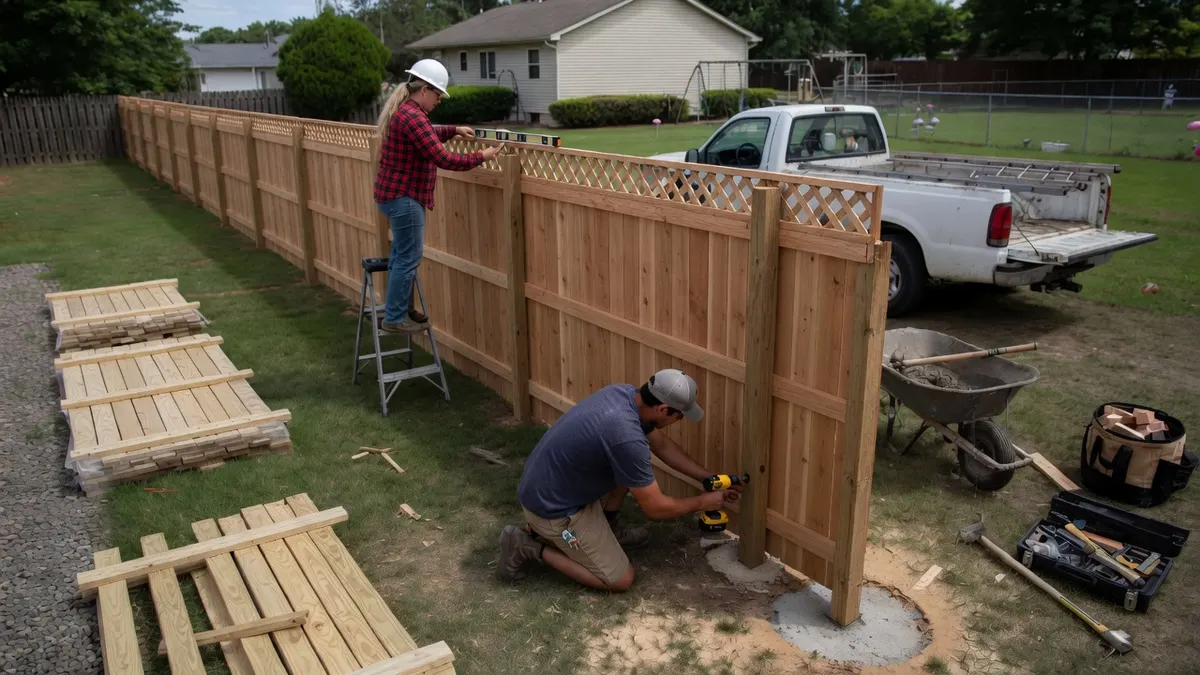
Orangevale Fence Replacement: Privacy, Pets, and Property Lines
Drive through the older parts of Orangevale and you'll notice something: the lots are deep, the trees are old, and a lot of the fences are tired. Redwood that went up in the early 2000s has gone gray and wobbly, posts have rotted at the soil line, and the panels lean a little more every winter. When a homeowner finally decides to replace one, the assumption is usually that it's a quick weekend-style job. Then the questions start. Where exactly is the line? What about the dog? Who's paying for the side the neighbor sees?
A fence is one of the few home projects that literally touches someone else's property, and in Orangevale, where parcels are roomy and landscaping is mature, the details add up fast. Here's how to think through it before you order a single picket.
The line on the deed isn't always the line in the dirt
The most expensive mistake on a fence project happens before anyone digs a hole: assuming the old fence sits on the property line. Frequently it doesn't. Fences drift over the decades, get rebuilt an inch off, or were never surveyed to begin with. If you tear out the old one and rebuild a foot the wrong direction, you've either given away land or built on your neighbor's.
On Orangevale's larger lots this matters more, because a few inches over a long run adds up to real square footage. If there's any doubt, pull your plat map or spring for a survey before demo. It's cheaper than moving a finished fence. And if the fence is shared, get the agreement with your neighbor in writing first, who pays what, which side faces whom, how tall it goes. California's "good neighbor" fence law assumes adjoining owners split the cost of a boundary fence, but that assumption disappears the moment one party wants something fancier. A signed note now prevents a cold war later.
Pets, privacy, and the height rules nobody reads
If you've got a dog, tell your contractor before they quote. Pet containment changes everything, gap spacing at the bottom, whether you need a dig guard, how the gates latch. A standard six-foot privacy fence that looks solid can still have a four-inch gap under the bottom rail that a determined terrier treats as a door.
Height is the other quiet rule. Most Sacramento County jurisdictions cap rear and side-yard fences around six feet and front-yard fences closer to three to four, with tighter limits near corners where a tall fence would block a driver's sightline. Go higher and you're into permit territory. If you want genuine privacy from a two-story neighbor, talk through lattice toppers or strategic planting instead of just building taller, the rules near intersections aren't negotiable, and the county does respond to complaints.
What the number on the estimate actually buys
Across the Sacramento Valley, a full fence replacement commonly lands somewhere between roughly $4,500 and $18,000. That's a wide range on purpose. The spread depends on material, wood, vinyl, or steel, plus how many gates, whether there's a slope or retaining edge, and what it costs to haul away the old fence. Demo and disposal is the line item that gets quietly left off cheap bids, and old concrete footings are the surprise that turns a fast job into a long one.
A useful estimate spells out materials, post type, gate hardware, who hauls the debris, and whether staining or sealing is included or extra. The cheapest bid usually wins by leaving things out. When two quotes are far apart, don't assume one contractor is generous, read the assumptions. Set aside a small contingency too, especially on older properties where a previous owner's "improvements" turn up underground.
It's worth knowing where the licensing line sits in California. Any home-improvement job, fencing included, that totals more than $1,000 in combined labor and materials legally requires a contractor licensed by the CSLB. Most real fence replacements clear that bar without trying. So before you sign, verify the license yourself at the CSLB website, confirm it's active, and ask for proof of liability insurance and workers' comp. An unlicensed crew that gets hurt on your property can become your problem fast.
Posts in the ground are the part you can't see
Years from now, the difference between a fence that stands straight and one that leans comes down to how the posts were set, not the panels on top. Ask how deep the holes go, whether posts are wood or galvanized steel, and how they're anchored. Sacramento Valley summers bake the soil and bone-dry clay shrinks; the freeze-thaw cycle is mild here, but heat, irrigation runoff, and sprinkler overspray rot wood posts at the soil line over time. Steel posts or properly set concrete footings cost more upfront and outlast the cheap alternative by years.
While the contractor is out, ask the unglamorous questions: How will the old footings come out? How are the gates reinforced so they don't sag in a season? Is there a written warranty, and a payment schedule tied to progress rather than a big deposit up front? A contractor who answers these clearly before the job tends to communicate just as clearly when something unexpected turns up mid-project.
Getting it scoped right
Start by walking the line with your phone. Photograph the trouble spots, the rotted posts, the lean, the spot where the old fence clearly wandered off the boundary, and note where mature trees or irrigation lines will complicate digging. Write down what you actually want: privacy, pet containment, a wider gate for the mower, a cleaner look from the street. Rank them, because trade-offs will come up.
Then compare at least three licensed bids rather than grabbing the first or cheapest. You can browse vetted local fencing contractors, see what's specific to your area on the Orangevale contractor guide, and build a shortlist through the Sacramento Valley contractor search. If the project ties into broader yard work, regrading, plantings, a new patio edge, it's worth looping in landscaping contractors early so the fence and the rest of the yard get designed as one thing. The goal isn't just a lower price. It's a clean scope, a fence on the right line, and a result you don't have to think about again for a long time.
Who to Hire for This Project
For the work covered in this guide, these are the contractor types to contact and the CSLB classification to verify before you take quotes:
Questions to Ask Before You Sign
- "Is your CSLB license active and bonded?" Verify it yourself at cslb.ca.gov the license number must appear on their bid.
- "Who pulls the permit, and is it included in the bid?" The contractor should handle any required permits a pro who suggests skipping one is a red flag.
- "Can you itemize labor, materials, and allowances?" Itemized bids are the only way to compare quotes on the same scope.
- "What's the payment schedule?" California caps the down payment at $1,000 or 10%, whichever is less payments should track completed work.
- "Who from this area can I call as a reference?" Ask for a recent local job of similar scope, not just photos.
Sacramento Contractors for This Project
Related Articles
Sacramento Irrigation Backflow and Sprinkler Valve Repair Guide: Leaks, Testing, Costs, and Practical Bid Questions
August 12, 2026
Sacramento Paver Patio Cost Guide: Base Prep, Drainage, Permits, and When Pavers Beat Concrete
July 11, 2026
Rocklin Retaining Wall Repairs: Drainage, Permits, and Contractor Scope
July 9, 2026
Frequently Asked Questions
Do I need a permit to replace a fence in Orangevale? +
A like-for-like fence replacement at standard height (generally up to six feet in rear and side yards) usually doesn't require a permit in unincorporated Sacramento County, which includes Orangevale. You typically do need one if you exceed the height limit, build near a corner where sightline rules apply, or add a retaining element. Always confirm with the county before you start, since rules and corner-visibility triangles are enforced.
Who pays for a shared fence between two Orangevale properties? +
Under California's good-neighbor fence law (Civil Code 841), adjoining property owners are generally presumed to share the cost of a boundary fence equally. That presumption can be challenged if one neighbor wants upgraded materials or extra height. The cleanest path is a written agreement covering cost, height, materials, and which side faces whom before any work begins.
Does my fence contractor need to be licensed in California? +
Yes, if the project totals more than $1,000 in combined labor and materials, which nearly every full fence replacement does. The contractor must hold an active license issued by the California Contractors State License Board (CSLB). Verify the license number at the CSLB website and ask for proof of liability insurance and workers' compensation before signing anything.
How much does a fence replacement cost in the Sacramento Valley? +
Most full replacements run roughly $4,500 to $18,000 depending on material (wood, vinyl, or steel), number of gates, slope or retaining needs, and the cost of removing the old fence. Demolition and haul-off, plus old concrete footings, are the items that most often separate a low bid from a realistic one. Always confirm whether demo and disposal are included in the quote.
How do I make sure a new fence keeps my dog contained? +
Tell your contractor about the dog before they quote, because it affects gap spacing, gate latching, and whether you need a dig guard at the bottom rail. A standard six-foot privacy fence can still leave a few inches of gap underneath that a determined dog can exploit. For diggers, ask about burying hardware cloth or a concrete mow strip along the base.
Why do fence posts fail in the Sacramento area? +
Our long, dry summers shrink the clay soil while irrigation and sprinkler overspray keep the soil line damp, which rots wood posts where they meet the ground over time. Posts set too shallow or without proper anchoring will also lean as the soil moves. Galvanized steel posts or properly poured concrete footings cost more upfront but significantly outlast the cheaper alternatives here.