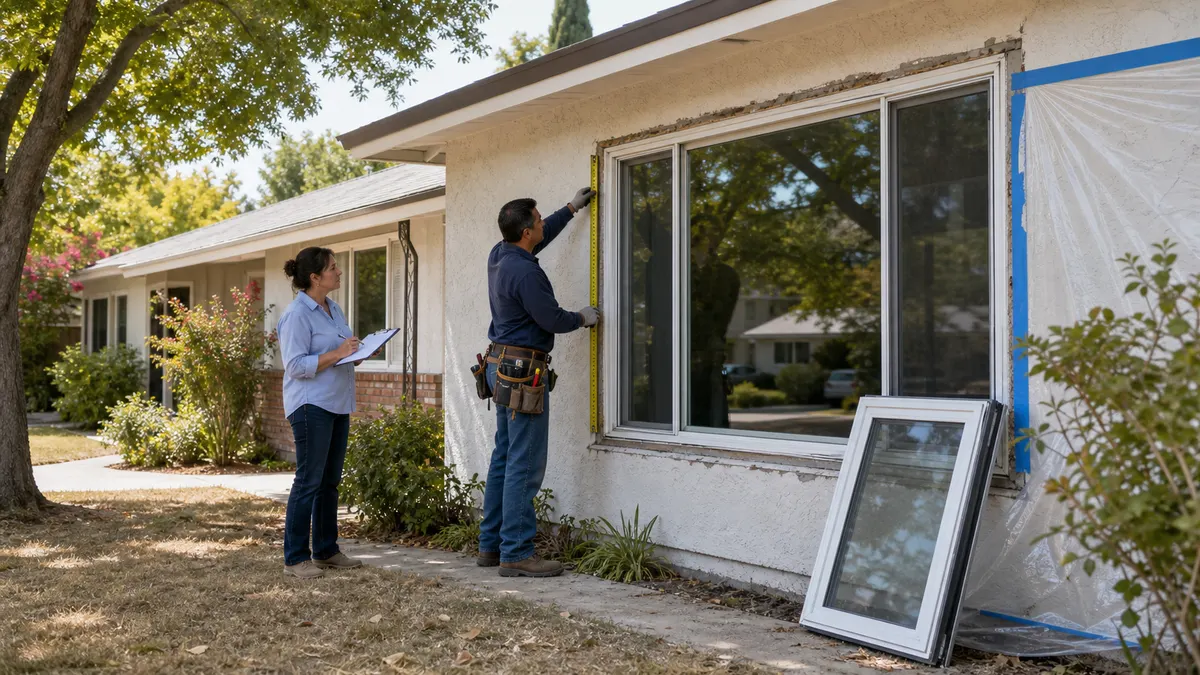
Carmichael Window Replacement: Lead Paint, Stucco Repairs, and Egress Questions
A new window sounds like a product decision until the first trim piece comes off. Then a Carmichael homeowner discovers the real question was never just vinyl versus fiberglass. It was whether the old aluminum frame comes out cleanly, whether the stucco edge survives, whether the bedroom still has a legal escape opening, and whether a pre-1978 wall needs lead-safe work practices before anyone starts scraping paint.
That is why two window bids for the same house can land thousands of dollars apart. One contractor may be pricing simple retrofit inserts. Another may be planning full-frame replacement, stucco patching, dry-rot repair, tempered glass where required, egress details, permit handling, and lead-safe containment. From the street, both proposals say "replace windows." In the house, they are different jobs.
Carmichael has many 1950s, 1960s, and 1970s ranch homes with original aluminum sliders, painted stucco, mature shade, additions, and past remodels that do not always match current expectations. This guide explains what homeowners should check before choosing windows, how to compare bids, when permits and lead-safe rules enter the conversation, and which contractor should lead the work.
Use this chart before comparing bids. Window performance matters, but the installation method and surrounding wall condition often decide the final cost.
Start With The Window That Fails First
Before calling contractors, walk the house and identify the windows that are actually causing problems. Sticky sliders, failed seals, fogged glass, missing screens, warm west-facing rooms, street noise, drafty bedrooms, water stains under the sill, swollen trim, or cracked stucco all point to different scopes.
Take photos from inside and outside. Include wide shots of the wall, close-ups of the frame, any stucco cracks, interior trim, water staining, and the room each window serves. For bedrooms, note whether the window is the emergency escape opening. For bathrooms, doors, stair landings, or windows near tubs, note that safety glazing may be part of the code conversation.
A good window estimate starts with those details. A bid that only counts openings and names a product line can miss the work that makes the replacement last.
Why Carmichael Older Homes Need A Closer Look
Many Carmichael homes were built before today's energy, egress, and lead-safe expectations. Original aluminum windows may be set into stucco in a way that makes full removal messy. Prior owners may have painted over wood trim, patched stucco with mismatched texture, or installed replacement windows that reduced the clear opening in a bedroom.
Mature trees help with shade, but they can hide moisture clues around sills and walls. Irrigation overspray can damage stucco below a window. Older single-pane glass can make a room hotter in July and colder in January even when the HVAC system is working. A large picture window facing afternoon sun may need a different glass package than a shaded bedroom slider.
The installation method matters as much as the window brand. Retrofit inserts usually leave more of the existing frame in place and can be less disruptive. Full-frame replacement can solve deeper problems, but it may expose stucco repair, flashing, trim, paint, and lead-safe work. Ask the contractor which method they are pricing and why.
What It Might Cost In 2026
These are planning ranges for Carmichael and nearby Sacramento County homes, not quotes:
- Basic retrofit replacement: $900 to $2,200 per opening for common sizes when access is easy and the surrounding frame is sound.
- Larger sliders, picture windows, or upgraded glass packages: $2,000 to $6,500 per opening depending on size, frame material, Low-E package, grid style, and installation detail.
- Whole-home replacement: $14,000 to $45,000 for many older ranch homes, with higher totals for custom sizes, full-frame work, multiple large openings, or extensive finish repair.
- Stucco, trim, dry-rot, or paint repair: $500 to $6,000 or more depending on how many openings need wall repair and who handles texture and paint matching.
- Egress, tempered glass, or opening changes: $2,500 to $12,000 or more when framing, structural headers, permits, or exterior finish work are involved.
- Lead-safe containment on pre-1978 homes: cost varies with disturbance area and method, but it should be named in the scope when painted surfaces will be disturbed.
The cheapest bid may be a good fit for a clean retrofit job. It is not a good fit if the old frame is leaking, the stucco is already cracked, the bedroom opening will shrink, or the work disturbs old paint without a lead-safe plan.
Retrofit, Full-Frame, Or Change The Opening?
Retrofit windows can be efficient and cost-effective when the existing frame is square, dry, and properly integrated with the wall. They reduce demolition and may preserve interior trim. The tradeoff is that they can slightly reduce glass area and clear opening size, which matters in bedrooms.
Full-frame replacement removes more of the old assembly. It is often the better conversation when there is rot, water damage, poor prior installation, frame corrosion, or a goal to correct flashing. It also makes the finish scope more visible: stucco, trim, texture, paint, and possible siding or drywall work.
Changing an opening is a different project. Enlarging a bedroom window, adding a new window, converting a window to a door, or changing header conditions can bring framing, engineering, permit, and finish work into the estimate. That is usually general-contractor territory with a window contractor or installer handling the product and installation details.
Permits, Lead-Safe Rules, And Egress
Sacramento County says residential window replacement requires a permit, including retrofit or cut-in replacement. Carmichael homeowners should assume permit questions run through the county unless their exact address falls under a different jurisdiction. Ask who pulls the permit, whether fees are included, what inspections are expected, and whether bedroom egress, natural light, ventilation, safety glazing, or energy documentation affects the submittal.
Lead-safe work is a separate issue. For homes built before 1978, the EPA Renovation, Repair and Painting rule generally requires paid contractors who disturb painted surfaces to be certified and to follow lead-safe work practices. Window replacement often disturbs painted trim, stucco edges, or interior casing, so do not treat this as a paperwork detail.
Egress also deserves attention. If a bedroom relies on a window for emergency escape, the replacement should not casually reduce the clear openable area. Even when an exact like-for-like replacement is allowed, a contractor should be able to explain how the chosen unit affects opening width, height, sill height, and operation.
California licensing rules still apply. Use a properly licensed contractor for window replacement and any related carpentry, stucco, painting, or structural work. Verify the CSLB license, bond, insurance, and workers' compensation status before signing, especially if the project will disturb old paint or open exterior walls.
Which Contractor Should Lead?
A window contractor can lead a straightforward replacement project when the openings are existing, the wall is sound, and the scope is mostly product selection plus installation. A general contractor should be involved when the project changes opening sizes, touches structural framing, coordinates stucco and paint across many elevations, or is part of a larger remodel.
If old paint will be disturbed on a pre-1978 home, confirm EPA lead-safe certification and cleanup procedures. If stucco is cracked or water-damaged, ask who performs the stucco repair and who matches texture and paint. If the project includes exterior paint, a painting contractor may need to sequence after windows are installed. If interior trim or drywall is affected, make sure finish repair is not floating as an unstated owner responsibility.
The best lead contractor is the one who can explain the wall assembly, not just the window label.
What A Useful Window Bid Should Include
Ask each contractor to separate:
- Window count, room locations, sizes, and operation type
- Retrofit versus full-frame installation method
- Frame material, glass package, U-factor, solar heat gain coefficient, grids, screens, and color
- Bedroom egress and whether clear opening dimensions change
- Tempered or safety glass requirements near doors, tubs, stairs, or other hazardous locations
- Permit responsibility, inspection plan, and energy documentation
- Lead-safe certification and containment when applicable
- Stucco, trim, sill, dry-rot, drywall, texture, and paint repair
- Disposal, cleanup, dust control, landscaping protection, and warranty terms
- What is excluded, especially painting, blinds, shutters, security sensors, or alarm contacts
If one bid includes stucco repair, lead-safe prep, permit handling, and paint touch-up while another only lists window units, the lower price may not be lower after the job starts.
Red Flags In Window Replacement Quotes
Slow down if you hear any of these:
- "Permits are never needed for replacement windows" in Sacramento County.
- "Lead paint is not an issue" before anyone asks the home's age.
- The contractor will not say whether the job is retrofit or full-frame.
- Bedroom windows are replaced with units that reduce the emergency opening without explanation.
- Stucco cracks, sill stains, or dry rot are dismissed before inspection.
- The estimate excludes stucco, trim, paint, or cleanup but does not say who handles them.
- The product warranty is clear, but the installation warranty is vague.
- License, insurance, bond, workers' compensation, or lead-safe credentials are hard to verify.
Good window work is quiet after it is done. The room feels better, the wall stays dry, and the replacement does not create a new resale or inspection problem.
Internal Homework Before You Hire
For local context, start with our Carmichael contractor guide, compare window contractors, general contractors, and painting contractors, or use the contractor search to build a shortlist.
For related planning, pair this with our window replacement guide, window cost guide, hot-room window and shade guide, noise and heat window guide, California permit basics, and license verification guide.
The Bottom Line
For Carmichael homeowners, window replacement is part comfort upgrade, part wall repair, part code check. Do not buy the window before you understand the opening. Confirm the installation method, lead-safe plan, stucco and paint scope, permit path, and egress details. Then compare contractors by what they are actually taking responsibility for, not by the cheapest unit price.
Who to Hire for This Project
For the work covered in this guide, these are the contractor types to contact and the CSLB classification to verify before you take quotes:
Questions to Ask Before You Sign
- "Is your CSLB license active and bonded?" Verify it yourself at cslb.ca.gov the license number must appear on their bid.
- "Who pulls the permit, and is it included in the bid?" The contractor should handle any required permits a pro who suggests skipping one is a red flag.
- "Can you itemize labor, materials, and allowances?" Itemized bids are the only way to compare quotes on the same scope.
- "What's the payment schedule?" California caps the down payment at $1,000 or 10%, whichever is less payments should track completed work.
- "Who from this area can I call as a reference?" Ask for a recent local job of similar scope, not just photos.
Sacramento Contractors for This Project
Related Articles
Frequently Asked Questions
Do Carmichael window replacements need permits? +
Sacramento County says residential window replacement requires a permit, including retrofit and cut-in window or door replacement. Carmichael is generally under Sacramento County permitting, but homeowners should confirm the jurisdiction for their exact address and ask the contractor who pulls the permit.
Does lead paint matter when replacing windows? +
Yes, it can. For homes built before 1978, paid contractors who disturb painted surfaces generally need EPA lead-safe certification and must follow lead-safe work practices. Window replacement often disturbs trim, casing, or stucco edges, so ask how containment and cleanup are handled.
Is retrofit window replacement cheaper than full-frame replacement? +
Usually, yes, when the existing frame is sound and dry. Full-frame replacement costs more because it removes more of the old assembly and may expose stucco, trim, flashing, dry-rot, and paint repair. The right method depends on the wall condition, not just price.
What should I compare in Carmichael window bids? +
Compare installation method, glass package, frame material, permit handling, egress impact, tempered glass requirements, lead-safe prep, stucco and trim repair, cleanup, warranty terms, and exclusions. Two bids with the same window count may cover very different work.