Citrus Heights Window Replacement for Noise, Heat, and Curb Appeal
A lot of Citrus Heights houses share the same quiet problem. Drive through the older tracts off Greenback or Sunrise and you'll find homes from the 1960s through the early '80s, many still wearing their original single-pane aluminum windows. By two in the afternoon, the west-facing rooms feel like a parked car. By evening, you can hear Sunrise Boulevard through the glass like it's in the next room. People often call about one of those problems and discover, mid-conversation, that the same project can fix the other. Heat, noise, and a tired-looking front elevation usually trace back to the same forty-year-old windows.
The mistake is treating new windows as a single decision. They're really three: which glass, which frame style, and which installer. Get those right and the difference is obvious from the first hot week. Get them wrong and you've spent five figures to swap one drafty window for a slightly newer one.
Start with the rooms that bother you, not the whole house
Before anyone hands you a brochure, walk your own house and rank the rooms. The bedroom that bakes. The office where you can't take a call without traffic noise. The slider that takes both hands and a shoulder to open. That ranking matters more than you'd think, because it tells a good contractor where to spend your money and where to coast.
West and south-facing glass in Citrus Heights does the most damage, since that's where the summer sun lands hardest from May into September. For those openings, the spec that actually moves the needle is a low solar heat gain coefficient (SHGC) the number describing how much of the sun's heat the glass lets through. A low-E coating tuned for our climate, paired with a tight SHGC, will cool a room more than jumping to a fancier frame ever will. North-facing windows, by contrast, rarely need the premium glass, and a contractor who suggests the same package on every opening either isn't paying attention or is padding the bill.
Noise is its own animal. Standard dual-pane helps, but if Sunrise or Antelope Road traffic is the real complaint, ask about laminated glass or unequal glass thicknesses in the two panes. Those break up sound waves far better than a thicker frame. It's a small upcharge that delivers the thing you actually wanted.
What insert versus full-frame really changes
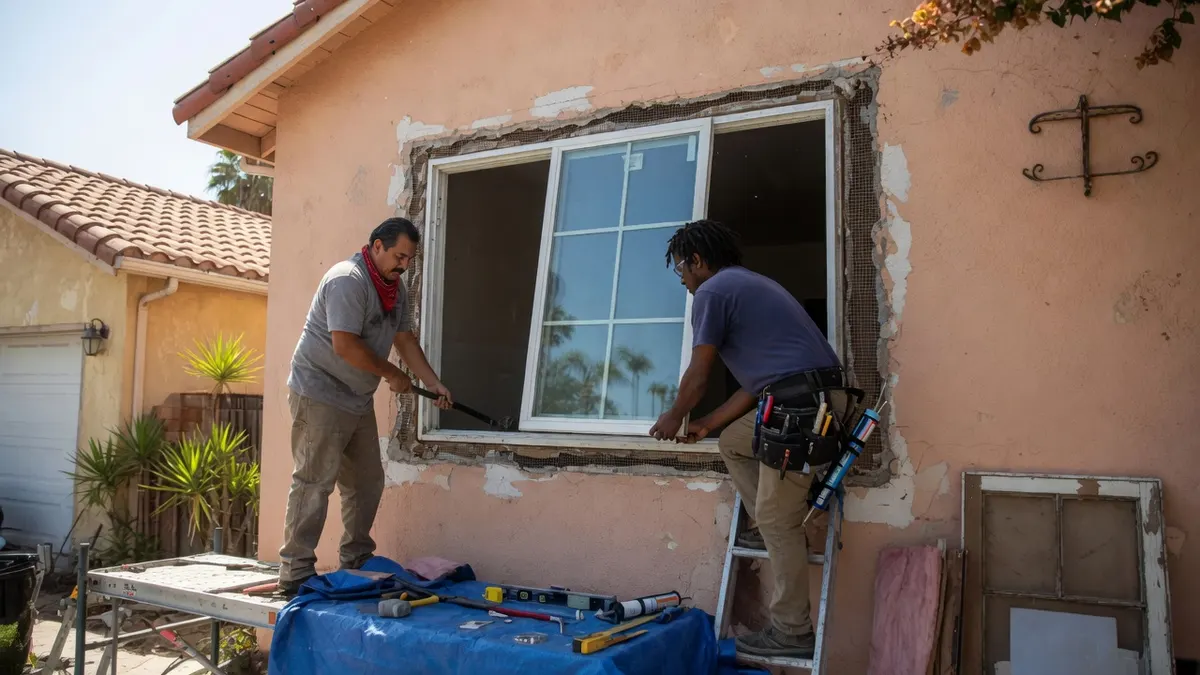
Here's where two bids can look wildly different for reasons no one explains. An insert (or "retrofit") window drops a new unit into your existing frame. It's faster, cheaper, and leaves your stucco and interior trim alone. A full-frame replacement tears everything back to the rough opening, which costs more and means stucco or siding patching afterward but it's the honest choice when the old frames are rotted, leaking, or you want to change a window's size.
Neither is automatically right. What you want is a contractor who tells you *which* of your openings need full-frame and which are fine as inserts, instead of quoting the whole house one way to keep the math simple. Across the Sacramento Valley, a typical whole-home replacement lands somewhere around $9,000 to $28,000, and that enormous spread is mostly explained by this single choice, plus the glass packages and how much patch-and-paint work follows. Treat any quote that skips these details as incomplete.
Set aside a cushion, too. Older Citrus Heights homes hide things behind the trim dry rot under a leaky sill, framing that was modified by a previous owner without a permit, stucco that won't match cleanly. A contingency of ten percent or so keeps a small surprise from becoming a budget fight.
The California rules that quietly shape the job
Two state-level things catch homeowners off guard. The first is safety glazing. California code requires tempered glass in specific spots windows close to a door, glass near the floor, anything in a tub or shower wall. If your replacement touches those locations, tempered units are non-negotiable, and a legitimate installer will flag them without being asked. Bedrooms have their own rule: the egress window has to stay big enough to climb out of in a fire, so you can't just shrink an opening to save on glass.
The second is the contractor's license. Any home-improvement job in California priced over $1,000 in combined labor and materials must be performed by a CSLB-licensed contractor and at the typical cost of a window job, that's essentially all of them. (You may still see the old $500 figure floating around online; it's outdated. The threshold is $1,000.) Take ten minutes and verify the license yourself at the CSLB website, and confirm the contractor carries both liability insurance and workers' compensation. That last one protects *you* if someone gets hurt on a ladder against your wall. You can line up several license-verified installers through our Citrus Heights contractor directory or browse the broader pool of window specialists to start a shortlist.
Permits, timing, and the questions that separate the pros
Like-for-like swaps in the same opening usually move on a straightforward over-the-counter permit, and the inspection mostly confirms the energy specs and any required tempered glass. The moment you change an opening's size, cut a new one, or do full-frame work that exposes framing, the permit gets more involved and an inspector will want to see the rough opening before it's closed up. Pin down in writing who pulls the permit and who meets the inspector that one sentence in a contract prevents a lot of finger-pointing later.
Timing is worth a thought. Spring and early summer are peak season for every exterior trade in the region, so the best installers book out and lead times on custom glass stretch. If your project isn't urgent, fall and winter often mean shorter waits and a contractor who's less rushed.
When you're comparing finalists, ask for a room-by-room schedule listing each window's size, frame style, and the U-factor and SHGC for its glass. Ask how interior trim and exterior stucco get repaired and repainted, since that finish work is where a sloppy crew shows itself. Ask for photos of similar Sacramento-area jobs and a payment schedule tied to real progress, not a big deposit up front. If your home borders Orangevale or Fair Oaks, double-check which jurisdiction issues your permit and the same vetting habits apply if you're also weighing new siding while the exterior is open.
The practical move is simple. Spend an afternoon photographing your worst windows, write down what each one does wrong, and bring that list to three license-verified installers you pull from our Sacramento Valley contractor search. The bids will start to make sense fast, and you'll end up choosing on scope and clarity rather than on whoever happened to name the lowest number.
Who to Hire for This Project
For the work covered in this guide, these are the contractor types to contact and the CSLB classification to verify before you take quotes:
Questions to Ask Before You Sign
- "Is your CSLB license active and bonded?" Verify it yourself at cslb.ca.gov the license number must appear on their bid.
- "Who pulls the permit, and is it included in the bid?" The contractor should handle any required permits a pro who suggests skipping one is a red flag.
- "Can you itemize labor, materials, and allowances?" Itemized bids are the only way to compare quotes on the same scope.
- "What's the payment schedule?" California caps the down payment at $1,000 or 10%, whichever is less payments should track completed work.
- "Who from this area can I call as a reference?" Ask for a recent local job of similar scope, not just photos.
Sacramento Contractors for This Project
Related Articles
Sacramento Attic Insulation and Air Sealing Guide: Costs, Rebates, Ducts, Venting, and Summer Comfort
August 9, 2026
Sacramento Attic Insulation and Air Sealing Guide: Costs, Rebates, Comfort, and Contractor Questions
August 5, 2026
Arden Arcade Mini-Split Installation: Permits & Summer Cooling
July 18, 2026
Frequently Asked Questions
How much does whole-home window replacement cost in Citrus Heights? +
For a full house, plan on roughly $9,000 to $28,000 across the Sacramento Valley. The wide range comes down to whether you use insert or full-frame replacements, how much premium low-SHGC or laminated glass you order, and how much stucco and trim repair follows. Get itemized bids so you can see what's driving the number rather than just comparing totals.
What glass actually reduces afternoon heat in west-facing rooms? +
Look for a low solar heat gain coefficient (SHGC) paired with a low-E coating tuned for our hot inland climate. That combination blocks the sun's heat far more effectively than upgrading the frame. A good installer will spec aggressive glass on your west- and south-facing openings and skip the premium on north-facing windows that don't need it.
Will new windows really cut Sunrise Boulevard traffic noise? +
Standard dual-pane helps somewhat, but if traffic noise is your main complaint, ask specifically about laminated glass or panes of unequal thickness. Those disrupt sound waves much better than a thicker frame. It's a modest upcharge that targets the noise problem directly instead of hoping a basic upgrade is enough.
Do I need a permit to replace windows in Citrus Heights? +
A like-for-like swap in the same opening usually needs only a simple permit, and the inspection mainly confirms the energy specs and any required tempered glass. Changing a window's size, cutting a new opening, or doing full-frame work triggers a more involved permit and an inspection of the rough opening. Put in writing who pulls the permit and meets the inspector.
How do I verify a window contractor is properly licensed in California? +
Any job over $1,000 in combined labor and materials requires a CSLB-licensed contractor, which covers essentially every window project. Look up the license number directly on the CSLB website to confirm it's active, and ask for proof of liability insurance and workers' compensation. The old $500 threshold you may still see online is outdated; the current figure is $1,000.
When does California require tempered glass in replacement windows? +
State code mandates tempered safety glass in specific spots windows near a door, glass close to the floor, and anything in a tub or shower wall. If your replacements touch those areas, tempered units are required and a reputable installer will flag them automatically. Bedrooms also have an egress rule, so an opening can't be shrunk below the size needed to escape in a fire.