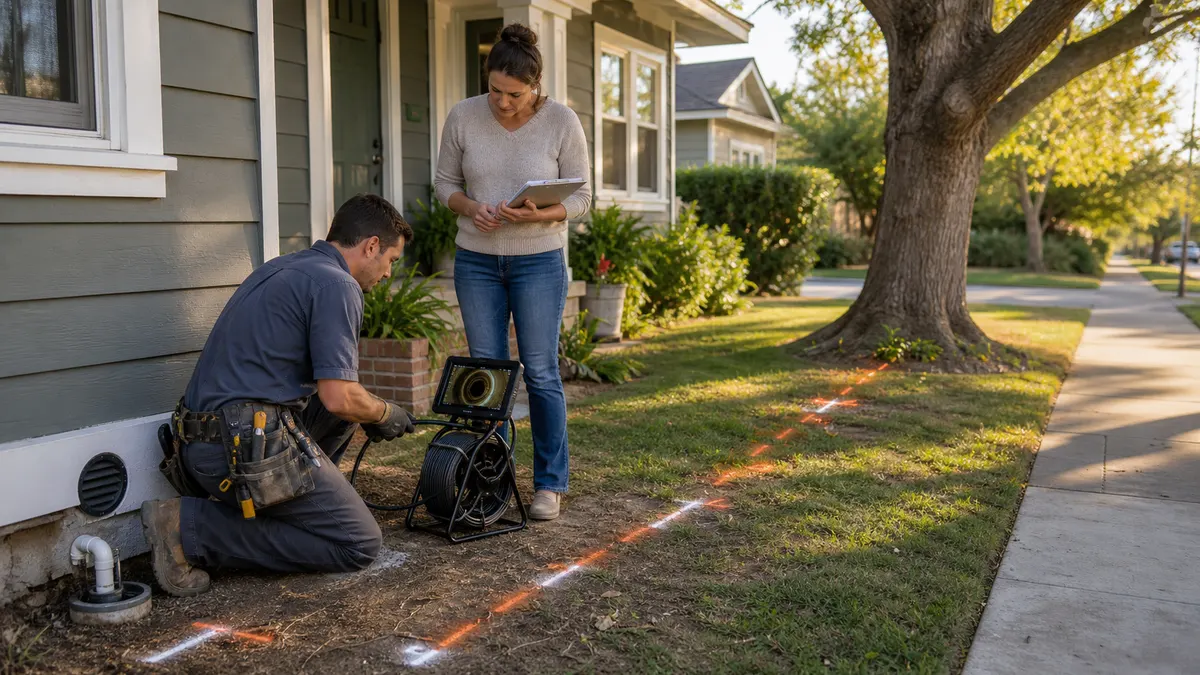
Woodland Sewer Lateral Planning Before You Remodel: Camera Scopes, Trees, and Permits
The worst time to discover a tired sewer lateral is after the new bathroom tile is in.
A Woodland homeowner starts with a sensible remodel: move the laundry, refresh the kitchen, add a bigger shower, maybe rough in a future half bath. The finishes get all the attention. Then the plumber opens the wall, asks where the cleanout is, and wants to know whether the original clay or cast iron line has ever been scoped. Nobody knows. The house has mature trees, a sidewalk out front, and decades of small plumbing changes hidden behind the walls.
That question can feel like scope creep. It is usually the opposite. A sewer camera inspection before the remodel helps you decide whether the lateral is healthy enough to leave alone, needs a cleanout, needs a spot repair, or should be replaced before new cabinets, flooring, concrete, or landscaping trap the same problem for another ten years.
Use this chart before comparing bids. A sewer estimate is not ready until the camera findings, pipe material, tree path, right-of-way limits, and remodel tie-ins are visible.
Start With the Remodel, Not the Emergency
Sewer planning is easy to ignore because the line is underground and, on a normal day, boring. That changes when a remodel adds fixtures, moves a kitchen sink, relocates laundry, opens a slab, or replaces flooring you do not want torn up later.
Woodland has a mix of older homes near downtown, mid-century neighborhoods, and newer subdivisions. The risk profile is not the same on every street. An older home may have clay, cast iron, Orangeburg, or several generations of patched pipe. A newer home may still have a low spot, root intrusion near a tree, poor cleanout access, or a section that was disturbed by past landscaping, porch, driveway, or sidewalk work.
The practical question is not "is the sewer line perfect?" It is "will this line support the remodel we are about to protect with new finishes?" If you are spending real money inside the house, a small inspection line item can prevent a much more expensive teardown later.
What the Camera Scope Should Actually Show
A useful sewer camera inspection is more than a plumber saying "it looked okay." Ask for a video file or link, still photos of the problem areas, footage counter readings, and a plain-English summary. The contractor should tell you where the camera entered, how far it traveled, what pipe material was visible, whether the line reached the city connection, and what could not be inspected.
You are looking for:
- Pipe material. Clay joints, cast iron scale, Orangeburg deformation, ABS/PVC repairs, or mixed materials all change the repair conversation.
- Roots. A few hair roots at one joint are different from heavy root mats in multiple sections.
- Bellies and standing water. A low spot can collect waste even if the pipe is not cracked.
- Offset joints. Soil movement or older sectional pipe can leave edges that catch paper and solids.
- Cracks or missing pipe. These move the project from maintenance into repair or replacement.
- Cleanout access. If the only access point is awkward, missing, or indoors, adding an exterior cleanout may be one of the smartest small upgrades.
- Depth and route clues. These matter if excavation, trenchless work, a sidewalk crossing, or landscaping restoration may be needed.
If the contractor cannot document the line, you are being asked to make a remodel decision with underground guessing.
Camera First, Then Choose the Repair
A sewer lateral problem does not automatically mean full replacement. The camera result should drive the method.
If one joint has roots or one section is cracked near the cleanout, a spot repair may be enough. If the pipe is old but round, structurally sound, and mostly clear, cleaning plus a follow-up maintenance plan may buy time. If the pipe has repeated failures, sagging sections, severe scaling, collapsed areas, or root intrusion throughout, replacement or lining may be the better long-term answer.
Trenchless methods can reduce surface damage, but they are not magic. Pipe lining needs enough host pipe shape to work. Pipe bursting needs launch and receiving pits and a route that can tolerate the pulling force. Traditional excavation may still be the honest answer when the pipe is collapsed, shallow, poorly sloped, or routed through areas that need correction anyway.
For Woodland homeowners, the right repair depends on more than the pipe. It depends on whether the line runs under a porch, driveway, mature tree roots, fresh landscaping, sidewalk, or street. The estimate should make those constraints visible.
Trees and Sidewalks Change the Bid
Mature Woodland shade trees are part of the appeal of older neighborhoods, but roots do not care where the sewer lateral is supposed to be. If the camera finds root entry, ask the plumber to mark the approximate route in the yard and explain whether the roots are a symptom of a failed joint, a nearby tree conflict, or both.
Do not let a plumbing contractor casually promise root cutting or trenching near a significant tree without discussing preservation, access, and restoration. Sometimes a plumber, excavation contractor, and tree professional need a short shared conversation before anyone digs. That is especially true if the line runs close to a large trunk, crosses a front yard with established planting, or sits near older concrete that has already moved.
Sidewalks and curb areas add another layer. If the work goes into the public right-of-way, blocks sidewalk access, opens pavement, or connects water or sewer services, Woodland homeowners should ask about encroachment permits, inspection timing, traffic or pedestrian controls, backfill, compaction, and pavement restoration. The plumber may handle that, but the contract should say so clearly.
What a Useful Estimate Should Separate
For a Woodland sewer lateral project, a basic camera inspection might run a few hundred dollars. Cleaning, root cutting, or adding an accessible cleanout can land in the low thousands. A spot repair often runs several thousand dollars depending on depth and surface restoration. Full replacement, lining, bursting, or excavation can move into the $8,000 to $25,000-plus range when the line is long, deep, under concrete, near trees, or tied to right-of-way work.
Ask each bidder to separate:
- Inspection and evidence. Camera video, photos, pipe material, distance, problem locations, depth assumptions, and whether the city connection was reached.
- Immediate maintenance. Cleaning, root cutting, hydro jetting, temporary relief, and whether those steps are safe for the pipe material.
- Repair method. Spot repair, lining, bursting, full excavation, or a mixed approach, with why that method fits the camera findings.
- Access and excavation. Cleanout location, pit locations, trench depth, shoring assumptions, haul-off, soil handling, and where equipment will enter.
- Surface restoration. Lawn, irrigation, planting beds, walkway, driveway, sidewalk, curb, paving, and who restores each item.
- Permits and inspections. Plumbing permit, encroachment permit if applicable, inspection scheduling, and who handles corrections.
- Remodel coordination. Whether the sewer work must happen before flooring, cabinets, shower pan work, laundry relocation, or slab patching.
- Warranty. What is covered, for how long, and whether the warranty depends on future root maintenance or camera documentation.
Two sewer bids can look thousands of dollars apart because one includes right-of-way restoration and the other stops at the property line. Compare the scope, not just the number.
Permits and Licensing in Woodland
Woodland homeowners should treat sewer work as permit-sensitive until the contractor proves otherwise. The city's engineering materials call out right-of-way excavation, sidewalk or paving disturbance, and connection of water and sewer services as encroachment-permit items. Its inspection guidance also flags sewer pipeline bedding, backfill, trench compaction, paving, and gravity-line grades as work that inspectors may need to see before backfill.
Plain English: a kitchen faucet replacement is not the same thing as repairing or replacing a buried sewer lateral. If the job opens the ground, changes the drainage system, touches the sidewalk or street, or changes a service connection, ask for the permit path in writing.
Licensing should match the work:
- C-36 plumbing contractor. Use this for sewer diagnosis, drain repair, cleanouts, line replacement, and plumbing tie-ins.
- C-42 sanitation system contractor. This may fit some sewer and sanitation-system scopes.
- A general engineering or excavation-capable contractor. This may be needed when the work is heavy excavation, public right-of-way, trenching, compaction, or utility coordination.
- B general contractor. A broader remodel lead can make sense when the sewer work is tied to a kitchen, bathroom, laundry, slab, flooring, or addition schedule.
One person does not need to hold every classification. The important part is that the contractor can explain who is licensed for each part of the job and who is responsible for permits and inspections.
Red Flags in Sewer Lateral Bids
Slow down if you hear any of these:
- "We can price it without a camera."
- The contractor will not provide the video or still photos.
- The bid says "replace sewer" but does not name length, method, material, depth, or restoration.
- Tree roots are discussed as a nuisance, not a site constraint.
- The estimate ignores sidewalk, curb, street, or right-of-way questions.
- No one explains who restores irrigation, concrete, paving, or landscaping.
- The plumber and remodel contractor are not communicating before the interior work starts.
- The contractor says permits never matter for sewer work.
Good sewer contractors are not dramatic. They show you the evidence, explain the options, and tell you where their scope ends.
Questions to Ask Before You Sign
- Can I receive the full camera video and a written summary?
- What pipe material did you see, and where did it change?
- Did the camera reach the city connection?
- Are roots, bellies, offsets, cracks, or standing water present?
- Is this a maintenance issue, a spot repair, or a replacement issue?
- Will any work enter the sidewalk, street, curb, or other public right-of-way?
- Who pulls the Woodland plumbing or encroachment permits if they are required?
- What surfaces are included in restoration after excavation?
- How should this be sequenced with my kitchen, bath, laundry, or flooring work?
Those questions keep the conversation grounded. You are not trying to become a sewer expert. You are trying to prevent an underground problem from ambushing an aboveground remodel.
Internal Homework Before You Hire
For local context, start with our Woodland contractor guide, compare licensed plumbing contractors, excavation contractors, general contractors, kitchen remodel contractors, and bathroom remodel contractors. Use the contractor search when you are ready to build a shortlist.
For related planning, pair this with our sewer line warning signs guide, sewer replacement cost guide, sewer lateral responsibility guide, whole-house repiping guide, spring plumbing checkup, and California permit basics.
The Bottom Line
A sewer camera scope is not the glamorous part of a Woodland remodel. That is exactly why it is worth doing early. Find the cleanout, document the line, understand the route to the street, settle the permit question, and make the sewer decision before new finishes make every underground surprise more expensive.
Who to Hire for This Project
For the work covered in this guide, these are the contractor types to contact and the CSLB classification to verify before you take quotes:
Questions to Ask Before You Sign
- "Is your CSLB license active and bonded?" Verify it yourself at cslb.ca.gov the license number must appear on their bid.
- "Who pulls the permit, and is it included in the bid?" The contractor should handle any required permits a pro who suggests skipping one is a red flag.
- "Can you itemize labor, materials, and allowances?" Itemized bids are the only way to compare quotes on the same scope.
- "What's the payment schedule?" California caps the down payment at $1,000 or 10%, whichever is less payments should track completed work.
- "Who from this area can I call as a reference?" Ask for a recent local job of similar scope, not just photos.