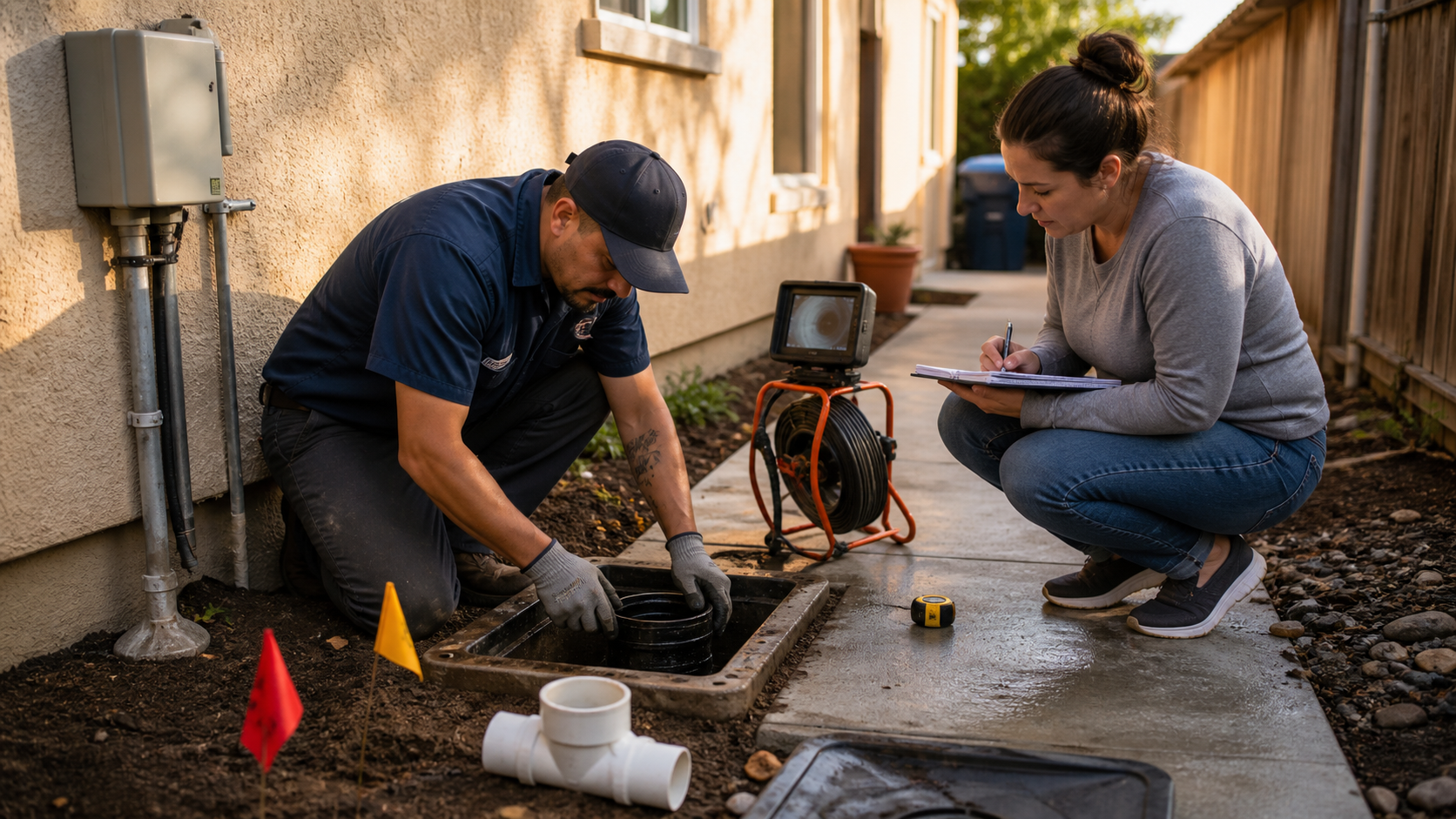
West Sacramento Backwater Valve Planning: Sewer Backup Risk, Permits, and Who to Call
The worry usually starts after the water has already gone down.
A West Sacramento homeowner runs the washing machine, hears the hall bath gurgle, and later notices a damp ring around the garage floor drain. Nothing is actively backing up anymore. The plumber can probably clear the line. Then the homeowner asks the question that changes the job: should we add a backwater valve so this does not come back into the house?
That is a reasonable question in a low, river-adjacent city. It is also a question that needs diagnosis before installation. A backwater valve can protect the right fixtures from sewer surcharge, but it can also create maintenance responsibility, access requirements, and false confidence if the real problem is roots, a belly, a collapsed lateral, or no usable cleanout. The smart project starts with evidence: elevation, camera footage, cleanout location, lateral responsibility, and permit assumptions.
| What is happening | Start with | Decision point | Typical planning range |
|---|---|---|---|
| Lowest tub, shower, toilet, or floor drain backs up during heavy use | Licensed C-36 plumbing contractor | Camera the lateral, locate cleanouts, and compare fixture elevation with the sewer. | $300 to $1,500 for diagnosis |
| No exterior cleanout or cleanout is buried under hardscape | Plumber, sometimes excavation help | Add proper access before approving a valve or future repair. | $1,200 to $4,500-plus |
| Roots, offset pipe, belly, or cracked lateral on camera | Sewer repair plumber | Repair the failure before relying on a backwater valve. | $4,000 to $25,000-plus |
| Valve location requires trenching, slab cutting, or driveway restoration | Plumber with excavation or concrete coordination | Confirm permit path, utility marking, access box, and surface repair. | $3,500 to $12,000-plus |
| Garage conversion, bath remodel, laundry move, or ADU planning | General contractor with plumber involved early | Design protection before finishes, cabinets, or new concrete cover the line. | Scope dependent |
Use this chart before comparing bids. Backwater valve estimates are not comparable until each contractor is pricing the same assumptions for camera work, pipe repair, trench depth, utility marking, permit handling, access covers, and concrete or landscape restoration.
Start With The Backup Pattern
Before asking for a valve price, write down what actually happened.
Did wastewater come up through the lowest shower, tub, toilet, laundry standpipe, or floor drain? Did it happen during a storm, during heavy laundry use, after guests stayed over, or when no one was using plumbing inside the house? Did a neighbor have the same problem? Did a plumber clear the line from an outside cleanout, a roof vent, a toilet opening, or the city side?
Those details matter. A single clog in the house branch line is different from a lateral that repeatedly surcharges at the lowest fixture. A slow kitchen drain is different from sewage pushing up through a shower pan. A backup that happens only when the city main is overwhelmed is different from roots grabbing wipes and paper inside an older private lateral.
Take photos after cleanup, save the plumber's invoice, and ask for the camera video if one was recorded. If the contractor cannot show you where the valve would go and what problem it is meant to solve, the estimate is not ready.
Why West Sacramento Needs A Careful Sewer Conversation
West Sacramento homes can have very different sewer conditions block by block. Older homes around Broderick, Bryte, and the state streets may have aging laterals, tight side-yard access, mature trees, older cleanout details, or additions that changed the plumbing layout. Newer Southport homes may have more modern underground work, but that does not make every low garage, laundry, or downstairs bath immune from backup risk.
Flat lots also change the conversation. When the house sits close to sewer elevation, the lowest fixtures deserve extra attention. A backwater valve is one possible tool, but it is not a substitute for proving slope, pipe condition, cleanout access, and where the private line connects. West Sacramento's river setting makes homeowners naturally think about water risk. For this specific project, keep the focus on the sanitary sewer path, not general flood risk, sump pumps, or yard drainage unless those systems are truly involved.
If your issue is broader than a valve question, read the West Sacramento sewer camera and line problem guide first, then pair it with the sewer lateral responsibility guide. Those two guides help you separate private lateral work from public-side questions before the bid gets expensive.
What The Valve Can And Cannot Do
A backwater valve is a one-way valve installed in the drainage line. Under normal conditions, wastewater leaves the house. If sewage tries to flow backward, the valve flap closes and helps protect the fixtures served by that line.
That protection depends on placement. The plumber needs to know which fixtures are low enough to need protection, where the valve can be installed, whether upper fixtures would keep draining against a closed valve, and how the valve will be accessed for cleaning. A buried valve with no accessible cover is a future service problem. A valve on the wrong branch may protect the wrong fixtures.
The valve also does not repair the pipe. It will not remove roots, correct a belly, fix an offset joint, stop stormwater, or make wipes and grease safe for the drain. When the camera shows a real pipe defect, treat that defect as the main project. The valve may still belong in the final scope, but it should not be used to avoid repairing a failing lateral.
Permit And Code Questions To Ask
Backwater valve work sits in the plumbing and sewer lane, so do not treat it like a handyman add-on.
The City of West Sacramento's Building and Permitting Division is the local starting point for confirming the current permit path for your address and scope. West Sacramento's public sewer construction code says work that constructs, extends, or connects to a public sewer requires a written permit, and it also says properly licensed contractors are required for public sewer construction. A private backwater valve inside your lateral is a specific scope question, so ask the city and your plumber where the permit line falls before work starts.
For license fit, start with a C-36 plumber. The CSLB's C-36 plumbing classification covers plumbing systems related to safe water, waste disposal, waste removal, piping, and backflow prevention equipment. If the job adds trenching, shoring, sawcut concrete, driveway restoration, framing, drywall, or remodel coordination, the plumber may need an excavation contractor, concrete contractor, or general contractor involved.
California plumbing code provisions used by jurisdictions to evaluate backwater protection focus on fixtures below the next upstream manhole or main sewer level. Do not guess on that elevation. Ask the plumber how they will determine whether a valve is required, optional, or inappropriate for the fixtures you want to protect.
What It Might Cost In 2026
These are planning ranges for West Sacramento and nearby Yolo/Sacramento County homes, not quotes:
- Sewer camera, locate, and diagnosis: $300 to $1,500, depending on access and whether the contractor provides usable video and a marked line location.
- Cleanout addition or correction: $1,200 to $4,500-plus when the line is accessible and the work is limited.
- Backwater valve installation in an accessible exterior line: $2,500 to $8,500 when trenching is modest and the pipe is in repairable condition.
- Valve plus pipe repair, new cleanout, and surface restoration: $5,000 to $18,000-plus if damaged pipe, driveway sawcutting, sidewalk/flatwork, or landscape restoration is included.
- Major lateral replacement or difficult excavation: $10,000 to $30,000-plus when depth, length, shoring, street-side coordination, or failed pipe condition drives the job.
The number that matters is not just the valve price. It is the whole finished scope: diagnosis, permits, utilities, trenching, pipe condition, valve box, cleanouts, inspection, compaction, concrete, landscaping, and documentation.
Which Contractor Should Lead?
For a standalone sewer backup diagnosis or valve discussion, start with a licensed plumbing contractor who regularly handles sewer laterals, not just fixture swaps. Ask whether they self-perform camera work, locate the line at the surface, install backwater valves, and provide photos of accessible valve boxes after installation.
Bring in an excavation contractor when the line is deep, hard to reach, close to utilities, or in a side yard where equipment access matters. Bring in a concrete contractor when the scope cuts a driveway, garage slab, walkway, or patio. Use a general contractor when the sewer decision is tied to a bathroom remodel, laundry relocation, garage conversion, ADU, flooring repair, drywall repair, or insurance restoration after a backup.
Avoid hiring a general handyman for this scope. Sewer protection affects health, sanitation, code compliance, and future service access. If the bid does not list a license number, permit responsibility, camera findings, pipe materials, valve model or type, access method, and restoration scope, it is not detailed enough.
Questions To Ask Before You Approve The Valve
Use these questions during the site visit, not after the trench is open:
- Where is the sewer lateral, and how did you confirm it?
- Which fixtures are at risk, and which fixtures will this valve protect?
- Is the concern a city-main surcharge, a private lateral defect, a house branch clog, or an unknown condition?
- What did the camera show: roots, belly, offset joint, collapse, grease, wipes, or normal pipe?
- Does the job need a City of West Sacramento permit or inspection?
- Who contacts 811 for utility marking before digging?
- How deep is the valve, and what surface will be removed and restored?
- How will the valve remain accessible for cleaning?
- Can upper-floor or upstream fixtures keep draining if the valve closes?
- What photos, camera footage, permit records, and warranty paperwork will I receive?
The best contractors will welcome these questions because they force the bid to become specific.
Red Flags In A Backwater Valve Bid
Slow down if a contractor wants to install the valve without camera footage, cannot explain which fixtures it protects, plans to bury the access cover, skips utility marking, avoids permit questions, or treats every backup as proof that a valve is required.
Also watch for bids that ignore the surface work. A price that covers the plumbing but excludes concrete, landscape repair, irrigation repair, compaction, or cleanup may look cheaper and still cost more by the end. In West Sacramento side yards, driveways, and garage slabs, restoration is often a real part of the job.
If the contractor says the city is definitely responsible, ask for evidence. If they say the homeowner is definitely responsible, ask for evidence too. The local sewer lateral responsibility guide explains why that line can matter before anyone starts digging.
How To Build A Shortlist
Start with the West Sacramento contractor guide, then compare licensed plumbing contractors. If access or restoration will be part of the project, also review excavation contractors, concrete contractors, and general contractors. Use the contractor search when you are ready to compare local options.
For deeper planning, pair this article with the West Sacramento sewer camera guide, cleanout access planning guide, Sacramento sewer camera cost guide, sewer line replacement cost guide, California permit guide, and license verification guide.
The Bottom Line
A backwater valve is not a panic purchase. It is a sewer-protection detail that only makes sense after the plumber proves the backup pattern, line condition, fixture elevation, access plan, and permit assumptions.
For a West Sacramento homeowner, the right first move is a documented sewer diagnosis from a licensed plumber. If the camera and elevation review support a valve, build the bid around the whole finished scope: valve, cleanouts, permits, access, surface restoration, and maintenance. If the camera shows a failing lateral, fix the pipe first. Either way, the contractor who explains the underground conditions clearly is usually the contractor closest to the real answer.
Who to Hire for This Project
For the work covered in this guide, these are the contractor types to contact and the CSLB classification to verify before you take quotes:
Questions to Ask Before You Sign
- "Is your CSLB license active and bonded?" Verify it yourself at cslb.ca.gov the license number must appear on their bid.
- "Who pulls the permit, and is it included in the bid?" The contractor should handle any required permits a pro who suggests skipping one is a red flag.
- "Can you itemize labor, materials, and allowances?" Itemized bids are the only way to compare quotes on the same scope.
- "What's the payment schedule?" California caps the down payment at $1,000 or 10%, whichever is less payments should track completed work.
- "Who from this area can I call as a reference?" Ask for a recent local job of similar scope, not just photos.
Sacramento Contractors for This Project
Related Articles
West Sacramento Heat Pump Water Heater: SMUD Rebates and Permits
September 24, 2026
Sacramento Heat Pump Water Heater Guide: Costs, Rebates, Electrical Needs, Noise, and Installation Details
August 15, 2026
Sacramento Main Water Shutoff and Pressure Regulator Guide: Valves, Leaks, Access, and Remodel Planning
August 10, 2026
Frequently Asked Questions
Does every West Sacramento home with a sewer backup need a backwater valve? +
No. Some backups come from roots, grease, wipes, broken pipe, poor slope, or a local branch clog. A licensed plumber should camera the line, locate the lateral, and explain which fixtures are at risk before recommending a valve.
Who should install a residential backwater valve? +
Start with a licensed C-36 plumbing contractor who regularly works on sewer laterals. Excavation, concrete, or general contractor coordination may be needed if the work requires trenching, slab cutting, driveway repair, or remodel sequencing.
Does a backwater valve require a permit in West Sacramento? +
It depends on the exact scope and where the work occurs. Ask the City of West Sacramento Building and Permitting Division and have the plumber identify whether the job changes private plumbing only, connects to public sewer facilities, or triggers inspection.
How much does a backwater valve project cost in 2026? +
Many homeowners should plan for $2,500 to $8,500 for an accessible exterior valve installation, with higher totals when cleanouts, damaged pipe, deep trenching, concrete cutting, permits, or landscape restoration are included.
Can a backwater valve stop all sewer backups? +
No. It can help protect the fixtures served by the valve from reverse flow, but it does not fix roots, collapsed pipe, poor slope, stormwater drainage, grease, wipes, or a missing cleanout.
What should I ask for after the work is complete? +
Ask for permit records if applicable, inspection signoff, photos of the open trench and installed valve, camera footage, the exact valve location, cleaning instructions, surface-restoration details, and warranty information.