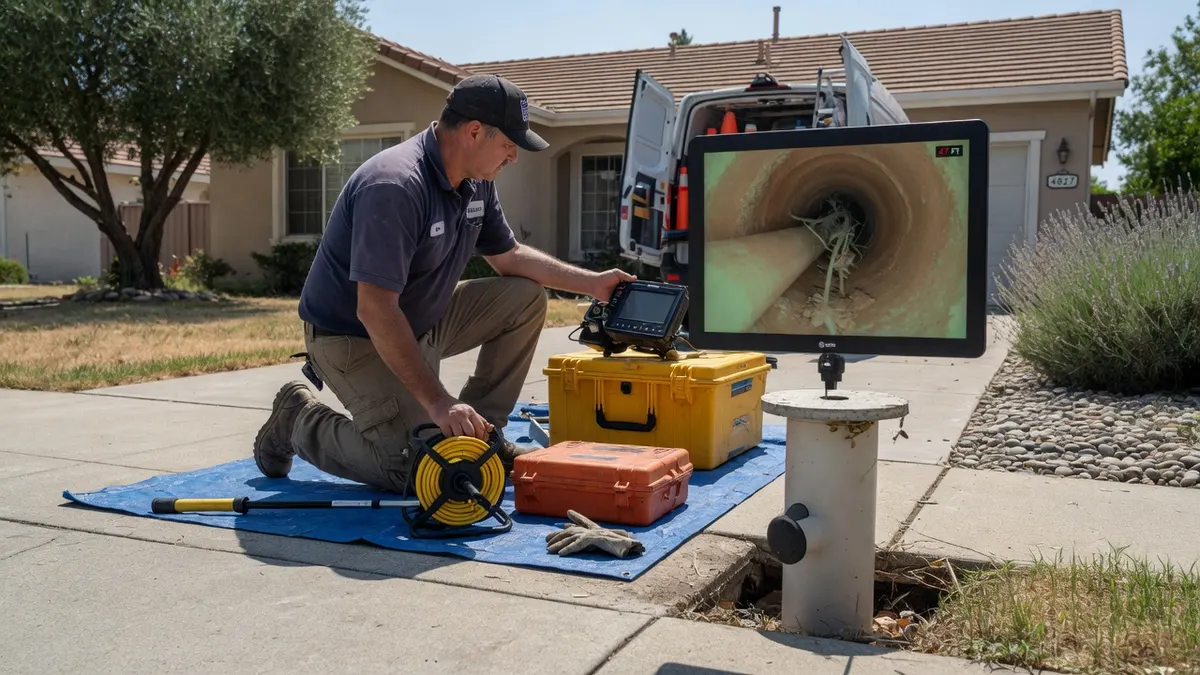
Sacramento Sewer Camera Inspection Costs: When to Scope the Line Before You Dig
Watch: Quick Homeowner Overview
A short vertical explainer for this guide share it on socials or preview the project before you read.
A sewer camera inspection is one of the least glamorous home services, but it can save Sacramento homeowners from guessing wrong on an expensive underground problem. Slow drains, recurring backups, sewer gas odors, soggy lawn areas, and root intrusion warnings all point to the same basic question: what is actually happening inside the line?
In older Sacramento neighborhoods, that answer matters. Many homes still have clay, cast iron, concrete, Orangeburg, or patched sewer laterals that have lived through decades of tree roots, soil movement, remodels, driveway work, and utility repairs. A plumber can clear a clog and get water moving again, but that does not always explain whether the line is cracked, bellied, offset, invaded by roots, crushed, or simply overdue for cleaning.
This guide explains realistic 2026 sewer camera inspection costs in the Sacramento area, when camera work is worth paying for, what the video should show, how cleanout access affects pricing, and how to use the findings before approving a repair or replacement bid.
Typical 2026 Sewer Camera Inspection Cost in Sacramento
For planning purposes, Sacramento homeowners often see these ranges:
- Basic camera inspection through an accessible cleanout: $175 to $450 when the plumber can access the line easily and the goal is documentation or diagnosis.
- Camera plus drain cleaning: $300 to $850 when the line needs to be cleared before the camera can pass through enough pipe to see the problem.
- Camera inspection with locating: $350 to $900 when the contractor also marks the pipe route, depth, and problem area at the surface.
- Difficult access or no usable cleanout: $600 to $1,500 or more if a toilet must be pulled, access has to be created, the line is heavily blocked, or multiple attempts are needed.
- Camera work tied to repair planning: sometimes included or credited toward a larger sewer repair estimate, but homeowners should still ask for the video, route, depth, and written findings.
These are planning ranges, not quotes. Cost depends on access, line length, blockage severity, whether the home has a proper two-way cleanout, how much locating is needed, and whether the work is urgent after a backup.
When a Camera Inspection Is Worth It
A camera inspection is most useful when the problem repeats. One slow sink may be a fixture trap or branch drain issue. A whole-house backup, recurring main line clog, gurgling toilets, or sewage appearing at a tub or shower drain points closer to the building sewer or main drain.
Sacramento homeowners should strongly consider camera work when any of these are true:
- The main line has backed up more than once in a year
- Drain cleaning brings temporary relief but the problem returns
- A contractor finds roots during cable cleaning
- The home was built before modern plastic sewer piping became common
- A driveway, patio, tree, or addition sits over the suspected line route
- A home purchase inspection recommends checking the lateral
- A remodel will add a bathroom, ADU, laundry, or major plumbing load
- There are wet, sunken, or unusually green areas along the sewer path
Camera footage does not replace good judgment, but it changes the conversation from "maybe the pipe is bad" to "here is the actual defect, location, and depth."
Cleanout Access Changes the Job
The best camera inspections usually start at a proper cleanout. A cleanout gives the plumber access to the sewer line without removing a toilet or opening finished surfaces. Many older homes have a cleanout near the foundation, in a planter, in the garage, or near the property line. Some have one-way cleanouts that allow access in only one direction. Others have no practical cleanout at all.
If there is no usable cleanout, the plumber may need to pull a toilet, access the line from a roof vent in limited situations, or recommend installing a cleanout first. Pulling a toilet adds labor, risk of wax ring replacement, and possible flooring complications. Installing a new cleanout costs more upfront but can make future cleaning and camera work safer, faster, and cheaper.
Before approving the inspection, ask where the camera will enter, whether the plumber expects to see the entire line to the city connection or septic connection, and whether locating is included. A low inspection price is less useful if it only covers ten feet of pipe and stops before the known problem area.
What the Video Should Show
A useful sewer camera video should be more than a blurry trip through dark pipe. Ask the contractor to identify:
- Pipe material, such as clay, cast iron, ABS, PVC, concrete, or Orangeburg
- Root intrusion locations and severity
- Cracks, missing pipe sections, holes, offsets, or collapsed areas
- Low spots or bellies where water and solids sit
- Heavy scale, grease, debris, or construction material
- Transitions between old and newer pipe
- Approximate distance from the access point to each defect
- Surface location and depth if a spot repair is being considered
The video should ideally include narration or a written summary so you can understand what you are seeing later. If the contractor recommends replacement, ask them to show the exact section that justifies it. A single root cluster near a joint is different from a long line with multiple offsets and a belly under hardscape.
Sacramento Soil, Trees, and Older Pipe
Sacramento-area sewer problems often come from a mix of mature trees, aging pipe materials, and soil movement. Neighborhoods with large street trees and older private laterals can see repeated root intrusion at clay joints or cracks. Roots do not need a wide opening. They follow moisture, enter small gaps, and expand until the line clogs again.
Soil movement can also create offsets and bellies. A belly is a sagging low section where water sits instead of flowing continuously. Cable cleaning may punch through the blockage, but it will not fix slope. If the camera shows standing water for a long section, the repair conversation should include grade, depth, and whether spot repair will actually solve the issue.
Not every defect requires immediate full replacement. Minor roots in an otherwise sound line may be managed with cleaning and monitoring. A cracked, flattened, or badly offset pipe under a driveway is a different risk. The goal is to match the repair to the evidence rather than defaulting to the biggest job.
Permits and Repair Decisions
Camera inspection by itself usually does not require a building permit, but sewer repair or replacement often does. The correct agency depends on the property address. City of Sacramento, Sacramento County, Elk Grove, Roseville, Folsom, West Sacramento, Rancho Cordova, Citrus Heights, and Davis can have different permit rules, inspection steps, and sewer district details. Start with the official City of Sacramento building division or Sacramento County building permits and inspection services when those agencies apply, and confirm locally for other cities.
Repair choices usually fall into a few buckets:
- Maintenance cleaning: useful when the pipe is mostly intact and the issue is roots, grease, or debris.
- Spot repair: common when one broken, offset, or root-damaged section can be excavated and replaced.
- Trenchless lining or bursting: possible in some situations, but only if pipe condition, route, depth, and local rules fit the method.
- Full replacement: more likely when defects are widespread, slope is wrong, pipe has collapsed, or a larger remodel needs reliable capacity.
For Sacramento budgeting, spot sewer repairs can often run several thousand dollars, while larger replacements can reach $8,000 to $25,000 or more depending on depth, length, surface restoration, street work, traffic control, and connection details. The camera inspection should help narrow that range.
How to Compare Sewer Repair Bids After the Camera
Do not compare sewer bids only by the final number. Compare the scope behind the number. A complete bid should state the pipe section being repaired, depth, material, excavation method, permit responsibility, inspection handling, bedding or backfill plan, surface restoration, cleanup, and warranty terms. If hardscape, landscaping, irrigation, fencing, or driveway replacement is excluded, it should say so clearly.
Ask whether the contractor will provide the camera video, mark the line, explain utility locating, and perform a follow-up camera inspection after repair. For any dig work, underground utility marking matters. Homeowners can review California 811 resources at california811.org before excavation planning.
Also confirm license fit. Sewer and plumbing work should be handled by a properly licensed contractor for the scope. You can check license status through the official Contractors State License Board. Make sure the business name, license classification, bond status, and workers' compensation information line up with the written contract.
Bottom Line
A sewer camera inspection is not magic, and it should not be used as a scare tactic. It is a diagnostic tool. Used well, it gives Sacramento homeowners a clearer picture of pipe material, damage, distance, depth, and repair options before money is spent underground.
If you have one isolated clog, basic drain cleaning may be enough. If backups repeat, roots keep returning, or a major remodel depends on reliable drainage, camera inspection is usually worth the cost. Get the video, ask for plain-language findings, require location details before excavation, and compare repair bids by scope rather than pressure.
Browse licensed plumbing contractors in the Sacramento area, start with the Sacramento contractor guide, or compare professionals serving Elk Grove, Folsom, Roseville, Citrus Heights, and nearby communities.
For related planning, see our sewer line replacement cost guide, home improvement permits guide, California contractor license verification guide, and Sacramento home maintenance checklist.
Who to Hire for This Project
For the work covered in this guide, these are the contractor types to contact and the CSLB classification to verify before you take quotes:
Questions to Ask Before You Sign
- "Is your CSLB license active and bonded?" Verify it yourself at cslb.ca.gov the license number must appear on their bid.
- "Who pulls the permit, and is it included in the bid?" The contractor should handle any required permits a pro who suggests skipping one is a red flag.
- "Can you itemize labor, materials, and allowances?" Itemized bids are the only way to compare quotes on the same scope.
- "What's the payment schedule?" California caps the down payment at $1,000 or 10%, whichever is less payments should track completed work.
- "Who from this area can I call as a reference?" Ask for a recent local job of similar scope, not just photos.
Sacramento Contractors for This Project
Related Articles
West Sacramento Heat Pump Water Heater: SMUD Rebates and Permits
September 24, 2026
Sacramento Heat Pump Water Heater Guide: Costs, Rebates, Electrical Needs, Noise, and Installation Details
August 15, 2026
Sacramento Main Water Shutoff and Pressure Regulator Guide: Valves, Leaks, Access, and Remodel Planning
August 10, 2026
Frequently Asked Questions
How much does a sewer camera inspection cost in Sacramento? +
A basic camera inspection through an accessible cleanout often ranges from $175 to $450. Camera work with cleaning, locating, difficult access, or urgent backup response can range from $300 to $1,500 or more depending on conditions.
Is sewer camera inspection worth it before replacing a sewer line? +
Yes. Camera inspection helps confirm pipe material, defect type, distance, and location before excavation or replacement. It can prevent overbuying a full replacement when a spot repair is enough, or reveal when repeated cleaning will not solve the real problem.
Do I need a cleanout for a sewer camera inspection? +
A cleanout makes camera work easier and usually cheaper, but it is not always required. If there is no usable cleanout, the plumber may need to pull a toilet or recommend installing a cleanout before future maintenance.
Does sewer repair require a permit in Sacramento? +
Camera inspection alone usually does not require a permit, but sewer repair or replacement often does. Permit rules depend on the property address and local agency, so confirm requirements before excavation or replacement work starts.