West Sacramento Sewer Line Problems: When to Camera the Line
There's a particular West Sacramento moment that plumbers know well: it's the third time this year the downstairs shower has gurgled and the kitchen sink has backed up at the same time, usually right after a long stretch of dry weather breaks. You plunge it, you pour something down the drain, it clears for a few weeks, and then it's back. That pattern, where the same backup keeps returning across multiple fixtures, is almost never a coincidence. It's your main sewer lateral trying to tell you something, and the only honest way to find out what is to put a camera down the line.
What a gurgling drain in Bryte or Broderick is actually saying
A lot of the housing here predates modern pipe standards. In the older pockets near the river, Bryte, Broderick, and the established streets off West Capitol, plenty of laterals are original clay or early cast iron. Add decades of mature trees and the seasonal swelling and shrinking of the valley's clay-heavy soil, and you get the classic recipe for a struggling sewer line. Roots chase the moisture inside the pipe. Joints separate as the ground moves. A section sags into what plumbers call a "belly," where waste pools instead of flowing.
The frustrating part is that all of those problems look identical from your bathroom. Roots, a grease blockage, a cracked section, a belly, or a plain clog all produce the same slow drain and the same backup. You cannot tell them apart by guessing, and that matters, because the fix for roots costs a fraction of the fix for a collapsed pipe. Treating a structural failure like a routine clog means you'll be paying a rooter to come back every few months while the real problem gets worse.
The camera ends the guessing
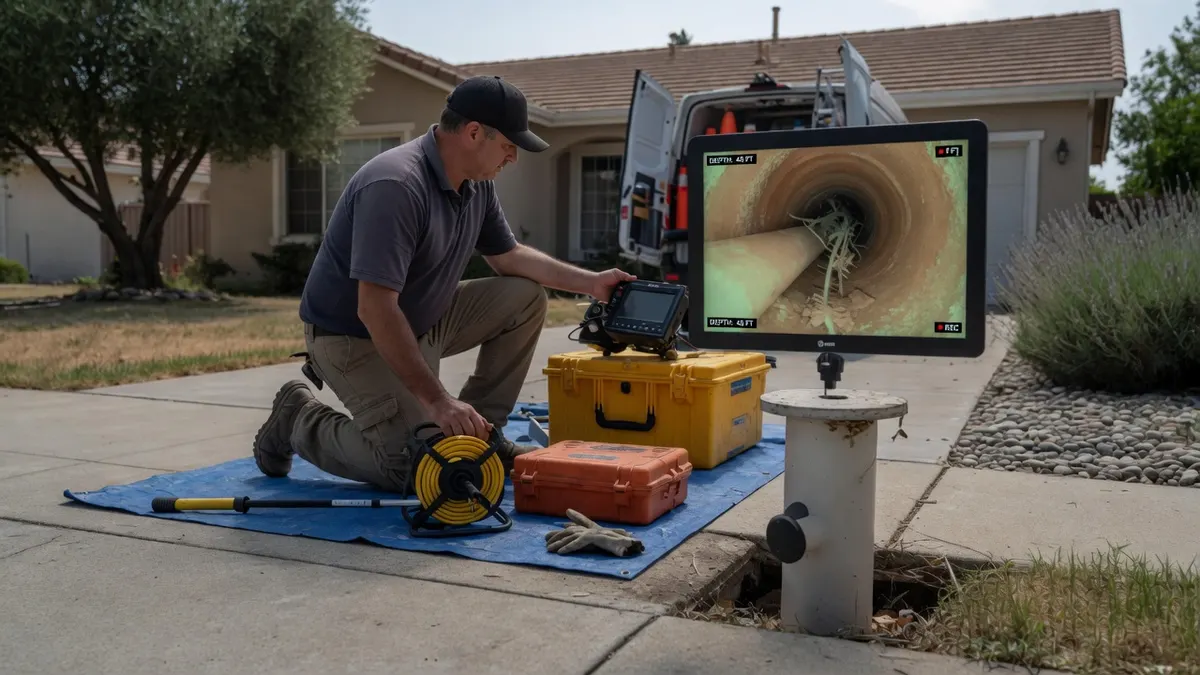
A sewer camera inspection is exactly what it sounds like: a waterproof camera on a flexible cable, fed through a cleanout into the lateral. The plumber watches a screen in real time and records the run. A good inspection pairs the camera with a locator, a transmitter that lets them mark the exact spot and depth of a problem on the surface of your yard or driveway. That locate is the difference between "we'll dig somewhere around here" and "the break is eleven feet down the side yard, four feet deep."
This is the cheapest, highest-value step in the entire process, and it's worth pushing for footage you can keep. A camera-and-locate visit in the Sacramento Valley typically runs a couple hundred dollars on the low end, often in the $250 range, and some companies credit it back if you hire them for the repair. Compare that to the back end of sewer work, where a full excavation and replacement can climb toward $15,000 to $18,000 once you factor in depth, length, surface restoration, and right-of-way coordination. Knowing precisely what's wrong before anyone touches a shovel is how you avoid paying for the expensive version of a cheap problem. When you're lining up plumbers to compare, the licensed plumbing contractor listings and the contractor search are good places to build a shortlist.
Reading the footage: roots versus a real structural problem
Once the camera is running, the diagnosis usually sorts into a few buckets, and each points to a very different repair:
- Roots and grease are the most common and the most forgiving. Often a cleaning or a root treatment buys you years, and you re-camera afterward to confirm the pipe behind them is intact.
- A belly means a sagging section holding water. Cleaning won't fix the grade; that section eventually needs to be re-laid.
- Cracks, offset joints, or a collapse are structural. This is where you weigh a spot repair against relining or full replacement.
For the structural cases, ask specifically whether trenchless is an option. Trenchless methods, pipe bursting or cured-in-place lining, can replace or rehabilitate a lateral with far less digging, which spares your landscaping, driveway, and the street. It isn't right for every condition, though. A fully collapsed pipe or a severe belly sometimes can't be lined, so don't let "trenchless" be a sales pitch that skips over what the camera actually showed. The footage should drive the recommendation, not the other way around.
Permits, the city's side of the lateral, and California licensing
Sewer lateral repair in West Sacramento usually means permits, and if the failure is out near where your line meets the city main, you're potentially into the public right-of-way, which carries its own rules and inspection steps. Sort out early who owns what: you're generally responsible for the lateral on your side, and the contract should spell out who pulls the permit, who schedules inspections, and who handles any corrections the inspector calls for.
This is plumbing, so licensing isn't optional. In California, any home-improvement job where labor plus materials totals $1,000 or more must be performed by a contractor holding a CSLB license, and sewer work clears that bar easily. Verify the license number yourself on the CSLB website rather than taking a business card at face value, and confirm the contractor carries both liability insurance and workers' compensation. It takes five minutes and it's the single best protection you have. Because West Sacramento sits in Yolo County while most of the metro is in Sacramento County, permit steps can differ from a neighbor a few miles across the river, so check the West Sacramento city guide and, if your project sits near a jurisdiction line, the Sacramento page too.
Turning a diagnosis into a smart hire
Before you sign anything, ask the plumber to walk you through the recording: where the trouble is, how deep, what the pipe is made of, and which repair options the footage actually supports. A good estimate names the pipe material, the method, the permit responsibility, whether surface restoration (your lawn, concrete, or asphalt) is included, and a payment schedule tied to real progress rather than a big number up front. If you're staring at a torn-up driveway after the work, you'll want to know whether the concrete restoration was in the bid or is about to become a surprise line item.
The practical move when those backups keep returning is straightforward: get the line camera'd and located first, save the footage, then take that recording to two or three licensed contractors and let them bid against the same evidence. A diagnosis in hand turns a scary, open-ended repair into an apples-to-apples decision, and it's the surest way to spend your money on the pipe rather than on guesswork.
Who to Hire for This Project
For the work covered in this guide, these are the contractor types to contact and the CSLB classification to verify before you take quotes:
Questions to Ask Before You Sign
- "Is your CSLB license active and bonded?" Verify it yourself at cslb.ca.gov the license number must appear on their bid.
- "Who pulls the permit, and is it included in the bid?" The contractor should handle any required permits a pro who suggests skipping one is a red flag.
- "Can you itemize labor, materials, and allowances?" Itemized bids are the only way to compare quotes on the same scope.
- "What's the payment schedule?" California caps the down payment at $1,000 or 10%, whichever is less payments should track completed work.
- "Who from this area can I call as a reference?" Ask for a recent local job of similar scope, not just photos.
Sacramento Contractors for This Project
Related Articles
Frequently Asked Questions
How much does a sewer camera inspection cost in West Sacramento? +
A camera-and-locate inspection in the Sacramento Valley typically starts around $250, making it the cheapest step in the whole process. Many plumbers will credit that fee back if you hire them for the actual repair. It's well worth paying for footage you can keep and show to other contractors for comparison bids.
Why do my drains keep backing up even after I clear them? +
If multiple fixtures back up repeatedly, the problem is usually in your main sewer lateral, not the individual drains. In West Sacramento's older Bryte and Broderick neighborhoods, that often means tree roots, a sagging belly, or a cracked clay pipe. Repeated clearing only treats the symptom; a camera inspection identifies the actual cause so you can fix it once.
Do I need a permit to repair a sewer lateral in West Sacramento? +
Yes, sewer lateral repair or replacement in West Sacramento generally requires a permit, and work near the public right-of-way where your line meets the city main carries additional rules. Because West Sacramento is in Yolo County, the steps can differ from Sacramento County across the river. Your contract should state who pulls the permit and schedules the required inspections.
Is trenchless sewer repair worth it for an older West Sacramento home? +
Trenchless methods like pipe bursting or cured-in-place lining can repair a lateral with far less digging, which protects your landscaping, driveway, and the street. It's often a good fit for older homes with intact pipe geometry. However, a fully collapsed pipe or a severe belly sometimes can't be lined, so the camera footage should determine whether trenchless is actually viable.
How do I verify a sewer contractor is properly licensed in California? +
Any sewer job where labor plus materials totals $1,000 or more must be done by a contractor holding a CSLB license. Look up the license number directly on the CSLB website rather than trusting a business card. Also confirm the contractor carries liability insurance and workers' compensation before signing anything.
What questions should I ask after a sewer camera inspection? +
Ask the plumber to walk you through the recording: where the problem is, how deep, the pipe material, and which repair options the footage actually supports. Confirm whether surface restoration like lawn or concrete is included in the bid, and get a payment schedule tied to progress. Then take the footage to two or three licensed contractors for competing bids on the same evidence.