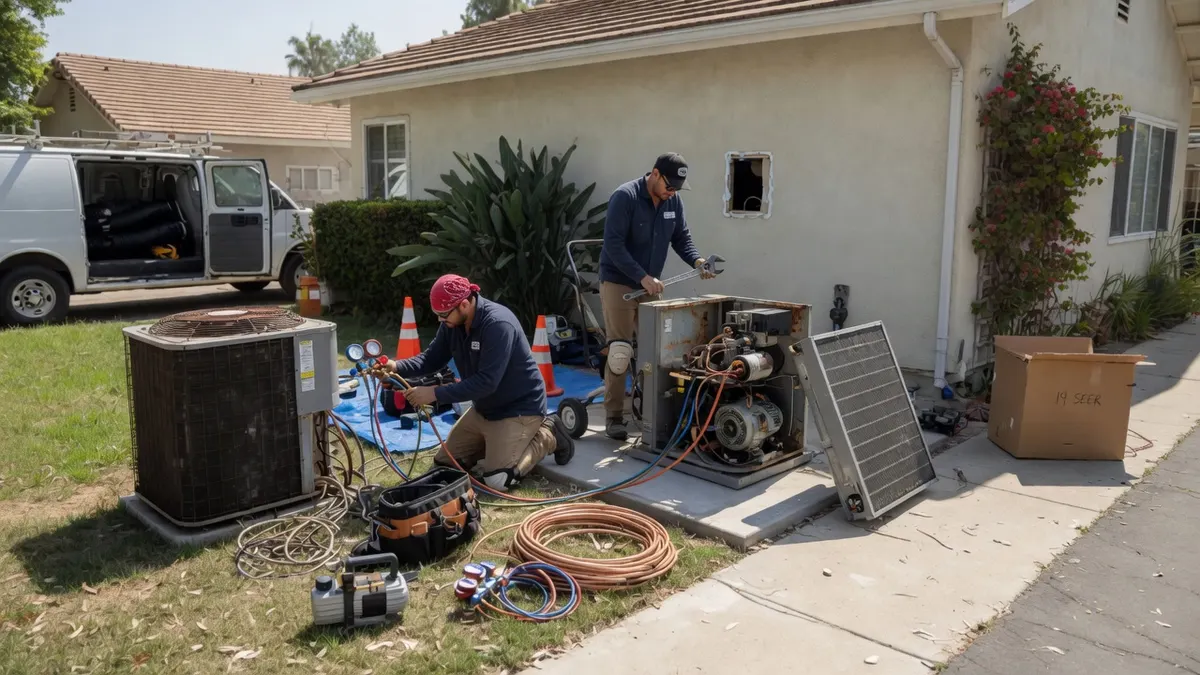
How to Prevent an AC Breakdown During a Sacramento Heat Wave
An AC breakdown during a Sacramento heat wave is usually not one surprise failure. It is often a weak capacitor, dirty condenser, restricted airflow, clogged condensate drain, aging compressor, or undersized duct system that finally gives up after several 100-degree days.
Picture a homeowner in Arden-Arcade who waits until the first 108-degree weekend to test the system. The thermostat says cooling, the outdoor unit hums, the bedrooms stay hot, and every HVAC company is scheduling days out. A spring or early-summer check would have shown the weak parts before the house became uncomfortable.
Use this guide before you call an HVAC contractor.
Heat-Wave AC Risk Chart
| Warning Sign | What It May Mean | What to Do Before Peak Heat |
| --- | --- | --- |
| Long run times with weak cooling | Low airflow, dirty coil, duct leakage, refrigerant issue | Schedule diagnostic service, not just a filter change |
| Outdoor unit buzzing or slow starting | Weak capacitor or electrical problem | Ask for electrical readings during tune-up |
| One side of house stays hot | Duct issue, insulation gap, poor return air | Ask whether the issue is equipment or distribution |
| Water near indoor unit | Condensate drain or pan problem | Clear and test the drain before heavy runtime |
| Breaker trips | Electrical fault, compressor stress, motor issue | Stop resetting it and call a pro |
| System is 12-15+ years old | Higher failure risk during long heat events | Compare repair vs replacement before July |
The goal is to find weak points while appointments are still available.
What Homeowners Can Check
Replace the filter, open supply vents, clear two feet around the condenser, remove leaves and cottonwood buildup, confirm thermostat batteries, and test cooling on a warm day. If the system makes new sounds, short cycles, freezes, leaks water, or cannot cool after basic checks, stop guessing.
For broader seasonal maintenance, read summer HVAC maintenance.
What the HVAC Contractor Should Check
A real heat-wave prevention visit should include capacitor readings, contactor condition, amp draw, refrigerant readings when appropriate, coil condition, blower operation, temperature split, condensate drainage, filter size, duct concerns, and thermostat operation.
Ask whether the visit includes repair recommendations in writing and whether emergency service priority is available for maintenance customers.
Repair or Replace Before Summer
If the system is newer and the problem is a capacitor, contactor, drain clog, or dirty coil, repair may be practical. If the system is old, uses expensive parts, has compressor trouble, has major refrigerant issues, or never cooled the house well, compare replacement before the hottest weeks.
Use the Sacramento HVAC replacement guide to ask about load sizing, ductwork, heat pumps, electrical capacity, permits, rebates, and warranty terms.
License, Permit, and Bid Questions
HVAC repair and replacement should be handled by the right licensed contractor for the scope. For replacement, ask who pulls the permit, whether duct changes are included, what equipment is registered, what labor warranty applies, and whether the bid includes disposal, startup, and inspection.
Use license verification before signing.
The Bottom Line
The best way to avoid a Sacramento heat-wave AC failure is to test early, fix weak electrical and airflow issues, clear condensate problems, and make replacement decisions before emergency scheduling and limited equipment choices take over.
Start with HVAC contractors, compare local options in Sacramento, Elk Grove, and Carmichael, or search AC repair contractors.
Who to Hire for This Project
For the work covered in this guide, these are the contractor types to contact and the CSLB classification to verify before you take quotes:
Questions to Ask Before You Sign
- "Is your CSLB license active and bonded?" Verify it yourself at cslb.ca.gov the license number must appear on their bid.
- "Who pulls the permit, and is it included in the bid?" The contractor should handle any required permits a pro who suggests skipping one is a red flag.
- "Can you itemize labor, materials, and allowances?" Itemized bids are the only way to compare quotes on the same scope.
- "What's the payment schedule?" California caps the down payment at $1,000 or 10%, whichever is less payments should track completed work.
- "Who from this area can I call as a reference?" Ask for a recent local job of similar scope, not just photos.