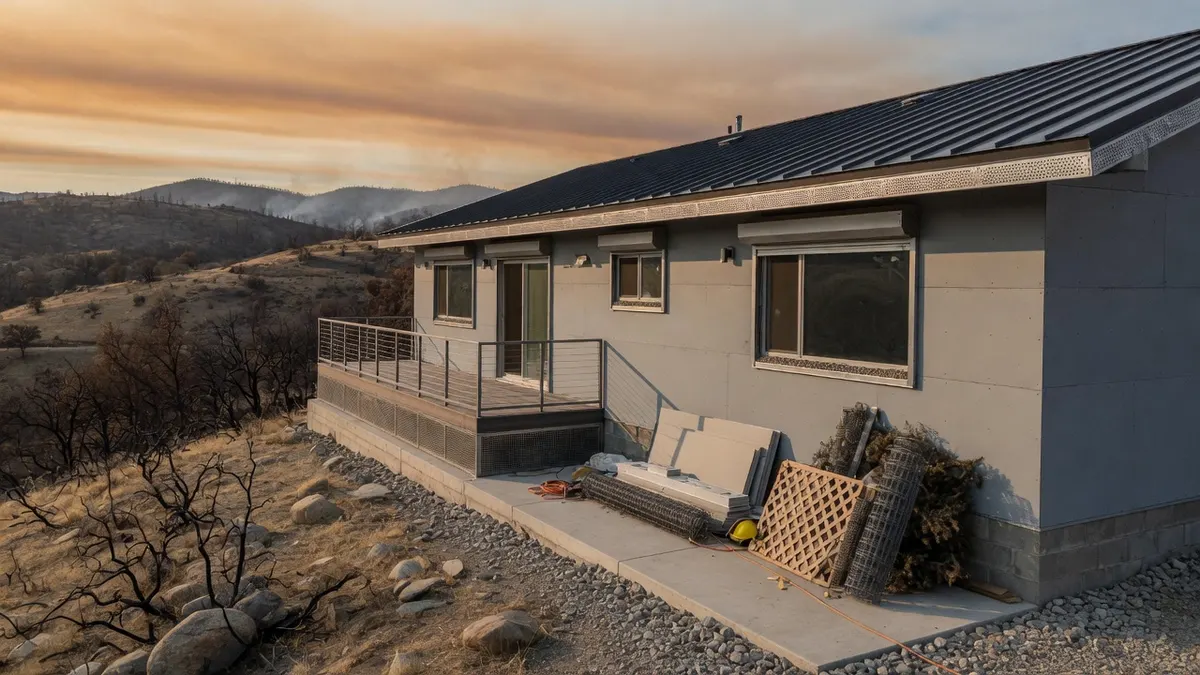
Folsom, Granite Bay & Lincoln Wildfire-Hardening Checklist
Your neighbor just had a tree service out last week trimming the oaks back from the roofline. You noticed it, made a mental note, and then the weekend got away from you. Now it's June, the hillside grasses have gone gold, and you're staring at a gutter still full of last fall's debris, a wood fence running straight to the siding, and a soffit vent covered in nothing but mesh. If you live in Folsom, Granite Bay, or Lincoln, that mental note is overdue.
This isn't a scare piece. It's a work-sequencing guide which jobs you can knock out yourself this week, which ones need a licensed contractor, and how to spend a limited budget so the dollars go to the vulnerabilities that actually matter in foothill-adjacent neighborhoods like these. California law requires up to 100 feet of defensible space around your home, and Folsom's fire prevention page notes that extra-hazardous conditions can trigger firebreak treatment from 30 to 100 feet as directed by the fire code official. That's state baseline what you do to the house itself is a separate layer on top.
Use this to focus your first contractor conversation; it is not a universal ranking.
Roof and Gutters Come First Here's Why
Embers travel. During a wildland fire the ignition source isn't usually the flame front it's burning debris landing in your gutters, collecting at roof valleys, or blowing into open soffit vents. Your roofing contractor doesn't need to replace the entire roof for this to matter; the targeted jobs are often cleaning, caulking, and adding ember-blocking mesh.
Specific tasks worth getting a quote on:
- Clean and inspect gutters now, before July. Debris sitting since November is dry enough to ignite.
- Ask whether your gutter guards are ember-rated standard foam inserts can actually hold embers rather than block them.
- At roof valleys and ridgeline transitions, check for gaps where debris piles up between inspections.
- Look for lifted or missing shingles along the rakes; gaps there are ember entry points as much as water entry points.
- If your home is in an older Folsom neighborhood (pre-2000 construction), ask whether the roof deck was sheeted with gaps a roofer can tell you quickly.
For context on what a full roof job involves in this area, the Sacramento-area roof replacement cost guide breaks down material and labor ranges that apply to Folsom and the foothill zip codes.
Vents, Eaves, and the Ember Entry Problem
A 1/16-inch mesh over your attic and foundation vents is the single cheapest upgrade with the clearest research behind it. Larger mesh the standard 1/4-inch hardware cloth lets embers through. Fire agencies, including South Placer Fire District which covers Granite Bay, emphasize home-hardening alongside defensible space in their homeowner resources precisely because an ignition-resistant home buys time even when the zone around it isn't perfect.
DIY-doable: replacing individual vent covers with ember-resistant units (they're stocked at most Sacramento-area hardware stores). What needs a pro: any soffit work that involves cutting into existing framing, rerouting attic ventilation, or replacing box vents on a steep-pitch roof. A general contractor or a roofer who works on existing exteriors can quote this as a separate line item ask for it explicitly.
The Fence-to-House Connection Is Often Overlooked
A wood fence that runs directly into wood siding creates a wick. This is one of the more common findings in post-fire structure analysis, and it's fixable without replacing your entire fence. The options range from a simple metal standoff (a few feet of non-combustible material where the fence meets the house) to replacing just the last panel section with metal. Your fencing contractor should know this detail if they don't bring it up when you describe the scope, ask about it.
Questions to raise with a fencing contractor:
- Can we swap the last 3-6 feet of fence material to metal or masonry where it connects to the structure?
- Is the fence currently attached to my siding or to a post set in the ground independently?
- What's the cost difference between a full replacement and a transition-zone modification only?
If the fence conversation grows into a broader exterior project, a general contractor may be more efficient for coordinating multiple trades at once.
Trees, Brush, and the Defensible Space Zones
Folsom's weed abatement guidance follows the state framework: Zone 1 is 0-30 feet (lean, clean, green no ladder fuels, no dead material touching the house), Zone 2 is 30-100 feet (reduced fuel load, spacing between plants, no continuous ground cover connecting to structures). Lincoln Fire's prevention resources reference the same Ready-Set-Go framework and point residents toward defensible space compliance as a baseline.
What you can handle yourself: raking, mowing, pulling dead annuals, removing woodpiles stored against the house. What genuinely benefits from a professional: large oak or gray pine limbs that need to come down near power lines or structures, tree removal on slopes, or stump grinding that requires equipment. A licensed tree service will know the local requirements and can document the work if your insurer asks. Separately, a landscaping contractor can help you rethink planting zones with fire-resistant species if you're doing a broader landscape refresh.
What a Good Contractor Estimate Separates Out
When you're getting quotes for any of these scopes, a useful estimate breaks the work into distinct line items not a single number for "exterior work." Ask each contractor to separate labor from materials and to identify specifically which items are fire-hardening versus general maintenance. That distinction matters when you're talking to your insurer about potential premium adjustments.
Red flags to watch for:
- A quote that bundles roofing, gutter work, and vent replacement into one price with no itemization.
- A contractor who can't tell you what mesh size or vent specification they're using.
- Any pressure to sign before you've had a chance to check their license on the CSLB site.
- A "verbally approved permit" claim verify contractor licenses before signing anything.
For work that crosses trades say, re-roofing plus soffit repairs plus a gutter system check whether a general contractor might coordinate more efficiently than managing three separate bids. You can search licensed contractors serving Folsom to compare options across trades.
Siding, Windows, and the Longer-Term Hardening Projects
If your budget is tight, siding and window replacement are capital projects to plan for next season, not emergency action items for this month. That said, if you're already planning a repaint or siding repair, fire agencies do differentiate between ignition-resistant exterior assemblies. Single-pane windows in older wood frames are a heat-transfer vulnerability. A painting job that involves any wood repair is a natural moment to ask about material upgrades.
For window replacement combined with exterior work, see the sibling guide on Granite Bay and Lincoln reroof decisions which covers material choices and contractor selection for the foothill zone specifically. The Folsom quick-permits guide is also worth reading if any of your hardening work crosses into permit territory.
The Bottom Line
Start with the gutters and vents this week those are low-cost, high-impact, and most homeowners in Folsom, Granite Bay, and Lincoln can schedule them within two weeks if they call now. The fence-to-house transition and tree clearance should follow within the month. Before hiring anyone, verify their license at CSLB, ask for itemized line items, and confirm any required permits with Folsom's fire prevention division or your local fire district South Placer for Granite Bay, Lincoln Fire for Lincoln. The city and fire district pages are the source of truth on defensible space expectations; contractor bids are where you turn that into actual work.
Who to Hire for This Project
For the work covered in this guide, these are the contractor types to contact and the CSLB classification to verify before you take quotes:
Questions to Ask Before You Sign
- "Is your CSLB license active and bonded?" Verify it yourself at cslb.ca.gov the license number must appear on their bid.
- "Who pulls the permit, and is it included in the bid?" The contractor should handle any required permits a pro who suggests skipping one is a red flag.
- "Can you itemize labor, materials, and allowances?" Itemized bids are the only way to compare quotes on the same scope.
- "What's the payment schedule?" California caps the down payment at $1,000 or 10%, whichever is less payments should track completed work.
- "Who from this area can I call as a reference?" Ask for a recent local job of similar scope, not just photos.
Sacramento Contractors for This Project
Related Articles
Frequently Asked Questions
How much defensible space does Folsom require around my home? +
California law requires up to 100 feet of defensible space, and Folsom's fire prevention guidance follows that requirement. The city's weed abatement page notes that extra-hazardous conditions can require firebreak treatment from 30 to 100 feet as directed by the fire code official. Check Folsom's current fire and weed abatement pages before the season since notices can update.
Does South Placer Fire District have specific home-hardening guidance for Granite Bay homeowners? +
Yes. South Placer Fire District, which serves Granite Bay, publishes defensible space zone guidance and home-hardening resources on its safety and resources pages. They emphasize both the space around the home and the structure itself vents, eaves, and roof edges in particular. Visit southplacerfire.org and verify current materials before starting any work.
Which exterior jobs can I do myself versus which need a licensed contractor? +
DIY-reasonable tasks include cleaning gutters, raking dead debris from defensible space zones, removing woodpiles stored against the house, and replacing individual vent covers with ember-resistant units. Jobs that benefit from a licensed pro include any rooftop work on a steep-pitch or high roof, tree removal near structures or power lines, fence modification at the house connection, and any siding or soffit work that involves cutting into framing.
Does wildfire home-hardening work in Folsom require a building permit? +
Simple maintenance such as gutter cleaning, swapping vent covers, and clearing brush generally does not require a permit. Work that modifies structural elements, changes the roofing assembly, or alters venting may require one. Confirm with Folsom's Building Department before starting any structural exterior work; the city's minor-permit handout covers common residential scopes.
What questions should I ask a roofing contractor about ember resistance? +
Ask specifically about mesh size on any soffit or gutter guard products you want 1/16-inch, not 1/4-inch. Also ask whether your current roof deck has gaps that should be sealed, whether the material at your roof valleys and ridgeline transitions is intact, and whether the contractor is familiar with fire-hardening requirements for Folsom's Fire Hazard Severity Zone designation.
How do I find a licensed contractor in Folsom for wildfire-hardening work? +
Search the California State License Board at cslb.ca.gov to verify any contractor's license before signing. You can also search licensed contractors serving the Folsom area through sacvalleycontractors.com's contractor search. For multi-trade projects, a licensed general contractor can coordinate roofing, fencing, and tree work under one contract.