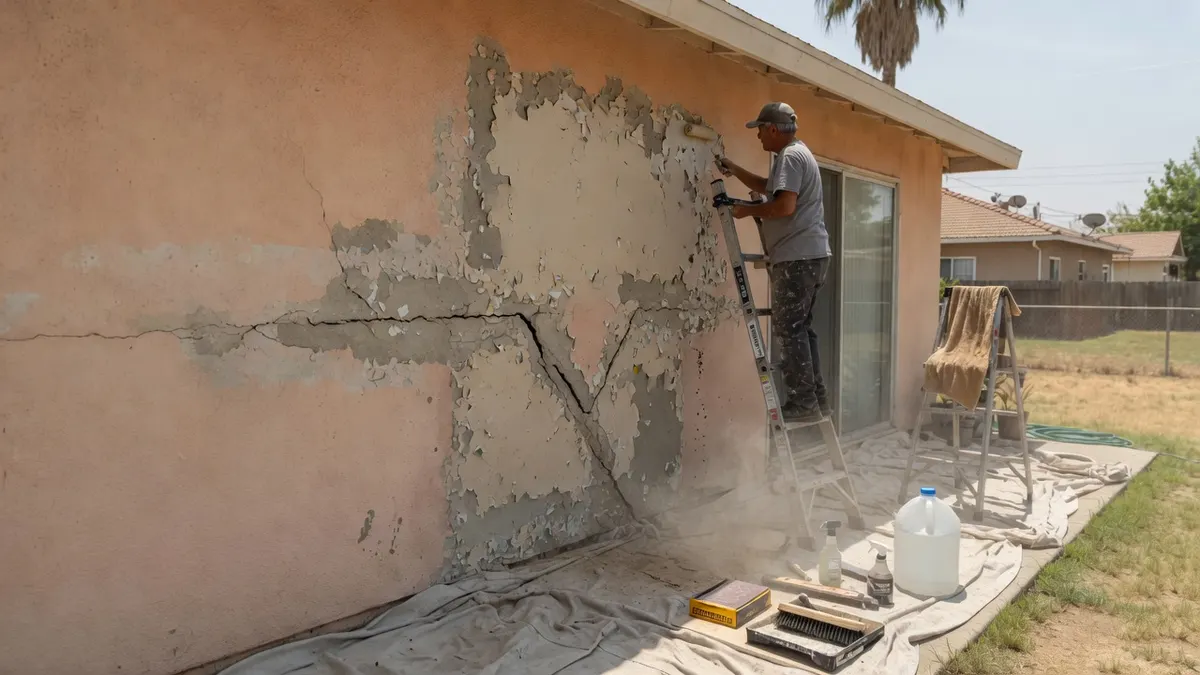
Sacramento Exterior Paint Timing Before Triple-Digit Weather
If you have ever pressed a bare hand against a south-facing stucco wall in Sacramento on an August afternoon, you already understand the problem with summer painting. That wall can sit well above 120 degrees even when the air reads 102. Latex hitting a surface that hot doesn't bond, it skins over in seconds, leaving a film that looks fine in the driveway and starts peeling by the following spring. The window to do exterior paint right around here is narrower than most homeowners assume, and it closes fast once the triple-digit stretch arrives.
The April-to-June sweet spot, and why crews chase it
Spring is the kindest stretch the Valley gives a paint job. Daytime highs sit in a range where the coating can actually flash off at the pace the chemistry wants, overnight temperatures stay above the dew point, and the winter rain has usually wrapped up. From Land Park to Natomas, the better crews book this window solid, which is exactly why you want to be calling in February or early March, not the week the forecast first flirts with 100.
Once we're into the real heat, good painters don't stop working, they adjust. They start at sunrise, follow the shade around the house, and quit the sunny elevations by late morning. That's a sign of a pro, not a problem. But it stretches the timeline and it limits how much wall they can cover in a clean day. If a contractor promises to blast through your whole two-story in mid-July with no mention of chasing shade, that's worth a second look.
When you're lining up bids, our Sacramento contractor guide and the list of licensed painting contractors are a reasonable place to build a shortlist before the calendar tightens.
What you're really paying for around the Valley
A full exterior repaint in the Sacramento Valley typically lands somewhere between roughly $5,000 and $14,000, and the spread comes almost entirely from prep, not paint. The actual product is a small slice of the invoice. What moves the number is the washing, the scraping and sanding, the caulking, the stucco crack repair, and the dry rot that turns up around fascia and window trim on a lot of our older homes.
Here's the thing to internalize: the cheapest bid is often the one that quietly skips prep. Two estimates $4,000 apart usually aren't pricing the same job. One assumes a power wash and two coats over whatever's there. The other includes patching, priming bare spots, and re-caulking every seam. Read the assumptions side by side before you decide anyone is overcharging. And set aside a contingency, because on a house built in the 70s or earlier, something behind that trim board is usually worse than it looked from the ground.
Sacramento sun, stucco, and the lead question
Our climate is hard on a paint film in specific ways. Relentless UV fades color and chalks the surface, the heat swings crack stucco along stress lines, and lawn irrigation overspray keeps the bottom three feet of a wall damp far more than people realize. A coating spec that makes sense in a milder climate can underperform here. Ask which paint line the contractor is putting up and how many coats are included, because a quality 100% acrylic with real UV resistance is what survives a Valley summer.
One non-negotiable: if your house was built before 1978, federal lead-safe rules apply to any sanding or scraping. A legitimate contractor will already know this and contain the dust. If the topic never comes up on an older Curtis Park or East Sac home, treat that as a red flag.
Permits, licenses, and the paperwork most people skip
Straight painting almost never needs a permit. The wrinkle is what painting often uncovers. Replace rotted siding, rebuild structural trim, or repair anything load-bearing, and you can cross into permit territory with the local building department. Make sure the contract spells out who pulls any permit that becomes necessary and who handles the inspection.
The bigger homework is the license. In California, any home-improvement job where labor plus materials totals $1,000 or more must be handled by a contractor holding an active CSLB license. Painting a whole exterior clears that bar with ease, so verify the license number directly on the CSLB website rather than trusting a card or a logo on a truck. While you're there, confirm the license is active and check that they carry liability insurance and workers' compensation. That comp coverage matters more than people think, because a painter falling off a two-story ladder on your property without it can become your liability.
Five minutes of questions that save the job
Before you sign anything, ask a handful of pointed things. How do they handle stucco cracks, fill or just paint over? Will they brush a color sample onto your actual wall so you see it in real Sacramento light instead of a fan deck under store fluorescents? How many coats, and on which surfaces? Ask for photos of jobs they finished two or three summers back, since fresh paint always looks good and the real test is how it held up through a couple of heat cycles. Tie the payment schedule to progress, never a large deposit up front, and get a single named contact. A contractor who is clear and patient now tends to stay that way when something behind the trim turns into a surprise.
If your project brushes up against siding work, it's worth glancing at siding contractors too, and if you sit near a jurisdiction line, the permit steps can shift from one city to the next. A homeowner over in Elk Grove may face a slightly different inspection path than one in central Sacramento.
So here's the practical move: walk your house this weekend with your phone, photograph every cracked seam, peeling corner, and soft spot of trim, and rank what actually bothers you. Do it before the forecast turns, then compare at least three licensed bids through our contractor search. Get the calls out early, lock a spring or early-summer slot while crews still have open dates, and you'll be watching that paint cure under reasonable temperatures instead of praying it sticks at 108.
Who to Hire for This Project
For the work covered in this guide, these are the contractor types to contact and the CSLB classification to verify before you take quotes:
Questions to Ask Before You Sign
- "Is your CSLB license active and bonded?" Verify it yourself at cslb.ca.gov the license number must appear on their bid.
- "Who pulls the permit, and is it included in the bid?" The contractor should handle any required permits a pro who suggests skipping one is a red flag.
- "Can you itemize labor, materials, and allowances?" Itemized bids are the only way to compare quotes on the same scope.
- "What's the payment schedule?" California caps the down payment at $1,000 or 10%, whichever is less payments should track completed work.
- "Who from this area can I call as a reference?" Ask for a recent local job of similar scope, not just photos.
Sacramento Contractors for This Project
Related Articles
Frequently Asked Questions
When is the best time to paint a house exterior in Sacramento? +
April through June is the sweet spot, when daytime temperatures let the coating cure at the right pace and overnight lows stay above the dew point. Once Sacramento hits its triple-digit stretch in July and August, sun-baked stucco can exceed 120 degrees, causing paint to flash and peel. If you must paint in summer, hire a crew that starts at sunrise and follows the shade around the house.
How much does it cost to repaint a house exterior in the Sacramento Valley? +
A full exterior repaint typically runs roughly $5,000 to $14,000 in the Sacramento Valley, with prep work driving most of the spread rather than the paint itself. Washing, scraping, caulking, stucco crack repair, and dry rot fixes are where the labor hours go. Always budget a contingency, since older Valley homes often hide rot behind fascia and trim that isn't visible from the ground.
Do I need a permit to paint my house in Sacramento? +
Straightforward exterior painting almost never requires a permit in Sacramento. However, related work the job can uncover, like replacing rotted siding or rebuilding structural trim, may require one from the local building department. Make sure your contract states who pulls any permit that becomes necessary and who manages the inspection.
How do I verify a painting contractor's license in California? +
Any California home-improvement job totaling $1,000 or more in labor and materials must be done by a contractor with an active CSLB license, and an exterior repaint easily clears that threshold. Look up the license number directly on the CSLB website rather than trusting a business card or truck logo. Confirm the license is active and check that they carry liability insurance and workers' compensation.
Why does exterior paint fail faster in Sacramento? +
The Valley climate is hard on paint in specific ways: intense UV fades and chalks the surface, big heat swings crack stucco along stress lines, and lawn irrigation overspray keeps the bottom few feet of walls chronically damp. A quality 100% acrylic with strong UV resistance and proper prep holds up far better than a budget coating. Ask which paint line your contractor is using and how many coats are included.
Does lead paint matter for older Sacramento homes? +
Yes. If your home was built before 1978, federal lead-safe rules apply to any sanding or scraping of existing paint, which covers many homes in neighborhoods like Curtis Park and East Sacramento. A legitimate contractor will already plan to contain the dust and follow lead-safe practices. If the subject never comes up on an older home, treat it as a warning sign.