Sacramento County Tree Permits Before a Mature-Yard Remodel
Your driveway has been lifting at the same crack for three years, and now you're finally ready to fix it new concrete, maybe a fence reset along the property line, possibly even a pool layout in the back. The problem is the 40-foot valley oak whose roots are the actual reason the slab buckled. Before you call anyone, you need to know whether that tree requires a county permit to remove, and how that permit fits into the project timeline.
This question comes up constantly in Fair Oaks, Carmichael, and Orangevale mature, established neighborhoods where native oaks are part of the landscape identity and also the source of foundation lifts, cracked driveways, and fence line headaches. Granite Bay homeowners face the same oak-permit question but under a different jurisdiction entirely (Placer County, not Sacramento County see below). The answer isn't always "you need a permit," but getting it wrong mid-project can stop work and create far bigger problems than the original tree.
Use this to focus your first contractor conversation; it is not a universal ranking.
First: Make Sure You're Actually in Sacramento County
Fair Oaks is an unincorporated community, not an incorporated city. That distinction matters here because it determines which permit office you're dealing with. Sacramento County Planning handles tree permits for Fair Oaks, Carmichael, and Orangevale not a city permit counter. Granite Bay is an unincorporated Placer County community, which means Granite Bay homeowners must contact Placer County Planning, not Sacramento County, for tree permit requirements and protection ordinances. The rules, forms, and fee structures differ, so starting at the wrong office costs real time.
The County's own guidance recommends using the County Parcel Viewer to confirm jurisdiction before submitting anything. If a portion of your property sits near a city boundary, this step isn't optional a neighbor two blocks away might be in the City of Sacramento or Citrus Heights, which have their own rules entirely. Check Sacramento County tree permits before assuming your parcel is unincorporated. A related sibling guide covers this overlap in depth: see Carmichael, Fair Oaks, and Orangevale permit jurisdiction.
What Sacramento County Actually Regulates
Sacramento County requires a permit to remove or prune any public tree and certain private trees, specifically native oaks on residential properties. That last category is what catches most Fair Oaks homeowners off guard.
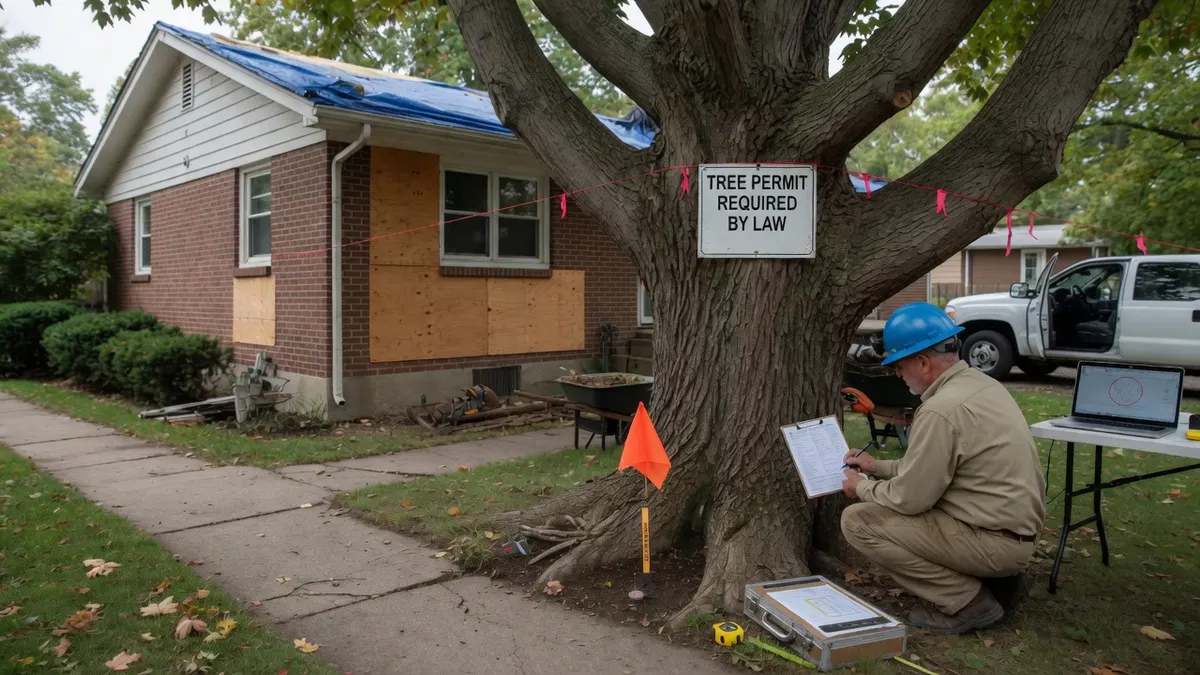
A valley oak growing in your front yard is your property, but it's also a protected resource under County ordinance. Pruning major limbs or removing the tree entirely requires going through the County's tree permit process, regardless of whether the roots have cracked your driveway or your fence post is rotting because the trunk has grown into it. The permit is not automatic approval; the County reviews the request, so you need to build that into your project schedule.
The current permit fee is listed at $31.95 on the County Planning page, and the County says review typically takes fewer than 10 working days. That's actually workable less than two weeks in most cases. But "typically" is doing real work in that sentence. Check current processing times directly with the Sacramento County Planning Department before you commit your concrete contractor or fencing contractor to a start date.
What Goes in the Application
The County asks for a specific set of documentation, and submitting it completely is the fastest way through the 10-day window. Showing up with a vague description of "big tree, need it gone" will slow things down.
The County's current guidance asks for:
- Photos of the full tree from ground to canopy
- Photos of the damaged property cracked driveway slab, lifted sidewalk, compromised foundation, fence pushed out of line
- Trunk diameter measurement (taken at roughly 4.5 feet above grade)
- Your stated reason for the work, including the downstream project the tree removal enables
If your case involves root damage to a driveway or foundation, this documentation also serves a second purpose: it's the evidence your tree service contractor and your concrete or foundation repair contractor will both want to see before giving you an accurate estimate.
How Tree Work Sequences Into the Larger Project
The permit process is one thing; the project sequencing is where things actually go wrong. Most homeowners approach a driveway replacement, pool addition, or fence reset as if the tree question is a side note. It isn't.
If removal is approved, the stump grinding and root removal typically need to happen before any formwork goes down for new concrete root systems don't cooperate with grading otherwise. For a pool layout, the excavation contractor needs to know which roots are being cleared and to what depth before they can give you a real dig plan. A pool construction contractor who's quoting without knowing the tree status is giving you a placeholder, not a number you can rely on.
This sequencing logic applies to landscaping resets too a landscaping contractor resetting grade, drainage, or planting zones in a mature-tree yard needs to know the final tree count before laying out irrigation or hardscape.
Screening Questions for the Contractor You Call First
Whether you call a tree service first or a general contractor, these are the questions that tell you whether the person on the other end has actually worked in unincorporated Sacramento County:
- Have you pulled Sacramento County tree permits before, or will I need to handle that myself?
- Can you include permit documentation support in your scope, or does that fall outside your contract?
- What's your process if the permit is denied or comes back with conditions?
- How do you coordinate your work timing with the concrete or pool or fence contractor coming after you?
- Are you licensed with CSLB, and is your license class appropriate for the root removal scope (not just above-ground work)?
You can verify a tree service contractor's license at the California State License Board or read how to verify a California contractor license before you commit. For Fair Oaks contractors specifically, familiarity with the County process not just general permit awareness is the real differentiator.
Red Flags That Should Slow You Down
A few things that should make you pause before signing anything:
- A contractor who says you don't need a permit for oak removal on private property without confirming it through the County Parcel Viewer. The rules distinguish tree type and ownership status; an offhand "you're fine" isn't due diligence.
- Anyone quoting you a combined tree-plus-concrete or tree-plus-pool price before the permit is approved. The downstream scope can change depending on permit conditions.
- A start date scheduled before the 10-business-day review window closes. That's a contractor who's either unaware of the process or hoping you are.
- No mention of root removal depth in a scope that involves new concrete or pool excavation. Surface stump grinding and full root extraction are different jobs with different costs.
The Folsom, Rancho Cordova, and other Sacramento-area jurisdictions each have their own sequences - confirm with your local building counter if your project crosses city lines.
The Bottom Line
If you're in Fair Oaks and a native oak is involved in your remodel whether it's cracking your driveway, sitting in your pool footprint, or crowding a new fence line start with Sacramento County Planning's tree permit page, confirm your parcel jurisdiction with the County viewer, and build the 10-business-day review into your project timeline before you book any downstream contractor. The $31.95 permit fee is not the cost to worry about; it's the project delays that stack up when tree work and hardscape trades aren't properly sequenced. Find a qualified tree service professional who knows the County process, then bring your concrete, fencing, or pool contractor in once the permit path is clear.
Who to Hire for This Project
For the work covered in this guide, these are the contractor types to contact and the CSLB classification to verify before you take quotes:
Questions to Ask Before You Sign
- "Is your CSLB license active and bonded?" Verify it yourself at cslb.ca.gov the license number must appear on their bid.
- "Who pulls the permit, and is it included in the bid?" The contractor should handle any required permits a pro who suggests skipping one is a red flag.
- "Can you itemize labor, materials, and allowances?" Itemized bids are the only way to compare quotes on the same scope.
- "What's the payment schedule?" California caps the down payment at $1,000 or 10%, whichever is less payments should track completed work.
- "Who from this area can I call as a reference?" Ask for a recent local job of similar scope, not just photos.
Sacramento Contractors for This Project
Related Articles
Frequently Asked Questions
Do I need a permit to remove an oak tree on my own property in Fair Oaks? +
Yes, if your parcel is in unincorporated Sacramento County which Fair Oaks is native oaks on private residential properties require a Sacramento County tree permit before removal or major pruning. The current fee is $31.95 and review typically takes fewer than 10 working days, but you should confirm current processing times directly with Sacramento County Planning before scheduling contractors.
How do I know if I'm in Sacramento County jurisdiction or a city? +
Fair Oaks is an unincorporated community, not an incorporated city, so most Fair Oaks parcels fall under Sacramento County Planning rather than a city permit office. Sacramento County recommends using the County Parcel Viewer to confirm your specific parcel's jurisdiction before submitting any application, especially if you're near a city boundary.
What documentation does Sacramento County require for a tree permit application? +
The County asks for photos of the full tree from ground to canopy, photos of any damaged property (cracked driveway slab, lifted sidewalk, compromised fence, or foundation damage), trunk diameter measured at approximately 4.5 feet above ground, and your stated reason for the work including what downstream remodel project the tree removal is enabling.
Can I schedule my driveway or pool contractor before the tree permit is approved? +
It's risky to commit a hard start date to a concrete, fencing, or pool contractor before the permit clears, because permit conditions or denial can change the scope of downstream work. The typical review window is fewer than 10 business days, so it's usually better to let the permit come back before locking in your next contractor's schedule.
Does pruning a valley oak in Sacramento County require a permit, or only full removal? +
Sacramento County's tree permit requirement covers both removal and pruning of protected trees, including native oaks on private residential properties. If you're only trimming minor growth, check with Sacramento County Planning directly to determine whether your scope triggers the permit requirement, since the rules depend on the extent of the work.
What should I ask a tree service contractor to confirm they know the Fair Oaks permit process? +
Ask whether they have experience pulling Sacramento County tree permits specifically, whether permit documentation support is included in their contract, and how they coordinate timing with downstream trades like concrete or pool contractors. A contractor who can't clearly answer those questions may not be familiar with the unincorporated Sacramento County process that applies to Fair Oaks.