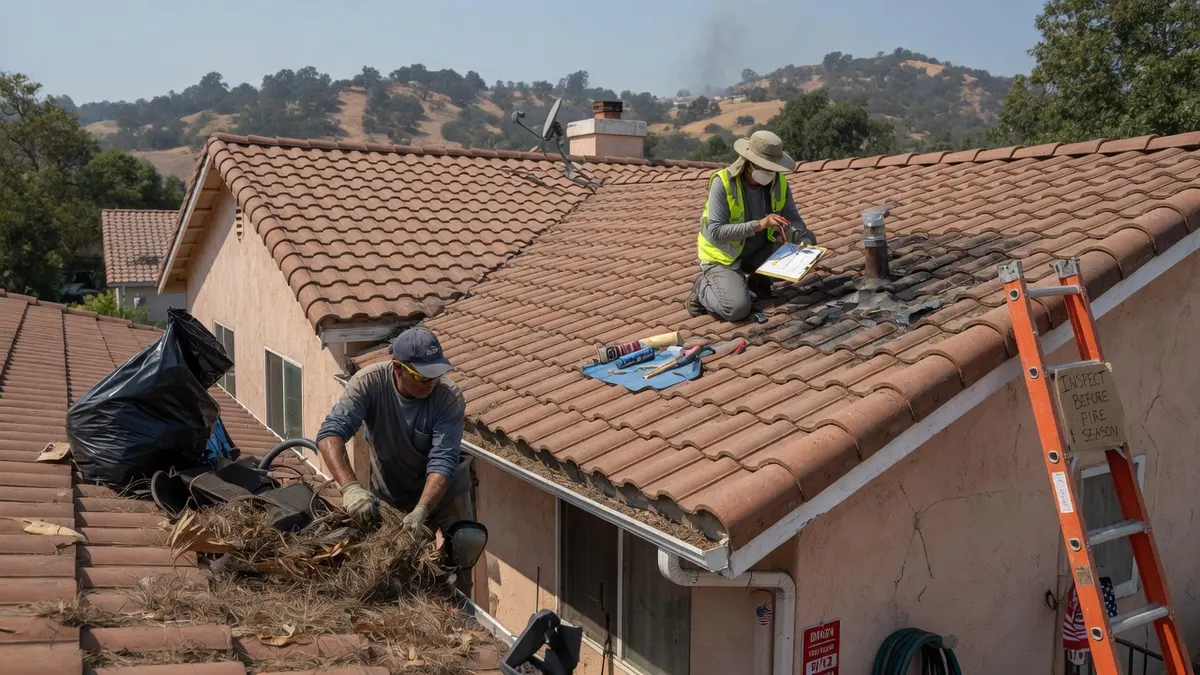
Rancho Cordova Roof and Gutter Maintenance Before Fire Season
A Rancho Cordova ranch house off Coloma Road, the kind built in the 1960s under a canopy of live oaks and pines, can hold a surprising amount of fuel right above the front door. By April, the gutters along those eaves are packed with last winter's needles, and the valleys where two roof slopes meet have quietly become a nest of dry oak leaves. None of it looks alarming from the driveway. But once the Delta breeze stops carrying moisture and the thermometer starts hitting triple digits, that tucked-away debris turns from a drainage annoyance into a genuine ignition hazard. This is the window, late winter through early spring, when getting up there actually pays off.
What a clogged valley is really costing you
Most homeowners think of gutter debris as a water problem, and it is one. Packed gutters back up, overflow at the seams, and let moisture wick into fascia boards and rafter tails. In our older Rancho Cordova housing stock, that's exactly how dry rot gets a foothold along the eave line. But there's a second cost that shows up only in fire season. A roof valley full of cured pine needles is essentially kindling sitting on your most exposed surface, right where wind-driven embers tend to land and collect. Clearing it does double duty: you protect the wood from rot in the wet months and remove the fuel before the dry ones.
The vents matter just as much as the gutters. Attic and soffit vents are designed to move air, which means they can also pull in embers if the screening has corroded or gone missing. A maintenance visit that ignores vent screens isn't really a fire-season visit. When you're comparing crews, ask specifically whether they inspect and re-screen vents, because plenty of cheaper cleanings skip that step entirely.
What this actually runs in the Sacramento Valley
Here's the honest range. A straightforward roof and gutter maintenance in our area typically lands somewhere between $300 and $6,000, and that spread is enormous on purpose. A single-story home with accessible gutters and a quick debris clearing sits near the bottom. The number climbs fast the moment a crew finds cracked sealant at the flashing, a lifted vent boot, or soft fascia that needs replacing before new gutter sections can be hung.
Treat the cleaning itself as the cheap part. The expensive scenarios are the ones you're trying to *prevent*: water intrusion, dry rot, and the slow failure of an aging roof. If your roof is already near the end of its service life, be clear-eyed about it. Maintenance can buy you a season or two, but it shouldn't quietly stand in for a replacement plan you keep postponing. A roofer worth hiring will tell you which situation you're in rather than selling you a yearly cleaning on a roof that needs to come off.
When you collect estimates, the most useful one is rarely the shortest. You want it to spell out debris removal, any flashing or sealant work, vent inspection, what's excluded, who handles cleanup, and what happens if they find rot under the gutters. Two bids that look hundreds of dollars apart often differ because one assumes everything is fine up there and the other assumes it isn't. Compare the assumptions before you compare the totals. Browse licensed roofing contractors and the broader Rancho Cordova contractor directory to start a real shortlist.
The license question that protects you in California
This is the part homeowners skip and later regret. In California, any home-improvement job where labor and materials total $1,000 or more must be performed by a contractor holding an active license from the Contractors State License Board. A lot of older guidance still floats around quoting an outdated $500 figure, so ignore that. For roof and gutter work, you can clear that threshold quickly once flashing repair or a vent replacement enters the picture.
Verifying a license takes about two minutes on the CSLB website, where you can confirm the license is active, see the classification, and check that the contractor carries workers' compensation coverage. That last point is not a formality. If an uninsured worker is hurt on your roof, the liability can land on you. Roofing is precisely the trade where this matters most, because the work is elevated, physical, and genuinely hazardous. Ask for the license number up front, and walk away from anyone reluctant to give it.
Cleaning versus the jobs that need a permit
Routine maintenance, clearing debris, resealing a few flashing points, re-screening a vent, generally doesn't trigger a permit. The line gets crossed when the work becomes structural or substantial: a full roof replacement, repair to damaged sheathing or rafters, or major reconfiguration of the drainage system. In Sacramento County, which covers Rancho Cordova, that kind of work goes through the building department for permitting and inspection, and the contract should state plainly who is pulling the permit and managing the inspections. Don't accept a vague answer here. If a roofer suggests skipping a required permit to save you money, that's a reason to keep looking, not a discount.
Timing is the other lever you control. Exterior trades, roofing, gutters, tree work, all get slammed once the weather turns reliably dry, so the crews you actually want are easiest to book in the off-season. Scheduling in February or March instead of waiting for the first red-flag warning means more availability and usually better attention.
The overhang you can't ignore
One thing a roof cleaning can't fix on its own is what's hanging above it. Oak and pine branches scraping the shingles or dropping straight into the gutters will undo a maintenance visit within a few months, and in fire season those low limbs are part of the same ember-and-fuel problem you're trying to solve. If your trees are crowding the roofline, fold that into your planning and look at tree service contractors alongside the roof work. Clearing branches back from the eaves keeps the gutters cleaner longer and pulls fuel away from the structure.
Before you call anyone, walk your property with your phone and photograph what you see, sagging gutter sections, dark staining on the fascia, needle-packed valleys, any vent screen that looks chewed up. Those photos sharpen the conversation and make it far easier to tell an honest estimate from a guess. Then line up at least three licensed roofers through the contractor search, confirm each one's CSLB license is active, and book the work before the valley dries out. Getting it done in spring is the cheapest insurance you'll buy all year.
Who to Hire for This Project
For the work covered in this guide, these are the contractor types to contact and the CSLB classification to verify before you take quotes:
Questions to Ask Before You Sign
- "Is your CSLB license active and bonded?" Verify it yourself at cslb.ca.gov the license number must appear on their bid.
- "Who pulls the permit, and is it included in the bid?" The contractor should handle any required permits a pro who suggests skipping one is a red flag.
- "Can you itemize labor, materials, and allowances?" Itemized bids are the only way to compare quotes on the same scope.
- "What's the payment schedule?" California caps the down payment at $1,000 or 10%, whichever is less payments should track completed work.
- "Who from this area can I call as a reference?" Ask for a recent local job of similar scope, not just photos.
Sacramento Contractors for This Project
Related Articles
Frequently Asked Questions
When is the best time to do roof and gutter maintenance in Rancho Cordova? +
Late winter through early spring, roughly February through April, is ideal. You clear out the needles and leaves that built up over the wet season before the Sacramento Valley dries out for summer. It also means booking a crew before exterior trades get slammed in fire season, so you get better availability and attention.
How much does roof and gutter maintenance typically cost in the Sacramento Valley? +
A straightforward cleaning and minor repair usually runs somewhere between $300 and $6,000, and the range is wide on purpose. A single-story home with accessible gutters sits near the low end, while flashing repair, vent replacement, or rotted fascia pushes the number up fast. Cleaning is cheap compared to the water intrusion and dry rot it prevents.
Does roof or gutter work in Rancho Cordova require a permit? +
Routine maintenance like debris removal, minor sealant work, and vent re-screening generally does not. A full roof replacement, repair to damaged sheathing or rafters, or major drainage reconfiguration does require a permit through the Sacramento County building department. Your contract should state clearly who pulls the permit and manages inspections.
Do I need a licensed contractor for roof and gutter maintenance in California? +
Yes, once the total cost of labor and materials reaches $1,000 or more, California law requires an active CSLB-licensed contractor. The outdated $500 figure no longer applies. Roof work often crosses that threshold quickly once flashing or vent repairs are added, so verify the license and workers' compensation coverage before hiring.
How do I verify a Rancho Cordova roofer's CSLB license? +
Use the Contractors State License Board's online license lookup, which takes a couple of minutes. Confirm the license is active, check the classification covers roofing, and verify the contractor carries workers' compensation insurance. If an uninsured worker is hurt on your roof, the liability can fall on you, so this step matters.
Why does fire season make roof and gutter cleaning more urgent here? +
Cured pine needles and oak leaves packed into roof valleys and gutters become ready fuel for wind-driven embers during Sacramento Valley's hot, dry summers. Clogged vents with corroded screens can also pull embers into the attic. Clearing debris and re-screening vents removes that fuel before the dry months while also preventing winter water damage.