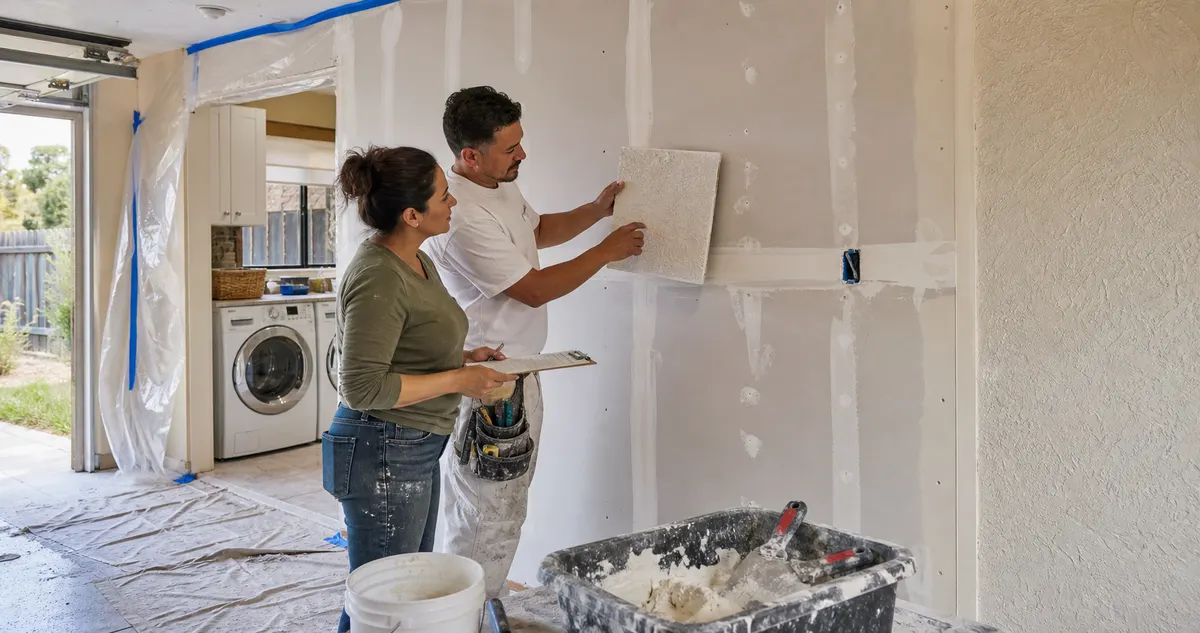
Rancho Cordova Drywall Installation Costs: Texture Matching, Permits, and Scope
Drywall looks like one of the simpler trades until the first bid comes in. A Rancho Cordova homeowner might ask for "new drywall in the laundry room" and receive three numbers that do not seem to describe the same job. One contractor is pricing hanging board only. Another is including demolition, insulation removal, moisture investigation, Level 4 finish, texture matching, primer, and paint touch-up. A third is planning around electrical, plumbing, or garage fire separation that changes the permit conversation.
That spread is normal because drywall installation is not just panels and joint compound. The real cost depends on access, wall condition, ceiling height, framing, finish level, texture, whether the work is tied to a remodel, and whether hidden water, mold, or termite damage has to be addressed before new board covers the wall again.
Rancho Cordova homes include older postwar neighborhoods, 1970s and 1980s houses, newer Anatolia and Sunridge Park area homes, garage conversions, additions, and plenty of properties where past repairs were done quickly. This guide explains realistic 2026 drywall cost ranges, when permits may matter, how texture matching works, and what a complete drywall bid should include before you approve the work.
Use this before comparing bids. The patch size matters, but the cause, finish level, fire-rated assemblies, paint scope, and inspection sequence usually explain the real price difference.
Typical 2026 Drywall Cost Ranges in Rancho Cordova
For planning purposes, most Rancho Cordova drywall projects fall into these ranges:
- Small patch visit: $250 to $750 for one or several small holes, doorknob damage, minor ceiling cuts, or localized seam repair when texture is simple and paint is excluded.
- Medium repair with texture matching: $750 to $2,500 for multiple patches, water-stained ceiling sections, drywall opened for plumbing or electrical access, or repairs that require careful blending into existing orange peel, knockdown, or skip trowel texture.
- Single room installation: $2,000 to $6,500 for hanging, taping, mudding, sanding, and finishing walls and ceiling in a bedroom, office, laundry room, or garage bay, depending on size and finish level.
- Garage drywall or fire-rated repair: $2,500 to $9,000 or more when the wall or ceiling separates the garage from living space, uses type X board, needs taped joints for fire separation, or requires insulation and access work.
- Whole-home remodel drywall: $12,000 to $45,000 or more when several rooms are opened, ceilings are replaced, texture is changed, or the drywall work follows major electrical, plumbing, insulation, or HVAC changes.
These are not quotes. Drywall pricing is labor-heavy, and small details move the total quickly. Ceiling work costs more than wall work. Matching an old texture costs more than a smooth new finish in a blank room. A room with furniture, flooring protection, dust containment, and occupied-home scheduling costs more than an empty renovation shell.
Repair, Replace, or Open the Wall Further?
The first decision is whether the existing drywall is only damaged at the surface or whether the wall assembly behind it needs attention. A clean hole from a moved outlet is one kind of repair. A soft ceiling below a bathroom, staining under a window, bubbling paint near a baseboard, or recurring cracks above a door are different problems.
Before patching, ask what caused the damage. If the answer involves a roof leak, plumbing leak, window leak, shower failure, irrigation overspray, slab moisture, pest damage, or foundation movement, drywall should not be the first trade to finish the job. The source needs to be corrected and the cavity needs to be dry. Covering damp framing with new board can trap moisture and create a larger repair later.
Replacement makes sense when damage is widespread, the old board is brittle, texture has been patched too many times, ceilings are sagging, or a remodel has already opened several walls. Full replacement can be cleaner than trying to hide dozens of old patches, especially if the homeowner wants a consistent texture or smoother finish.
Texture Matching Is Where Many Bids Differ
Sacramento-area homes use a mix of orange peel, knockdown, skip trowel, hand texture, popcorn, and older custom blends. Rancho Cordova repairs often fail visually because the patch is structurally fine but the texture catches light differently. A two-foot patch on a flat wall may look acceptable in the morning and obvious at sunset.
A serious drywall estimate should state whether texture matching is included, whether the contractor will texture only the patch or the full wall plane, and whether primer or paint is included. For small repairs, blending into the surrounding area may be reasonable. For larger ceiling repairs, it may look better to retexture the entire ceiling or at least a defined section from corner to corner.
If your home has popcorn ceiling texture, ask about testing before disturbance, especially in older homes. Some older ceiling texture and joint compounds can contain asbestos. If testing or abatement is needed, that is separate from ordinary drywall installation and should be handled before the drywall crew sands or scrapes.
Finish Levels and Paint Expectations
Drywall has finish levels, and the level matters. Utility areas and garages may only need a basic taped finish. Living rooms, bedrooms, and hallways usually need a smoother Level 4 finish before texture and paint. High-end smooth walls may require Level 5 finish, which adds skim coating and extra labor to reduce shadows and joint visibility.
Do not assume paint is included. Many drywall contractors stop at ready-for-primer, while others include primer and sometimes paint for small repairs. A patch can be perfectly finished and still look wrong if the old paint has faded, the sheen differs, or the wall has years of texture and roller marks. For visible rooms, ask whether the bid includes priming the patched area, painting the full wall, or only leaving the surface ready for a painter.
Lighting matters too. Smooth walls and ceilings under large windows, recessed lights, or long hallway sightlines show more imperfections. If you are changing from heavy texture to smooth walls, budget for more finishing time than a basic repair.
Permits and When Drywall Becomes Part of a Bigger Job
Basic drywall repair usually does not require a building permit by itself. Patching a hole, replacing a small damaged section, or finishing a cosmetic surface is generally maintenance. The permit conversation changes when drywall is part of structural work, a garage conversion, room addition, wall removal, electrical rewiring, plumbing relocation, HVAC changes, insulation upgrades in opened exterior walls, or fire-rated assemblies.
Garage walls and ceilings deserve special attention. The drywall between a garage and living space is part of the fire separation system. Missing board, open joints, unsealed penetrations, thin replacement panels, or sloppy ceiling repairs can create safety and resale issues. If the job touches the garage-to-house wall, the underside of living space above a garage, or an access door area, ask the contractor what material and finish are required.
California contractor rules also matter. Home improvement work totaling $1,000 or more in combined labor and materials generally requires a licensed contractor, and permit-required work should not be treated as a handyman exception. Homeowners can verify a license, bond, and workers' compensation status through the Contractors State License Board at cslb.ca.gov.
Drywall After Plumbing, Electrical, or HVAC Work
Many drywall calls happen after another trade cuts the wall open. A plumber repairs a shower valve, an electrician adds recessed lights, an HVAC contractor moves a register, or a remediation crew removes water-damaged board. The drywall repair should be coordinated after the behind-the-wall work is complete, inspected if required, and photographed for records.
Do not let a drywall crew close walls before rough inspections are complete on permitted electrical, plumbing, mechanical, or framing work. It is frustrating to wait, but reopening a finished wall for inspection is worse. Ask the lead contractor who owns scheduling, who confirms the cavity is ready to close, and who handles insulation replacement if exterior walls or attic-adjacent ceilings were opened.
Occupied homes also need a dust plan. Drywall sanding travels. A good scope should mention floor protection, plastic containment, covering returns, cleanup, and whether the HVAC system should stay off during sanding. This is especially important for families working from home or living in the house during a remodel.
What a Complete Drywall Bid Should Include
A useful Rancho Cordova drywall estimate should identify:
- Demolition, debris hauling, and disposal of old drywall or texture
- Whether moisture, mold, pest, or framing damage is excluded or included
- Board type, thickness, and whether moisture-resistant or type X board is required
- Insulation replacement where exterior walls or ceilings are opened
- Tape, mud, sanding, finish level, and number of coats assumed
- Texture type, texture matching method, and whether full wall or ceiling blending is included
- Primer, paint, and whether color matching or full-wall repainting is included
- Dust containment, floor protection, furniture moving, and cleanup
- Permit or inspection coordination if the drywall follows trade or structural work
- Change-order pricing for hidden damage, additional patches, or texture surprises
A low bid that says "patch drywall" may be fine for a closet. It is not enough for a kitchen ceiling leak, garage fire-rated wall, or visible living room repair. The more visible the surface, the more specific the scope should be.
Final Planning Advice
For most Rancho Cordova homeowners, the smartest drywall project starts with diagnosis, not finish. Find out why the wall failed, confirm the cavity is dry and safe to close, decide how visible the finished surface will be, and compare bids by the same finish level and texture plan.
If the job is small, batch several patches into one visit so you pay the setup cost once. If the job is part of a remodel, make drywall sequencing part of the full construction schedule instead of treating it as cleanup. Good drywall disappears when it is done. Getting there requires clear scope, dry framing, the right board, patient finishing, and realistic expectations about texture and paint.
Browse licensed drywall contractors in the Sacramento area, start with the Rancho Cordova contractor guide, or use the contractor search to compare professionals serving Carmichael, Fair Oaks, and nearby communities.
For related planning, pair this with our California home improvement permits guide, contractor vs. handyman license guide, license verification guide, whole-house repiping cost guide, and bathroom exhaust fan permit guide if the drywall work follows plumbing, moisture, or ventilation repairs.
Who to Hire for This Project
For the work covered in this guide, these are the contractor types to contact and the CSLB classification to verify before you take quotes:
Questions to Ask Before You Sign
- "Is your CSLB license active and bonded?" Verify it yourself at cslb.ca.gov the license number must appear on their bid.
- "Who pulls the permit, and is it included in the bid?" The contractor should handle any required permits a pro who suggests skipping one is a red flag.
- "Can you itemize labor, materials, and allowances?" Itemized bids are the only way to compare quotes on the same scope.
- "What's the payment schedule?" California caps the down payment at $1,000 or 10%, whichever is less payments should track completed work.
- "Who from this area can I call as a reference?" Ask for a recent local job of similar scope, not just photos.
Sacramento Contractors for This Project
Related Articles
Frequently Asked Questions
How much does drywall installation cost in Rancho Cordova? +
Small patch visits often range from $250 to $750. Medium repairs with texture matching commonly run $750 to $2,500. A single room can cost $2,000 to $6,500, while garage fire-rated work or multi-room remodel drywall can cost much more depending on board type, finish level, access, and paint scope.
Does drywall repair require a permit in Rancho Cordova? +
Basic cosmetic drywall repair usually does not require a permit by itself. Permits may matter when drywall is part of structural work, a garage conversion, electrical or plumbing changes, HVAC work, insulation upgrades, additions, or fire-rated garage assemblies.
Why does texture matching add cost? +
Texture matching takes extra labor because the contractor has to blend the patch into an existing surface that may have aged, been painted several times, or been applied by hand. Large ceiling repairs may need a wider retexture area to avoid a visible patch.
Should drywall be replaced after water damage? +
Drywall should only be repaired or replaced after the water source is fixed and the cavity is dry. If framing, insulation, or adjacent materials remain wet, closing the wall can trap moisture and create mold or recurring damage.