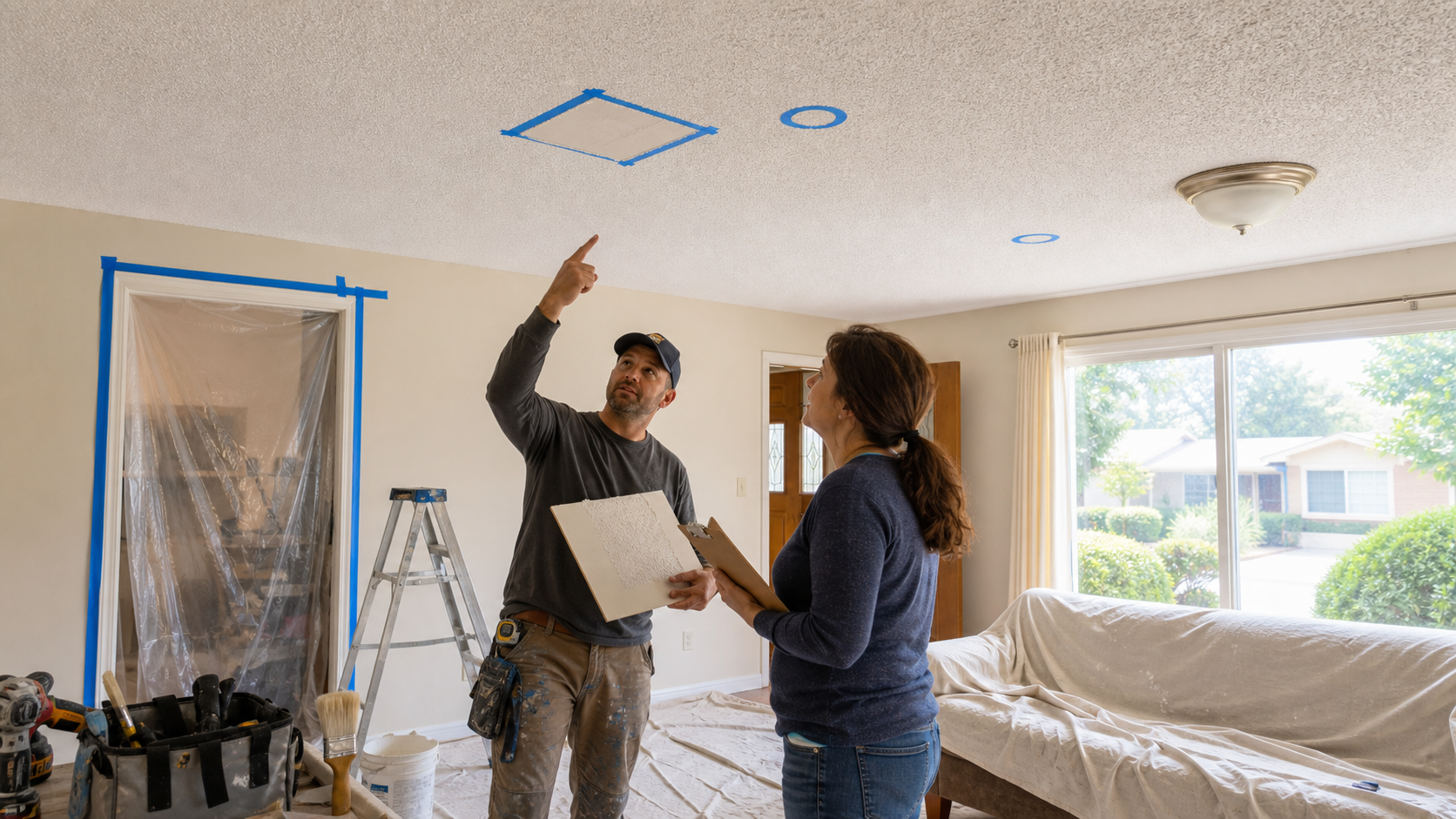
Citrus Heights Popcorn Ceiling Removal: Asbestos Testing, Texture Matching, and Lighting Plans
The ceiling usually looks harmless until the sunlight hits it sideways.
A Citrus Heights homeowner pulls carpet before moving in, paints a few sample colors on the wall, and then notices the old acoustic ceiling makes every room feel dated. The first idea is simple: scrape it flat, repaint, maybe add a few recessed lights while the room is empty. Then one contractor says it could contain asbestos. Another says testing is not needed. A third prices "popcorn removal" without mentioning texture matching, primer, lighting layout, or where the dust goes.
That is the moment to slow the project down. Popcorn ceiling removal can be a clean cosmetic refresh, but in older Citrus Heights ranch homes it can also become asbestos testing, drywall repair, skim coating, electrical work, paint, fixture changes, and permit questions. The best contractor call depends on what the ceiling is made of, what you want it to look like after removal, and whether you are changing anything behind or through the drywall.
| Decision | Why it matters | Best lead | Planning range |
|---|---|---|---|
| Test before disturbance | Lab results decide whether normal drywall work is appropriate. | Asbestos inspector or abatement pro | $250 to $900 |
| Scrape and retexture | Cheaper than smooth ceilings but still needs containment and finish skill. | C-9 drywall contractor | $2 to $6 per sq ft |
| Skim coat to smooth | Modern look, but flaws show under windows and new lighting. | Drywall finisher plus painter | $4 to $10-plus per sq ft |
| Add recessed lighting | Wiring, attic access, layout, patching, and permits can change the job. | C-10 electrician or GC | $1,500 to $7,500-plus |
Use this chart before comparing estimates. Two popcorn-ceiling bids are not comparable until they use the same assumptions for asbestos testing, containment, ceiling finish level, primer, paint, electrical work, permits, and cleanup.
Start With The Ceiling, Not The Scraper
Before calling for bids, figure out what you are actually changing. Are you removing texture in one bedroom before a tenant moves in? Updating the living room before listing the home? Opening the ceiling for recessed lights? Trying to get rid of water stains after a roof repair? Hoping for a perfectly smooth Level 5 ceiling under big windows?
Those are different projects. A rental turnover may only need safe testing, scrape, simple orange-peel texture, primer, and paint. A main living area with low-angle afternoon light may need skim coating and a better finish level. A lighting project brings electrical layout, switch legs, fan boxes, attic access, insulation, and patching into the scope. A stain or sagging area means someone should identify the old leak before the ceiling is sealed up.
Take wide photos of each room, then close photos of stains, cracks, patched areas, old ceiling fans, smoke alarms, HVAC registers, attic access, and any existing recessed lights. Note the year the home was built if you know it. Citrus Heights has many 1950s, 1960s, and 1970s homes where ceiling texture, joint compound, flooring adhesives, and older painted surfaces deserve more caution than a newer tract home.
Why Asbestos Testing Comes First
The most expensive popcorn-ceiling mistake is disturbing suspect material before testing. The EPA says the only way to know whether suspect materials contain asbestos is testing by a qualified laboratory, and it recommends testing when the material is damaged or when a renovation will disturb it. For a homeowner, that means do not scrape first and ask questions later.
Testing is usually a small line item compared with a whole-house ceiling project. Ask who takes samples, how many rooms are included, which lab is used, how results are documented, and whether the contractor is allowed to proceed if any room comes back positive. A single negative test from one room may not answer every ceiling if additions or past repairs used different materials.
If asbestos is found, do not treat that as a drywall contractor's inconvenience. It is a scope change. California licensing and worker-safety rules can require the right asbestos qualifications and DOSH registration for asbestos-related work. CSLB's C-22 asbestos abatement classification and asbestos certification guidance are worth checking before anyone says, "our drywall crew can just handle it."
What It Might Cost In 2026
These are planning ranges for Citrus Heights and nearby Sacramento Valley homes, not quotes:
- Asbestos inspection and ceiling texture sampling: $250 to $900 for common residential sampling, more if the home is large or multiple materials are tested.
- Popcorn removal after negative testing: $2 to $6 per square foot depending on ceiling height, containment, furniture protection, cleanup, texture, primer, and paint.
- Removal plus skim coat for a smoother finish: $4 to $10-plus per square foot when the ceiling needs multiple coats, sanding, stronger lighting control, and higher finish expectations.
- Whole-house acoustic ceiling update: $5,000 to $18,000-plus for many modest homes, with larger totals when rooms are occupied, ceilings are vaulted, or a very smooth finish is expected.
- Asbestos abatement if required: often several thousand dollars and highly scope-dependent, especially if containment, air handling, disposal, and clearance documentation are included.
- Recessed lighting, fan boxes, or electrical changes: $1,500 to $7,500-plus depending on fixture count, attic access, switching, circuit limits, patching, and permit requirements.
- Paint-only finish after drywall work: $1,000 to $6,500-plus depending on room count, primer, ceiling/wall transitions, trim, furniture moving, and whether walls are also painted.
A low bid often means one of three things: no testing, no real containment, or no finish detail after scraping. The contractor may not be cheating. They may simply be pricing a different job than the one you expect to live with every day.
Which Contractor Should Lead?
For tested-negative popcorn removal with patching, skim coating, texture, and ceiling finish, start with a licensed drywall contractor. CSLB's C-9 drywall classification covers gypsum wallboard assemblies, taping, texturing, and finish compounds. That is the skill set that makes the ceiling look intentional after the texture is gone.
A painting contractor belongs in the plan when primer, ceiling paint, wall touch-ups, trim, and sheen transitions matter. Smooth ceilings are unforgiving; cheap paint or skipped primer can make seams flash every afternoon.
Use a licensed electrical contractor when adding recessed lights, moving fixtures, changing switches, installing fan-rated boxes, or correcting old wiring. A general contractor or residential remodeling contractor is usually cleaner when the job combines ceilings, electrical, painting, flooring, cabinets, wall removal, or several rooms on a tight move-in schedule. A demolition contractor may be involved if the project expands beyond surface texture into larger interior demo.
Citrus Heights Permit Questions
Straight ceiling texture removal may be different from electrical work or remodel work, so ask the City and the contractor to define the permit path instead of guessing. The City of Citrus Heights Building Permits page says permits are submitted and processed online through the Citizen Access Portal. Its permit requirements page lists additions or alterations of an existing home, moving or demolishing a building, and window replacement among commonly permit-required projects.
For ceiling work, the practical question is what else changes. Ask:
- Is this only finish removal and repainting, or are we altering electrical, framing, smoke alarms, HVAC registers, or ceiling assemblies?
- If recessed lights are added, who prepares the permit application and meets the inspector?
- Will fan boxes, junction boxes, or old wiring stay accessible and code-compliant?
- If asbestos is found, who stops the job, who handles abatement, and what documentation is provided?
- Does the contract include primer, ceiling paint, wall touch-up, cleanup, and disposal?
- If the ceiling has stains, cracks, or sagging areas, who diagnoses the source before finishing?
For licensing, CSLB says a contractor license is not needed only in limited minor-work situations where the project does not require a permit, no employee labor is used, and combined labor, materials, and other costs are less than $1,000. Ceiling projects with multiple rooms, crews, abatement, electrical work, or permits usually clear that line quickly. Do not split one real project into smaller invoices to make unlicensed work look legal.
Texture Choices After Popcorn Is Gone
Removing popcorn does not automatically create a smooth ceiling. Under the texture, you may find uneven joints, old repairs, nail pops, shadow lines from previous walls, or drywall that was never meant to be seen under critical light. That is normal. The contract should say what finish you are buying.
Common choices include:
- Orange peel or light texture: hides minor imperfections and is usually the practical middle ground.
- Knockdown texture: more visible texture, often easier to blend with older Sacramento-area interiors.
- Skim-coated smooth ceiling: cleanest modern look, but it costs more and exposes waves under windows or recessed lights.
- Overlay with new drywall: sometimes used when the existing ceiling is too rough, tested positive, or has too many defects, but it changes trim, fixture, and clearance details.
Ask for a small sample area if finish expectations are high. A ceiling that looks smooth under a work light may show every wave at 4 p.m. when Citrus Heights sun cuts through the front window.
Timing With Lighting, Flooring, And Move-In
If you plan to add recessed lighting, do it before final skim coat and paint. Cutting holes after a finished ceiling means new patches and touch-ups. Ask the electrician and drywall contractor to agree on fixture layout, hole sizes, attic access, insulation clearance, switching, dimmers, and whether existing ceiling fixtures or fan boxes stay.
If flooring is also being replaced, ceiling work usually comes first. Popcorn removal is messy even with good containment. Scraping, sanding, primer, and paint can damage new floors if the sequence is wrong. Cabinets and built-ins also complicate access, so schedule ceiling work before the room is full again.
Move-in timing matters. A whole-house ceiling project can make the home difficult to occupy for several days or longer. If asbestos abatement is required, expect more planning and documentation. If you are living in the home, ask whether the crew can phase rooms, how they isolate dust, where furniture goes, and whether HVAC returns will be protected.
Red Flags In Popcorn Ceiling Bids
Be cautious if a contractor says testing is unnecessary because they have "done hundreds of these." Be careful with bids that do not mention containment, primer, finish level, paint, cleanup, disposal, or what happens if results are positive. Also watch for anyone who wants to add recessed lights without discussing permits, attic access, fixture spacing, dimmers, insulation, or repair responsibility.
Other red flags include no license number, no workers' compensation discussion for crews, a cash-heavy payment plan, no sample finish, vague square footage, and no exclusions. A good ceiling bid should be boringly specific because the work itself is dusty, visible, and hard to hide once painted.
Internal Homework Before You Hire
Start with our Citrus Heights contractor guide, then compare licensed drywall contractors, painting contractors, electrical contractors, general contractors, and demolition contractors. Use the contractor search when you are ready to build a shortlist.
For related planning, pair this with our drywall installation and texture guide, asbestos and old flooring removal guide, recessed lighting permit guide, Citrus Heights soffit removal guide, California permit basics, contractor versus handyman guide, and license verification checklist.
The Bottom Line
Popcorn ceiling removal is a good Citrus Heights upgrade when the scope is honest. The smart order is test first, plan the finish, coordinate lighting before final paint, and verify the contractor license for the actual work being performed.
Do not compare "scrape ceiling" bids until each one answers the same questions: asbestos testing, containment, finish level, primer, paint, electrical work, permits, disposal, and cleanup. A ceiling is one of the largest visible surfaces in the house. The contractor who talks about dust control and final light, not just square footage, is usually the one pricing the job you actually want.
Who to Hire for This Project
For the work covered in this guide, these are the contractor types to contact and the CSLB classification to verify before you take quotes:
Questions to Ask Before You Sign
- "Is your CSLB license active and bonded?" Verify it yourself at cslb.ca.gov the license number must appear on their bid.
- "Who pulls the permit, and is it included in the bid?" The contractor should handle any required permits a pro who suggests skipping one is a red flag.
- "Can you itemize labor, materials, and allowances?" Itemized bids are the only way to compare quotes on the same scope.
- "What's the payment schedule?" California caps the down payment at $1,000 or 10%, whichever is less payments should track completed work.
- "Who from this area can I call as a reference?" Ask for a recent local job of similar scope, not just photos.
Sacramento Contractors for This Project
Related Articles
Frequently Asked Questions
Should Citrus Heights homeowners test popcorn ceilings for asbestos before removal? +
Yes. If the ceiling texture is old or unknown, test before disturbing it. The EPA says lab testing is the only way to know whether suspect material contains asbestos, and testing is especially important when renovation will disturb the material.
How much does popcorn ceiling removal cost in Citrus Heights? +
After negative asbestos testing, many popcorn ceiling removal projects fall around $2 to $6 per square foot. Skim coating, smooth finishes, vaulted ceilings, occupied rooms, primer, paint, asbestos abatement, and recessed lighting can raise the total substantially.
What contractor should remove popcorn ceilings? +
For tested-negative material, start with a licensed C-9 drywall contractor for scraping, patching, skim coating, and texture. Add a painting contractor for finish work, an electrical contractor for lighting changes, and a C-22 asbestos abatement contractor or properly qualified asbestos professional if asbestos is present.
Do I need a permit for popcorn ceiling removal in Citrus Heights? +
Simple finish removal and repainting may be different from electrical, structural, or remodel work. If the project adds recessed lights, changes wiring, alters ceiling assemblies, or becomes larger demolition, confirm the permit path with the City of Citrus Heights or have the contractor state it in writing.
Can I add recessed lights while removing popcorn ceilings? +
Yes, and it is often the best time to do it. Plan the lighting layout, switching, attic access, fixture spacing, insulation clearance, permits, and patching before final skim coat and paint so the ceiling does not get opened twice.
Will popcorn removal leave a smooth ceiling? +
Not automatically. Popcorn texture often hides uneven joints, old patches, nail pops, and drywall that was never finished for smooth paint. Ask whether the bid includes retexture, skim coating, primer, paint, and a sample area if you expect a smooth modern finish.