North Highlands Old Flooring Removal: Asbestos, Slab Prep, and LVP Bids
The flooring project often starts with a simple sentence: "We just want to pull the old carpet and put in LVP."
Then the carpet comes up.
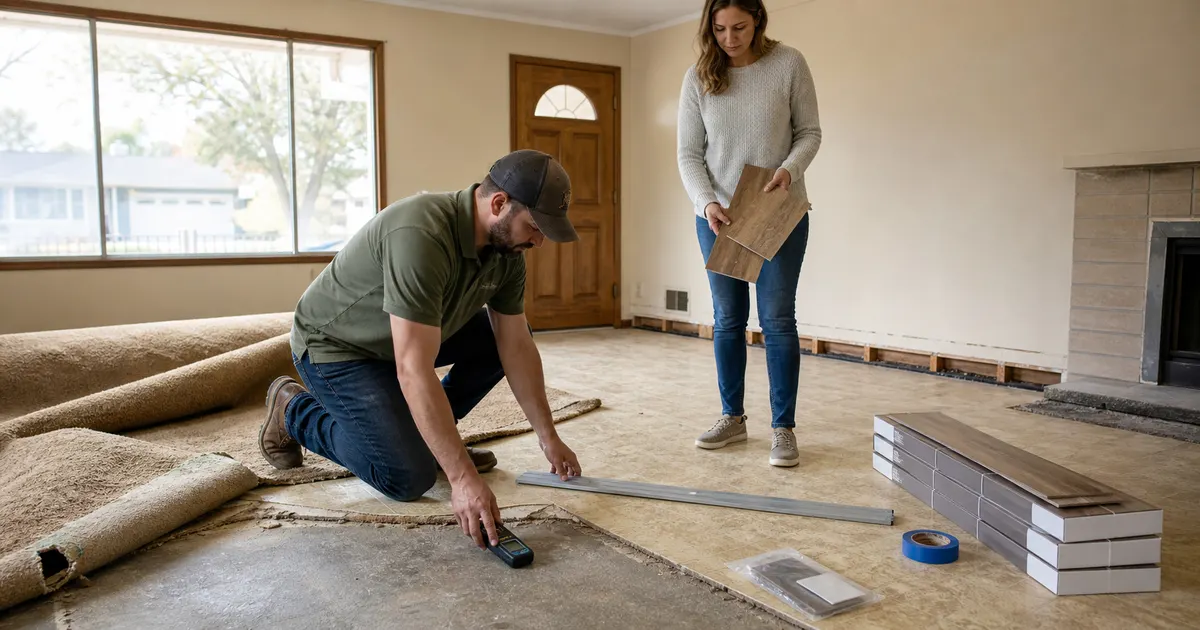
A North Highlands homeowner sees yellowed sheet vinyl under the padding, a brittle edge near the hallway, dark adhesive on the slab, and a low spot that makes the straightedge rock. The flooring sample still looks good. The problem is that the job is no longer only about choosing a plank color. It is about what can be safely removed, what must be tested, how flat and dry the slab really is, and whether the contractor's bid includes the prep that keeps the new floor from clicking, cupping, separating, or failing its warranty.
That is the part homeowners rarely see in a showroom. The floor you buy is the visible layer. The floor you live with depends on the removal, testing, slab prep, transitions, baseboards, and written scope underneath it.
Use this chart before comparing flooring bids. In older North Highlands homes, the lowest LVP number can change quickly when old vinyl, adhesive, slab flatness, moisture, doors, and trim are not priced up front.
Start With What Is Under the Carpet
In many North Highlands homes, carpet is not the first floor. It is the latest floor. A living room may have carpet over pad, pad over old sheet vinyl, sheet vinyl over adhesive, and all of it sitting on a concrete slab that has seen decades of settling, moisture, pet accidents, hallway traffic, and previous repairs.
That stack matters because each layer changes the job. Carpet and pad removal is usually straightforward. Old vinyl tile, sheet vinyl, black adhesive, and brittle backing deserve more caution, especially in homes built before asbestos-containing flooring materials fell out of common use. A good contractor should not shrug and start dry scraping unknown material into dust.
Before the estimate becomes a signed contract, ask what the contractor believes is under the existing floor, whether they will expose a small area before final pricing, and what happens if old vinyl or adhesive needs testing. If the answer is "we will deal with it when we get there," the bid is not ready yet. The uncertainty should be written into the scope as a test, allowance, exclusion, or separate abatement step.
Asbestos Testing Is Not Overreacting
Asbestos is a scary word, but the practical response is boring: do not disturb suspicious flooring until you know what it is. Older vinyl sheet flooring, 9-by-9 tiles, backing paper, and some adhesives can contain asbestos. The hazard is not that the material exists under your carpet. The hazard is grinding, sanding, breaking, or dry scraping it in a way that releases fibers.
For homeowners, the right questions are simple:
- Will you test old flooring or adhesive before demolition?
- Who collects the sample, and where is it analyzed?
- If it tests positive, who performs removal or encapsulation?
- Is abatement included, excluded, or handled by a separate contractor?
- How will the work area be protected before new flooring goes in?
Do not pressure a flooring installer to "just get it out" if they are not qualified for that scope. If asbestos-containing material is present, the job may need a qualified abatement contractor before the flooring crew returns. That delay is frustrating, but it is cheaper than contaminating the house and then trying to clean up the mistake.
Slab Prep Is Where Cheap Bids Hide
Luxury vinyl plank is forgiving in daily life. It is not forgiving over a bad slab. Click-lock floors need a flat surface within the product manufacturer's tolerance. Glue-down products need the right adhesive, surface profile, and moisture conditions. Tile and engineered hardwood have their own requirements. The prep language in the bid matters as much as the flooring brand.
Ask the contractor to show how they check flatness. A long straightedge across the living room, hallway, and kitchen tells you more than a quick glance from the doorway. Low spots may need patching or self-leveling compound. High spots may need grinding, which becomes more complicated if old adhesive or suspect material is present. Cracks need context: a hairline shrinkage crack is different from active movement or a slab edge that has shifted.
Moisture matters too. North Highlands slab homes can have moisture coming from plumbing leaks, exterior drainage, sprinklers, missing vapor barriers, or simple seasonal conditions. The installer should know what moisture test the flooring manufacturer requires and whether the chosen product allows the readings found in the house. A vague line that says "floor prep included" is not enough.
What the Bid Should Separate
For a typical North Highlands flooring refresh, broad planning ranges often look like this:
- Carpet and pad removal: $1 to $3 per square foot
- Old hard-surface removal: $2 to $6 per square foot, more if testing or careful removal is needed
- LVP material and installation: $5 to $11 per square foot for many practical products and crews
- Slab patching or leveling: $1 to $6 per square foot in affected areas, depending on depth and material
- Baseboard removal, replacement, or repainting: a few hundred to several thousand dollars depending on the home
- Asbestos testing or abatement: separate pricing, because the result and method control the cost
A modest room or hallway refresh might stay under $4,000. Whole-house LVP in a small ranch home can easily land in the $9,000 to $24,000 range once removal, prep, transitions, baseboards, toilets, appliances, and furniture moving are included. If testing, abatement, slab grinding, door trimming, drywall repair, or moisture mitigation enters the job, the total can move higher.
The useful estimate should separate these pieces:
- Product. Brand, style, thickness, wear layer, underlayment requirement, installation method, and warranty conditions.
- Demo. Which rooms, which layers, who moves appliances, who removes toilets, and how debris is hauled.
- Testing. Whether old vinyl, tile, backing, or adhesive will be tested before disturbance.
- Slab prep. Flatness tolerance, crack handling, patching, leveling, grinding, and moisture testing.
- Transitions. Doorways, hallways, tile edges, fireplace hearths, closet tracks, and exterior doors.
- Baseboards. Remove and reset, replace, shoe molding, caulk, paint, and who handles touch-ups.
- Schedule. How long the home is disrupted, where furniture goes, and when rooms can be used again.
- Exclusions. Abatement, subfloor repair, plumbing leaks, pet odor treatment, door trimming, and painting if not included.
If two bids are far apart, look here first. One contractor may be pricing a floor. The other may be pricing the floor, the removal risk, and the prep that protects the warranty.
Which Contractor Should Lead?
Start with a licensed flooring contractor when the work is limited to demolition, prep, flooring, underlayment, transitions, baseboards, and cleanup. In California, flooring work commonly falls under the C-15 flooring and floor covering classification. A B general contractor can make sense when the project becomes a larger remodel with walls, cabinets, plumbing, electrical, doors, drywall, or multiple trades.
Bring in an asbestos testing or abatement professional when old flooring materials are suspect. Bring in a plumber if moisture seems tied to a water line, refrigerator line, toilet flange, dishwasher, or slab leak. Bring in a foundation repair or concrete contractor if the slab has active movement, wide cracks, settlement, or drainage clues that should not be hidden under a new floor. Bring in a drywall or painting contractor if baseboards, wall texture, or trim damage are part of the finish scope.
The wrong hire is the installer who wants to sell planks but cannot explain what happens when the old layers do not cooperate. The right hire can tell you where their scope ends before the job starts.
Permits, Licensing, and Contract Questions
North Highlands is in Sacramento County, so permit questions usually run through the county rather than a city building counter. A like-for-like flooring replacement is often treated as finish work. That changes when the job includes structural repair, plumbing, electrical, wall changes, substantial water-damage repair, garage conversion work, or other remodeling beyond the floor covering.
Ask the contractor to state in writing whether permits are needed and who is responsible for confirming that answer. If the floor replacement follows a leak, insurance claim, mold-like staining, or slab repair, do not assume it is still a simple finish job.
California licensing and contract rules matter even when the project feels cosmetic. The limited minor-work exemption is narrow, and real flooring jobs usually exceed it once labor and materials are combined. Home improvement work over $500 should be documented in a written contract. Before signing, verify the license, bond, workers' compensation status, and insurance. Make sure the license holder is the person or company actually responsible for the work, not just a name on a proposal.
Red Flags in Flooring Bids
Slow down if you see any of these:
- The contractor will not discuss old vinyl, adhesive, or asbestos testing in a pre-1980s home.
- "Floor prep included" appears with no flatness tolerance, moisture testing, or patching allowance.
- The bid omits baseboards, transitions, appliances, toilets, closet doors, or furniture moving.
- The installer wants to grind unknown adhesive without testing.
- Moisture readings are skipped even though the product warranty requires them.
- The contractor says permits never matter, regardless of leaks, plumbing, electrical, or structural repairs.
- There is no written change-order method for hidden layers, slab repairs, or abatement.
- The license, insurance, or workers' compensation proof is vague or hard to verify.
A clean flooring bid does not need to predict every hidden condition. It needs to explain how hidden conditions will be found, priced, and approved.
Questions to Ask Before You Sign
- What layers do you expect under the existing carpet or hard surface?
- Will you test old vinyl, tile, backing, or adhesive before removing it?
- What flatness and moisture standards does this flooring product require?
- How are slab cracks, low spots, high spots, and old adhesive handled?
- Are baseboards removed and reset, replaced, or covered with shoe molding?
- Who moves appliances, toilets, closet tracks, and furniture?
- What is excluded from the price if asbestos, moisture, pet damage, or slab movement is found?
- Does this scope need Sacramento County permit review, or is it limited to finish flooring?
- What license classification, insurance, bond, and workers' compensation coverage apply?
Those questions make the first estimate slower. They also make the finished floor much less risky.
Internal Homework Before You Hire
For local context, start with our North Highlands contractor guide, compare licensed flooring contractors, demolition contractors, general contractors, foundation repair contractors, concrete contractors, and drywall contractors. Use the contractor search when you are ready to build a shortlist.
For related planning, pair this with our Sacramento flooring material guide, ground-floor remodel scope guide, foundation warning signs guide, California permit basics, and license verification guide.
The Bottom Line
A North Highlands flooring replacement is simple only after the old layers, slab condition, moisture, and finish details are known. Pull back enough carpet to understand the floor, test suspicious old material before disturbing it, price slab prep honestly, and hire the contractor who can explain the hidden work as clearly as the plank sample. The best LVP bid is not the one with the prettiest color board. It is the one that makes the floor underneath ready to carry it.
Who to Hire for This Project
For the work covered in this guide, these are the contractor types to contact and the CSLB classification to verify before you take quotes:
Questions to Ask Before You Sign
- "Is your CSLB license active and bonded?" Verify it yourself at cslb.ca.gov the license number must appear on their bid.
- "Who pulls the permit, and is it included in the bid?" The contractor should handle any required permits a pro who suggests skipping one is a red flag.
- "Can you itemize labor, materials, and allowances?" Itemized bids are the only way to compare quotes on the same scope.
- "What's the payment schedule?" California caps the down payment at $1,000 or 10%, whichever is less payments should track completed work.
- "Who from this area can I call as a reference?" Ask for a recent local job of similar scope, not just photos.