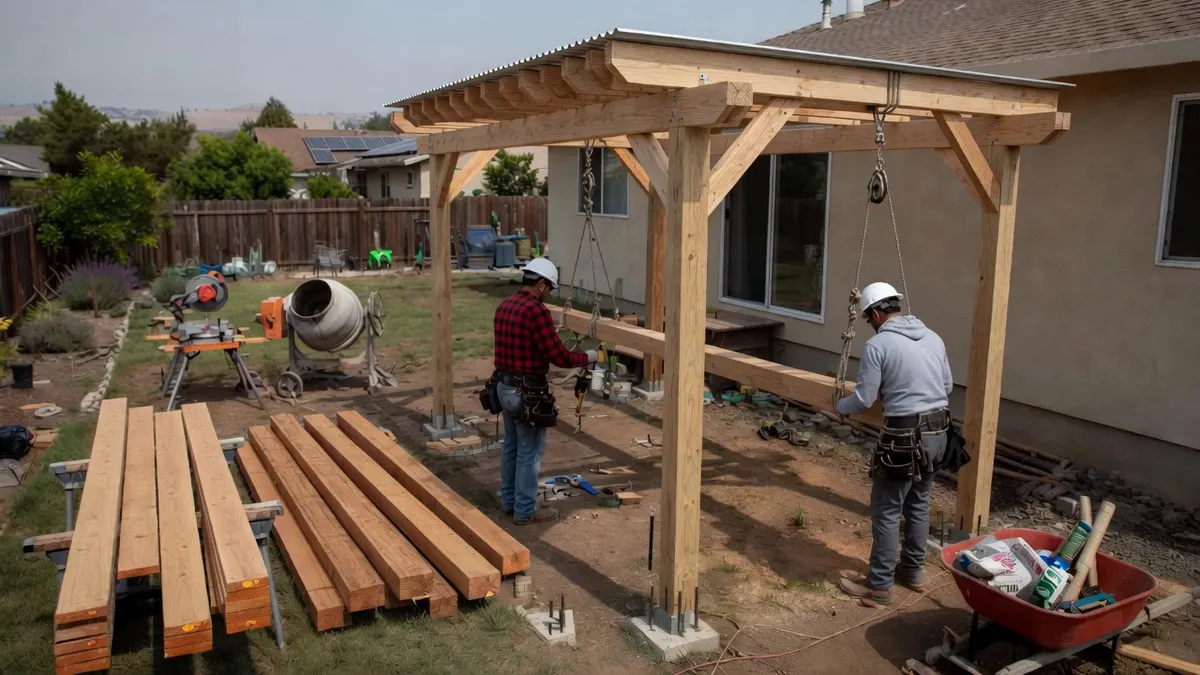
Lodi Patio Cover Planning for Shade, Permits, and Drainage
Stand in a Lodi backyard at four in the afternoon in late July and you understand the problem instantly. The slab radiates heat, the sliding door is too hot to touch, and the only shade is a sliver near the fence that nobody wants to sit in. A patio cover fixes that, but only if it is planned as three problems at once: how it blocks sun, where the water goes when a winter storm rolls through, and what holds it up when the Delta breeze turns into a real wind. Get one of those wrong and you have spent five figures on a structure that traps heat against the house or floods the back door.
Solid roof or open lattice? The shade decision comes first
Lodi sun is not gentle, and the cover style you choose changes how the whole space feels. A solid, insulated panel roof gives you full, deep shade and keeps the patio noticeably cooler, which matters when valley afternoons push past 100 degrees. An open lattice or pergola filters light instead of blocking it, so you get dappled shade and better airflow but less relief at peak heat. Many homeowners here land on a solid cover with a fan, because moving air under a closed roof beats still air under an open one when the thermometer climbs.
The orientation of your patio should drive the call. A west-facing slab takes the worst of the late-day sun and usually wants a solid roof with a generous overhang. A north or east exposure can often get away with lattice. A good contractor will walk the yard with you, note which direction the heat comes from, and tell you honestly when a cheaper open design will leave you sweating. If you want to compare approaches before you commit, the decks and patio trade page is a reasonable place to see what local crews build.
Where the water goes when the storm comes
Shade is the part everyone thinks about. Drainage is the part that causes callbacks. Lodi gets most of its rain in a few concentrated winter months, and an attached cover changes how water moves off your roofline and across the slab. If the cover ties into the house fascia without a plan for runoff, you can end up with sheeting water at the foundation or a steady drip onto the exact spot where people walk in and out.
Ask any contractor to describe the drainage plan in plain words before you sign. That means the slope of the cover, whether gutters and downspouts are included, and where the water is directed once it leaves the structure. On older slabs, the existing concrete may already pitch toward the house instead of away from it, and a new cover can make that worse. Sometimes the fix is a gutter and a downspout extension; sometimes it is grinding or replacing a section of the slab. Either way, you want it in the estimate, not discovered in January.
What the permit counter in San Joaquin County actually checks
An attached patio cover almost always needs a building permit, and a freestanding one usually does too once it passes a certain size. The plan reviewer is looking at setbacks from your property lines, how much of the lot the structure covers, the footing and post sizing that holds it up, and any electrical you add for fans or lights. If the cover attaches to the house, expect questions about the connection to the existing framing, and in some cases an engineered detail for the ledger and footings.
This is also where California licensing law matters. Any project where labor and materials total $1,000 or more must be handled by a contractor holding an active CSLB license. That threshold catches essentially every real patio cover, so verify the license number on the CSLB website before you write a check, and confirm the contractor carries both liability insurance and workers' compensation. If a fan, outlet, or lighting circuit is part of the build, the electrical work needs proper permitting too. Pulling a permit triggers inspections, and an inspector will check footing depth, post connections, and the electrical before the cover gets a final sign-off.
Reading three estimates without getting fooled
In the Sacramento Valley, a patio cover commonly runs somewhere between roughly $8,000 and $38,000, which is a wide enough range that the number alone tells you almost nothing. The spread comes from materials, span, footings, whether gutters and lighting are included, and any concrete repair the slab needs. A short, cheap bid often looks attractive precisely because it left out the parts that cost money.
Compare the assumptions, not just the totals. A useful estimate names the cover material and roof assembly, the footing and post details, who pulls the permit, whether engineering is included for an attached structure, the drainage approach, cleanup, and warranty. When two bids are thousands apart, the gap is usually hiding in those line items, not in one contractor being greedy. Set aside a contingency too, because older Lodi homes sometimes reveal dry rot at the fascia or undersized framing once a crew starts attaching to the house.
It helps to look at the trades around this job, since a patio cover often pulls in more than one. The slab and footings touch concrete work, the fans and lights touch electrical, and a larger or structurally tricky build may want a general contractor coordinating the whole thing.
Before you book anyone
Walk the patio with your phone and photograph the slab, the fascia where a cover would attach, and the direction the afternoon sun comes from. Write down the two or three things you actually want the cover to do, whether that is killing the west glare, keeping the back door dry, or just creating a spot to eat dinner outside in August. Then take that short list to at least three licensed contractors and ask each to spell out shade, drainage, and structure in their bid. Start your shortlist through the Sacramento Valley contractor search, and if your project sits near a jurisdiction line, glance at a nearby option like Woodland since permit steps can differ one city over. The cover you want is the one that is cooler in summer, dry in winter, and still standing after the first real wind.
Who to Hire for This Project
For the work covered in this guide, these are the contractor types to contact and the CSLB classification to verify before you take quotes:
Questions to Ask Before You Sign
- "Is your CSLB license active and bonded?" Verify it yourself at cslb.ca.gov the license number must appear on their bid.
- "Who pulls the permit, and is it included in the bid?" The contractor should handle any required permits a pro who suggests skipping one is a red flag.
- "Can you itemize labor, materials, and allowances?" Itemized bids are the only way to compare quotes on the same scope.
- "What's the payment schedule?" California caps the down payment at $1,000 or 10%, whichever is less payments should track completed work.
- "Who from this area can I call as a reference?" Ask for a recent local job of similar scope, not just photos.
Sacramento Contractors for This Project
Related Articles
Frequently Asked Questions
Do I need a building permit for a patio cover in Lodi? +
Yes, in almost every case. An attached patio cover requires a building permit from the San Joaquin County or City of Lodi building department, and freestanding covers typically need one once they pass a size threshold. The review covers setbacks, lot coverage, footing and post sizing, and any electrical for fans or lights, followed by inspections before final sign-off.
What does a patio cover typically cost in the Sacramento Valley? +
It commonly falls somewhere between roughly $8,000 and $38,000, depending on the cover material, span, footings, drainage, and whether lighting or fans are included. The range is wide because a basic open lattice is far cheaper than a large insulated solid roof with gutters and electrical. Compare estimates by what each one includes, not by square footage alone.
Does my Lodi patio cover contractor need a CSLB license? +
Yes. California law requires any contractor performing work where labor and materials total $1,000 or more to hold an active license from the Contractors State License Board, which covers essentially every real patio cover. Verify the license number on the CSLB website and confirm the contractor carries liability insurance and workers' compensation before you sign or pay a deposit.
How should drainage be handled on a Lodi patio cover? +
Because Lodi gets its rain in a few concentrated winter months, the cover needs a clear plan for where water goes. That means the roof slope, included gutters and downspouts, and where runoff is directed once it leaves the structure. On older slabs that already pitch toward the house, a new cover can worsen pooling near the foundation, so confirm the drainage approach is written into the estimate.
Should I choose a solid roof or open lattice cover in Lodi's climate? +
A solid, insulated roof gives the deepest shade and keeps the patio noticeably cooler during 100-degree valley afternoons, which suits west-facing slabs that take the worst late-day sun. An open lattice or pergola filters light and improves airflow but offers less relief at peak heat. Many Lodi homeowners choose a solid cover with a ceiling fan to combine full shade with moving air.
Does adding lights or a fan to my patio cover require extra permits? +
Yes. Any new electrical circuit, outlet, fan, or lighting added to the cover needs to be included in the permit and performed to code, and the electrical is inspected before the project gets a final approval. If the contractor is not also doing the electrical, make sure a licensed electrician handles it and that the work is documented in your contract and permit scope.