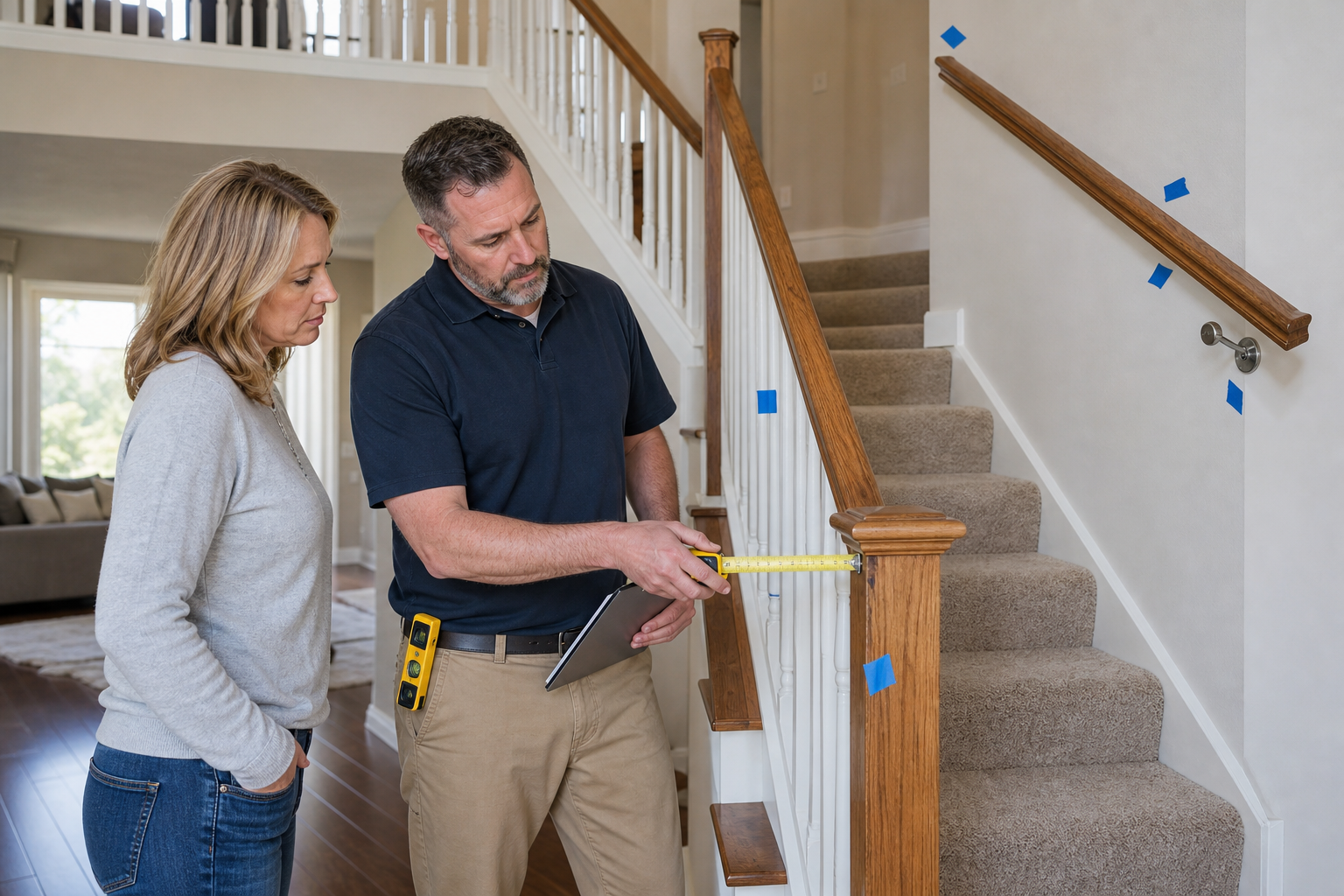
Lincoln Stair Railing Repairs: Loose Handrails, Guardrails, Safety, and Permit Questions
The stair railing only moves a little. A quarter inch at the newel post, maybe less. The wall handrail bracket has one screw that spins. The kids still run upstairs, guests still grab the rail, and everyone tells themselves it has probably been that way for years.
That is exactly why Lincoln homeowners should slow down before treating a loose railing like a tiny cosmetic repair. Interior stair rails are touched every day, and they are often the thing someone reaches for when a foot slips, a toddler pulls sideways, a parent carries laundry, or an older relative needs balance. A rail that feels merely annoying on Tuesday can become the most important part of the house in one bad second.
The fix may be simple: longer screws into solid blocking, a tightened bracket, or a new section of trim. It may also mean the newel post is loose below the finished floor, the guardrail spacing is outdated, stair nosing changed after new flooring, or the wall never had proper backing where the bracket was installed. The right contractor should figure that out before pricing the job.
| Condition | Likely lead | What to verify | Planning range |
|---|---|---|---|
| Loose wall handrail bracket | Handyman or finish carpenter | Stud or blocking, bracket condition, wall damage | $200 to $900 |
| Wobbly newel post or guardrail | General contractor or stair/finish pro | Subfloor attachment, baluster spacing, stair geometry | $900 to $4,500 |
| Partial rail replacement | General contractor, finish carpenter, or specialty rail installer | Code assumptions, finish match, paint or stain scope | $2,500 to $9,500 |
| Stair rebuild or layout correction | General contractor, sometimes designer or engineer | Treads, risers, guards, landings, permits, flooring transitions | $8,000 to $35,000-plus |
Use this chart before comparing bids. A stair railing estimate is not complete until it says whether the contractor is tightening hardware, rebuilding a connection, replacing visible rail parts, or changing stair geometry.
Start With The Movement You Can Feel
Before calling anyone, put one hand on the rail and move it gently in the same direction a person would use it. Does the wall handrail shift at one bracket, or does the whole run move? Does the newel post rock at the floor? Do individual balusters spin? Are there cracks in the paint where the post meets the tread, landing, or wall cap? Does the stair make noise only at the rail, or does the tread itself flex?
Do not yank hard enough to make the problem worse. The goal is to describe the movement, not stress-test the house. Take wide photos of the full stair run and close photos of brackets, rail ends, newel posts, balusters, treads, nosing, landings, baseboard, and any patched wall areas. If the rail became loose after carpet, LVP, or stair tread work, photograph that transition too.
That first documentation step saves time. A contractor can tell whether the first visit is likely a small repair, a carpentry job, or a larger stair-safety scope. It also helps you avoid a bid that only prices the visible screw while ignoring the connection below it.
Why Lincoln Homes Run Into This
Lincoln has many two-story homes in neighborhoods such as Twelve Bridges, Lincoln Crossing, and newer Placer County subdivisions. Those homes often have open stair rails, carpeted stairs, painted balusters, stained caps, and builder-standard hardware that worked fine when the house was new. After years of kids, pets, moving furniture, handrail use, flooring updates, and small wall patches, the weak spots start showing.
Newer does not always mean simple. A rail can be fastened into trim instead of solid framing. A wall handrail bracket can miss the stud by just enough to loosen. A newel post can hide its real connection below carpet or a landing cap. A flooring project can change stair nosing height or trim clearances. A painter may caulk a crack that was really movement. By the time the homeowner sees it, several small decisions may be stacked together.
The best contractor will ask when the movement started, what changed recently, who last worked on the stairs, and whether any safety concerns are immediate. A good repair is not just making the railing stop squeaking for a week. It is creating a connection that can handle real use.
What It Might Cost In 2026
These are planning ranges for Lincoln and nearby Sacramento Valley homes, not quotes:
- Tighten or replace a few handrail brackets: $200 to $900 when the work is accessible, backing is solid, and wall repair is minor.
- Add blocking or repair drywall behind a loose wall rail: $650 to $2,500 depending on wall opening, texture matching, paint, and bracket layout.
- Stabilize a wobbly newel post or short guard section: $900 to $4,500 depending on how the post is attached, whether flooring must be lifted, and whether finish pieces can be reused.
- Replace balusters, rail caps, or a partial stair guard: $2,500 to $9,500 depending on length, material, paint or stain match, stair shape, and code assumptions.
- Replace a full interior stair railing system: $7,500 to $25,000-plus for custom wood, metal, glass, cable, or mixed-material systems.
- Correct stair geometry, treads, landings, or structural framing: $8,000 to $35,000-plus when the project moves beyond the rail and into the stair itself.
The low end is real for a bracket repair. It is not real for a rail that moves because the post is poorly anchored below the finished surface. Ask the contractor what they believe is loose, how they will prove it, and what becomes a change order if the hidden connection is worse than expected.
Which Contractor Should Lead?
For a small bracket repair or a sub-$1,000 non-permit fix, a careful handyman may be enough. The handyman should still explain where the screws land, what backing exists, and how the finished wall will look. If the job is only tightening hardware into known framing, do not overcomplicate it.
A licensed general contractor or experienced stair/finish carpenter is a better lead when the newel post moves, the guardrail is loose, balusters need replacement, flooring has changed the stair details, or the repair might affect code-required handrails and guards. A flooring contractor may need to coordinate if stair treads, nosing, carpet, or LVP are part of the problem. Drywall contractors and painting contractors often enter after blocking or wall repairs are finished.
Metal, cable, or glass rail systems may require a specialty installer who understands the product, anchoring, glass safety, tensioning, and inspection expectations. Do not assume a generic trim crew can install every rail style correctly.
Permit, Code, And License Questions
The City of Lincoln's building permit guidance says permits are generally required for most construction, including alterations, remodeling, all electrical work, decks over 30 inches high, termite repair and dry rot, and other listed project types. The city's residential permits page also points homeowners to permit applications, plan sets, and online-eligible minor permit categories.
That does not mean every loose screw requires a permit. A like-for-like bracket repair may be different from rebuilding a guardrail, changing stair geometry, opening walls for structural backing, replacing a stair section, or doing related electrical or remodel work. The practical move is to ask the contractor to state the permit assumption in writing before work starts.
California licensing matters because small rail repairs can grow. The CSLB explains that a contractor license is generally required when a project requires a building permit, uses employee labor, or totals $1,000 or more in combined labor, materials, and other costs. Work cannot be split into smaller invoices to avoid the threshold.
If the rail is safety-critical, do not let the license conversation become casual. Verify the license, bond, workers compensation status, and business name before signing.
Details That Change The Scope
A stair railing can be loose for several different reasons. The repair changes depending on the cause:
- Missed framing: The bracket or rail may be screwed into drywall, thin trim, or weak blocking instead of solid framing.
- Loose newel post: The visible post may need hidden fasteners, floor access, or stair-trim removal to anchor correctly.
- Baluster movement: Loose balusters may be cosmetic, but spacing, broken dowels, or damaged shoes can turn into a larger guardrail repair.
- Flooring changes: New carpet, stair caps, LVP, or tile can change height and rail clearances.
- Wall damage: Adding blocking behind a rail usually means drywall, texture, primer, and paint.
- Style upgrades: Switching from wood to cable, metal, or glass can trigger product-specific anchoring and code questions.
Ask the contractor to separate repair from upgrade. A homeowner who only needs a secure handrail should not be pushed into a full style replacement. A homeowner who wants a modern rail should not be told a decorative upgrade is just a quick repair.
Questions To Ask Before You Sign
Ask each contractor:
- Is the movement coming from a bracket, wall backing, rail joint, newel post, baluster, tread, or landing?
- Will you open anything to verify the connection, or can the problem be confirmed from the outside?
- If blocking is missing, how will the wall be repaired and painted afterward?
- Are you changing any handrail height, guard height, opening size, tread, riser, nosing, or landing condition?
- Does this scope require a City of Lincoln permit or inspection?
- What rail parts are reused, replaced, painted, stained, or custom-ordered?
- What happens if flooring or trim has to be removed to anchor the post correctly?
- How soon can the rail be made temporarily safe if the permanent parts have a lead time?
- What warranty applies to movement after repair?
- Who verifies the CSLB license and insurance fit for the actual scope?
A useful bid should answer most of those questions without forcing you to decode a one-line "fix railing" price.
Red Flags In Stair Railing Bids
Slow down if a contractor says they can make a moving guardrail safe without checking how it is attached. Be careful with anyone who wants to hide movement with caulk, filler, or paint before the connection is repaired. A pretty rail that still moves is not a repair.
Other warning signs include no written scope, no permit assumption, no discussion of wall patching, no plan for matching stain or paint, and no answer about what happens if the post is loose below the finished floor. Also be cautious when a quote jumps straight to a full replacement without explaining why a targeted repair will not work.
For homes with small children, older adults, or frequent guests, ask whether any temporary safety step is needed while you wait for parts or scheduling. Sometimes the right first move is making the rail stable enough to use safely until the larger finish repair can happen.
Timing The Work
Interior stair rail work is less seasonal than roofing, HVAC, or exterior painting, but timing still matters. Finish carpenters, painters, and flooring crews can book out when larger remodels are active. If the repair is safety-related, say that clearly when calling. If the project is part of a flooring or interior paint plan, sequence the rail work before final paint and after any stair-surface decisions are settled.
Custom rail components can take longer than homeowners expect. Matching an older stain, ordering metal panels, fabricating glass, or sourcing replacement balusters may turn a quick estimate into a multi-visit project. Ask about lead times before removing the old rail.
Internal Homework Before You Hire
Start with the Lincoln contractor guide, compare general contractors, review when handyman services are appropriate, and use the contractor search when you are ready to build a shortlist. If the rail work touches finishes, also compare flooring contractors, drywall contractors, and painting contractors.
For related planning, pair this with our Roseville flooring and stair detail guide, Lincoln patio cover permit guide, contractor question checklist, California permit basics, and license verification checklist.
The Bottom Line
A loose stair rail is not automatically a major project, but it deserves more respect than a loose cabinet pull. Start by documenting where it moves, then hire for the actual cause: bracket, backing, newel post, guard section, finish repair, or stair geometry.
Lincoln homeowners should compare bids by safety scope, not just price. The right contractor will explain what is loose, how it will be anchored, whether permits or inspections matter, who owns finish repair, and how the rail will perform after real daily use. That is the difference between a quick touch-up and a repair you can actually trust.
Who to Hire for This Project
For the work covered in this guide, these are the contractor types to contact and the CSLB classification to verify before you take quotes:
Questions to Ask Before You Sign
- "Is your CSLB license active and bonded?" Verify it yourself at cslb.ca.gov the license number must appear on their bid.
- "Who pulls the permit, and is it included in the bid?" The contractor should handle any required permits a pro who suggests skipping one is a red flag.
- "Can you itemize labor, materials, and allowances?" Itemized bids are the only way to compare quotes on the same scope.
- "What's the payment schedule?" California caps the down payment at $1,000 or 10%, whichever is less payments should track completed work.
- "Who from this area can I call as a reference?" Ask for a recent local job of similar scope, not just photos.
Sacramento Contractors for This Project
Related Articles
Frequently Asked Questions
How much does it cost to repair a loose stair railing in Lincoln? +
Small handrail bracket repairs may run about $200 to $900. Adding wall blocking or drywall repair can reach $650 to $2,500. Stabilizing a newel post or guard section often ranges from $900 to $4,500, while larger rail replacement or stair correction can cost much more.
Do I need a permit to repair an interior stair railing in Lincoln? +
A simple like-for-like bracket repair may be different from replacing guardrails, changing stair geometry, opening walls for structural backing, or altering a stair section. Ask the City of Lincoln or your contractor to state the permit assumption in writing before work starts.
Should I call a handyman or general contractor for a stair rail repair? +
A careful handyman may be fine for a small non-permit bracket repair under the licensing threshold. Call a licensed general contractor or stair/finish specialist when the newel post, guardrail, balusters, stair treads, flooring transitions, or code-required safety details are involved.
Why is my stair railing loose? +
Common causes include screws that missed solid framing, weak wall blocking, worn brackets, loose newel post anchoring, damaged balusters, flooring changes, or prior finish work that hid movement instead of fixing the connection.
Can a loose stair rail be repaired without replacing the whole railing? +
Often yes, if the rail parts are sound and the problem is a bracket, blocking, or post connection. Full replacement is more likely when the rail is damaged, poorly laid out, outdated for the intended use, or part of a broader stair remodel.
What should a stair railing repair estimate include? +
The estimate should describe the movement source, anchoring method, reused and replaced parts, wall or flooring repair, paint or stain matching, permit assumption, warranty, and what becomes a change order if hidden conditions are worse than expected.