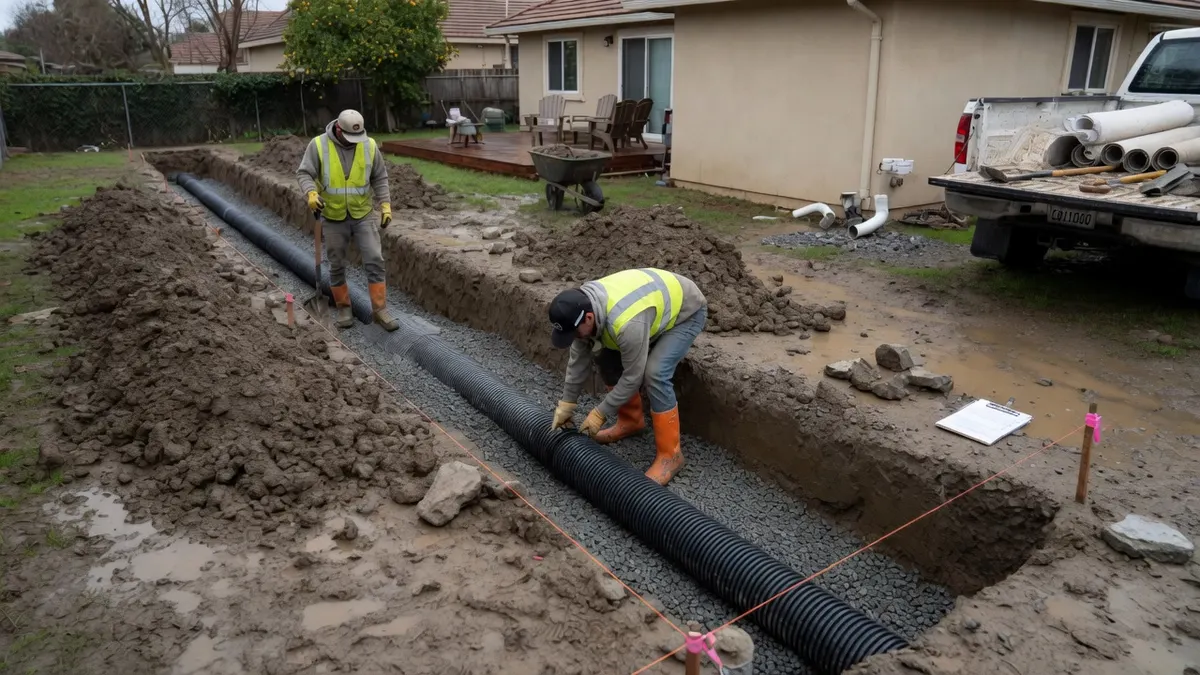
Elk Grove Backyard Drainage Fixes Before New Landscaping
There's a particular kind of disappointment that hits an Elk Grove homeowner around February. You spent good money in October on new sod, a paver patio, maybe a couple of raised beds along the back fence. Then the winter storms roll through, and now there's a shallow lake sitting in the middle of the yard, the turf edge is sloughing, and the patio has a dark stain creeping up from the bottom. The plants didn't fail. The water did.
This is why anyone planning a backyard makeover in Elk Grove should treat drainage as step one, not a footnote. Water is the single thing most likely to undo a landscape, and it almost always moves where it wants to before you've finished admiring the new layout.
The clay underfoot is doing more than you think
Large stretches of Elk Grove sit on heavy clay soils, and clay is stubborn about absorbing water. Add the flat grading that's common on tract lots built across the south county, and you get a yard that holds standing water for days after a real storm instead of shedding it. The summer makes it worse in a sneaky way: clay shrinks and cracks in the heat, then swells again when the rain returns, which slowly shifts the grades you thought were fine.
So before you fall in love with a planting plan, walk the yard during or right after a rain. Note where puddles form, which direction they drain, and whether any water is pooling against the foundation or under a slab. Those low spots are the real budget drivers, and a good contractor will want to see photos of them.
What "fixing the drainage" actually buys you
Drainage work in a backyard is rarely one thing. Depending on the site it can mean re-grading the surface so water flows away from the house, cutting in French drains or drain boxes, re-routing downspouts so roof water gets carried past the planting beds, or swapping solid hardscape for permeable materials that let water sink in. Most real jobs combine two or three of these.
Across the Sacramento Valley, a backyard drainage project typically lands somewhere between roughly $3,000 and $22,000. That's a wide range on purpose. A few downspout extensions and a regrade sits near the bottom. A full network of drain lines, gravel beds, soil export, and tying everything into a replaced patio pushes toward the top. The number that matters isn't the headline price anyway. It's the detail behind it. A bid worth trusting will spell out pipe runs, slope, gravel, where the water exits, what's excluded, who hauls off the spoil, and what the warranty covers.
If two estimates are thousands apart, resist the urge to crown a winner immediately. Line up the assumptions side by side. Usually the cheaper one quietly left something out, and that something is the part that floods.
Get the sequence right, or pay twice
The cardinal rule: solve drainage before the new patio, turf, or beds go in. Trenching a drain line through a paver patio you just paid for is how a $4,000 fix becomes a $9,000 fix. When you're staging the work, drainage and grading come first, then hardscape, then soil and planting last. A landscaper who pushes back on that order is telling you something about how they think.
This is also where coordination between trades matters. If your project includes a new slab or a paver base, the concrete and landscaping scopes have to agree on where the drains run and how the surfaces tie in. Loop that conversation in early rather than discovering the conflict mid-build.
The license check that takes five minutes and saves thousands
In California, any home improvement job where labor plus materials runs $1,000 or more requires a licensed contractor. Most backyard drainage work clears that bar easily, so this isn't optional. Before you sign anything, look the contractor up on the CSLB website, confirm the license is active and in their name, and verify they carry workers' compensation and liability insurance. If someone pressures you to skip the paperwork or wants a large cash deposit up front, that's your cue to keep shopping.
Permits enter the picture once the work gets ambitious. Routine surface grading and a few drain lines usually don't trigger a permit, but retaining walls, significant grading changes, and tying into the public stormwater system often do. There's also a rule that's easy to overlook: you can't legally redirect your runoff onto a neighbor's property. A drainage plan that dumps water over the fence isn't a fix, it's a future dispute. Ask your contractor exactly where the water exits and make sure it stays on your side of the line or reaches an approved outlet.
Timing it around the seasons
Exterior trades in Elk Grove get slammed in spring and early summer. Landscapers, concrete crews, and drainage installers are all booked when the weather turns nice, so if you want the work done before next winter, start lining up estimates in late summer or early fall. There's a practical bonus to planning ahead, too: you can schedule the dig for dry ground, which keeps clay from turning into a mud-wrestling pit and usually means a cleaner, faster job.
A smart way to begin is to walk your property after the next good rain, photograph every spot that holds water or drains the wrong way, and write down your priorities before the first contractor visit. Then pull together a shortlist of at least three licensed pros. Our Elk Grove contractor guide is a good starting point, and you can widen the net through the Sacramento Valley contractor search when you're ready to compare bids. Get the water sorted first, and the beautiful backyard you're picturing will still look that way after the rain.
Who to Hire for This Project
For the work covered in this guide, these are the contractor types to contact and the CSLB classification to verify before you take quotes:
Questions to Ask Before You Sign
- "Is your CSLB license active and bonded?" Verify it yourself at cslb.ca.gov the license number must appear on their bid.
- "Who pulls the permit, and is it included in the bid?" The contractor should handle any required permits a pro who suggests skipping one is a red flag.
- "Can you itemize labor, materials, and allowances?" Itemized bids are the only way to compare quotes on the same scope.
- "What's the payment schedule?" California caps the down payment at $1,000 or 10%, whichever is less payments should track completed work.
- "Who from this area can I call as a reference?" Ask for a recent local job of similar scope, not just photos.
Sacramento Contractors for This Project
Related Articles
Sacramento Irrigation Backflow and Sprinkler Valve Repair Guide: Leaks, Testing, Costs, and Practical Bid Questions
August 12, 2026
Sacramento Paver Patio Cost Guide: Base Prep, Drainage, Permits, and When Pavers Beat Concrete
July 11, 2026
Rocklin Retaining Wall Repairs: Drainage, Permits, and Contractor Scope
July 9, 2026
Frequently Asked Questions
Why does my Elk Grove backyard hold standing water after storms? +
Much of Elk Grove sits on heavy clay soil that absorbs water slowly, and many tract lots have flat grading that doesn't shed water well. Together that means puddles can linger for days after a real winter storm. The summer heat also cracks and shifts clay, which gradually alters the grades you thought were fine.
How much does backyard drainage work typically cost in the Sacramento Valley? +
A backyard drainage project usually runs roughly $3,000 to $22,000 in the Sacramento Valley. Simple downspout extensions and a regrade sit near the low end, while a full system of drain lines, gravel beds, soil export, and hardscape tie-ins pushes toward the high end. Costs vary with site conditions, materials, and whether any permits are required, so get itemized bids.
Should I fix drainage before installing my new patio or turf? +
Yes, almost always. Solving grading and drainage first is far cheaper than trenching a drain line through a finished patio or replacing flooded turf later. The right sequence is drainage and grading first, then hardscape, then soil and planting. A contractor who resists that order is a red flag.
Do I need a permit for drainage work in Elk Grove? +
Routine surface grading and a few drain lines usually don't require a permit, but retaining walls, major grading changes, and connections to the public stormwater system often do. California also prohibits redirecting your runoff onto a neighbor's property. Confirm with your contractor where the water exits and whether the city requires approval for your specific scope.
How do I verify a drainage or landscaping contractor is licensed in California? +
Look the contractor up on the CSLB website and confirm the license is active and held in their name. In California, any home improvement job totaling $1,000 or more in labor and materials must be done by a licensed contractor, and most drainage work clears that threshold. Also verify they carry workers' compensation and liability insurance before you sign.
When is the best time to schedule drainage work in Elk Grove? +
Late summer or early fall is ideal if you want the work done before winter rains arrive. Exterior trades like landscaping, concrete, and drainage get heavily booked in spring and early summer. Scheduling the dig for dry ground also keeps clay soil from turning to mud, which usually means a cleaner and faster job.