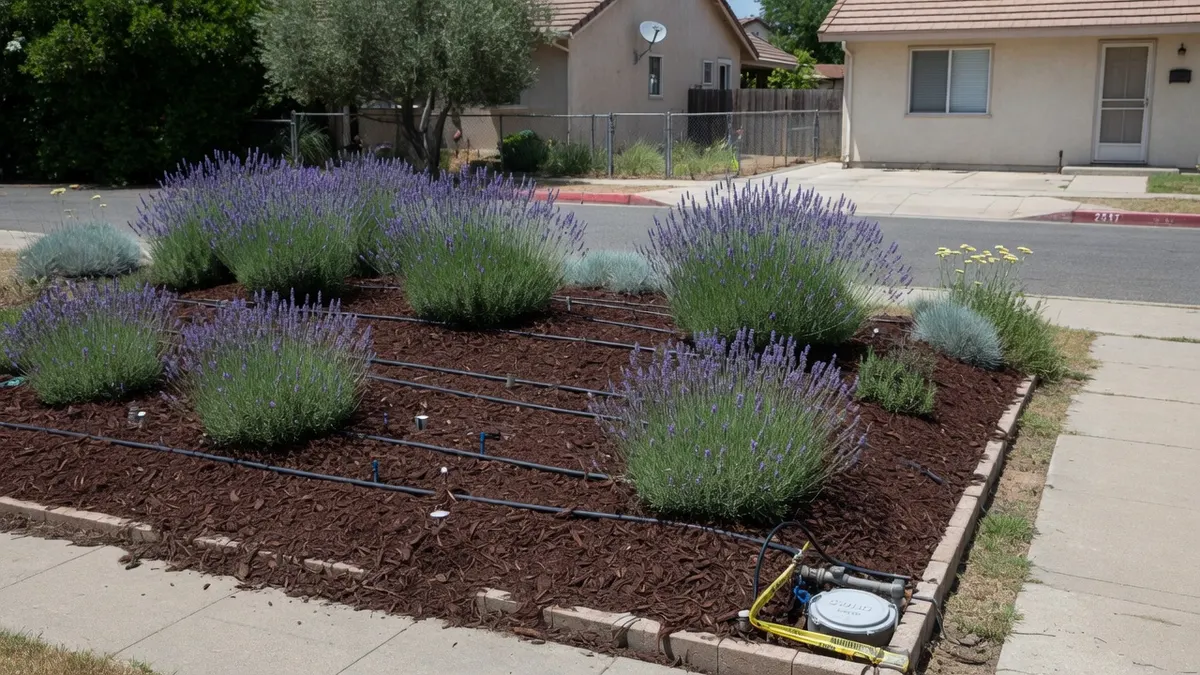
Drought-Tolerant Landscaping for Sacramento Homes: A Complete Guide to Water-Smart Yards
A drought-tolerant yard should not look like a pile of gravel with three stressed plants.
In Sacramento, the best water-wise landscapes still feel alive: shade, pollinator plants, decomposed granite paths, drip irrigation, mulch, and enough structure that the yard looks intentional in August. The goal is not to punish the lawn. The goal is to build a yard that fits hot summers, winter rain, water rules, and real family use.
If you are thinking about removing turf in Sacramento, Elk Grove, Folsom, Roseville, or Fair Oaks, start here.
What to Decide Before Calling a Landscaper
| Decision | Why It Matters | Contractor Question |
| --- | --- | --- |
| Keep any turf? | Kids, pets, and play space may need it | Can we shrink the lawn instead of removing all of it? |
| Plant style | Native, Mediterranean, modern, edible | Which plants survive Sacramento heat here? |
| Irrigation | New plants still need water | Will this be drip, smart controller, or both? |
| Soil prep | Clay soil can kill good plants | What amendment and grading are included? |
| Hardscape | Paths, borders, and DG affect cost | What is included versus allowance? |
| Maintenance | Low-water is not no-maintenance | What pruning and irrigation checks are expected? |
This chart also makes bids easier to compare.
The Best Sacramento Yards Use Zones
A good drought-tolerant design groups plants by water need. This is called hydrozoning.
Near the house, you might keep higher-value plantings, shade trees, or a small seating area. Farther out, you can use tougher native shrubs, grasses, mulch, and paths. Slopes, side yards, and park strips may need different plants than shaded backyard corners.
If a proposal shows one drip line and one plant mix for the whole property, ask for a better irrigation plan.
Plants That Fit the Valley
Sacramento-friendly choices often include:
- California native plants such as manzanita, ceanothus, deer grass, yarrow, and California poppy
- Mediterranean plants such as lavender, rosemary, olive, and santolina
- Tough flowering perennials such as salvia, penstemon, lantana, and gaura
- Shade trees such as valley oak, Chinese pistache, crape myrtle, and desert willow
- Lawn alternatives such as kurapia, dymondia, creeping thyme, or a small low-water turf area
Plant selection should match sun exposure, soil, water zone, mature size, and maintenance tolerance. A pretty nursery cart is not a landscape plan.
What Drought-Tolerant Landscaping Costs
Costs depend on lawn removal, irrigation, plant size, hardscape, soil work, access, and whether you want a simple conversion or a designed outdoor space.
For a typical Sacramento front yard, homeowners often see:
- Basic DIY conversion: lower cost, more sweat, less design support
- Professional front yard conversion: higher cost, better irrigation and plant survival
- Full property conversion: larger budget, especially with paths, patios, lighting, walls, or drainage
Ask for the bid to separate:
- Design
- Turf removal and disposal
- Soil amendment
- Drip irrigation and controller
- Plants by size and quantity
- Mulch or decomposed granite
- Edging, paths, boulders, or other hardscape
- Cleanup and warranty
That breakdown will show whether a cheap bid is missing irrigation, soil prep, or enough plants to look finished.
Permits, Licenses, and Rebates
Most ordinary planting does not need a building permit, but landscaping can trigger rules when it includes retaining walls, grading, drainage changes, electrical lighting, gas lines, fences, or major hardscape.
For paid landscaping work over California's contractor threshold, look for a licensed C-27 landscaping contractor. If the project includes electrical, plumbing, masonry, or major construction, make sure the correct licensed trade is involved.
Rebates change by water provider, so check before removing turf. Many programs require approval and before photos. Starting work too early can cost you the rebate.
For license basics, see California contractor license rules.
Red Flags in a Landscape Bid
Be cautious if a contractor:
- Recommends mostly rock without shade or plant coverage
- Does not discuss irrigation
- Cannot name plants that work in Sacramento heat
- Skips soil prep
- Gives a square-foot price without walking drainage and sun exposure
- Will not provide a license number
- Promises "no maintenance" landscaping
Low-water yards still need establishment watering, seasonal pruning, weed control, and irrigation checks.
Best Timing
Fall is usually the best planting window in Sacramento because winter rain helps roots establish before summer heat. Spring can work with careful watering. Mid-summer installs are harder on plants and can require more replacement.
If you want a summer-ready yard, start design and bidding months earlier.
The Bottom Line
Drought-tolerant landscaping works best when it is designed, not dumped. Keep useful turf if you need it, convert wasteful areas first, invest in drip irrigation and soil prep, and choose plants proven for Sacramento heat.
Start with a licensed landscaping contractor, verify their C-27 license, and compare bids by irrigation, plant list, soil prep, and maintenance plan. You can also browse contractors in Sacramento, Elk Grove, Folsom, and Roseville.
Who to Hire for This Project
For the work covered in this guide, these are the contractor types to contact and the CSLB classification to verify before you take quotes:
Questions to Ask Before You Sign
- "Is your CSLB license active and bonded?" Verify it yourself at cslb.ca.gov the license number must appear on their bid.
- "Who pulls the permit, and is it included in the bid?" The contractor should handle any required permits a pro who suggests skipping one is a red flag.
- "Can you itemize labor, materials, and allowances?" Itemized bids are the only way to compare quotes on the same scope.
- "What's the payment schedule?" California caps the down payment at $1,000 or 10%, whichever is less payments should track completed work.
- "Who from this area can I call as a reference?" Ask for a recent local job of similar scope, not just photos.
Sacramento Contractors for This Project
Related Articles
Sacramento Irrigation Backflow and Sprinkler Valve Repair Guide: Leaks, Testing, Costs, and Practical Bid Questions
August 12, 2026
Sacramento Paver Patio Cost Guide: Base Prep, Drainage, Permits, and When Pavers Beat Concrete
July 11, 2026
Rocklin Retaining Wall Repairs: Drainage, Permits, and Contractor Scope
July 9, 2026
Frequently Asked Questions
How much does drought-tolerant landscaping cost in Sacramento? +
A professional front yard conversion typically costs $5,000-$15,000. Full property conversions run $10,000-$35,000+. DIY front yard projects can be done for $2,000-$6,000. Costs depend on design complexity, plant choices, hardscape elements, and irrigation system requirements.
How much water does drought-tolerant landscaping save? +
Drought-tolerant landscapes use 50-75% less water than traditional lawns. For a typical Sacramento yard, this translates to $600-$1,500+ in annual water savings, depending on yard size and current usage.
Are there rebates for removing my lawn in Sacramento? +
Yes. The City of Sacramento and local water districts offer lawn conversion rebates, typically $1-$2 per square foot of lawn removed. Apply for rebates before starting work, as most programs require pre-approval and 'before' photos.
What are the best drought-tolerant plants for Sacramento? +
Top performers include lavender, salvia, California poppy, deer grass, manzanita, California lilac (Ceanothus), rosemary, and crape myrtle. Valley oak and Chinese pistache are excellent drought-tolerant shade trees. Visit the UC Davis Arboretum for proven Sacramento-friendly plant ideas.
When is the best time to install drought-tolerant landscaping in Sacramento? +
Fall (October November) is ideal because winter rains help new plants establish roots before summer heat. Spring (March April) is second best. Avoid planting during Sacramento's intense summer months (June September).
Do I need a licensed contractor for landscaping in Sacramento? +
California requires a C-27 landscaping license for any project over $1,000 (labor + materials combined). For drought-tolerant conversions, a licensed contractor ensures proper irrigation design, plant selection, and soil preparation. Verify licenses at cslb.ca.gov.
Will drought-tolerant landscaping increase my home value? +
Yes. Professional drought-tolerant landscaping typically returns 60-100% of the investment at resale. Sacramento buyers increasingly value water-wise yards for their lower maintenance, lower water bills, and climate-appropriate aesthetics.
Can I keep some lawn and still have a drought-tolerant yard? +
Absolutely. Many Sacramento homeowners keep a small functional turf area (500-800 sq ft) for kids and pets while converting the rest. Use a low-water grass like UC Verde Buffalo Grass for the remaining lawn to maximize water savings.