Davis Tree Permits Before a Roof, Paint, or Remodel Project
You have a roofer coming Monday, the scaffolding quote includes clearing branches from the eave line, and your neighbor just mentioned casually that the big oak near the property line "might be a City tree." That one sentence can change your project timeline and who owns the problem.
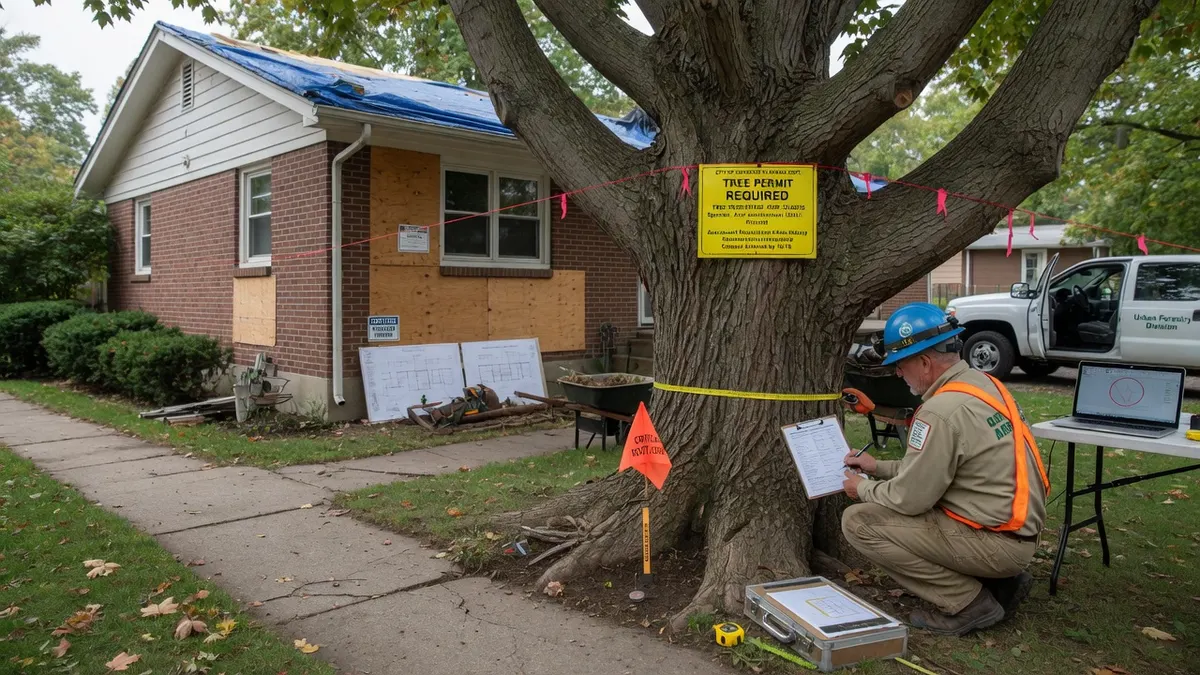
Davis has a genuinely distinct set of rules here. The City's urban forestry program means City-owned trees can exist within a ten-foot tree planting and maintenance easement that runs along the street side of private residential property. That easement is on your parcel, but the tree may belong to the City. If branches overhang your roofline, if roots run under your planned trench, or if scaffolding access requires cutting or disturbing that tree, Davis requires a permit before your contractor touches it. This is not a technicality that disappears if you ignore it it affects who is liable and whether your project can stay on schedule.
Use this to focus your first contractor conversation; it is not a universal ranking.
First Question: Is That Actually a City Tree?
Before you do anything else, figure out ownership. The City of Davis maintains trees in the ten-foot planting and maintenance easement that typically runs along the street-side edge of residential lots. That means a mature street tree whose trunk sits a few feet inside your fence line may still belong to the City and its care, pruning, removal, or root-zone modification falls under the City's urban forestry rules, not standard homeowner discretion.
The City's urban forestry page is your starting point (cityofdavis.org/city-hall/urban-forestry), and you can also call the Urban Forestry Division directly if a tree's status is not obvious. Do not skip this step and assume your contractor will catch it some will, many won't.
If you're planning a roof replacement or exterior project in Davis, this check should happen before you sign any contract. Once you know whether you're dealing with a City tree, a private protected tree, or an ordinary backyard tree, the rest of the planning becomes much clearer. The Sacramento area minor permits homeowner guide covers the broader permit context, but Davis's tree rules add a layer that requires its own attention.
How the City Tree Permit Works
If a City tree needs pruning, limb removal, root-zone modification, or any change to the area around it including grading, trenching, fencing, or paving you or your contractor must submit a Tree Modification Permit application to the City of Davis. The current fee is $150, and the application can be filed by the property owner or an authorized agent (meaning your contractor can handle it if you designate them).
The practical reason to file proactively: Davis operates on roughly a 7-year pruning cycle for City trees. If your roofing schedule or paint access depends on branches being trimmed, waiting for the City's routine cycle is not a realistic option. The permit path is how you get pruning done on your timeline rather than the City's. The Davis Tree Removal and Modification Requests page spells this out specifically for house painting, roof replacement, and general remodeling situations.
For removal of a healthy City tree, mitigation may be required meaning replacement planting or a fee in lieu. That's a different conversation than pruning for access, so clarify early which situation applies to your project.
What Your Contractor Needs to Separate in the Estimate
A roofing, painting, or remodel estimate that doesn't mention trees near the work zone is not necessarily thorough. Before you approve any scope, make sure the estimate breaks out:
- Whether any tree within the work zone is a City tree or a private tree, and who made that determination
- Whether branch trimming, root-zone protection measures, or scaffolding adjustments are included in the price or excluded
- Who is responsible for pulling and paying the Tree Modification Permit ($150 fee, plus any mitigation)
- Whether an ISA-certified arborist is needed for the tree work, separate from the trade contractor
- What happens to the project schedule if permit review takes longer than expected
A general contractor coordinating a larger remodel should be managing this across trades. For a standalone roofing or painting job, the trade contractor should be able to tell you immediately whether they've dealt with Davis City trees before and how they handle the permit. If they look blank, that's information.
Contractor-Screening Questions for Davis Tree Situations
Not every roofer or painter working in Davis has thought carefully about the urban forestry rules. Before you sign, ask these directly:
- Have you worked on Davis properties where a City tree affected access? What did you do?
- Will you walk the site with me and identify whether any trees near the work zone are City trees?
- Is the Tree Modification Permit in your scope, or will I need to handle that separately?
- Do you have an arborist you work with, or will I need to find one independently?
- If the permit takes longer than expected, how does that affect your start date and our contract terms?
A painting contractor or roofing contractor who has done this before in Davis will have straight answers. The ones who haven't will either guess, deflect, or tell you it's not their problem all of which are useful signals.
You can find licensed Davis-area contractors who know local permit requirements through the contractor search or by browsing the Davis city page.
When This Becomes a Real Schedule Risk
The tree permit question turns into a genuine timeline problem when it surfaces late. If your roofer books a start date, orders materials, and then discovers on day one that a City oak is blocking scaffold placement and nobody has filed a permit, you're looking at a project pause. That pause may cost you a contractor slot, a deposit dispute, or a delayed insurance claim window.
Trenching and drainage work near City trees carries an additional layer of risk: root-zone damage can trigger a City stop-work order and potential liability for tree loss. The Davis urban forestry guidance explicitly lists grading, trenching, and paving near protected trees as activities requiring advance review. If you're combining a remodel with drainage improvements, check the Davis ADU fast path guide for how permit layers interact, and make sure whoever is coordinating your project has accounted for both the building permit and any tree-related review.
Red flags to watch for in any contractor approach to a Davis tree situation:
- "We'll just trim a little, it'll be fine" with no mention of a permit
- No site visit before the estimate
- No line item for tree-related work in the scope
- Pressure to start immediately with no mention of checking City tree status
The Bottom Line
Check City tree ownership before you sign any exterior contract in Davis it takes one call or email to the Urban Forestry Division and can prevent a significant mid-project delay. The Tree Modification Permit runs $150 and can be filed by you or your contractor, so negotiate upfront who is handling it and make sure it's written into the scope. Any contractor who hasn't walked the site and answered the tree question directly is giving you an incomplete estimate, regardless of how competitive the price looks. For background on how permit layers interact on larger Davis projects, the home improvement permits California guide and the roof replacement cost guide are worth reading before your first contractor conversation.
Who to Hire for This Project
For the work covered in this guide, these are the contractor types to contact and the CSLB classification to verify before you take quotes:
Questions to Ask Before You Sign
- "Is your CSLB license active and bonded?" Verify it yourself at cslb.ca.gov the license number must appear on their bid.
- "Who pulls the permit, and is it included in the bid?" The contractor should handle any required permits a pro who suggests skipping one is a red flag.
- "Can you itemize labor, materials, and allowances?" Itemized bids are the only way to compare quotes on the same scope.
- "What's the payment schedule?" California caps the down payment at $1,000 or 10%, whichever is less payments should track completed work.
- "Who from this area can I call as a reference?" Ask for a recent local job of similar scope, not just photos.
Sacramento Contractors for This Project
Related Articles
Frequently Asked Questions
Does Davis really require a permit just to trim a tree branch before roof replacement? +
If the tree is a City tree which can happen when the trunk sits in the ten-foot planting and maintenance easement along your street-side property line then yes, a Tree Modification Permit is required before pruning, even for access purposes. The current permit fee is $150. If it's a private tree entirely on your property with no protected status, standard tree work rules apply instead. The easiest way to confirm is to contact the Davis Urban Forestry Division before your contractor starts.
How do I find out if the tree near my house is a City tree or my tree? +
Start at cityofdavis.org/city-hall/urban-forestry and review the City tree description, which explains the ten-foot easement on residential property. If the tree sits along the street-side edge of your lot, call the Urban Forestry Division directly they can tell you ownership by address. Do this before signing a contractor contract, not after, so permit responsibility can be written into the scope.
Who files the Davis Tree Modification Permit me or my contractor? +
Either you or your contractor can file, since the City accepts applications from the property owner or an authorized agent. In practice, if the tree work is part of the project scope (branches trimming for roof access, for example), your roofing or painting contractor should handle the permit as part of their coordination. Make sure that's explicitly in the contract rather than assumed, because some contractors treat it as the homeowner's responsibility.
What happens if we skip the permit and just trim the City tree anyway? +
Unpermitted pruning or modification of a City tree can result in a stop-work order, liability for tree damage, and potential fines. The City's urban forestry rules apply on private property within the easement, so "it's on my land" is not a sufficient defense. Beyond the legal exposure, an inspector visiting for your roofing or building permit may flag the unpermitted tree work, which can complicate your project closeout.
Does trenching for drainage near a City tree require the same permit? +
Yes. The Davis City tree guidance specifically lists trenching, grading, fencing, and paving near the root zone as activities requiring advance review or a permit. Root-zone damage from trenching is one of the most common ways City trees are harmed during remodel projects, so the City treats it seriously. If your remodel includes any drainage or underground work near a street tree, get the tree ownership confirmed and the permit filed before any digging starts.
My painter says the tree is my problem to sort out before they arrive is that normal? +
It is common, but it is not necessarily acceptable depending on what you agreed to in the contract. A painter who identifies a Davis City tree conflict during the estimate and tells you upfront that you need to sort the permit before they arrive is being straightforward. A painter who notices on the first day of work and then halts the job is creating a schedule and cost problem that should have been caught in the site visit. Ask specifically during the estimate process whether any trees near the work area have been evaluated for City tree status.