Carmichael Soft Floors: Termite, Dry Rot, and Crawl-Space Repair Questions
The soft spot usually starts as a joke. Everyone in the house knows the hallway board that dips a little, the bathroom corner that feels spongy after showers, or the living room seam that makes the bookcase lean just enough to notice.
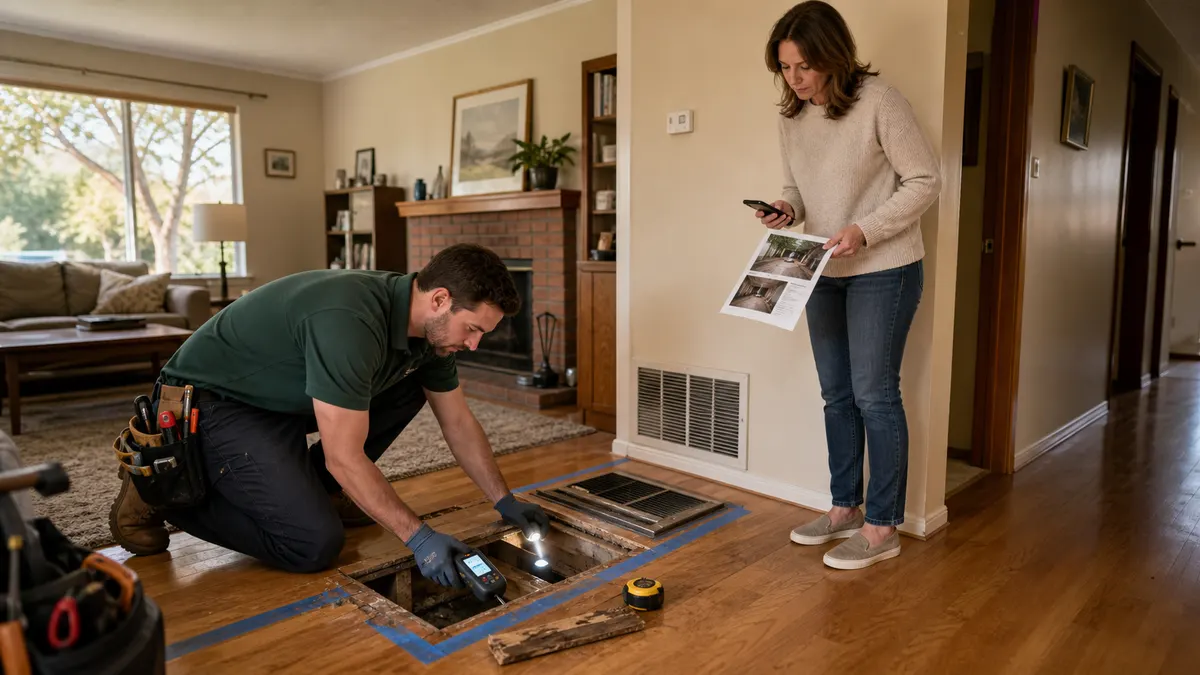
Then a Carmichael homeowner pulls up a floor vent, shines a light into the crawl space, and sees dark wood, mud-colored streaks on a pier, plumbing lines that have been sweating or leaking, and a subfloor edge that flakes instead of splinters. Suddenly the question is not "What flooring should we install?" It is "What damaged the floor, how far did it travel, and which contractor should lead the repair?"
That order matters. Covering a soft floor with new LVP, tile, carpet, or hardwood is one of the fastest ways to spend money twice. In Carmichael's older raised-foundation homes, soft floors often sit at the intersection of moisture, termites, plumbing leaks, undersized crawl-space ventilation, framing repairs, and finish flooring. The visible dip is only the first clue.
Use this chart before comparing bids. In Carmichael raised-foundation homes, the floor covering is usually the last decision, not the diagnostic step.
The Floor Is Telling You About Something Else
A soft floor is rarely only a flooring problem. It can be a subfloor problem, a joist problem, a sill plate problem, a moisture problem, a pest problem, or a combination of all five. That is why the first contractor conversation should be about diagnosis, not product samples.
Carmichael has many homes from the 1940s through the 1970s with raised foundations, crawl-space access, older plumbing runs, mature landscaping, and previous remodels layered over the original framing. Those homes can be very repairable, but they punish guesswork. A bathroom leak that ran for years can look like dry rot. Subterranean termite damage can look like water damage. A sag near a doorway can be framing movement, not a bad plank. A floor that feels fine in July may smell musty after winter rain.
Before you sign a flooring or remodel contract, ask someone to inspect below the problem area. If there is no crawl-space access, the estimate should explain whether an access panel is needed, where it would go, and what the contractor can and cannot know until the area is opened. "We will just lay new flooring over it" is not an answer.
Termites, Dry Rot, and Moisture Are Different Problems
Homeowners often use "dry rot" as a catch-all phrase for damaged wood. Contractors should be more precise. Fungal decay needs moisture. Termites need treatment and prevention. Plumbing leaks need repair. Poor drainage needs rerouting. Framing that has lost strength needs structural repair. If the bid does not separate the cause from the repair, the same floor can fail again.
For termite concerns, ask for a Wood Destroying Organism inspection or a pest-control inspection from someone qualified to identify active infestation, past damage, and treatment options. The repair contractor should not guess at whether mud tubes, frass, hollow-sounding wood, or damaged sill plates are active pest issues. Treatment and repair are related, but they are not the same bill.
For moisture concerns, ask where the water came from. Common Carmichael culprits include leaking toilet flanges, tub overflows, dishwasher or refrigerator lines, old galvanized or copper piping, irrigation hitting foundation vents, downspouts dumping near the crawl space, soil piled too high against siding, and poor crawl-space ventilation. Replacing damaged subfloor without fixing the moisture source is just hiding the timer.
What a Useful Estimate Should Separate
A targeted inspection may cost a few hundred dollars. A basic localized subfloor patch might stay in the low thousands. A larger repair with pest treatment, plumbing corrections, floor framing, insulation, drywall, trim, and finish flooring can move into the $8,000 to $35,000 range. If sill plates, multiple joists, bathroom tile, cabinets, or foundation drainage are involved, the number can climb higher.
The exact cost depends on access, damage depth, finish materials, permit requirements, and how much of the floor system is still sound. That is why the estimate should separate:
- Diagnosis. Crawl-space inspection, moisture readings, pest/WDO findings, photos, and what remains unknown until opening the floor.
- Treatment. Termite treatment, moisture correction, plumbing repair, drainage routing, or ventilation work before structural repair is covered.
- Demolition and access. Which flooring, baseboards, cabinets, toilets, appliances, or wall finishes need to come out.
- Framing repair. Subfloor, joists, blocking, rim joists, sill plates, piers, posts, connectors, and any engineer or county inspection requirement.
- Finish rebuild. Flooring patch or replacement, tile reset, drywall, texture, paint, trim, and who matches existing finishes.
- Change orders. Unit pricing or allowances for hidden joist damage, additional sheathing, plumbing surprises, pest treatment expansion, and insulation replacement.
- Cleanup. Debris haul-off, crawl-space protection, dust control, and how the home is kept safe while the floor is open.
If two bids are far apart, compare which one actually priced the cause. The cheaper bid may only be pricing the surface.
Which Contractor Should Lead?
Start with the problem you can document. If the floor is soft near a toilet, tub, dishwasher, refrigerator, or laundry area, a plumbing contractor may need to find and correct the leak before anyone rebuilds. If there are mud tubes, hollow wood, frass, or a real estate inspection report mentioning Section 1 items, bring in a pest-control contractor or WDO inspector early. If joists, sill plates, posts, or subfloor need repair, a general contractor or framing-capable contractor should lead the rebuild.
A flooring contractor belongs in the conversation after the structure is dry, sound, flat, and ready for the product. A foundation repair contractor may be needed if the floor slopes because posts, piers, soil movement, or crawl-space supports are failing. A drywall or painting contractor may be needed when the repair opens walls or ceilings. A home inspector can help a homeowner understand the pattern, but inspection is not the same as repair scope.
The red flag is the contractor who wants to own the easy part and wave away the hard part. The right lead can say, "I need the pest report first," or "This is plumbing before framing," or "We should not price flooring until we see the joists."
Permits, Licensing, and Contract Questions
Carmichael is in unincorporated Sacramento County, so building-permit questions run through Sacramento County rather than a city counter. Cosmetic flooring replacement may not need a permit. Structural floor repair, sill plate replacement, bathroom or kitchen plumbing changes, electrical changes, or work tied to a larger remodel can require permits and inspections. Ask the contractor to state in writing who verifies the permit path and who schedules inspections if they are required.
California licensing details matter here because soft-floor repairs can start small and turn structural quickly. The limited minor-work exemption is now under $1,000, but it does not apply when the work requires a permit or when the person doing the work employs others on the job. Separately, written home improvement contracts are required for projects over $500 in combined labor and materials. A real floor repair usually clears that quickly, so get a written scope, license number, payment schedule, change-order process, and proof of insurance before work starts.
For pest work, ask what license or registration applies to inspection and treatment. For plumbing, verify the plumbing contractor or subcontractor. For structural repair, make sure the license classification fits the work and that workers' compensation is active if employees are on site.
Red Flags in Soft-Floor Bids
Slow down if you see any of these:
- No crawl-space inspection before pricing a raised-foundation repair.
- A flooring bid that ignores moisture, termites, joists, or subfloor condition.
- Pest treatment and framing repair blurred into one vague line item.
- No plan to fix the leak, drainage, or ventilation issue that caused the damage.
- "Permit not needed" given as a blanket answer before the structure is inspected.
- No written change-order method for hidden joist, sill plate, plumbing, or pest findings.
- The contractor cannot explain who handles plumbing, pest treatment, framing, flooring, and finish repair.
- The license, insurance, bond, or workers' compensation status is vague.
A good bid does not promise that nothing else will be found. It tells you how the unknowns will be uncovered, priced, and approved.
Questions to Ask Before You Sign
- What evidence points to moisture, termites, framing movement, or finish-floor failure?
- Will you inspect below the soft area before final pricing?
- Do we need a WDO or pest-control report before repair work starts?
- What plumbing, drainage, irrigation, or ventilation issue could make the damage return?
- Which framing members are included: subfloor only, joists, blocking, sill plates, piers, or posts?
- Is an engineer or Sacramento County inspection needed for this scope?
- What flooring, baseboards, cabinets, toilets, or fixtures must be removed and reset?
- How are hidden conditions priced if the damage runs farther than expected?
- Who is responsible for permits, inspections, pest treatment, plumbing, finish flooring, and cleanup?
Those questions may make the estimate slower. They also keep the project from becoming a mystery once the floor is open.
Internal Homework Before You Hire
For local context, start with our Carmichael contractor guide, compare licensed pest control contractors, general contractors, plumbing contractors, foundation repair contractors, flooring contractors, and home inspection services. Use the contractor search when you are ready to build a shortlist.
For related planning, pair this with our termite damage repair guide, crawl-space moisture guide, foundation warning signs guide, Carmichael permit jurisdiction guide, California permit basics, and license verification guide.
The Bottom Line
A soft floor in a Carmichael home is not a decorating problem. It is a diagnostic problem first, a repair-scope problem second, and a flooring problem last. Find the moisture or pest source, document the crawl-space condition, separate treatment from repair, and hire the contractor who can explain where their scope begins and ends. The best floor replacement is the one that does not hide the reason the old floor got soft.
Who to Hire for This Project
For the work covered in this guide, these are the contractor types to contact and the CSLB classification to verify before you take quotes:
Questions to Ask Before You Sign
- "Is your CSLB license active and bonded?" Verify it yourself at cslb.ca.gov the license number must appear on their bid.
- "Who pulls the permit, and is it included in the bid?" The contractor should handle any required permits a pro who suggests skipping one is a red flag.
- "Can you itemize labor, materials, and allowances?" Itemized bids are the only way to compare quotes on the same scope.
- "What's the payment schedule?" California caps the down payment at $1,000 or 10%, whichever is less payments should track completed work.
- "Who from this area can I call as a reference?" Ask for a recent local job of similar scope, not just photos.