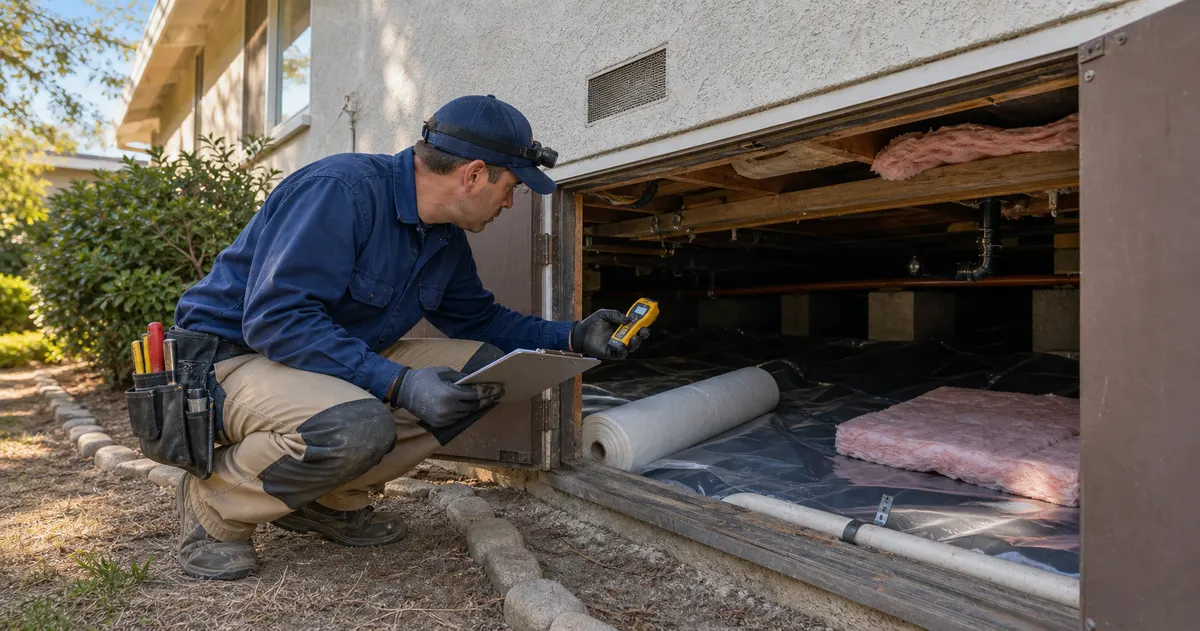
Arden-Arcade Crawl Space Moisture: Floor Insulation, Plumbing Leaks, and Who to Call
The problem usually starts upstairs, where it is easy to misread.
The living room floor feels cold in winter. A hallway has a slight bounce. One bedroom smells musty after rain. The hardwood has a small cupped area near an exterior wall. Someone says the house probably needs more insulation. Someone else says the crawl space may have a plumbing leak, poor drainage, pest activity, or damaged subfloor.
In Arden-Arcade, that is a real homeowner scenario. Many homes sit on raised foundations, with older floor framing, tight crawl-space access, mature landscaping, irrigation near the house, and decades of small repairs layered together. The right first contractor is not always the person who can staple insulation tomorrow. The right first step is figuring out whether the crawl space is dry, ventilated, structurally sound, and safe to work in.
A crawl-space project can be modest. It can also uncover plumbing, pest, insulation, foundation, drainage, or framing work. The estimate needs to separate those issues before anyone buries the evidence behind new batts or plastic.
Use this chart before comparing crawl-space bids. New insulation only makes sense after moisture, framing, plumbing, pests, and access are visible.
Why Arden-Arcade Crawl Spaces Deserve a Slower Look
Arden-Arcade has plenty of mid-century homes where the crawl space has been out of sight for years. That is normal. The trouble is that small problems under the floor can quietly affect comfort, indoor air, flooring, plumbing reliability, and remodel budgets.
Moisture is the main fork in the road. It may come from poor exterior grading, irrigation overspray, a missing downspout extension, condensation on pipes, a leaky tub drain, a slow supply-line leak, or seasonal water movement after storms. Each source points to a different contractor and a different scope.
The mistake is treating every crawl-space smell or cold floor as an insulation job. Insulation helps comfort only when the space is dry enough, pests are controlled, plumbing is sound, and the material is installed correctly. Wet or falling insulation can hide the problem and make the next repair messier.
Start With Evidence, Not a Product
Before asking for bids, document what you can from above. Which rooms have cold floors? Does the smell show up after rain, after showers, or when the HVAC runs? Are floors cupping near a bathroom, kitchen, laundry room, or exterior wall? Are there soft spots, squeaks, or doors that changed recently?
Take photos of the crawl-space access, exterior grade, downspouts, irrigation heads, foundation vents, and any staining around bathrooms or kitchen walls. If you can safely look inside the access opening without entering, photograph the ground surface, plumbing, floor joists, insulation, and any visible debris.
Do not crawl into a tight space with standing water, exposed wiring, animal activity, mold-like growth, sewage odor, or questionable structural conditions. That is contractor territory, not weekend curiosity.
Match the Contractor to the Real Work
For insulation replacement or floor insulation upgrades, start with a licensed insulation contractor, especially if the scope includes removing old batts, air sealing, fitting insulation around plumbing, or adding a ground vapor barrier. In California, insulation contractors commonly work under a C-2 insulation and acoustical classification.
Bring in a licensed plumber when stains, odors, wet soil, dripping supply lines, tub or shower drains, old galvanized piping, sewer lines, or water pressure clues are part of the picture. Crawl-space leaks can look small from above and still damage subfloor, framing, or insulation underneath.
Use a foundation repair contractor or general contractor when joists, girders, piers, posts, sagging floors, soft subfloor, or structural repairs are involved. A B general contractor can be useful when the job crosses several trades: plumbing repair, subfloor work, insulation, pest clearance, and finish flooring.
If there is termite evidence, fungus, rodent contamination, or wood-destroying organism language from an inspection report, involve the right pest or WDO professional before covering anything. New insulation should not become a lid over active damage.
What a Useful Estimate Should Separate
For Arden-Arcade homeowners, a simple crawl-space inspection or limited insulation repair may be a few hundred dollars to $2,500. A more complete cleanup, vapor barrier, floor insulation, air sealing, and minor access work often runs $3,000 to $9,000. Add plumbing repairs, pest cleanup, joist repair, drainage correction, or subfloor replacement and the project can move into the $8,000 to $25,000-plus range.
Ask each bidder to separate:
- Inspection and documentation. Photos, moisture readings, access limits, floor framing notes, plumbing observations, and what could not be inspected.
- Moisture control. Exterior grading, downspouts, irrigation, foundation vents, vapor barrier, drainage, and whether the source is confirmed.
- Insulation scope. Removal of old material, R-value target, fastening method, air sealing, pipe clearance, access areas, and disposal.
- Plumbing scope. Supply lines, drain lines, tub and shower traps, shutoff valves, leaks, pipe supports, and who tests the repair.
- Framing and subfloor. Joist condition, piers, girders, posts, dry rot, termite damage, sistering, blocking, and finish-floor impacts.
- Pest or cleanup work. Rodent debris, damaged ducts, WDO findings, sanitizing, exclusion work, and proof that the issue is controlled.
- Permits and trade responsibility. Which contractor pulls permits if plumbing, structural, electrical, or foundation work is included.
If the bid only says "install crawl space insulation," it is not detailed enough for a moisture or floor-performance problem.
Permits and Licensing Questions
Arden-Arcade homeowners usually deal with Sacramento County for building questions. Simple insulation replacement and cleanup may be straightforward. The answer can change when the scope includes plumbing changes, electrical work, structural framing, foundation repairs, HVAC duct changes, drainage connections, or floor-system repairs.
Ask the contractor to say, in writing, whether permits are included, not required, or still to be confirmed. That is especially important if a small crawl-space job becomes a bathroom leak repair, subfloor replacement, foundation support repair, or larger remodel.
Licensing should match the actual work. Insulation belongs with an insulation contractor. Plumbing belongs with a C-36 plumber. Structural coordination may need a B general contractor or foundation specialist. Electrical work should not be folded casually into a crawl-space cleanup. Pest and WDO findings should be handled by properly licensed pest professionals.
Red Flags in Crawl-Space Bids
A few warning signs should slow the project down:
- The contractor wants to install insulation without identifying why the old insulation failed.
- No one takes moisture readings, photos, or notes from the crawl space.
- Wet soil, plumbing leaks, or pest debris are treated as minor details.
- The estimate does not say who removes old insulation and contaminated material.
- Structural repairs are described vaguely as "support work" without photos or method.
- The contractor says permits never matter, even if plumbing or framing changes are included.
A good crawl-space contractor does not need to dramatize the problem. They should be able to show you what they found and explain which part of the job solves which condition.
Questions to Ask Before You Sign
- What evidence shows whether the problem is moisture, insulation, plumbing, pests, framing, or drainage?
- Will you provide crawl-space photos before and after the work?
- Is old insulation being removed, reused, or worked around?
- What R-value and fastening method are you recommending for the floor?
- Does the crawl space need a vapor barrier, drainage correction, vent repair, or exterior grading work?
- Who handles plumbing, pest cleanup, structural repair, and finish-floor repair if those are found?
- Does any part of this job require a Sacramento County permit or inspection?
- What is excluded from the price?
If the written estimate cannot answer those questions, ask for a clearer scope before work starts.
Internal Homework Before You Hire
For local context, start with our Arden-Arcade contractor guide, compare licensed insulation contractors, plumbing contractors, foundation repair contractors, pest control contractors, and general contractors. Use the contractor search when you are ready to build a shortlist.
For related planning, pair this with our Sacramento insulation guide, foundation warning signs guide, whole-house repiping cost guide, plumbing checkup guide, termite damage repair guide, and California permit basics.
The Bottom Line
A crawl-space project should not be a blind insulation sale. Start with moisture, plumbing, pests, and floor framing, then decide what comfort upgrades make sense. The right contractor will leave you with photos, a clear scope, and a crawl space that supports the house instead of hiding the next repair.
Who to Hire for This Project
For the work covered in this guide, these are the contractor types to contact and the CSLB classification to verify before you take quotes:
Questions to Ask Before You Sign
- "Is your CSLB license active and bonded?" Verify it yourself at cslb.ca.gov the license number must appear on their bid.
- "Who pulls the permit, and is it included in the bid?" The contractor should handle any required permits a pro who suggests skipping one is a red flag.
- "Can you itemize labor, materials, and allowances?" Itemized bids are the only way to compare quotes on the same scope.
- "What's the payment schedule?" California caps the down payment at $1,000 or 10%, whichever is less payments should track completed work.
- "Who from this area can I call as a reference?" Ask for a recent local job of similar scope, not just photos.