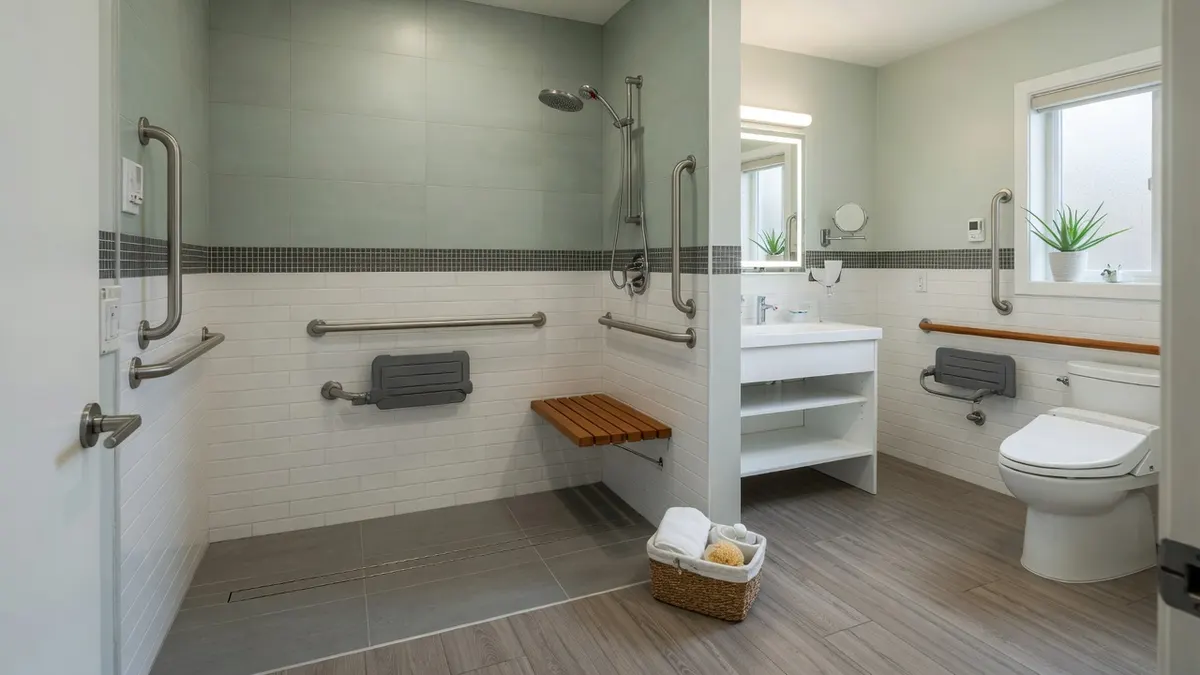
Carmichael Aging-in-Place Bathroom Updates That Do Not Look Clinical
A lot of Carmichael's ranch houses went up between the 1950s and 1970s, which means a fair number of primary bathrooms still have the original tub-shower combo, a single overhead light, and a doorway barely wide enough for a laundry basket. For a homeowner in their late sixties who plans to stay on the same oak-shaded street for another twenty years, that tub wall starts to feel less like a feature and more like a hazard you step over every morning. The good news is that fixing it does not mean turning the room into something that looks like a hospital wing.
The line between "safe" and "looks like a rehab facility"
Aging-in-place design has come a long way from the chrome bars and beige plastic seats people picture. You can get the same protection from a curbless shower, a built-in bench, and well-placed grab bars without any of it screaming medical supply catalog. The trick is treating safety features as design choices rather than add-ons. A grab bar in a matte black or brushed nickel finish reads as a towel bar to anyone who isn't looking for it. A teak fold-down seat looks like something you'd choose for comfort, not necessity. The point is to build a bathroom your grandkids think is just a nice remodel.
What a curbless shower actually demands behind the tile
The headline feature of most of these projects is a zero-threshold or low-threshold shower, and it is worth understanding why it costs what it does. Removing the curb means the floor has to slope correctly toward a drain so water doesn't wander out into the room, and that often requires reworking the subfloor and waterproofing the pan properly. On a slab-foundation Carmichael home, that can mean cutting concrete to relocate the drain, which adds real labor. This is exactly the kind of work where you want a licensed pro who handles bathroom remodel projects regularly, because a shower pan that wasn't built right shows up as mold and rot a few years down the line, long after the crew has packed up.
While the walls are open, this is also the moment to add blocking. Plywood backing installed between the studs gives you something solid to anchor grab bars into, now or ten years from now. It costs very little during a remodel and is a genuine headache to retrofit later. Smart homeowners add blocking around the toilet, the shower, and beside the tub even if they don't mount a single bar on day one.
A budget range that fits the Sacramento Valley
For a thoughtful aging-in-place bathroom around here, plan on roughly $20,000 to $60,000, depending on how much you move and how nice the finishes get. The spread is wide because the decisions stack on top of each other. A curbless shower, non-slip tile, a handheld sprayer on a slide bar, comfort-height fixtures, layered lighting, and a bench all add up, and they're far cheaper to do together than to bolt on one at a time later.
Build in a contingency too. Older Carmichael homes have a way of hiding surprises behind the drywall: galvanized supply lines, wiring that predates modern code, the occasional patch of dry rot near a leaky window. A good estimate names these risks up front instead of pretending the wall is empty. When you compare bids, the most useful one usually isn't the shortest. Look for the estimate that spells out materials, allowances, who pulls permits, cleanup, and warranty. If two numbers are far apart, the difference is almost always in the assumptions, not the contractor's greed.
The licensing and permit part you can't skip
In California, anyone doing home-improvement work that totals $1,000 or more in combined labor and materials has to carry a license from the Contractors State License Board. Plumbing, electrical, and a shower rebuild blow past that threshold instantly, so verify the license before you sign anything. You can check a contractor's status, bond, and workers' compensation coverage directly on the CSLB website in about two minutes, and it is the single best protection you have.
Permits are part of this trade, not an optional formality. Relocating plumbing, changing the electrical for new lighting or a fan, rebuilding the shower pan, or touching anything structural will generally trigger a permit and at least one inspection through Sacramento County. Your contract should state plainly who files the application and who handles any correction notices the inspector leaves behind. A contractor who waves off permits to save you time is a contractor who's planning to disappear before the consequences show up.
Lighting, flooring, and the small things that prevent falls
Falls in bathrooms are usually about two things people underestimate: bad lighting and slippery floors. A single ceiling fixture throws shadows right where you're stepping in and out of the shower. Layering in sconces beside the mirror, a recessed light over the shower, and a soft night-level fixture makes the whole room legible at 2 a.m. without anyone fumbling for a switch.
For the floor, ask specifically about slip resistance. Tile with a higher coefficient of friction, or a textured large-format porcelain, gives you traction without the dated look of tiny mosaic tile. If you're rethinking the floor anyway, it's worth talking to flooring specialists about continuous, low-maintenance surfaces that carry from the bathroom into the hall, since a flush transition is one less edge to catch a toe on.
When you're ready to move, start by walking your own bathroom with a notebook and writing down every spot that already feels awkward: the step over the tub, the dim corner, the cabinet you can't reach. Rank those problems before the first contractor visit so the conversation centers on how you actually live. Then line up at least three licensed bids. Our Carmichael contractor guide is a good place to see who works in the area, and the contractor search lets you build a shortlist you can compare side by side. The aim isn't the lowest number on the page. It's a bathroom that's safer than the one you have now and still feels like part of your home.
Who to Hire for This Project
For the work covered in this guide, these are the contractor types to contact and the CSLB classification to verify before you take quotes:
Questions to Ask Before You Sign
- "Is your CSLB license active and bonded?" Verify it yourself at cslb.ca.gov the license number must appear on their bid.
- "Who pulls the permit, and is it included in the bid?" The contractor should handle any required permits a pro who suggests skipping one is a red flag.
- "Can you itemize labor, materials, and allowances?" Itemized bids are the only way to compare quotes on the same scope.
- "What's the payment schedule?" California caps the down payment at $1,000 or 10%, whichever is less payments should track completed work.
- "Who from this area can I call as a reference?" Ask for a recent local job of similar scope, not just photos.
Sacramento Contractors for This Project
Related Articles
Frequently Asked Questions
How much does an aging-in-place bathroom remodel cost in Carmichael? +
In the Sacramento Valley, expect roughly $20,000 to $60,000 for a thoughtful aging-in-place bathroom, depending on how much plumbing you relocate and how nice the finishes are. A curbless shower, non-slip tile, blocking, layered lighting, and comfort-height fixtures cost far less done together than retrofitted one at a time. Always set aside a contingency for hidden conditions in older homes.
Do I need a permit to remodel a bathroom in Carmichael? +
Yes, in most cases. Relocating plumbing, rebuilding a shower pan, adding electrical for lighting or a fan, or making structural changes will generally require a permit and inspection through Sacramento County, which has jurisdiction over Carmichael. Your contract should state clearly who files the permit application and handles any inspection corrections.
Can a bathroom be made safe for aging in place without looking like a hospital? +
Absolutely. Modern grab bars come in finishes like matte black and brushed nickel that read as towel bars, and curbless showers with built-in teak benches look like an upgrade rather than a medical fixture. The key is treating safety features as intentional design choices, so the room stays residential while still reducing fall risk.
How do I verify a contractor's license before a Carmichael bathroom remodel? +
Any home-improvement work totaling $1,000 or more in California requires a license from the Contractors State License Board (CSLB). You can check a contractor's license status, bond, and workers' compensation coverage for free on the CSLB website in a couple of minutes. Do this before signing any contract or paying a deposit.
What is blocking and why does it matter in an aging-in-place bathroom? +
Blocking is plywood backing installed between the wall studs that gives grab bars something solid to anchor into. Adding it while the walls are already open during a remodel costs very little, but retrofitting it later means tearing out finished tile and drywall. Smart Carmichael homeowners add blocking around the shower, tub, and toilet even if they don't mount bars right away.
Why is a curbless shower more expensive to install in older Carmichael homes? +
A zero-threshold shower needs the floor sloped precisely toward the drain and waterproofed correctly so water doesn't escape the room. On the slab-foundation homes common in Carmichael, that often means cutting concrete to relocate the drain, which adds labor. It's work worth paying a licensed pro to do right, since a poorly built pan leads to mold and rot down the road.