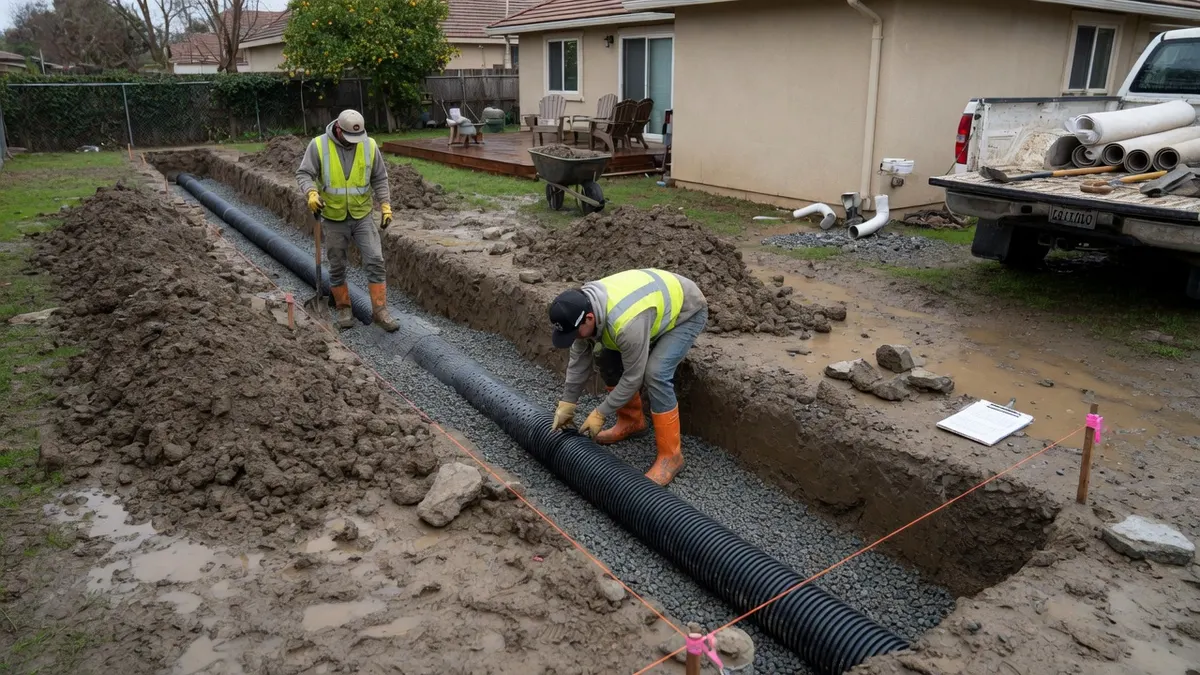
Yard Drainage and French Drains in Sacramento: Costs, Clay Soil, Permits, and Contractor Scope
Yard drainage is easy to ignore in Sacramento until the first real winter storm leaves water sitting against the foundation, pooling across a patio, or turning the side yard into a shallow pond. The problem is not always dramatic. Sometimes it is a soggy strip of lawn that never dries, mulch floating out of planting beds, a garage threshold that gets nervous during heavy rain, or crawl space moisture that appears every February.
Sacramento-area drainage work is practical, not glamorous. It is also easy to oversimplify. A French drain is not a magic trench that solves every wet yard. Sometimes the right fix is surface grading. Sometimes it is a catch basin and solid pipe. Sometimes it is downspout routing, a sump pump, soil correction, or a combination of smaller changes. The wrong fix can move water from one bad location to another, or worse, send runoff toward a neighbor.
Here is how homeowners in Sacramento, Elk Grove, Carmichael, Roseville, Fair Oaks, Rancho Cordova, Citrus Heights, and nearby communities should think about yard drainage before hiring a contractor.
What Yard Drainage Work Usually Costs
For a typical Sacramento-area home, drainage projects often fall into these rough 2026 ranges:
- Downspout extensions or simple surface discharge corrections: $300 to $1,500
- Small catch basin and solid drain pipe run: $1,500 to $4,500
- French drain along a side yard or wet landscape area: $3,000 to $9,000
- Larger multi-zone yard drainage system: $8,000 to $25,000 or more
- Regrading around patios, walkways, or lawn areas: $2,500 to $15,000 depending on access and finish work
- Sump basin and pump system for low areas: $3,500 to $12,000 or more
- Hardscape removal and replacement for buried drainage: $1,500 to $10,000 added cost depending on concrete, pavers, or landscape repairs
The wide range comes from access, trench length, pipe size, depth, disposal, surface restoration, utility conflicts, and where the water can legally discharge. A simple side yard with bare soil and a clear outfall is much cheaper than a finished backyard with concrete, irrigation, tree roots, fencing, and no obvious drainage destination.
A good estimate should not just say "install French drain." It should explain the drainage problem, proposed water path, trench depth, pipe type, gravel depth, fabric use, cleanouts, discharge location, surface restoration, and what is excluded.
French Drains vs. Catch Basins
Homeowners often ask for a French drain because the term is familiar. A French drain is a subsurface system that collects water through gravel and perforated pipe. It is useful when water is moving through saturated soil or when a wet area needs groundwater relief. It is not always the best way to catch fast-moving surface water from a roof, patio, or swale.
A catch basin collects surface water at a low point and sends it through solid pipe. That can be the better choice for patio runoff, downspout water, driveway edges, and areas where water is visibly flowing across the surface. Many Sacramento yards need both systems: catch basins for surface water and French drains for persistently soggy soil.
The distinction matters because perforated pipe and solid pipe do different jobs. Perforated pipe lets water enter along the trench. Solid pipe moves collected water without leaking it back into the soil. If a contractor connects roof downspouts into a perforated pipe under a wet side yard, that system may dump roof water exactly where the homeowner wanted less water.
Sacramento Clay Soil Changes the Design
Many local neighborhoods have clay or clay-heavy soils that drain slowly after winter storms. Clay can hold water near the surface, smear during excavation, and compact into a hard pan if worked when too wet. A drainage trench in clay needs careful bedding and a realistic discharge path. Otherwise it becomes a gravel-filled bathtub.
This is why slope is so important. Water must have somewhere to go. Even a high-quality drain pipe performs poorly if it is too flat, backpitched, clogged with roots, or forced to discharge uphill. In some low yards, gravity drainage is limited and a sump pump may be the honest answer.
Tree roots also matter. Mature neighborhoods like Carmichael, East Sacramento, Land Park, Fair Oaks, and parts of Roseville often have large trees that shape drainage choices. Cutting major roots for a trench can damage the tree, while shallow roots can invade poorly protected systems. The contractor should route around important root zones when possible and use cleanouts so the system can be maintained.
Start With Roof Water
Before paying for a large underground system, look at the roof drainage. Gutters and downspouts can put hundreds or thousands of gallons of water next to the foundation during a storm. If downspouts dump into short splash blocks, onto sloped soil, or beside a raised foundation vent, the yard drainage problem may start at the roof.
Common corrections include adding downspout extensions, routing downspouts into solid pipe, separating roof water from landscape French drains, repairing sagging gutters, and making sure discharge points do not erode soil or cross sidewalks unsafely. These are not exciting details, but they often deliver more benefit than digging a trench in the wrong place.
For raised foundation homes, keeping water away from crawl space vents is especially important. Persistent moisture under the house can contribute to wood decay, musty odors, pest activity, and foundation concerns. Drainage work should support a dry perimeter, not just make the lawn look better.
Grading Is Often the Real Project
A drain can move water, but grading decides where water wants to go before it reaches the drain. Soil should generally slope away from the house where conditions allow. Patios, walkways, turf, planting beds, and side yards need enough fall to avoid trapping water against structures.
In older Sacramento homes, grades may have changed over decades. New concrete, raised planters, added soil, tree roots, fences, sheds, and neighbor improvements can all block old flow paths. A contractor should identify these constraints during the walkthrough. If a patio is lower than the yard and slopes toward the house, a small drain at the edge may not be enough.
Regrading can involve removing soil, importing soil, adjusting irrigation, rebuilding planting beds, resetting pavers, or replacing sod. It can also affect fence posts, gates, deck steps, and concrete transitions. That is why drainage estimates often grow once the finish work is included.
Permits, Discharge Rules, and Neighbor Issues
Basic landscape drainage inside a yard may not require a building permit, but the details matter. Work can trigger local review when it connects to a public storm drain, cuts curb or sidewalk areas, changes grading near property lines, affects retaining walls, or involves electrical work for pumps. Cities and counties can handle right-of-way and stormwater rules differently.
The simplest rule is also the most important: do not solve your drainage problem by sending concentrated water onto a neighbor's property. Surface runoff naturally crosses some properties, but a pipe that dumps roof and yard water at the fence can create a dispute quickly. A contractor should explain the legal and practical discharge plan before work starts.
If a sump pump is proposed, ask where it discharges, how the outlet is protected, whether a check valve is included, whether the pump has accessible power, and what happens during an outage. Pumps solve real low-grade problems, but they add maintenance and failure points.
What a Complete Drainage Bid Should Include
A useful bid should answer these questions:
- What is the source of the water: roof runoff, surface flow, groundwater, irrigation, or grading?
- Will the system use perforated pipe, solid pipe, catch basins, or a combination?
- Where exactly will the water discharge?
- What pipe diameter and material will be used?
- How deep and wide will trenches be?
- What gravel, filter fabric, and soil separation details are included?
- Are cleanouts included for future maintenance?
- How will irrigation lines, utility markings, roots, and existing hardscape be handled?
- What landscape, sod, mulch, concrete, or paver restoration is included?
- Are permits or right-of-way approvals needed?
- What maintenance does the system require?
Be cautious with any bid that promises a complete fix without looking at elevations, downspouts, soil conditions, and discharge options. Drainage is site-specific. A system that works in a sloped Fair Oaks yard may make no sense in a flat Natomas side yard.
Maintenance After Installation
Even a well-built drainage system needs maintenance. Catch basin grates collect leaves, bark, and sediment. Downspout filters clog. Rodents can damage outlets. Roots can find water. Mulch can wash over inlets. Homeowners should inspect the system before the first major fall storm, after heavy wind, and during the first big rain to see whether water is moving as expected.
Cleanouts are worth paying for because they give future crews a way to flush or inspect lines. Outlet protection matters too. A pipe end hidden in shrubs can clog with leaves or get buried by soil. If the outlet is at the curb or a drainage swale, it should be visible enough to maintain and protected from damage.
The Bottom Line
Good yard drainage work in Sacramento starts with diagnosis, not digging. Identify where the water comes from, where it naturally wants to go, what the soil can absorb, and where water can discharge without causing another problem. Then choose the right combination of grading, downspout routing, catch basins, French drains, solid pipe, or pumping.
The best contractor is not the one who says every wet yard needs the same French drain. It is the one who can walk the site, explain the water path in plain language, show how the system will be maintained, and put the important details in writing. Done well, drainage work protects the foundation, keeps patios usable, reduces soggy landscaping, and makes winter storms feel a lot less stressful.
Who to Hire for This Project
For the work covered in this guide, these are the contractor types to contact and the CSLB classification to verify before you take quotes:
Questions to Ask Before You Sign
- "Is your CSLB license active and bonded?" Verify it yourself at cslb.ca.gov the license number must appear on their bid.
- "Who pulls the permit, and is it included in the bid?" The contractor should handle any required permits a pro who suggests skipping one is a red flag.
- "Can you itemize labor, materials, and allowances?" Itemized bids are the only way to compare quotes on the same scope.
- "What's the payment schedule?" California caps the down payment at $1,000 or 10%, whichever is less payments should track completed work.
- "Who from this area can I call as a reference?" Ask for a recent local job of similar scope, not just photos.
Sacramento Contractors for This Project
Related Articles
Sacramento Irrigation Backflow and Sprinkler Valve Repair Guide: Leaks, Testing, Costs, and Practical Bid Questions
August 12, 2026
Sacramento Paver Patio Cost Guide: Base Prep, Drainage, Permits, and When Pavers Beat Concrete
July 11, 2026
Rocklin Retaining Wall Repairs: Drainage, Permits, and Contractor Scope
July 9, 2026
Frequently Asked Questions
How much does a French drain cost in Sacramento? +
Many Sacramento-area French drain projects cost $3,000 to $9,000 for a side yard or localized wet area. Larger multi-zone systems, difficult access, hardscape removal, sump pumps, or extensive regrading can push drainage projects to $8,000 to $25,000 or more.
Is a French drain better than a catch basin? +
Neither is automatically better. A French drain helps collect subsurface water from saturated soil, while a catch basin collects surface water at a low point. Many yards need catch basins with solid pipe for roof or patio runoff, and French drains only where soil stays wet.
Can I discharge yard drainage to my neighbor's property? +
No. Homeowners should not concentrate runoff and send it onto a neighboring property. Drainage plans should identify a legal and practical discharge location, especially when pipes collect roof water or move water toward a property line.
Do Sacramento drainage projects need permits? +
Simple landscape drainage may not require a building permit, but permits or approvals may be needed for work in the public right-of-way, storm drain connections, curb cuts, retaining walls, grading changes, or electrical work for sump pumps. Check the local city or county requirements for the specific scope.
Why does my Sacramento yard stay wet after rain? +
Common reasons include clay soil, poor grading, low spots, roof downspouts dumping near the house, blocked drainage paths, over-irrigation, compacted soil, or a discharge point that is too flat. A contractor should diagnose the source before recommending a drain.